
The self-storage industry significantly contributes to local economies by providing flexible storage options, particularly during economic downturns. It creates jobs in management and maintenance and generates important tax revenue for local councils. As urban populations increase and lifestyles shift towards minimalism and online shopping, the demand for storage solutions grows. For example, a self-storage facility can offer a vital resource for small businesses needing extra space for inventory or for individuals looking to downsize. Moreover, the presence of storage units can boost the value of nearby properties, helping to stabilise local markets. Their ability to adapt supports both community growth and individual needs. Explore how these factors play out in different local contexts.
Key Takeaways
- The self-storage industry offers flexible storage options, helping to maintain local economic stability during tough times.
- It creates jobs in management and maintenance, bolstering local employment rates.
- Self-storage facilities can increase property values in nearby areas, positively impacting local real estate.
- The industry supports small businesses by providing vital storage for inventory, which can aid their expansion.
- Many storage facilities actively engage with their communities, sponsoring local events and initiatives, which helps build a strong sense of community.
Economic Resilience of Self-Storage
Economic downturns often pose challenges for many sectors, but the self-storage industry shows impressive resilience. Even during tough times, demand for storage remains steady as people experience life changes like downsizing or moving. This consistent demand is largely due to the low overhead costs of self-storage facilities, which require less upkeep compared to other property types. As a result, these facilities offer economic stability, making them a dependable choice for investors. Class A self-storage facilities provide a level of stability that many other real estate sectors cannot match.
The self-storage sector not only survives during economic crises, as evidenced during the Great Recession and the COVID-19 pandemic, but it also brings benefits to communities. The growth of self-storage facilities creates local jobs in various positions, from management to maintenance, contributing to local economies through job creation and property taxes.
Additionally, building and maintaining these facilities boosts local economic activity by employing local contractors and suppliers. Self-storage units also assist local businesses by providing flexible inventory management options, encouraging entrepreneurship.
Growth Drivers for Local Demand

With rising urbanisation and demographic changes, the demand for self-storage solutions is increasing. The urban population has grown from 52% to 57% since 2010, leading to a greater need for additional space. As living spaces in cities become smaller, individuals struggle to manage their belongings effectively. Lifestyle changes, such as downsizing and frequent moves, also contribute to this demand. Additionally, the self-storage market is projected to reach 64.7 billion dollars by 2025, indicating the significant growth potential in this sector. Enhanced security features offered by storage facilities further appeal to those seeking safe places for their belongings.
| Factor | Impact on Demand | Example Areas |
|---|---|---|
| Urban Population Growth | Greater need for storage | Major UK cities |
| Smaller Living Spaces | Higher demand for external storage | City flats |
| Aging Population | Downsizing leads to increased storage needs | Across the UK |
| E-commerce Growth | Necessity for inventory management | Local retailers |
Additionally, the growth of e-commerce creates a need for flexible storage options for small and medium-sized businesses. As more people adopt a mobile lifestyle, the requirement for temporary storage solutions becomes clear. These factors combine to form a strong market for self-storage, allowing individuals and businesses to manage their possessions efficiently in an evolving economic environment.
Market Projections and Local Impact
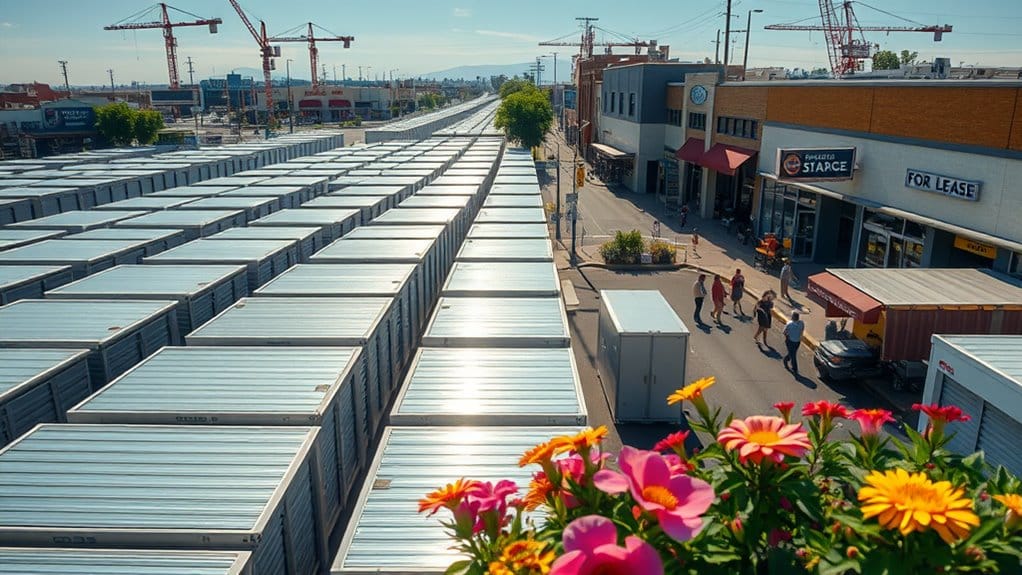
The self-storage market is set for notable growth, driven by rising urbanisation and changing consumer needs. By 2028, it's expected to reach £86.05 billion, with a CAGR of 7.9%. This growth is largely attributed to urbanization trends, which compel individuals to seek more storage solutions. Self-storage facilities are positioned to support decluttering homes and adapting to life changes, making them increasingly essential in urban environments.
As cities expand, local economies stand to gain in several ways:
- Creation of jobs in facility management and maintenance
- Increased property values due to the presence of storage facilities
- Boost in economic activity for local contractors
- Support for small businesses needing storage for inventory
- Enhanced community engagement through local events and sponsorships
However, the market also faces challenges, such as oversupply and competition from alternative storage solutions.
To navigate these trends, it's essential to understand market fragmentation and consumer preferences for smaller, climate-controlled units. Additionally, the growth of e-commerce is driving demand for flexible storage options.
Technology adoption, including AI and IoT, improves operational efficiency, but it's important to remain cautious of potential issues.
Investment Opportunities in Self-Storage
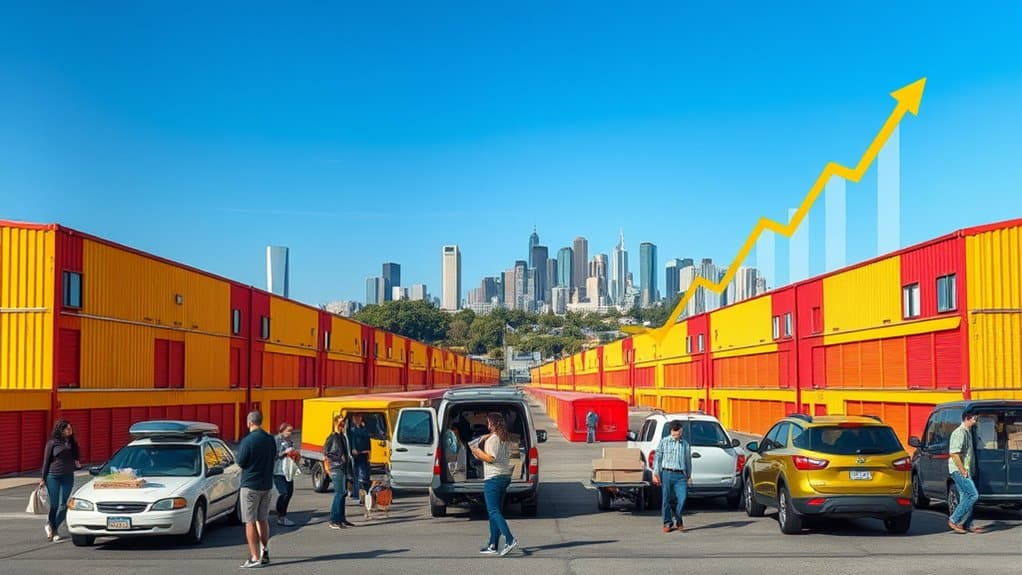
The self-storage sector presents various investment opportunities that cater to a broad spectrum of investors looking for stability and growth.
Real Estate Investment Trusts (REITs) focusing on self-storage provide a passive investment option, boasting high profit margins and strong returns on investment (ROIs). As the demand for storage space increases, REIT investors can benefit from multiple income streams, such as rental income and management fees, alongside tax advantages that boost overall profitability. Additionally, the self-storage industry demonstrates economic durability during challenging financial periods, making it an even more attractive investment.
For those keen to take a more hands-on approach, investing directly in self-storage facilities can offer substantial returns. This method allows you to adjust rental rates swiftly in response to market conditions, tapping into steady cash flow from month-to-month leases.
While it demands a significant initial investment and operational involvement, the potential for property value appreciation and consistent occupancy makes it an attractive option.
That said, it's important to be aware of market risks, including economic downturns and potential oversupply. Conducting thorough market research and choosing prime locations can help mitigate these risks.
Whether you opt for REITs or direct ownership, self-storage investments can provide diverse opportunities for financial growth in a flourishing sector.
Customer Dynamics and Satisfaction

Customer dynamics in the self-storage industry reflect a complex relationship between increasing expectations and changing service offerings. As you explore this sector, you'll find that customer demands are shifting towards convenience and flexibility. A straightforward rental process is crucial for attracting and keeping tenants, while excellent customer service is key to building loyalty.
Here are some important aspects of customer dynamics:
- Convenience and flexibility are essential.
- An efficient rental process boosts customer satisfaction.
- Quality service encourages loyalty and repeat business.
- Omnichannel marketing ensures a consistent experience.
- AI integration enhances efficiency while keeping a personal touch.
It's vital to understand customer needs, particularly as residential clients often require storage during major life changes. Business clients need secure solutions for managing stock and documents. The evolving customer experience in the self-storage industry emphasizes the need for immediate service and quick problem resolution to meet these demands.
The industry's ability to adapt to economic changes ensures it stays resilient and responsive to lifestyle trends. As you observe these shifts, remember that anticipating customer needs and maintaining consistent experiences across all interactions are critical for improving service quality.
Frequently Asked Questions
How Do Self-Storage Facilities Affect Local Job Creation?
Self-storage facilities generate job opportunities, boosting employment in your local area. As the industry grows, there is a rising need for staff in management, maintenance, and customer service roles, all of which help strengthen the local job market. For instance, a new storage facility might require a manager to oversee operations, alongside additional staff for customer support and facility upkeep. This not only provides jobs but also stimulates economic activity in the community.
What Role Does Self-Storage Play in Urban Development?
Self-storage is vital for urban development as it improves space efficiency in increasingly dense cities. It responds to changing demographics and helps overcome zoning issues, enabling the repurposing of properties. For instance, in London, self-storage facilities can transform unused retail spaces into secure storage solutions, catering to the diverse needs of residents and businesses alike. This flexibility supports urban growth while providing practical storage options in bustling environments.
How Do Self-Storage Facilities Contribute to Local Property Values?
You might assume that self-storage facilities depress property values, but evidence indicates they actually help stabilise the property market. They encourage investment by creating jobs and boosting local economies, which enhances the overall appeal of the area and can lead to property appreciation. For example, in areas with new self-storage developments, we often see increased foot traffic and local business growth, further benefiting homeowners.
What Community Services Do Self-Storage Companies Often Support?
Self-storage companies commonly support community services by engaging in charity initiatives and forming local partnerships. They may provide resources for community events, sponsor educational programmes, and participate in outreach activities. For instance, they might donate storage space for local charities or support school events, which helps strengthen community ties and promote collaboration.
How Can Local Governments Regulate Self-Storage Development?
You might assume that self-storage development can proceed without limits, but local councils in the UK have the power to enforce zoning regulations. By taking environmental impacts into account, they can strike a balance between the needs of the community and the necessity for organised land use and sustainable growth. For example, a council might restrict self-storage facilities in residential areas to maintain the character of the neighbourhood while allowing them in commercial zones where they can thrive without disrupting local life.
Conclusion
In conclusion, the self-storage industry significantly influences local economies by boosting economic resilience and driving demand. What does the future hold? With market projections showing ongoing growth, investment opportunities are becoming more appealing. However, success will depend on understanding customer needs and ensuring their satisfaction. Will operators adapt to changing requirements? The potential impact on communities is substantial, and addressing this question will be crucial for the future of both the industry and local economies.