
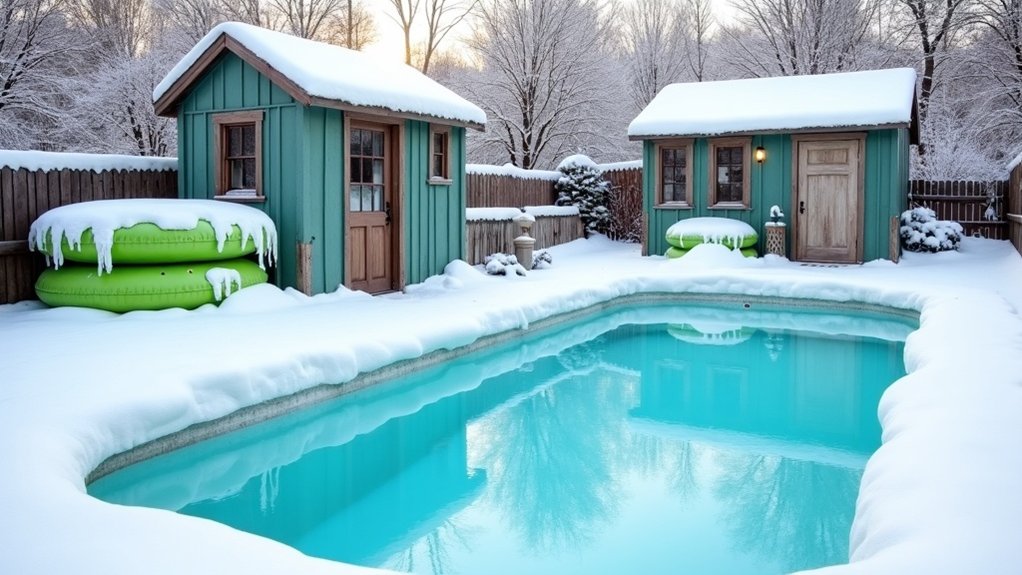
Storing pool supplies and equipment over winter is vital for their durability. Begin winterising when temperatures consistently fall below 18°C (65°F). Thoroughly clean and sanitise all items to prevent mould and mildew. Ensure everything is completely dry before placing it in a cool, dry area with good ventilation. A dedicated pool shed is ideal for keeping your supplies organised and shielded from harsh weather. With these steps, you’ll be ready for a hassle-free reopening in spring. Next, explore specific storage techniques to optimise your preparations.
Key Takeaways
- Rinse and dry all pool equipment thoroughly before storing it for winter to prevent mould, mildew, and corrosion.
- Store chemicals in a cool, dry, well-ventilated area, keeping chlorine away from acids to avoid dangerous reactions.
- Use a dedicated pool shed to shield supplies from harsh weather, moisture, and pests, while ensuring they’re easily accessible.
- Organise supplies by how often you use them in lockable cabinets for security and easier retrieval during the swimming season.
- Regularly check on stored equipment throughout the off-season to ensure it remains in good condition for reopening in spring.
Timing for Winterizing Pool Equipment
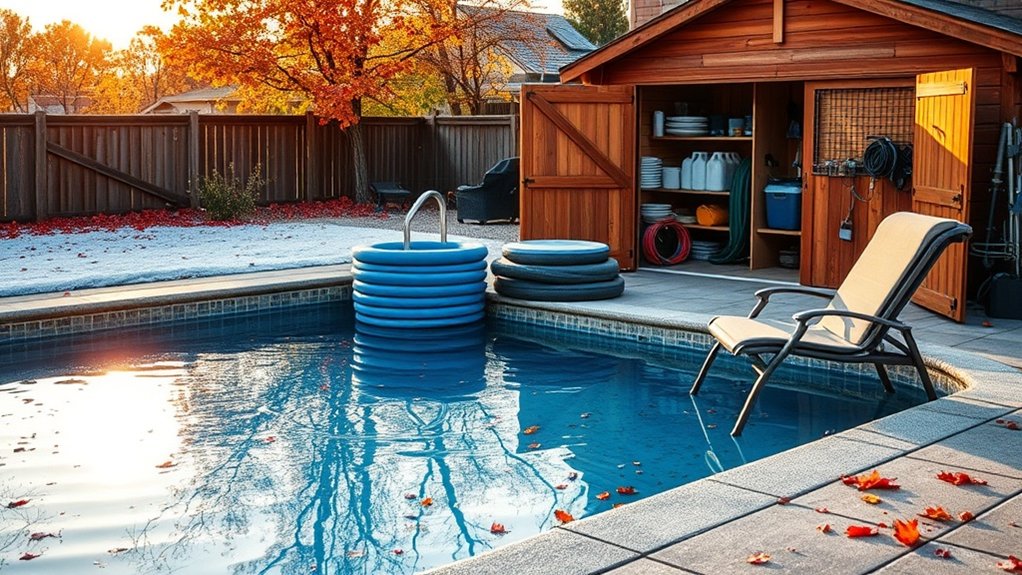
As temperatures begin to drop, it’s important to know when to winterise your pool equipment to keep it in good condition.
Start the process when nighttime temperatures consistently fall below 18°C (65°F). If you close your pool too early, you could end up with increased use of sanitiser and potential algae problems due to warmer water.
In colder areas, aim to winterise as the weather cools, but before any frost damage occurs. For pools without heaters, stick to these guidelines. Proper winterization is crucial to avoid damage from freezing temperatures.
Keep an eye on local weather forecasts to time your winterisation effectively and reduce costly repairs come spring.
Don’t forget to drain your pumps and filters once temperatures drop to protect your equipment throughout the winter months.
Proper Cleaning and Maintenance Before Storage
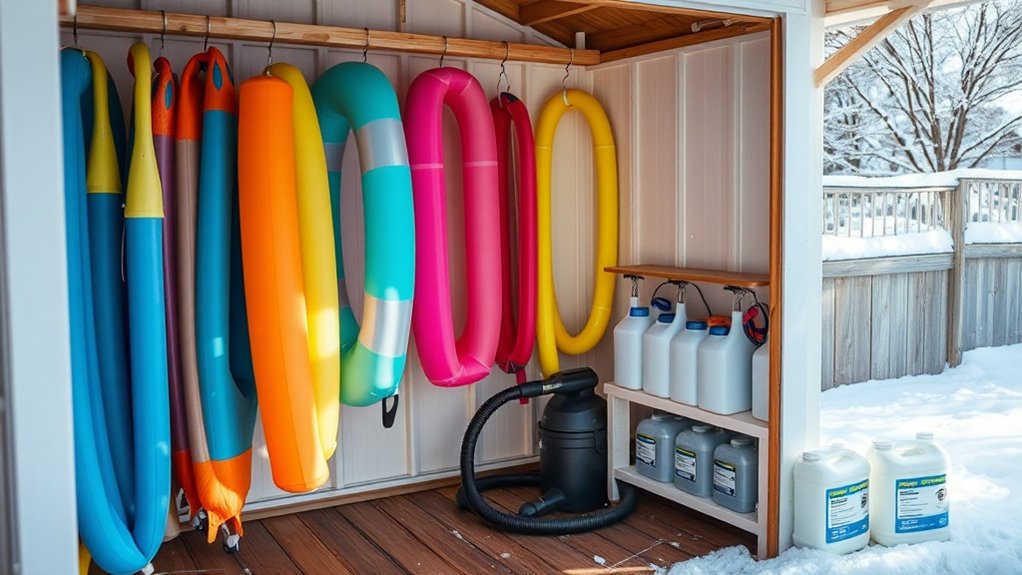
Before storing your pool supplies for winter, it’s crucial to rinse and dry all equipment to prevent mould and mildew. Be sure to sanitise accessories thoroughly to remove any lingering contaminants, and remember to clean the pool liner properly to prolong its lifespan. Paying attention to these details now will save you trouble when you reopen your pool in the spring. Additionally, proper winter maintenance of equipment helps avoid costly repairs and ensures everything is ready for use when the warmer months arrive.
Rinsing and Drying Equipment
Rinsing and drying your pool equipment properly is essential for its longevity and performance during the off-season.
Begin by rinsing effectively—empty skimmer baskets, rinse cartridge filters, and backwash sand filters to remove any dirt. Remember to clean your pumps and heaters as well.
Once rinsed, dry all equipment thoroughly to prevent mould and corrosion. Use clean, dry cloths to wipe sensitive surfaces, and ensure hoses and pipes are fully drained and left open to dry internally.
For robotic cleaners, dry them completely and store in a temperature-controlled environment. This careful rinsing and drying process will keep your equipment in top condition for the next swimming season. Additionally, consider that regular maintenance during winter can help prevent costly repairs when the swimming season arrives.
Sanitizing Accessories Thoroughly
Sanitising your pool accessories is crucial for preventing bacteria, algae, and mould during the off-season.
Begin by removing any visible dirt and organic matter, as this enhances the sanitisation process. Use a diluted chlorine solution or a specialised sanitiser to clean brushes, nets, and poles, soaking them for 10-15 minutes. Rinse thoroughly with clean water to remove any chemical residues.
For skimmer and pump baskets, clear out debris and sanitise using the same chlorine solution. Ensure all items are dried completely to avoid rust and mildew.
Store your accessories in a dry, rodent-proof location to keep them in good condition until you reopen your pool in spring. Following these steps will make your pool setup much easier come warmer weather.
Cleaning Pool Liners Properly
Cleaning your pool liner properly is crucial for winter storage, especially after sanitising your accessories.
Start by skimming the surface to remove debris and vacuum the bottom using vinyl-safe equipment. For effective cleaning, use an alkaline-based cleaner and gentle brushes to scrub the walls and waterline; steer clear of harsh chemicals that could damage the vinyl.
Ensure your water chemistry is balanced before cleaning to prevent discolouration. Once done, allow the liner to dry completely to avoid mould.
Keep at least 15 to 30 cm of water in the pool to prevent shrinkage. Finally, inspect for any damage and secure your cover tightly to protect the liner over winter.
Proper maintenance now will help extend your pool’s lifespan.
Safe Storage Environment for Pool Supplies
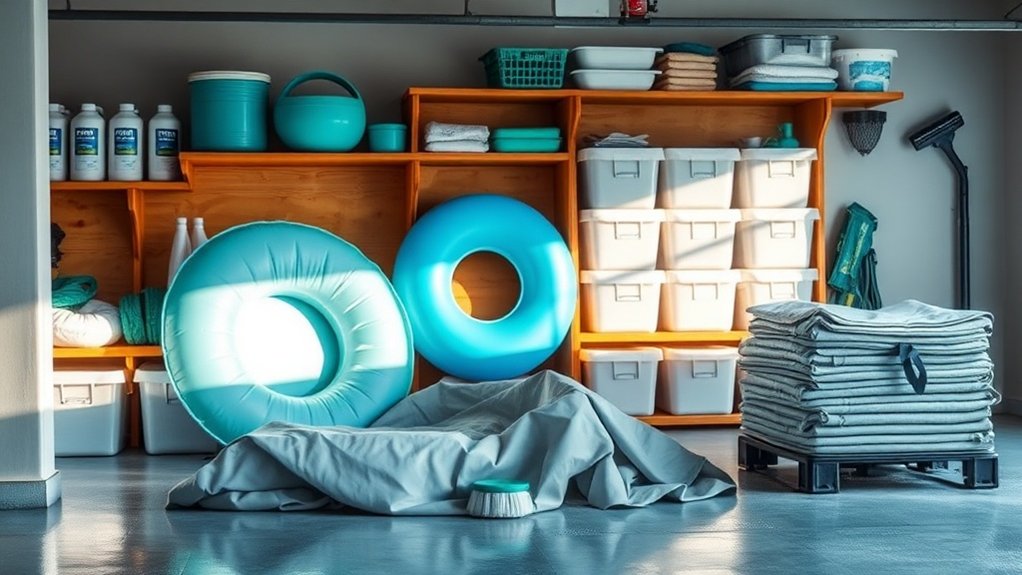
When storing your pool supplies for the winter, it’s vital to ensure a safe storage environment to maintain their effectiveness.
Select a cool, dry space that’s shielded from severe cold and moisture to prevent the degradation of chemicals. Good ventilation is important; it helps disperse fumes and stops toxic build-up.
Make sure to keep chlorine separate from acids and other incompatible chemicals to avoid dangerous reactions. Always store chemicals in their original containers and label them clearly for easy identification.
Use lockable cabinets to keep supplies secure, especially from children and pets. Lastly, keep everything organised and elevated off the floor to reduce damage risks and ensure proper chemical segregation for safe winter storage.
Equipment-Specific Storage Techniques
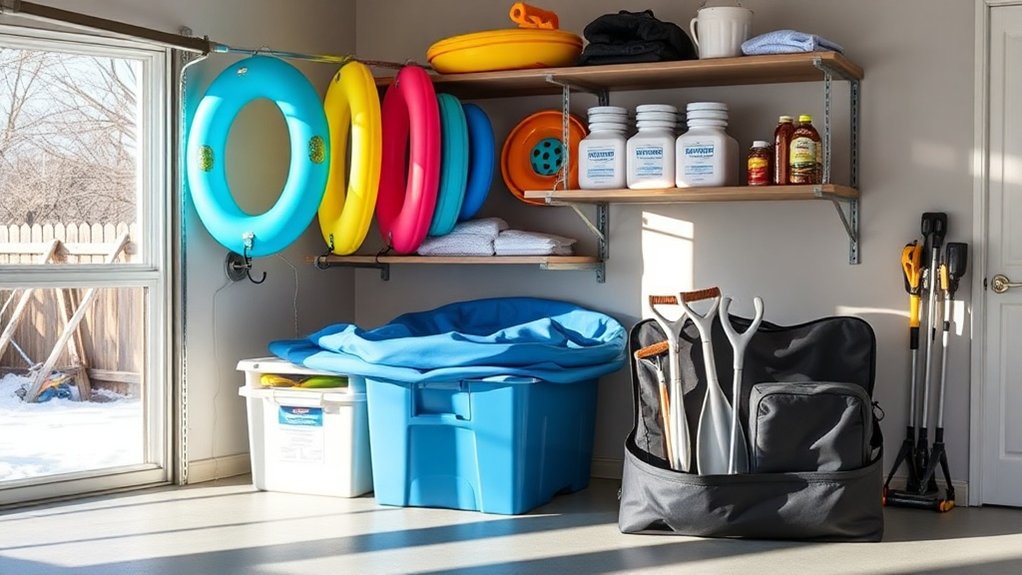
To ensure your pool equipment stays in good condition over winter, proper storage is crucial.
Start with the pump: drain all water to prevent freeze damage, disconnect parts for cleaning, and store it in a dry, temperature-controlled area to protect it from humidity.
For the filter, backwash and rinse it, then dry completely before storage. If you can, remove cartridges or sand and store them separately.
For hoses and vacuum equipment, disconnect, drain, and dry them thoroughly to prevent mould. Keep everything off the ground in a protective container.
Always label parts or keep manuals handy for easy reassembly in spring. Following these steps will help extend the life of your pool equipment.
Proper Handling and Storage of Pool Chemicals
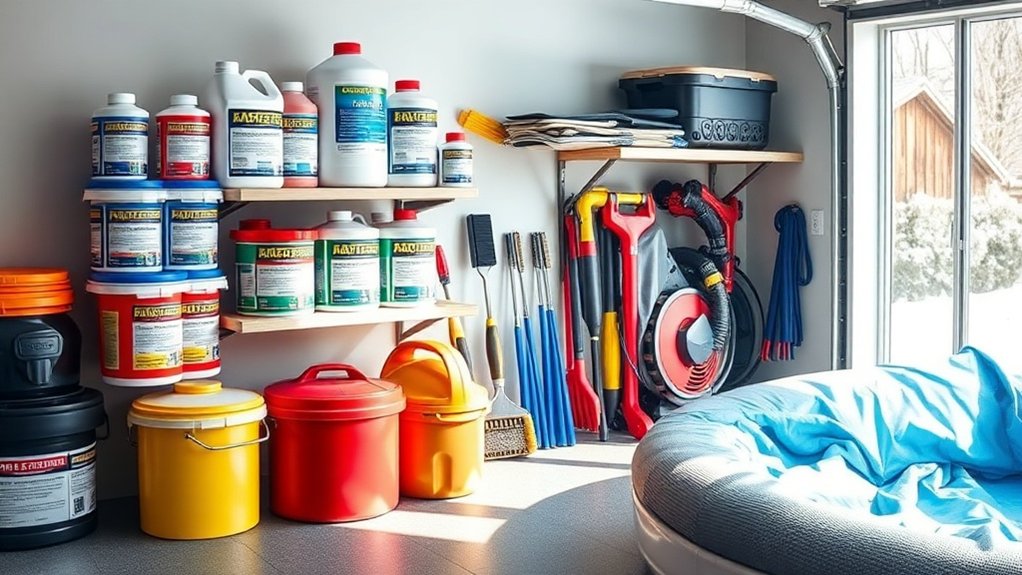
Proper handling and storage of pool chemicals is crucial for safety and effectiveness. Always keep these chemicals in a cool, dry, and well-ventilated space to avoid the build-up of hazardous gases.
Store them away from direct sunlight, moisture, and any sources of ignition. Ensure chemicals remain in their original, tightly sealed containers and keep them off the ground and at eye level for easy access.
Avoid stacking containers, and separate incompatible chemicals, such as chlorine and acids, in clearly labelled, sturdy bins. Adhering to local storage regulations and keeping chemicals out of reach of children and pets is vital for safety.
Regularly inspect for damaged containers and dispose of them properly to maintain a safe environment, especially during the winter months.
Benefits of Using a Dedicated Pool Shed for Storage
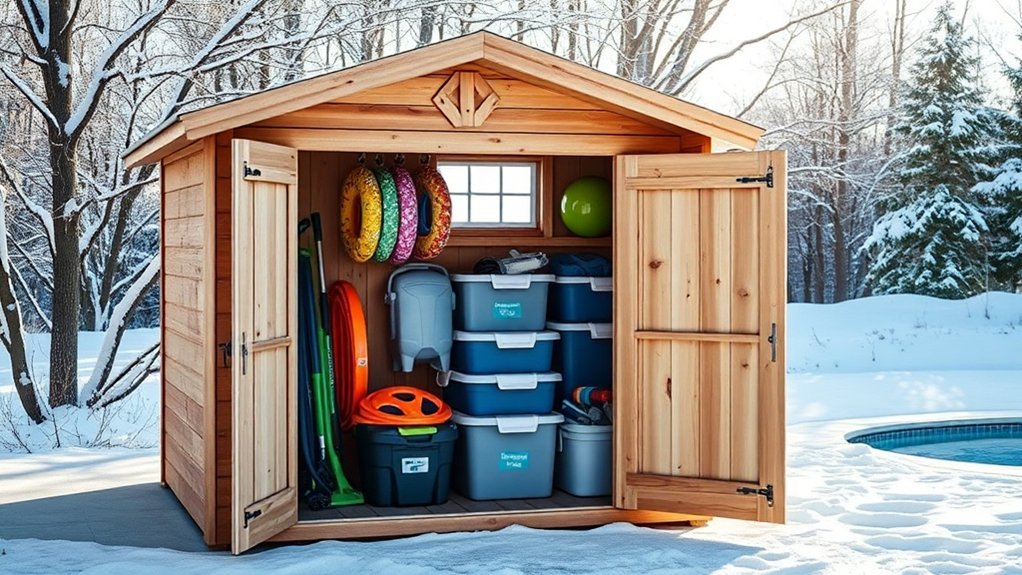
A dedicated pool shed is a smart investment for any pool owner.
It offers efficient storage for all your pool essentials, ensuring everything is organised and easy to find. By keeping your equipment sheltered from the unpredictable British weather, you can prolong its lifespan and maintain peak performance.
Plus, a pool shed helps keep your outdoor area tidy, making it a more enjoyable space.
Maximizes Space Efficiency
A dedicated pool shed can significantly improve your outdoor area by centralising all your pool supplies in one convenient spot.
An efficient layout maximises space organisation, keeping clutter to a minimum around your pool. By installing shelving, hooks, and compartmentalised storage, you can neatly organise both small and large items.
Vertical storage options allow you to store long poles and nets without taking up valuable floor space. This keeps your outdoor area tidy and frees up garage or shed space for other uses.
Customisable interiors ensure your shed meets your specific needs, making it easy to access essentials during the swimming season.
Protects Against Weather Damage
While space efficiency is important, protecting your pool supplies from weather damage is crucial.
A dedicated pool shed provides shelter for your equipment against harsh conditions like rain and snow, which can cause water damage to chemicals and tools. It also blocks UV rays, preventing plastic items from becoming brittle.
By keeping your equipment sheltered, you reduce the risk of corrosion on metal parts and freeze damage in colder weather. A controlled environment helps keep dust and debris at bay, ensuring your supplies remain clean and functional.
Investing in a pool shed is a sensible choice for safeguarding your pool essentials and ensuring they’re ready for use when needed.
Frequently Asked Questions
How Do I Determine When to Start Winterizing My Pool?
To determine when to start winterising your pool, keep an eye on the temperature. Begin the process when daily temperatures consistently drop below 18°C (65°F). This helps prevent algae growth and protects against freeze damage. Don’t wait until it’s freezing; take action early for the best results.
Can I Store Pool Equipment Outside if Covered?
Yes, you can store pool equipment outside if it’s covered, but it comes with risks. Covers can trap moisture, which may lead to rust. It’s better to store equipment under a roof to protect it from the harsh winter weather. For example, a garden shed or a covered patio can provide much better protection than a simple cover.
What Are the Signs of Equipment Damage From Winter Storage?
Look out for signs such as frozen hoses, cracked pumps, or leaks around seals. Check for rust, corrosion, and faulty valves. If your equipment isn’t working properly, it has likely sustained damage from inadequate winter storage.
How Often Should I Check on Stored Pool Supplies During Winter?
As winter covers your pool supplies, check them every 1–2 months to ensure they remain in good condition. Follow winter maintenance tips to keep your equipment in top shape and avoid any unpleasant surprises come spring. This way, you can enjoy your pool without worry when the warmer weather returns.
What Should I Do if I Find Leaks in Chemical Containers?
If you discover leaks in chemical containers, act quickly: isolate the area, don appropriate personal protective equipment (PPE), and ensure proper ventilation. Use spill kits for cleanup and follow chemical safety protocols for detecting leaks and disposing of materials safely.
Conclusion
As winter approaches, ensure your pool supplies are well taken care of. By properly cleaning, maintaining, and storing your equipment, you’ll extend its lifespan and make opening your pool next season much smoother. Just picture diving into a sparkling pool come spring, all thanks to your winter preparations. So, take the time now to safeguard your investment—your pool will thank you, and you’ll enjoy hassle-free fun in the sun when the warmer weather returns!