

To store seasonal business inventory safely, focus on organisation and preparation. Clean and pack items using moisture-resistant materials, and ensure everything is clearly labelled for easy identification. Make the most of your storage space by using vertical solutions and setting aside specific areas for seasonal items. Consider using technology like real-time stock tracking and automated reorder systems for efficient management. Regularly check your inventory to ensure accuracy and maintain product quality. There are many effective inventory strategies that can improve your operations.
Key Takeaways
- Use moisture-resistant packaging to keep seasonal items safe from dust and pests while in storage.
- Set up a clear labelling system to easily identify inventory and track storage dates.
- Organise your inventory efficiently, using vertical storage solutions to make the most of your space without creating clutter.
- Carry out regular stock counts and audits to ensure accuracy and protect sensitive products.
- Designate specific areas for seasonal items to allow for quick access during busy periods.
Understanding Seasonal Inventory Characteristics
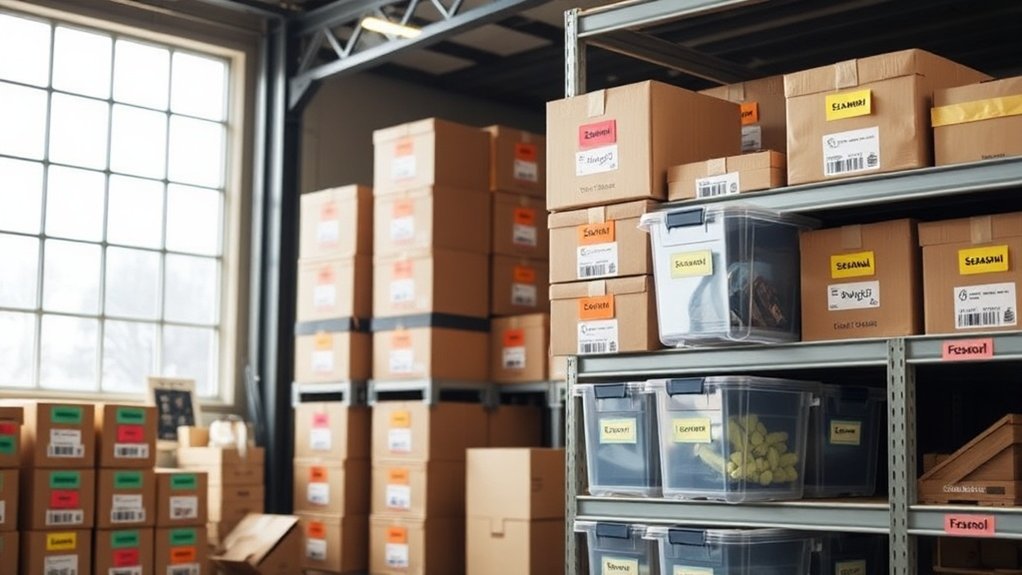
Understanding seasonal inventory characteristics is crucial for businesses aiming to optimise stock management. Seasonal demand causes sales spikes during specific times, such as Christmas or major sporting events, resulting in high inventory turnover during these periods. By identifying these patterns, you can align your procurement and sales strategies to meet predictable demand effectively. The timing of demand fluctuations can vary, so accurate inventory planning based on historical sales data is essential. Maintaining balanced stock levels throughout the year is important; overstocking may lead to obsolete goods, while understocking could mean missed sales opportunities. Adopting flexible logistics strategies can further improve inventory management, ensuring seasonal items are accessible during peak times and maximising your operational efficiency. Additionally, implementing flexible supply-chain procurement allows for timely adjustments in inventory levels to match seasonal demand changes. Moreover, utilizing self-storage solutions can provide an efficient way to manage excess inventory without incurring high overhead costs.
Preparing Inventory for Safe Storage
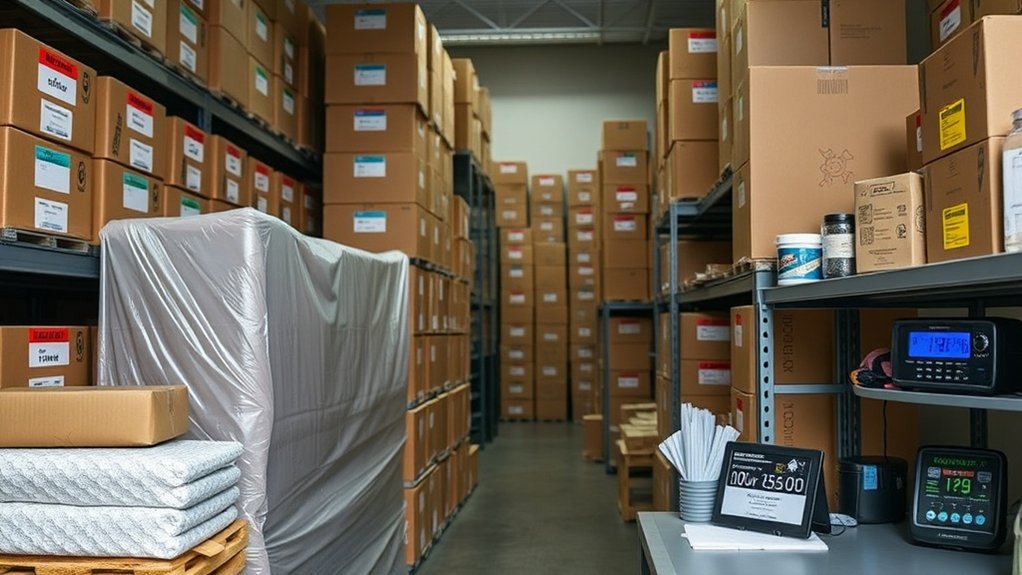
Once you understand your seasonal inventory’s characteristics, the next step is preparing it for safe storage. Proper inventory preparation is vital to maintain product integrity.
Here’s how to ensure your seasonal packaging is effective:
- Clean and Maintain: Give your inventory a thorough clean to prevent any damage or spoilage during storage.
- Use Protective Materials: Use moisture-resistant packaging to protect against dust and pests.
- Label Clearly: Clearly mark each item with important details like SKU, seasonality, and storage date for easy identification.
- Organise Smartly: Use palletising or shelving strategies that maximise storage efficiency without compromising product condition. Additionally, consider using self-storage solutions to effectively manage your inventory while reducing clutter and improving operational efficiency.
Storage Space Optimization and Organization
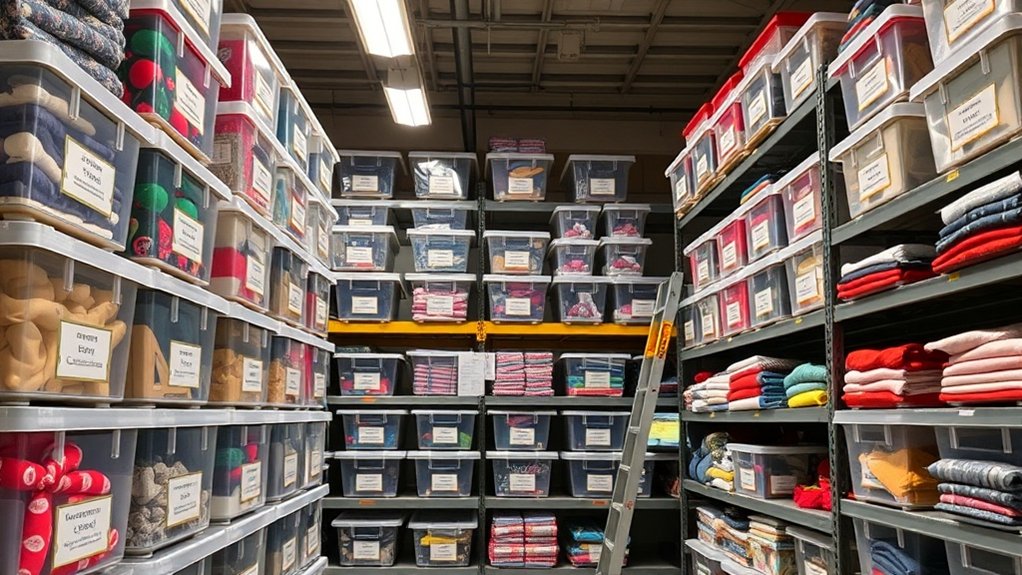
To optimise storage space and improve organisation, it’s essential to adopt strategies that suit your seasonal inventory requirements.
Start with vertical storage solutions, such as tall shelving, to increase capacity without taking up additional floor space. Create dedicated areas for seasonal items to ensure easy access, even in limited spaces.
Use stackable containers to make the most of vertical space and modular shelving for different inventory sizes. Implement a straightforward labelling system, perhaps using barcodes, to simplify tracking seasonal demand. Effective demand forecasting is crucial for planning your inventory levels and ensuring that you have the right amount of stock on hand.
Organise stock by category or sales speed to minimise picking errors. Regular stock counts help maintain accuracy, while controlled environments safeguard sensitive products.
These approaches not only boost efficiency but also enable quick responses to changing market demands.
Leveraging Technology for Inventory Management

To manage your seasonal inventory effectively, consider using real-time stock tracking technologies. These systems give you clear visibility of your inventory levels, enabling you to quickly respond to changes in demand. When paired with automated reorder systems, you can maintain optimal stock levels, reducing the risk of stockouts or excess inventory. For example, if a popular item starts to sell out, the system can automatically trigger a reorder, ensuring you don’t miss sales opportunities. Additionally, implementing advanced inventory management systems can further enhance your inventory organization and efficiency for better overall performance.
Real-time Stock Tracking
As businesses manage the challenges of seasonal inventory, utilising real-time stock tracking technology is vital for maintaining efficiency and accuracy. By implementing real-time updates, you can significantly reduce stock errors and improve your inventory management.
Here are some essential features to consider:
- AI and Machine Learning: Anticipate future demand and adjust inventory levels accordingly.
- Barcode and RFID Scanners: Allow for instant identification and tracking of stock-keeping units (SKUs).
- Cloud-Based Solutions: Provide centralised access to inventory data from any location, ensuring visibility across all channels.
- Integration with ERP Systems: Ensure data consistency across supply chains.
With these tools, you can enhance inventory accuracy, increase customer satisfaction, and streamline operations, ultimately helping your business succeed.
Automated Reorder Systems
Managing seasonal inventory can be tricky, but incorporating automated reorder systems can significantly enhance your operations. These systems improve efficiency and stock management by eliminating manual checks and cutting order cycle times by over 30%. They place orders based on real-time data, helping you avoid stockouts and reduce carrying costs.
| Feature | Benefit | Impact |
|---|---|---|
| Real-time data capture | Minimises human error | Accurate inventory counts |
| Automated ordering | Speeds up replenishment | Better customer satisfaction |
| Integration with ERP systems | Smooth data flow | Enhanced stock management |
For example, if you’re running a retail business, an automated system can alert you when your best-selling items are low in stock, allowing you to reorder promptly and keep customers happy.
Cost Control and Scalability Strategies
To effectively manage costs and scale your seasonal inventory, consider using flexible storage contracts that match your peak periods. This means you only pay for what you need when you need it.
Geographic diversification can also strengthen your logistics strategy, helping to cut shipping times and costs. For instance, if you have suppliers in different regions, you can reduce delays and expenses.
Additionally, using third-party logistics solutions can offer the agility and capacity required during fluctuating demand cycles, without the burden of unnecessary overhead.
Flexible Storage Contracts
Flexible storage contracts provide businesses with a competitive edge in managing seasonal inventory changes, allowing you to adjust your storage requirements as needed.
This adaptability helps control costs and improves scalability. Here are some key benefits:
- Month-to-month agreements offer short-term solutions without lengthy commitments.
- Tiered pricing models allow for cost savings as your storage usage increases.
- Overflow agreements provide emergency access to additional storage during busy periods.
- Early contract negotiation can secure better rates ahead of peak seasons.
These options make it easier for businesses to adapt to changing demands without being tied down.
Geographic Diversification Benefits
Geographic diversification provides key benefits for businesses aiming to manage costs and scale their inventory effectively. By operating across various regions, you bolster market resilience and decrease dependence on a single market. This approach helps to mitigate risks associated with economic downturns, political instability, and natural disasters, ensuring your business stays strong.
For instance, having warehouses in different locations can lower transportation costs and enhance delivery efficiency, which in turn reduces logistics expenses.
Third-Party Logistics Solutions
Third-party logistics (3PL) solutions can significantly improve your cost control and scalability, particularly during peak seasons. By partnering with a 3PL provider, you can manage your inventory effectively while keeping costs down.
Here are some key benefits:
- Flexible Storage: Adjust your storage space based on seasonal demand, avoiding unnecessary fixed warehouse costs.
- Safety Stock Strategies: Maintain a balance in inventory holding costs to prevent stockouts during busy periods.
- Outsourced Labour: Save on hiring and training costs for temporary staff when demand surges.
- Technology Integration: Leverage automation for quicker fulfilment and reduced errors.
With 3PLs, you can convert fixed logistics expenses into variable costs that align with actual demand, improving your inventory management and cash flow.
Ensuring Inventory Security and Accessibility
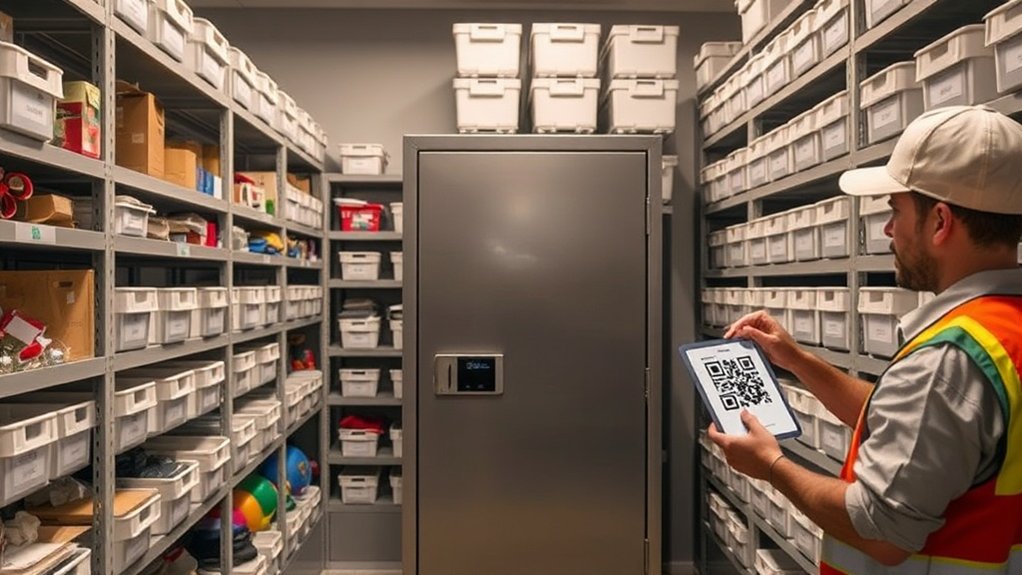
As you focus on growing your seasonal business, it’s crucial to ensure inventory security and accessibility to protect your assets and keep operations running smoothly.
Start by installing high-definition security cameras to deter theft and provide evidence if needed. Use RFID tagging for quick tracking of items, making it easier to identify anything that goes missing.
Implement access control measures, such as PIN codes or biometric scanners, to restrict inventory access to authorised personnel only.
Training staff on security protocols is vital; it reinforces the importance of safeguarding your assets. Conduct regular audits to catch discrepancies early, and consider hiring professional security patrols during peak seasons to enhance safety.
Best Practices for Cleaning and Packing
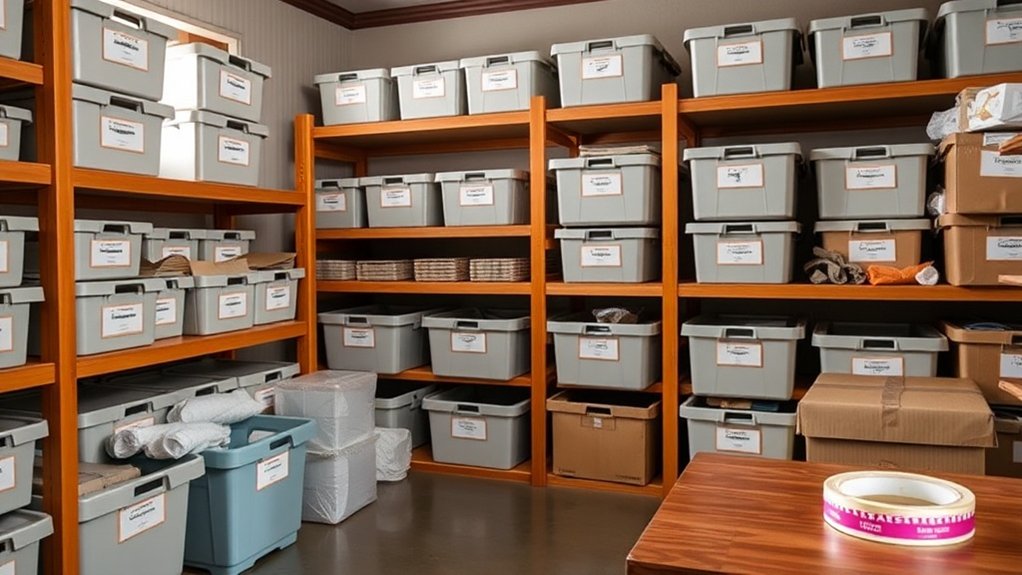
Cleaning and packing your seasonal business inventory requires a strategic approach to ensure efficiency and maintain product integrity. Here are some best practices to follow:
- Create a customised cleaning checklist that focuses on high-traffic areas and seasonal requirements, employing suitable cleaning methods.
- Use sturdy packing materials, such as plastic boxes with lids, to protect your stock from dust and moisture.
- Label all containers clearly with their contents and the relevant season for quick identification.
- Carry out regular audits to remove outdated items before packing, ensuring you only store what you truly need.
Organizing Inventory for Easy Access

To ensure quick access to seasonal inventory, place fast-moving items in easily reachable spots.
Design clear pathways to reduce obstacles, promoting efficient movement when picking items.
A straightforward labeling system will help you swiftly identify and locate products, significantly improving your operations.
Prioritize Fast-Moving Items
Prioritising fast-moving items is crucial for optimising inventory management and ensuring quick access during busy periods. By concentrating on inventory turnover and demand forecasting, you can streamline your operations.
Here are some effective strategies:
- Analyse sales data to pinpoint top-selling SKUs for quick restocking.
- Position high-demand items near packing stations to reduce picking time.
- Use real-time tracking systems to monitor stock levels and receive alerts for replenishment.
- Rotate stock regularly based on seasonal trends to keep your inventory organised.
Clear Pathway Design
Effective pathway design is crucial for managing inventory and ensuring easy access during busy periods.
Start by creating fixed aisles between racks to allow for smooth movement of staff and equipment. Where possible, implement one-way traffic flows to reduce collisions and bottlenecks, ensuring aisles are wide enough for forklifts and trolleys.
Use floor markings and signage to clearly define pathways and direct movement, which is key for efficient operations. Regularly maintain pathways by inspecting and clearing debris or misplaced items to avoid blockages.
Additionally, organise your inventory based on seasonality and access frequency, placing seasonal items near shipping areas for quick restocking. This proactive strategy boosts operational efficiency and promotes a seamless workflow.
Logical Labeling System
A well-organised logical labelling system is crucial for managing inventory and ensuring easy access, particularly during busy periods.
Implementing an effective system can enhance consistency in labelling and improve inventory visibility. Here are four key strategies to consider:
- Unique Identifiers: Use distinctive codes such as SKUs and barcodes for efficient tracking.
- Location-Based Labels: Clearly label storage areas with precise location details, using colour codes for quick identification.
- Standardised Content: Ensure labels contain essential information—product name, SKU, and handling instructions—in a consistent format.
- Technology Integration: Employ RFID and mobile scanning devices for real-time updates and accurate inventory management.
Utilizing Climate-Controlled Storage Solutions

When storing seasonal stock, using climate-controlled storage is essential for preserving product quality. These facilities manage temperature and humidity, protecting sensitive items from mould, warping, and spoilage. By implementing these sustainable practices, you diversify your inventory while reducing risks linked to extreme weather.
| Benefits | Security Features |
|---|---|
| Prevents spoilage | Gated access with CCTV |
| Reduces pest issues | Individual alarms available |
| Preserves delicate items | Well-lit premises |
| Enhances overall value | Professional management |
While climate-controlled storage may seem more expensive, the long-term savings from minimised damage and better inventory retention make it a smart investment. This approach ensures you’re prepared for any seasonal demands.
Implementing Regular Inventory Audits

Implementing regular inventory audits is crucial for ensuring accuracy and efficiency in your seasonal business operations. Here are some straightforward strategies to help you:
- Set an audit schedule: Decide whether to conduct audits monthly, quarterly, or annually, based on your busiest and quieter periods.
- Organise your inventory: Divide stock into manageable sections to make the auditing process easier and less daunting.
- Leverage technology: Use barcode scanners and inventory management software for real-time updates and improved accuracy.
- Perform variance analysis: Regularly compare physical counts with your records. Investigate any discrepancies to uncover their causes and refine your processes.
These steps can significantly enhance your inventory management and help maintain a smooth operation.
Frequently Asked Questions
How Can I Determine the Optimal Storage Location for My Inventory?
To find the best storage location for your inventory, consider accessibility and the amount of space you need. Opt for a site that allows easy access for regular inventory retrieval, which can help reduce transportation costs. For instance, if you often restock popular items, a location closer to your dispatch area can boost efficiency, especially during busy periods.
What Types of Inventory Require Climate-Controlled Storage?
Perishable goods and electronics require climate-controlled storage to avoid spoilage and malfunctions. Keeping temperatures and humidity levels stable ensures your inventory stays in top condition, ready for use when needed. For example, food items like fresh produce or dairy products can spoil quickly without the right environment, while sensitive electronics can suffer damage from excessive heat or moisture.
How Often Should I Conduct Inventory Audits?
Conduct inventory audits based on product value and turnover. For high-value items, carry out monthly audits; for mid-range products, opt for quarterly checks; and for seasonal stock, schedule bi-annual audits. This approach helps ensure accuracy and reduces discrepancies. For example, if you sell luxury watches, a monthly audit is crucial, whereas a quarterly check may suffice for clothing. Keep it straightforward to maintain effective stock management.
What Are the Best Packing Materials for Fragile Items?
When packing fragile items, bubble wrap is your best ally, offering vital protection. Pair it with packing peanuts for added cushioning, ensuring your valuables remain safe and secure, regardless of the journey ahead.
How Do I Assess the Condition of Stored Inventory?
To assess your stored inventory, use effective inspection techniques. Check for damage, such as moisture, pests, or spoilage. Regularly review packaging, labels, and environmental conditions to ensure your products remain in good condition and last longer. For example, if you store food items, look out for signs of mould or leakage. Keeping a close eye on these factors can save you from costly losses.
Conclusion
It’s ironic that despite all the effort you put into preparing and storing your seasonal inventory, the real challenge often lies in the passage of time. You carefully organise and protect your products, only to see them collect dust until the next season. Effective inventory management ensures your hard work doesn’t go to waste, helping your business thrive even when the seasonal rush feels far away. For example, keeping track of stock levels and setting reminders for restocking can make a significant difference in maintaining efficiency.