
Long-Term Protection for Seasonal Recreational Vehicles
For long-term protection of your seasonal recreational vehicle, start with regular washing and waxing to combat UV damage. Use high-quality RV covers suitable for the UK climate, ensuring they fit properly. Protect windows and tyres with reflective materials to minimise heat and UV exposure. Remember to carry out regular inspections of seals and caulking, and implement rust prevention measures. By staying proactive with these steps, you can significantly enhance your RV’s longevity and performance. There’s plenty more you can do!
Key Takeaways
- Regularly wash and wax your motorhome with products designed for RVs to shield it from UV damage and keep it looking good.
- Invest in quality motorhome covers suited to your local climate to protect against the elements and reduce wear and tear.
- Carry out inspections of seals and caulking twice a year to prevent leaks and improve energy efficiency, addressing any issues without delay.
- Use moisture control solutions like desiccant pouches and DampRid to avoid mould and rust during long-term storage.
- Consider security measures such as tamper-proof locks and wheel clamps to deter theft and keep your motorhome safe when parked.
Exterior Washing and Waxing
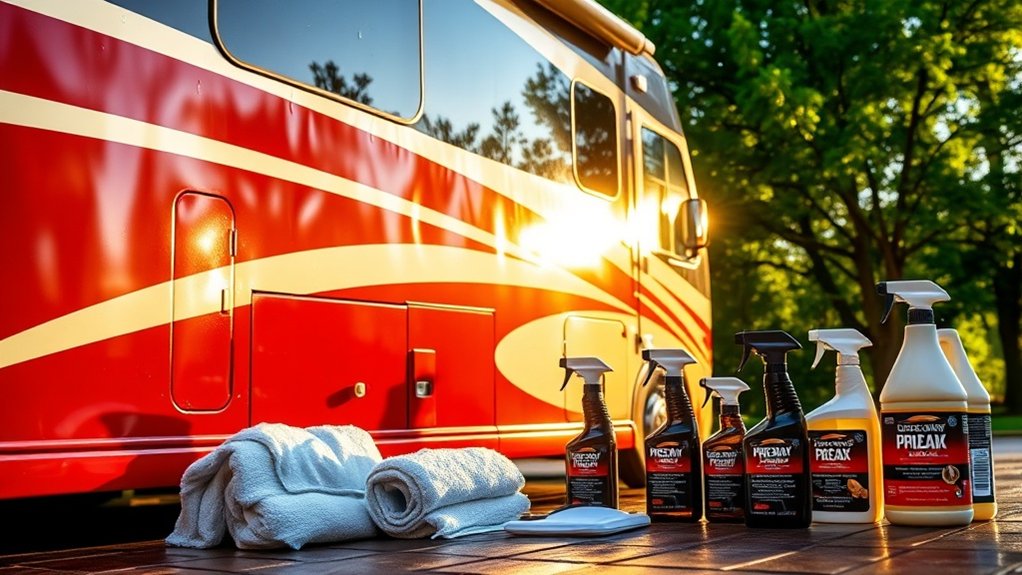
To keep your RV’s exterior in top shape, regular washing and waxing are crucial. Start by rinsing off loose dirt to prevent scratches during the wash. How often you wash depends on your travels; if you’ve parked under trees or encountered heavy dirt, a thorough rinse is advisable. Use cleaning products specifically designed for vehicles, steering clear of abrasive ones that could damage the finish. Remember to use RV-specific cleaning solutions to maintain exterior integrity.
The two-bucket method is effective for washing, as it reduces dirt transfer—always wash from top to bottom. Once cleaned, applying wax or a ceramic coating will help repel dirt and protect against UV damage. With consistent care, your RV will remain looking its best and be ready for your next adventure!
Utilizing RV Covers for Protection
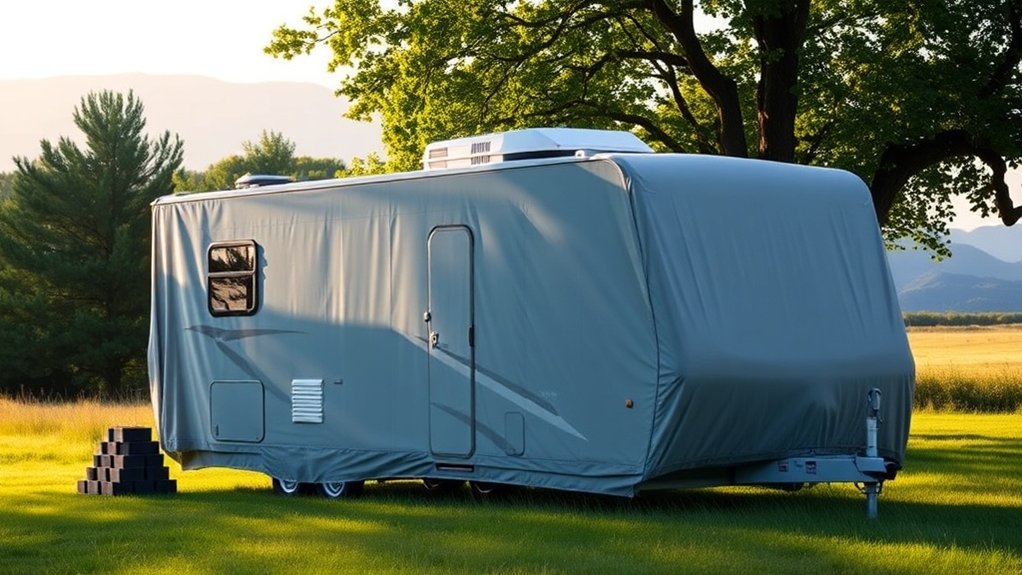
To ensure your RV remains protected from the elements, using a high-quality cover is vital. Begin by selecting cover materials suited to your climate and budget. Polypropylene offers basic protection, whereas multi-layered options provide enhanced durability against rain and UV rays. Multi-layered materials are typically the most expensive but offer maximum protection against various climatic conditions.
Look for covers featuring weighted buckle systems for easy installation and air vents to prevent mildew build-up.
Accurate measurements are crucial for a snug fit, but avoid making it too tight—allow some flexibility for attachments. Breathable fabrics improve moisture control, while UV protection helps maintain your RV’s appearance.
Investing in a quality cover not only preserves your vehicle but also offers peace of mind, enabling you to enjoy your adventures with confidence.
Window and Tire Shielding Techniques
When protecting your caravan from the elements, proper window and tyre shielding techniques are crucial for its longevity and performance.
Use bubble wrap insulation for your windows; simply dampen it and press it against the glass to create an insulating layer that minimises heat transfer. For extra protection, consider reflective foil, which bounces solar heat away and keeps your caravan cool. You can easily fit this foil inside windows with insulation tape or craft DIY thermal covers for larger areas. Insulation helps maintain comfort and prevents mold and mildew, making it an essential consideration for your caravan’s upkeep.
Don’t overlook your tyres! Use reflective tyre covers to protect them from UV damage and help maintain their condition.
Ensure they’re clean and dry before applying the covers, and inflate them to the recommended pressure to avoid flat spots during storage.
Seal and Caulking Inspection
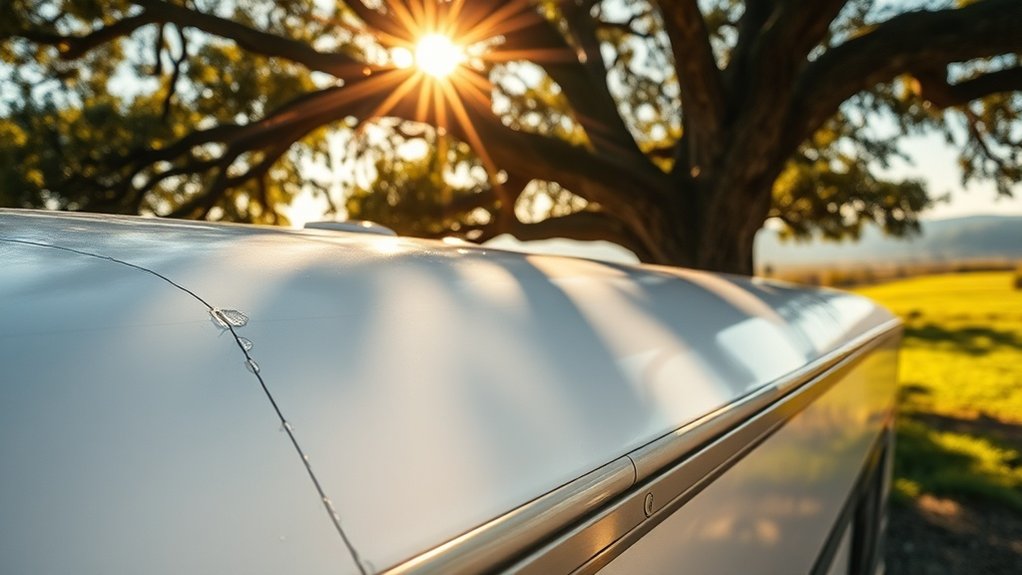
Regularly checking your RV’s sealants is vital for preventing leaks and avoiding costly repairs.
Pay attention to the types of sealants used, as some offer better durability and weather resistance than others.
Importance of Regular Inspection
When it comes to maintaining your recreational vehicle (RV), the importance of regular seal and caulking inspections can’t be emphasised enough.
These checks not only protect your investment but also enhance your enjoyment on the road. Here are three key reasons to make them a priority:
- Prevent Water Damage: Regular inspections can identify issues early, helping you avoid costly repairs and protect your RV’s structure from leaks.
- Maintain Energy Efficiency: Keeping your sealants intact ensures your interior remains comfortable, reducing drafts and energy loss, which can save you money in the long run.
- Identify Deterioration Early: Aim for inspections at least twice a year to spot cracks and voids early, ensuring your RV lasts longer and stays in good condition.
Types of Sealants Used
Understanding the types of sealants used in your caravan is crucial for its longevity and performance.
For example, Sikaflex 715 is excellent for EPDM roofs, while Alpha Systems 1021 is specifically designed for TPO materials.
When sealing sidewalls, ProFlex RV sealant offers a clear, sticky finish that resists yellowing.
Don’t forget to consider Dicor 551, which is perfect for roofing corner joints, and Sikaflex 221, a non-sag polyurethane ideal for vertical surfaces.
Just ensure that surfaces are properly cleaned before application.
Different techniques apply; self-levelling sealants like Dicor flow into seams, whereas non-self-levelling options remain in place on vertical surfaces.
Choosing the right sealant ensures your caravan is ready for any adventure, come rain or shine.
Rust Prevention Strategies
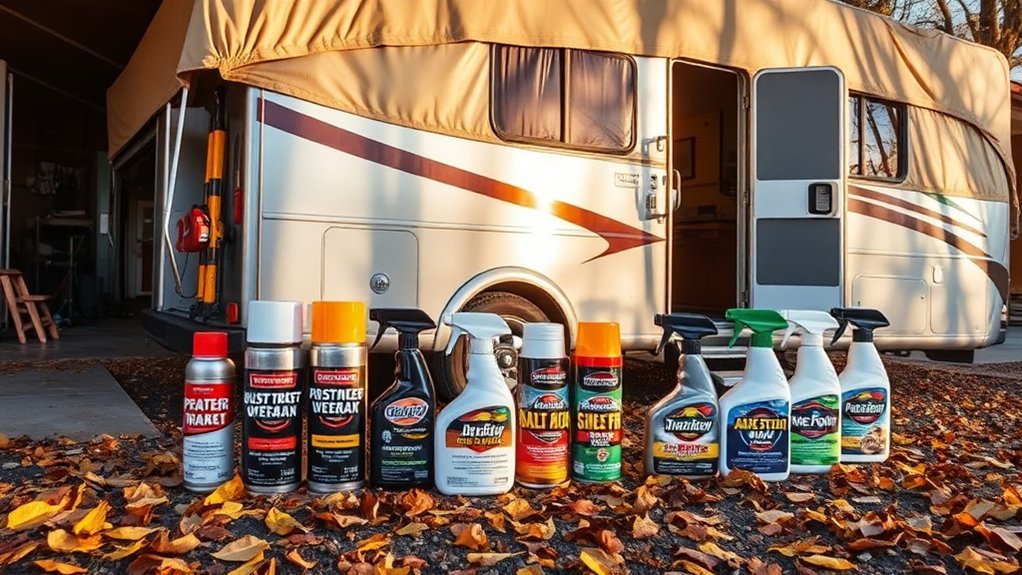
To keep your recreational vehicle free from rust, begin by applying a rust-inhibitor coating to all exposed metal surfaces.
Regular maintenance of the underbody is essential; ensure you clean and inspect those tricky spots where moisture and dirt can build up.
Rust-Inhibitor Coating Application
Applying rust-inhibitor coatings is crucial for safeguarding your caravan from moisture and corrosion damage.
By using effective rust prevention methods and proper coating techniques, you can prolong the life of your vehicle and enjoy your travels worry-free.
Here are three key steps to consider:
- Surface Preparation: Remove any rust and clean surfaces thoroughly before applying coatings.
- Product Selection: Choose from wax-based, rust converter, or cavity wax treatments based on your caravan’s specific requirements.
- Application Method: Use rustproofing kits for an even finish, and consider applying multiple coats for optimal protection, starting with rust converters if needed.
With these strategies, you’ll keep your caravan in top condition and ready for your next adventure!
Underbody Maintenance Practices
Maintaining your RV’s underbody is crucial for preventing rust and ensuring it lasts for years.
Begin with regular cleaning to remove dirt and salt that can trap moisture and lead to corrosion. After washing, check for rust and address any early signs of damage.
Apply protective grease or oil to create a barrier against moisture, remembering to reapply it regularly. If you find existing rust, sand or brush it off, use a rust converter, and then prime the area before applying undercoating.
When storing your RV in the off-season, cover it with a breathable tarp and keep it in a dry place.
Interior Cleaning and Pest Prevention
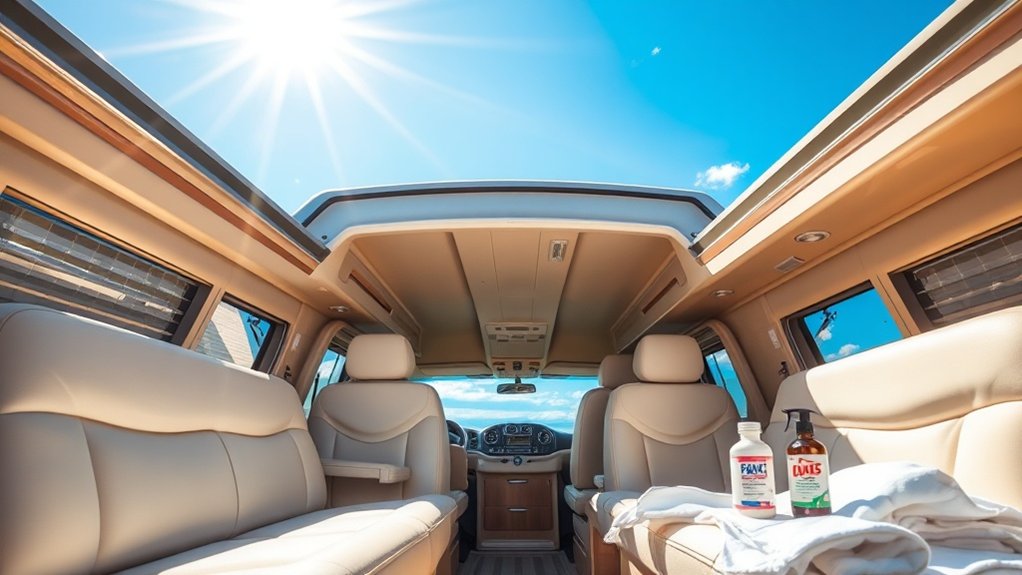
When you’re out on the open road in your motorhome, keeping the interior clean and free from pests is essential for a pleasant journey.
Good interior upkeep goes beyond just looks; it helps stop pests from settling in. Here are three straightforward steps to follow:
- Thorough Clean: Take out all movable items and clean surfaces with non-abrasive, ammonia-free products to safeguard your motorhome’s interior.
- Vent Upkeep: Regularly inspect and clean vent filters to ensure proper airflow and minimise pest hiding spots.
- Pest Prevention: Keep things tidy and vacuum often; seal any gaps around seams, windows, and doors to deter pests.
Moisture Control Solutions
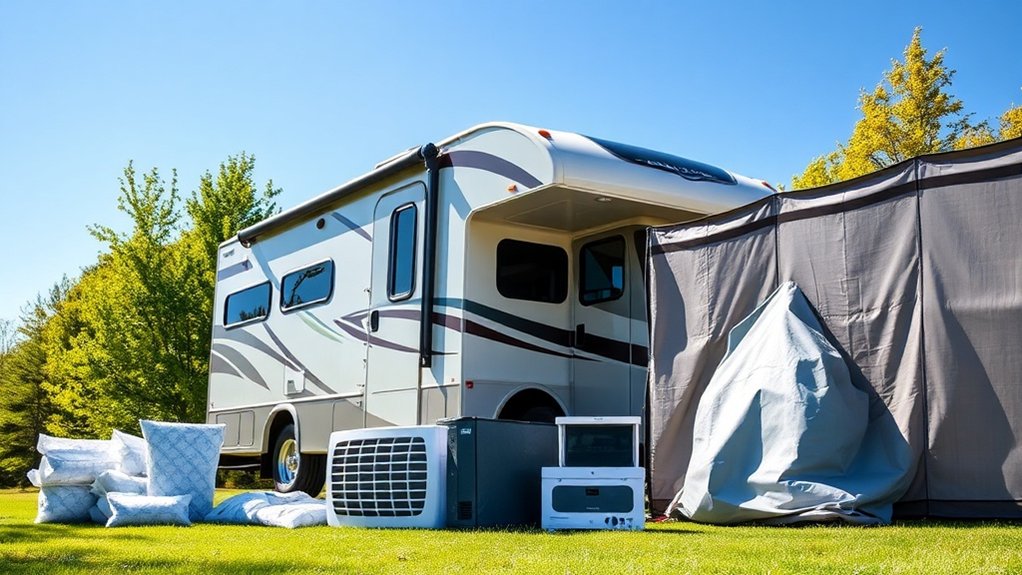
To prevent moisture build-up in your RV, using moisture absorbers in enclosed areas is a wise choice. These effective products capture excess humidity, safeguarding your belongings from mould and decay. Remember to encourage airflow regularly by opening vents during cooking or showering to maintain a balanced environment. Additionally, consider incorporating climate-controlled environments to further protect your RV from extreme weather conditions that can contribute to moisture-related issues.
Use Moisture Absorbers
Using moisture absorbers is a clever way to keep your caravan dry and free from mould, particularly during off-season storage.
These methods are effective and straightforward. Here are some options to consider:
- Desiccant Pouches: These pouches capture moisture and can last over 90 days, helping to prevent mould and rust.
- DampRid: This is a disposable, non-electric dehumidifier that can work for up to 45 days, making it an easy option for your caravan.
- Activated Charcoal: Not only does it absorb moisture, but it also eliminates unpleasant odours from cooking and rubbish. Additionally, using moisture control solutions can enhance the effectiveness of enclosed storage by protecting valuable vehicles from environmental damage.
Promote Airflow Regularly
Promoting airflow regularly in your caravan is crucial for preventing moisture build-up and ensuring a healthy living space. Here are some effective ventilation tips:
- Open Windows: Slightly open windows to allow humid air to escape, particularly during breezy weather.
- Roof Vent Fans: Invest in roof vent fans that efficiently remove warm, damp air in exhaust mode.
- Portable Fans: Use portable fans to circulate air, helping to eliminate stagnant areas behind furniture.
- Rain Guards: Consider fitting rain guards, which enable safe ventilation even during wet weather.
- Cross Ventilation: For a refreshing breeze, open windows on opposite sides of the vehicle to maximise cross ventilation.
- Keep Vents Clear: Ensure vents and fans are unobstructed for optimal performance.
- Shock Ventilation: Occasionally practise “shock ventilation” by opening all windows for a short time to quickly balance humidity levels.
Winterizing Plumbing and Water Systems
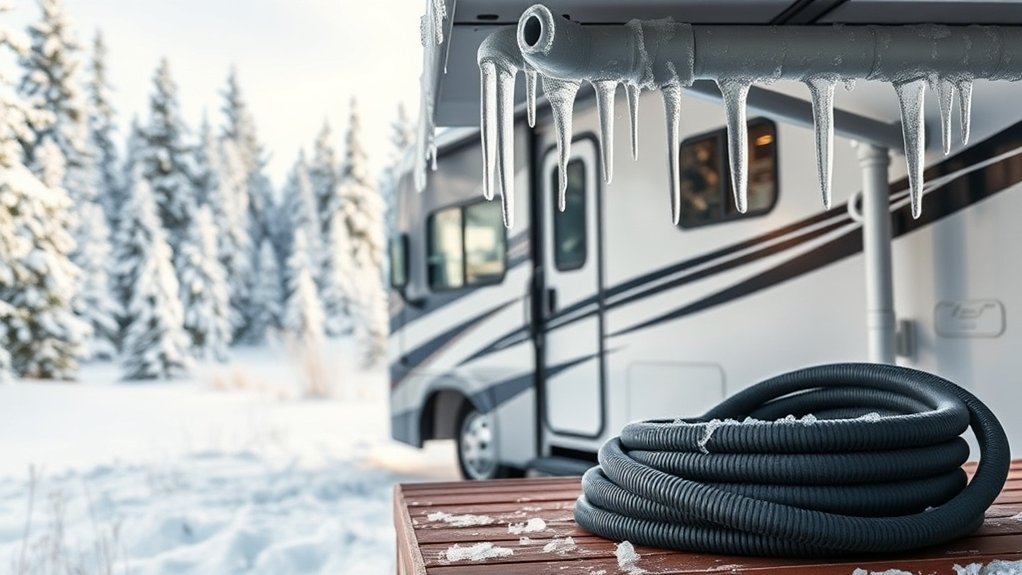
Winterising your campervan’s plumbing and water systems is crucial to avoid expensive repairs during the colder months.
To ensure your plumbing is properly maintained, follow these steps:
- Drain all water: Empty as much water as you can from pipes, tanks, and appliances. Open taps and low-point drains to allow everything to flow out.
- Add antifreeze: Use non-toxic RV antifreeze, and circulate it through all lines until you see pink fluid at every tap. This stops any remaining water from freezing.
- Use an air compressor: Blow out any leftover water using low pressure to prevent damage. Remember to open all drains and taps during this process.
Tire Maintenance and Protection
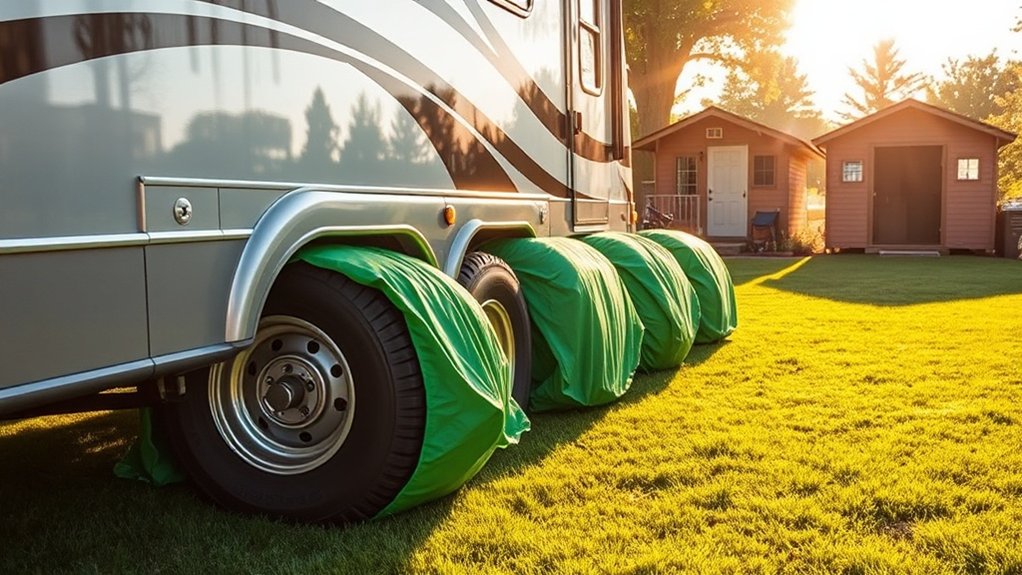
Maintaining your RV’s tyres is vital for safe journeys and optimal performance.
Start by checking tyre pressure regularly, following the manufacturer’s specifications usually found on the driver’s door jamb. Always measure the pressure when the tyres are cold for accurate results.
Inspect tread depth weekly and replace tyres before they reach the wear indicators to ensure safe driving.
Rotate your tyres every 6,000 to 8,000 miles to promote even wear and extend their lifespan.
Clean them with mild soap to prevent degradation, and consider using UV-rated tyre covers during storage.
Battery Care and Electrical System Maintenance
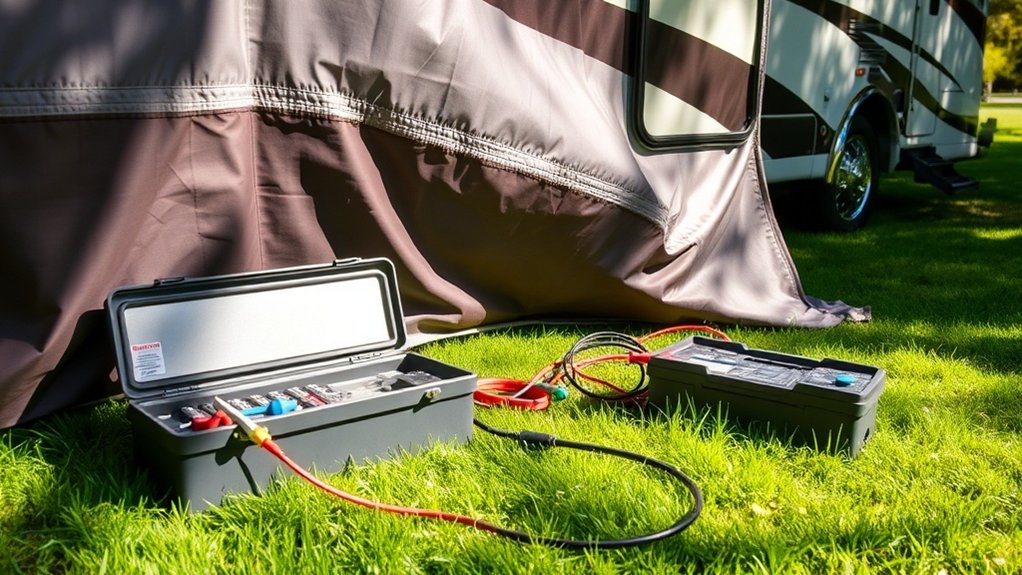
While you’re checking your RV’s tyres, don’t forget about battery care and electrical system maintenance.
Different battery types need specific upkeep to keep your adventures powered. Here are three key tips:
- Regular Inspection: Check the terminals for corrosion and ensure connections are secure each month to keep everything running smoothly.
- Charging Protocols: Use a suitable 3-stage charger for your battery type. This prevents overcharging or discharging beyond safe limits.
- Fluid Levels: If you have lead-acid batteries, regularly check and top up the electrolyte levels with distilled water to ensure safety during maintenance.
Enhancing Security Measures
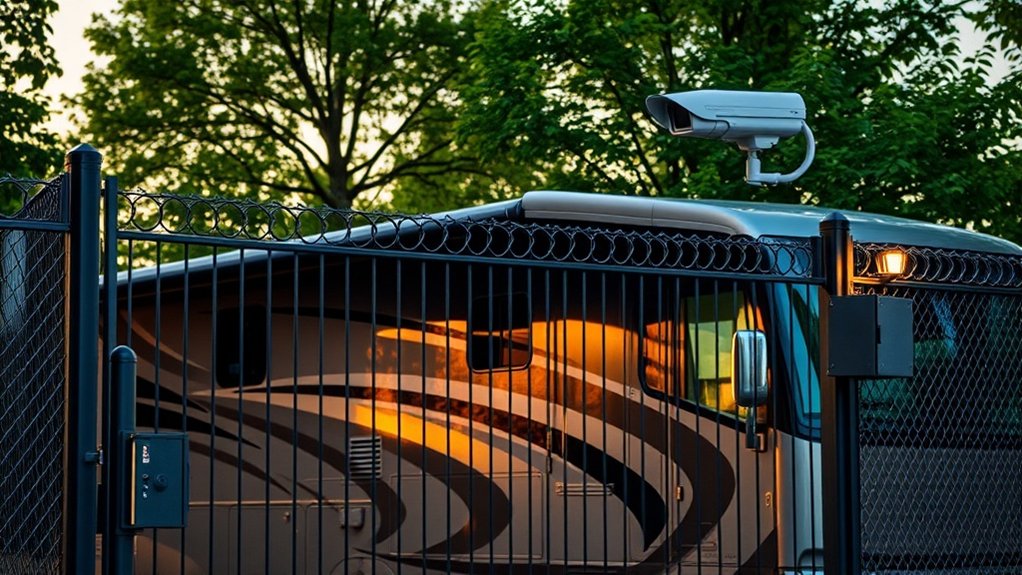
As you prepare your motorhome for long-term storage, it’s crucial to enhance security measures to safeguard your investment from theft and damage.
Begin by installing sturdy fencing to establish physical barriers, and use tamper-proof locks on doors and compartments. Heavy-duty wheel clamps and hitch locks are also effective for preventing theft.
Incorporate security technology, such as 24/7 CCTV cameras and motion sensor lights, to deter potential intruders.
Consider an alarm system that sends instant alerts to your smartphone for added peace of mind.
Opting for a secure parking facility with restricted access further boosts your motorhome’s safety. Additionally, implementing advanced security measures such as encryption and access controls can further protect your vehicle from unauthorized access.
Conducting Regular Inspections
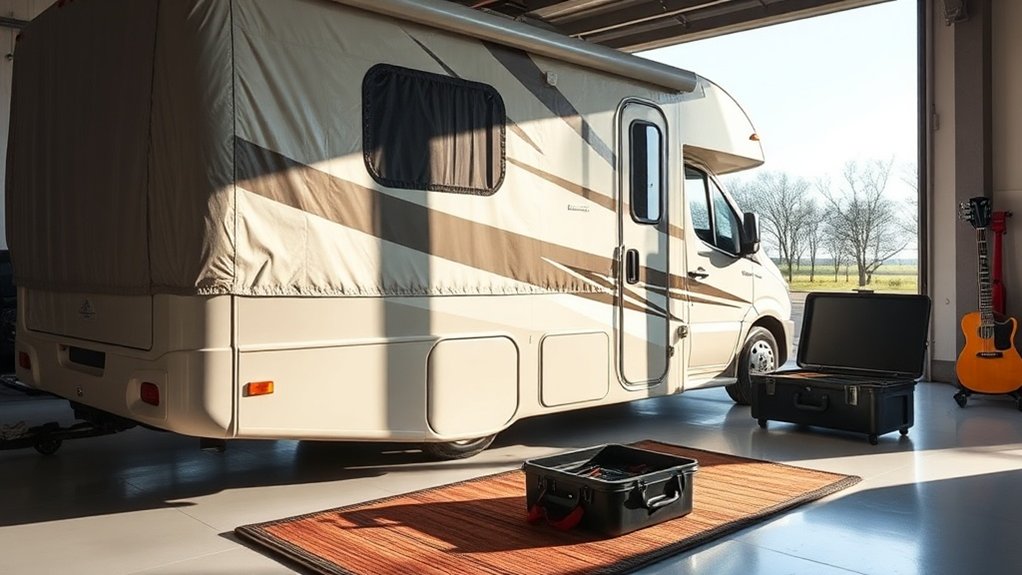
With your motorhome securely protected, the next step is to conduct regular inspections to ensure everything remains in top condition during long-term storage.
Creating an inspection checklist will help you stay organised and ensure nothing is overlooked. Aim for a monthly inspection frequency, focusing on these key areas:
- Exterior: Check the roof, seals, and lights for any damage or wear.
- Tyres and Suspension: Verify tyre pressure, tread depth, and lubricate suspension components.
- Interior Systems: Inspect for leaks, test appliances, and ensure safety detectors are functioning properly.
Frequently Asked Questions
How Often Should I Inspect My RV During Long-Term Storage?
You should inspect your RV at least once a month during long-term storage. Use a comprehensive checklist to ensure proper maintenance, checking the batteries, seals, and systems to prevent deterioration. This helps you avoid issues and ensures carefree trips in the future.
What Are the Best Practices for Storing RV Appliances?
It’s surprising how a bit of preparation can prolong the life of your appliances. For proper maintenance, ensure you clean them thoroughly, defrost where necessary, and drain any water. Additionally, using moisture absorbers can help keep everything in good condition for your next trip.
Can I Store My RV Outside Year-Round?
You can store your RV outside all year round, but it requires regular upkeep. To protect it from the elements, use a cover, check seals for leaks, and keep an eye out for pests. This way, you can enjoy your adventures without the worry of damage.
What Insurance Coverage Do I Need for Long-Term RV Storage?
You need comprehensive coverage to protect against theft and damage, along with liability insurance for any injuries or property damage that may occur. This combination ensures your RV is safe and secure, so you can relax and enjoy your travels without concern. For instance, if a tree branch falls on your RV while in storage, proper coverage will help cover the repair costs.
How Do I Keep My RV Smelling Fresh During Storage?
To keep your RV smelling fresh during storage, use odour eliminators and manage moisture effectively. Ensure you ventilate regularly, clean thoroughly, and place natural absorbers like baking soda to prevent musty smells while maintaining that adventurous spirit.
Conclusion
Protecting your seasonal recreational vehicle is essential for keeping it in excellent condition for years. While maintenance tasks may seem time-consuming, they actually save you money in the long run by avoiding expensive repairs. Regularly washing, waxing, and inspecting your RV ensures that you can enjoy stress-free adventures when the season begins. Don’t delay—start these simple strategies now to keep your RV primed for all your future trips!