Storage units are built with robust materials and cutting-edge technology to withstand extreme weather conditions. High R-value insulation and climate control systems ensure stable temperatures and humidity levels, safeguarding your belongings. Insulated doors and waterproofing provide extra protection against moisture and temperature changes. Features like sloped roofs and reinforced frames offer resilience against heavy snowfall and strong winds. Regular maintenance of HVAC systems keeps them running efficiently, ensuring a suitable environment inside. With these smart designs, your valuables remain secure, no matter the weather. There’s a lot more to discover about these essential protective measures.
Key Takeaways
- Climate-resistant materials and reinforced frames ensure storage units can handle heavy snowfall, strong winds, and rain without suffering structural damage.
- Insulated sectional doors and waterproofing prevent moisture from entering and help maintain stable internal temperatures.
- Sloped roofs enable effective water runoff, reducing the risk of water pooling and subsequent damage.
- Elevating structures and employing flood-resistant materials offer extra protection against environmental hazards.
- Regular maintenance and inspections are essential for identifying weaknesses and ensuring storage units remain robust during extreme weather.
Climate-Controlled Storage Unit Design
When designing climate-controlled storage units, it’s essential to prioritise insulation and ceiling height to ensure stable environmental conditions. Using high R-value materials for insulation helps retain desired temperatures and reduces energy consumption. Increasing ceiling height enhances air circulation, which is vital for maintaining a consistent climate within the unit. Additionally, implementing climate control features enhances facility appeal and profitability through consumer demand. Your construction design should minimise thermal bridging to improve temperature control and energy efficiency. Climate-controlled units are particularly beneficial for storing sensitive items that require specific environmental conditions. Whether you choose a single-storey or multi-storey layout, remember that each floor will require different HVAC efficiency levels for balanced climate control. Incorporating a high-efficiency HVAC system is crucial for effectively regulating temperatures and managing humidity. Additionally, proper ventilation systems and dehumidifiers are key to maintaining ideal humidity levels, preventing mould and mildew. Regular monitoring and maintenance of your HVAC systems ensure they operate at peak performance, providing necessary protection for stored items.
Key Features for Extreme Weather
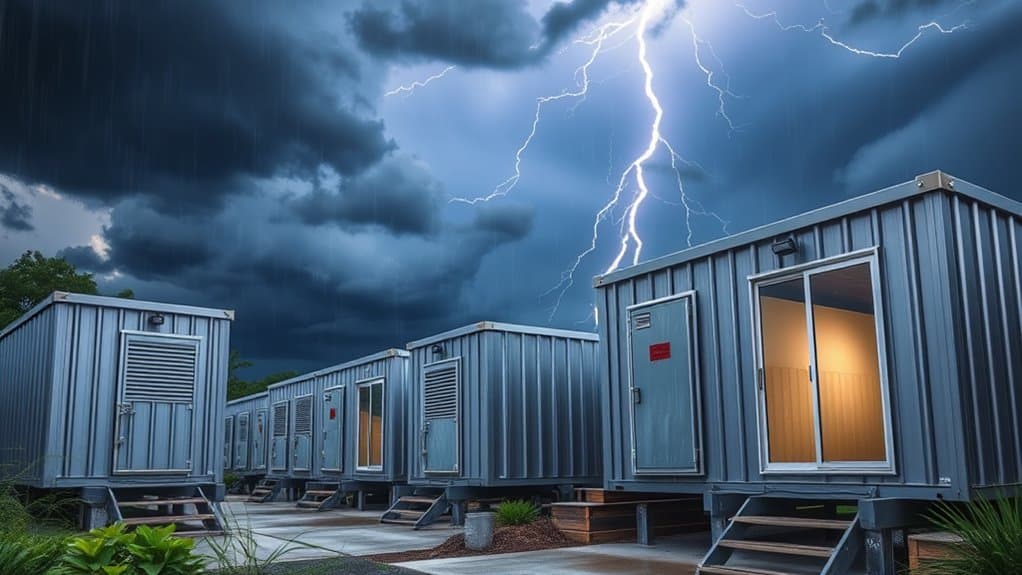
When choosing storage units for extreme weather, it’s important to look for covered loading areas and drive-up access. These features protect your belongings from the elements while loading and unloading, making the process more convenient. For instance, having a covered area means you won’t be drenched in rain or exposed to strong winds when moving items in and out. Easy access during bad weather can significantly enhance your storage experience. Additionally, incorporating energy-efficient materials in the construction can help maintain stable temperatures inside the units, protecting your items from extreme heat or cold. Furthermore, the integration of smart storage technologies can enhance security and convenience, ensuring that your items are not only well-protected from the weather but also easily accessible.
Covered Loading Areas
Covered loading areas are essential for protecting your belongings during severe weather. Their clever design ensures your items stay safe from extreme conditions, whether it’s sweltering heat or heavy rain. With an enclosed space, you can load or unload without worrying about your valuables getting wet or damaged.
These areas often feature climate control systems, including heating, ventilation, and air conditioning (HVAC), along with dehumidifiers. This technology keeps temperatures and humidity levels stable, which is crucial for sensitive items like electronics and antiques. Additionally, climate control is vital for preventing damage to wooden furniture and antiques from extreme temperature fluctuations. Many self-storage facilities offer variety of unit sizes to accommodate different storage needs, ensuring that you can find the right fit for your items.
Working in a climate-controlled environment makes a significant difference, especially when moving in bad weather. Additionally, insulated sectional doors with an R-19 rating help maintain optimal temperature conditions for your belongings.
Features like programmable thermostats and moisture-reducing ionisers further enhance safety and stability. Overall, covered loading areas prioritise the protection of your items while offering you peace of mind, allowing you to store and access your possessions without concern.
Drive-Up Exterior Access
Drive-up exterior access storage units provide a practical solution for those dealing with severe weather conditions. Constructed from robust materials, these units are designed to endure harsh elements, safeguarding your belongings effectively.
Their ground-level design reduces exposure to wind and rain, ensuring your items remain secure and dry all year round. Whether you’re facing extreme temperatures or high humidity, you can rely on these units to protect against environmental factors.
The convenience of drive-up access is unparalleled, with wide aisles and direct vehicle access allowing for easy loading and unloading of heavy items. This makes them ideal for both personal and business storage needs. You can retrieve your belongings whenever necessary, without the hassle of navigating indoor corridors.
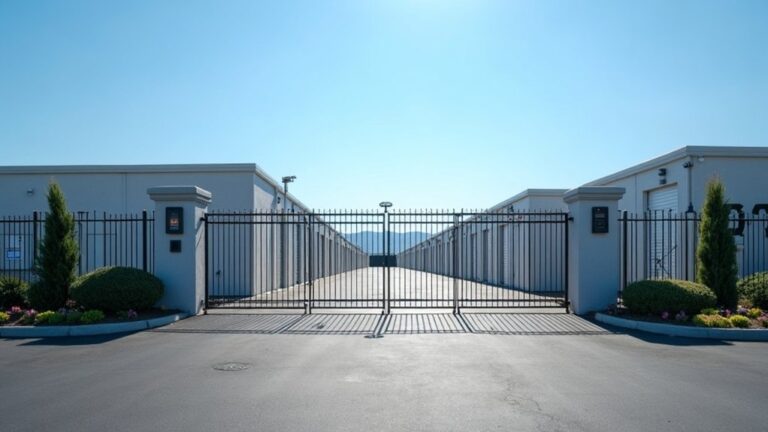
Security is a priority, featuring advanced measures like electronic gate access and video surveillance for your peace of mind.
With a variety of sizes available at competitive rates, these units can accommodate everything from furniture to vehicles, making them perfect for short-term storage during renovations or seasonal changes.
Embrace the practicality and resilience of drive-up exterior access units, tailored for your needs in challenging weather.
Benefits of Climate Control
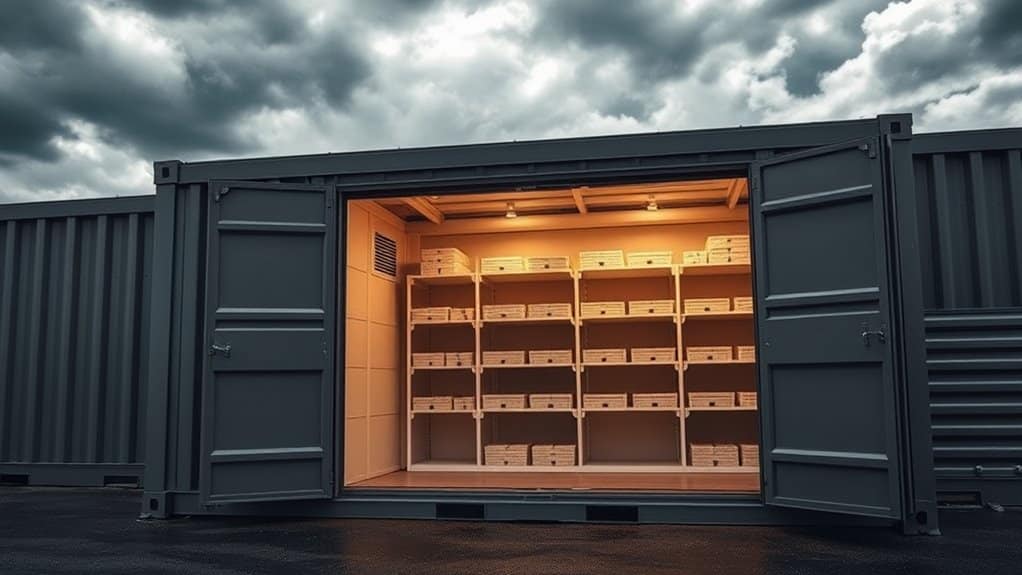
When you opt for climate-controlled storage, you’re ensuring that your belongings are kept at an ideal temperature, protecting them from extreme heat and cold.
This careful regulation, along with effective humidity control, helps to prevent damage from moisture, mould, and mildew.
By looking after your sensitive items, you’re investing in their durability and maintaining their value.
For example, furniture, electronics, and important documents all benefit from this type of storage, giving you peace of mind that they’re well-preserved.
Temperature Regulation Importance
Temperature regulation is crucial for maintaining the quality of your stored items, particularly in areas that experience extreme weather. By keeping temperatures stable, you can protect your belongings from damage and ensure they remain in good condition.
| Item Type | Temperature Sensitivity | Storage Solution Benefits |
|---|---|---|
| Electronics | Overheating can lead to malfunctions | Prevents damage and keeps them functional |
| Wooden Furniture | High heat can cause warping | Preserves shape and integrity |
| Leather/Plastic | Extreme temperatures can cause degradation | Enhances longevity and appearance |
Choosing climate-controlled storage units is a wise decision for various items, from electronics to important documents. These solutions create a stable environment, preventing deterioration and enhancing security. By storing your items in a regulated setting, you ensure their long-term preservation, giving you peace of mind.
With the right storage options, you can relax, knowing your valuable possessions are protected from the unpredictable nature of extreme weather.
Humidity Control Benefits
Effective humidity control is crucial for protecting your stored items, especially in areas prone to dampness. By using humidity monitoring systems, you can prevent moisture accumulation that leads to mould, mildew, and pest problems. Climate-controlled storage units maintain stable humidity levels, usually between 50% and 55%, ensuring your valuables remain in optimal condition.
This control is particularly important for certain items. For example, furniture benefits from moisture management, as high humidity can cause mould on leather and fabric, and lead to wood cracking.
Electronics are safeguarded from rust, while artwork and antiques are protected from deterioration and warping. Even musical instruments, which are sensitive to humidity, thrive in these controlled environments.
In regions with extreme temperature changes and high humidity, such as the Midlands and the North, it’s wise to choose facilities equipped with HVAC systems and dehumidifiers.
Regularly checking for leaks and using appropriate packaging can further enhance your protection efforts. By prioritising humidity control, you preserve your treasured belongings and gain peace of mind knowing they’re safe from the unpredictable elements of nature.
Construction Considerations
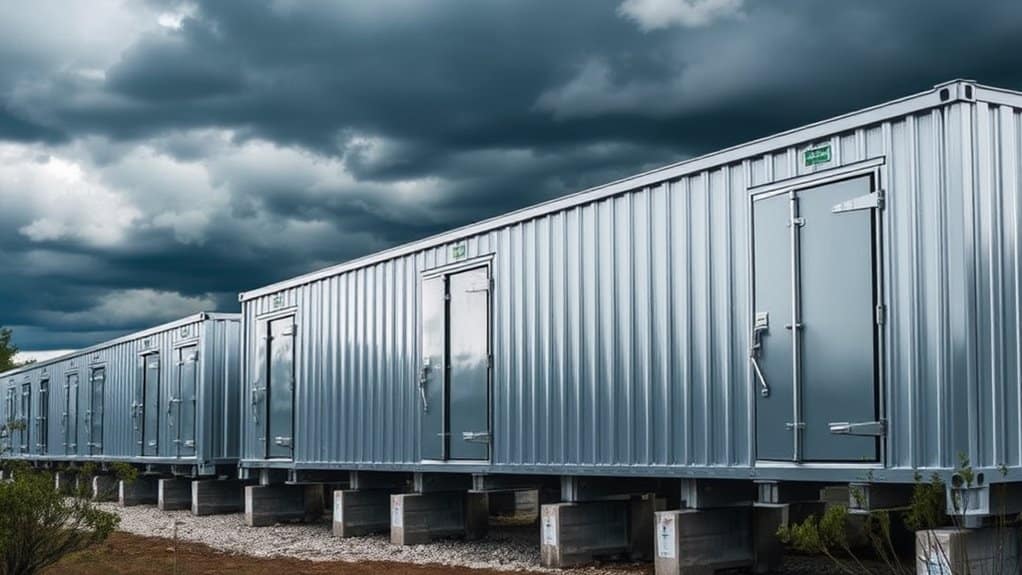
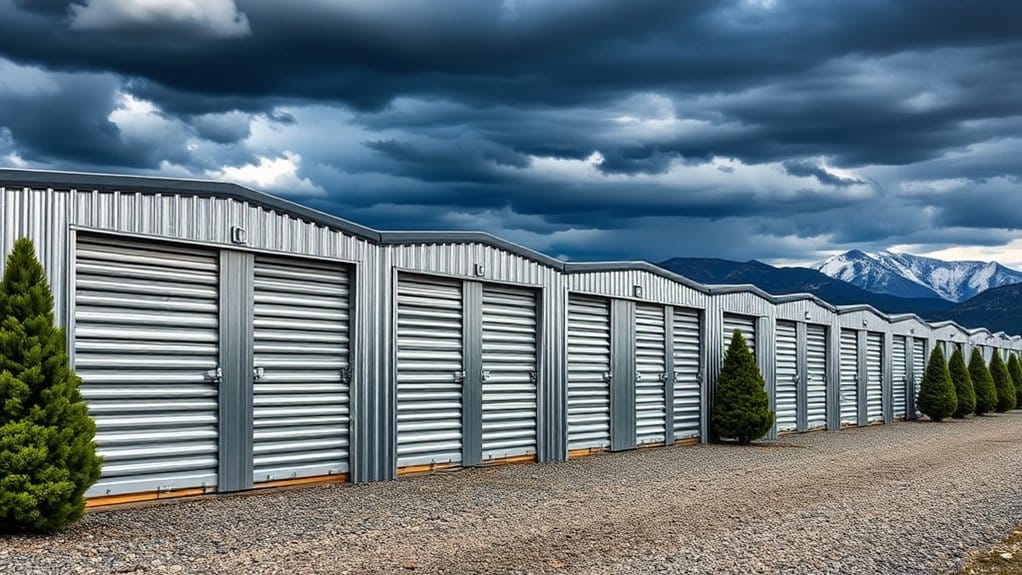
Building storage units that can withstand extreme weather demands careful planning and clever design. It’s vital to choose climate-resistant materials that can handle snow, rain, and wind. Using robust structures ensures your units endure long-term stress from harsh conditions.
Regular frames often aren’t strong enough for high winds or heavy snowfall, so opting for reinforced frames is essential. All-welded construction improves structural integrity, while powder-coated finishes protect outdoor units from the elements.
Insulation and waterproofing are also critical. Fully insulated walls and roofs help maintain temperature and prevent damage from outside weather. Weather-tight doors and windows keep water out, while rain guards divert moisture away.
Sloped roofs are designed to promote water runoff, minimising the risk of accumulation. Moreover, consider the layout. Both single-storey and multi-storey options have different air conditioning requirements, but both can be designed for effective climate control.
Elevating structures and using flood-resistant materials adds an extra layer of protection. Regular inspections and proactive maintenance are essential to ensure these units remain resilient against the elements, allowing you to store your belongings with confidence.
Technology and Systems
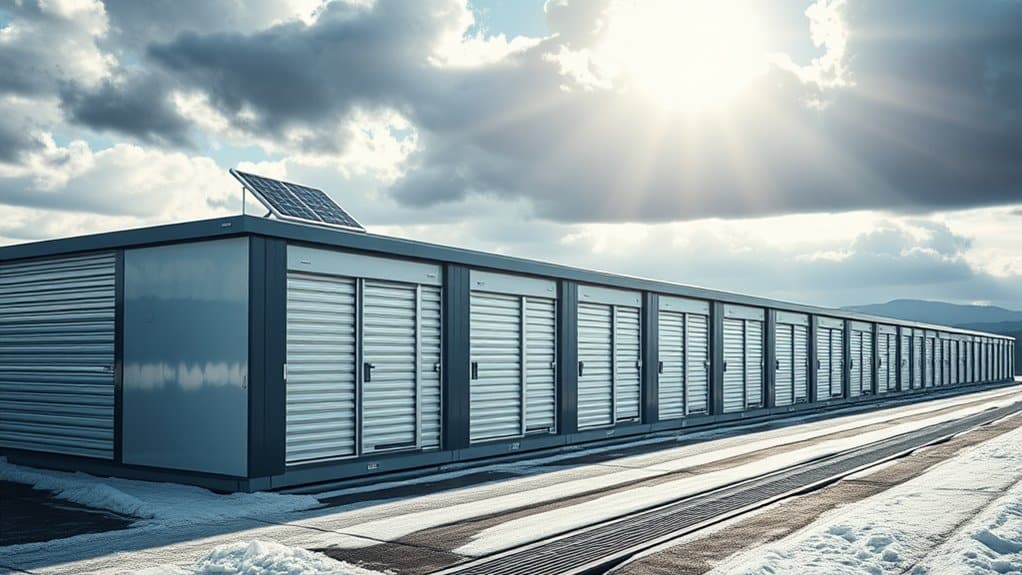
Innovation in technology and systems is crucial for ensuring storage units can endure extreme weather while effectively protecting your belongings.
Smart technology is key, employing advanced HVAC systems to maintain stable internal temperatures between 13°C and 29°C. This consistent climate helps preserve your items throughout seasonal fluctuations.
Humidity control is also vital. By keeping humidity levels around 55%, these systems prevent issues like warping, cracking, mildew, and mould, which can be particularly damaging to delicate items such as artwork and electronics.
Advanced security features further enhance the safety of storage units. High-tech surveillance and electronically coded access ensure that only authorised individuals can enter, while round-the-clock monitoring helps deter theft and vandalism.
Energy efficiency and sustainability are priorities too. Modern HVAC systems are designed to use less energy, thereby reducing your carbon footprint.
Protecting Stored Items
When storing your belongings, protecting them from extreme temperatures is crucial. Climate-controlled units offer stable temperature ranges, which are essential for safeguarding valuable items like electronics, vintage collectibles, and wooden furniture that can be damaged by heat and cold.
Moisture control is equally important. By keeping humidity levels low, these units help prevent mould, mildew, and issues like wood warping or metal corrosion. The sealed environments also reduce dust accumulation and deter pests, further protecting your items.
With advanced HVAC systems and insulation, these units provide ideal conditions for long-term storage, especially in areas with unpredictable weather.
When preparing your items, ensure containers are sealed tightly and consider waterproofing them for added protection against moisture. By opting for climate-controlled storage, you’re not just storing your belongings; you’re investing in their longevity.
Enjoy the peace of mind that comes with knowing your items are safe from the elements.
Frequently Asked Questions
How Do I Choose the Right Storage Unit for My Belongings?
When selecting a storage unit, think about the type that best suits your belongings. Consider factors such as climate control, accessibility, and size. For instance, if you have delicate items like antiques or electronics, a climate-controlled unit will help preserve them. Ensure the unit you choose meets your needs and fits your lifestyle.
Are Climate-Controlled Units More Expensive Than Regular Storage Units?
Yes, climate-controlled units are generally more expensive than standard storage units. You can expect to pay around 25-40% more for climate control, which helps protect your belongings from temperature and humidity changes. For example, if you’re storing items like wooden furniture or electronics, the extra cost can be worth it to prevent damage.
Can I Store Food Items in Climate-Controlled Units?
You can store food items in climate-controlled units, which are perfect for preserving your perishables. These units help maintain the right temperature and humidity, preventing spoilage. For example, if you have fresh fruit, vegetables, or even delicate cheeses, a climate-controlled space can keep them fresh for longer. It’s a reliable way to safeguard your food and ensure it stays safe to eat.
What Items Are Prohibited in Storage Units?
Be mindful of what you store in a storage unit. Prohibited items include hazardous materials like chemicals and batteries, perishables such as food and plants, and valuables like jewellery and cash. Adhering to these regulations ensures safety, prevents damage, and keeps you free from potential legal issues.
How Often Should I Check on My Stored Items?
You should regularly inspect your stored items, particularly during seasonal checks. This helps you spot any potential problems early, safeguarding your belongings and ensuring they remain in good condition for easy access whenever you need them. For instance, checking for dampness in winter can prevent mould from developing on your items.
Conclusion
In summary, choosing a storage unit designed for extreme weather is not just about protecting your belongings; it’s about ensuring your peace of mind. With climate control and sturdy construction, these units are built to last, keeping your items in excellent condition. It’s wise to prioritise safety—after all, it’s better to be safe than sorry. By opting for advanced technology and durable design, you can relax, knowing your valuables are shielded from the unpredictable elements.