
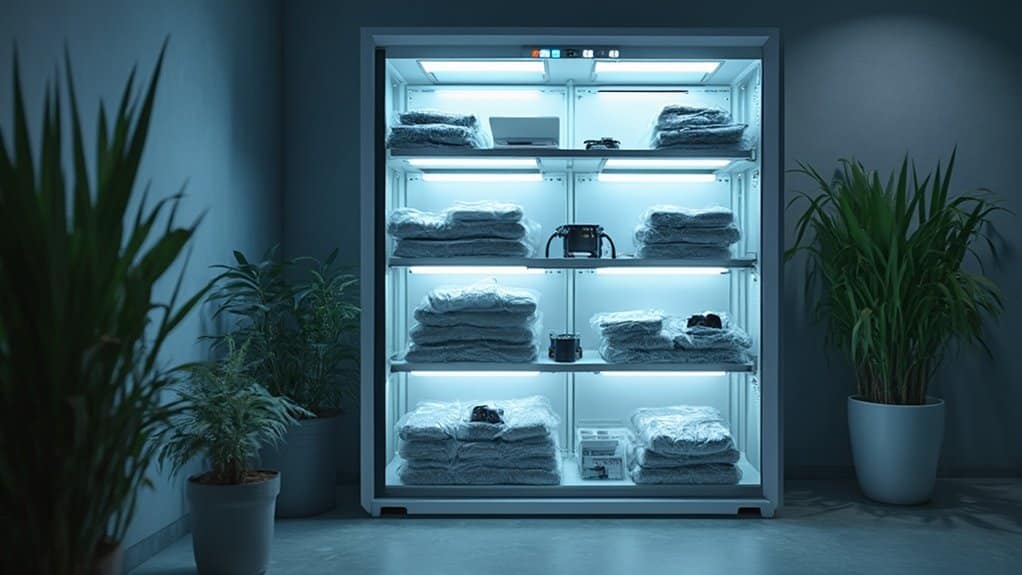
To store electronics safely in climate-controlled units, select a facility that maintains a temperature between 13-27°C and controls humidity levels. Use quality padding materials such as bubble wrap and foam to safeguard your devices. Place items on shelves to prevent water damage and keep them away from doors to reduce dust exposure. Regularly check your belongings for moisture and inspect them for any signs of damage. For further tips on optimising the storage process, explore best practices for preserving your electronics.
Key Takeaways
- Keep the temperature between 13-27°C and monitor humidity to protect your electronics from damage.
- Use quality packing materials like bubble wrap and foam to prevent physical harm.
- Store electronics on shelves, not the floor, to minimise the risk of water damage and allow for ventilation.
- Organise items by category and ensure there's space between boxes for better airflow and easy access.
- Regularly check on your stored electronics for moisture, dust, and overall condition to ensure they remain in good shape.
Climate-Controlled Storage Selection
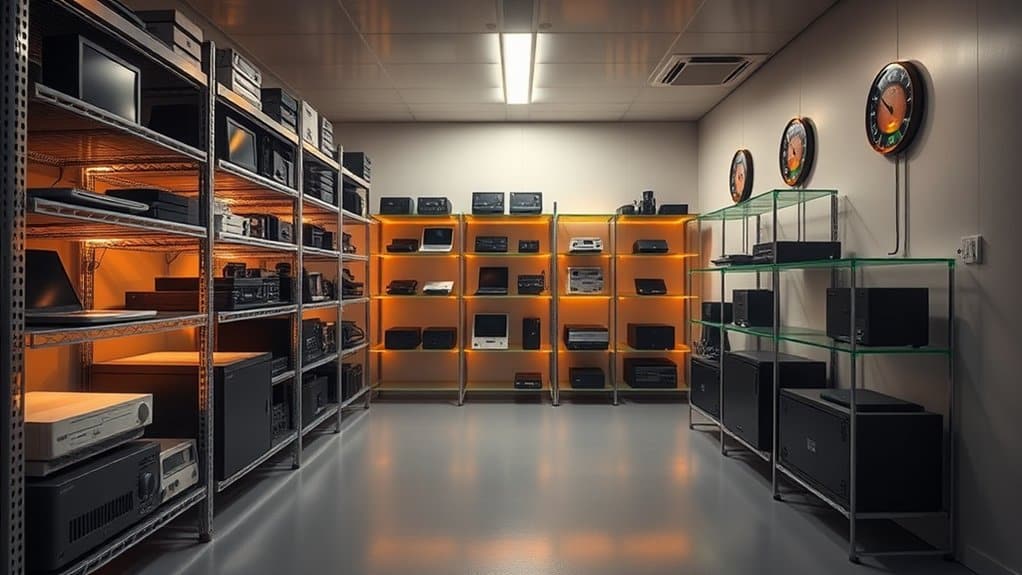
When storing electronics, selecting the right climate-controlled storage is crucial to protect your devices.
First, assess how sensitive your items are to temperature. Standard climate control typically keeps temperatures between 13 and 27 degrees Celsius, which is ideal for safeguarding against extremes. If you're in a humid area, opt for humidity-controlled storage to prevent mould and warping. Certain storage types, such as air-cooled or heated units, may be better suited to specific climates. Additionally, utilizing climate-controlled units helps prevent moisture-related issues like corrosion or mold. These units often use advanced HVAC systems to maintain optimal conditions.
Always check the security measures in place and ensure the location is easily accessible, so you can retrieve your devices without hassle.
The right facility should also offer flexible rental options in terms of cost and size, catering to your storage needs while keeping your electronics in top condition.
Padding and Protection Techniques
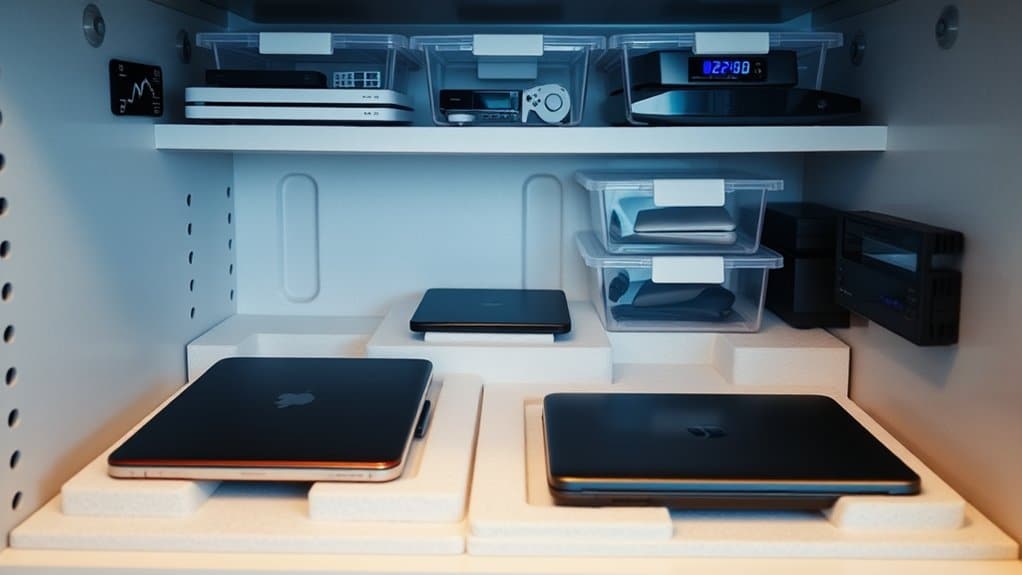
To protect your electronics during storage, it's essential to use proper padding and protection techniques.
Opt for high-quality packing materials such as bubble wrap and foam padding to absorb shocks. For screens, wrap them carefully in bubble wrap to prevent scratches. If you still have the original packaging, use it for the best fit and protection. Additionally, ensure that you avoid stacking heavy items on top of electronics, as this can lead to potential damage. Climate-controlled units are advantageous as they protect belongings from extreme temperatures, making them ideal for sensitive devices.
Fill any gaps in boxes with packing peanuts to reduce movement. Keep cables tidy with ties to avoid tangling.
Remember to add silica gel packets to absorb moisture and further protect your devices.
Removing Batteries and Accessories
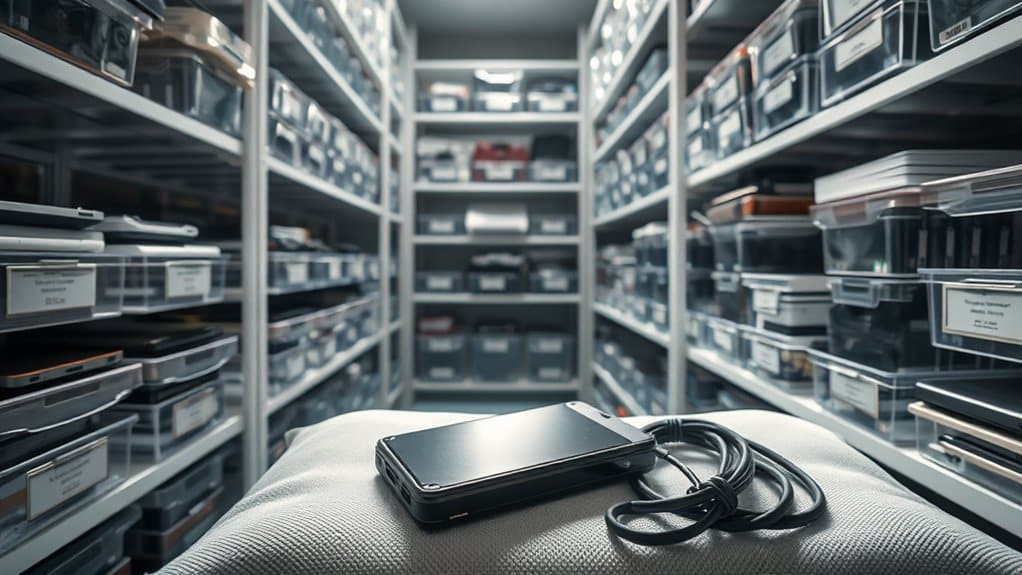
When storing electronics, it's crucial to remove the batteries to prevent leakage and potential damage over time. Proper battery removal can help mitigate safety risks associated with lithium batteries. Additionally, take a moment to organise your cables and accessories by labelling them; this makes it much easier to find what you need later. Properly managing these components helps ensure your devices stay in good condition for future use.
Battery Removal Importance
Removing batteries from your electronics is essential for their longevity and proper functioning. This simple step helps prevent chemical leaks that can cause battery corrosion, which can damage internal components.
By taking out the batteries, you also prolong their lifespan by minimising slow drain and protecting against electrical failures.
It's wise to isolate battery terminals and store batteries in a cool, dry place to maintain their performance during storage. Failing to remove batteries can create fire hazards and lead to costly repairs.
Always prioritise battery removal for handheld devices, laptops, and toys to ensure electrical safety and safeguard your valuable electronics. Your devices will thank you for it! Additionally, storing electronics in climate-controlled units can further protect them from extreme temperature fluctuations and humidity, which can also cause damage.
Cord Organization Tips
Effective cord organisation is essential for maintaining your electronics. Start by labelling your cords clearly; colour-coded tags can make this task easier. Invest in cable organisers such as ties or baskets to keep everything neat and accessible.
Remove detachable parts and store chargers and accessories in labelled bins to avoid damage. DIY solutions like paper tubes or hanging organisers can also greatly improve cable management.
When travelling, use small cases to keep your cords tidy and safe. Avoid exposing your electronics to extreme temperatures and store them in climate-controlled environments to extend their lifespan.
A little effort in organisation can free you from clutter and make accessing your devices much simpler.
Storage Placement and Positioning
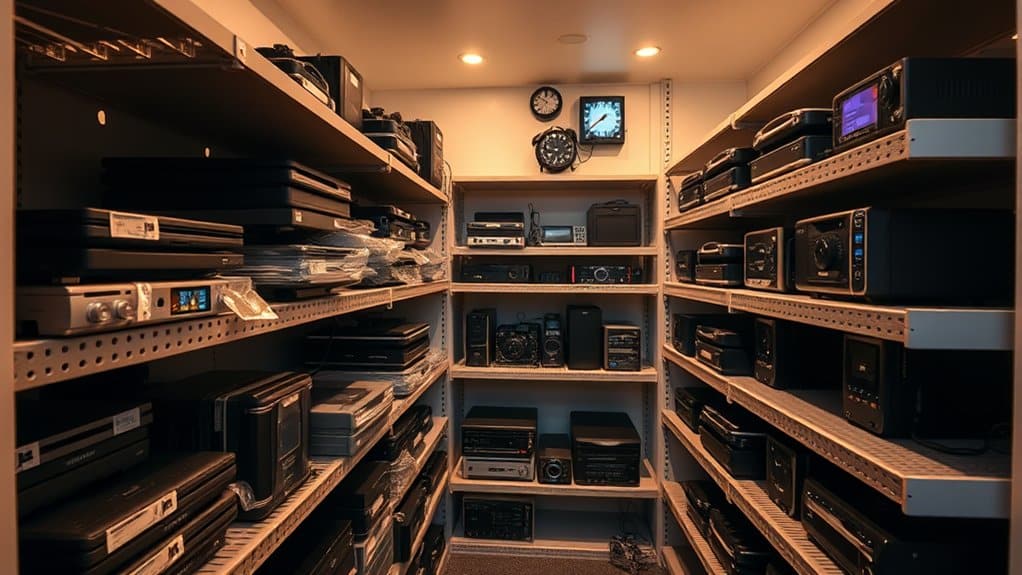
To keep your electronics in excellent condition, proper storage placement and positioning are crucial.
Start by using pallets or shelves to keep items off the floor, which helps prevent water damage. Store your electronics away from doors to reduce exposure to temperature changes and dust. Organise items by category for easy access and ensure they're positioned for straightforward retrieval.
Leave space between boxes for ventilation and airflow to prevent moisture buildup. Whenever possible, use the original packaging and anti-static materials for extra protection.
Maintenance and Inspection
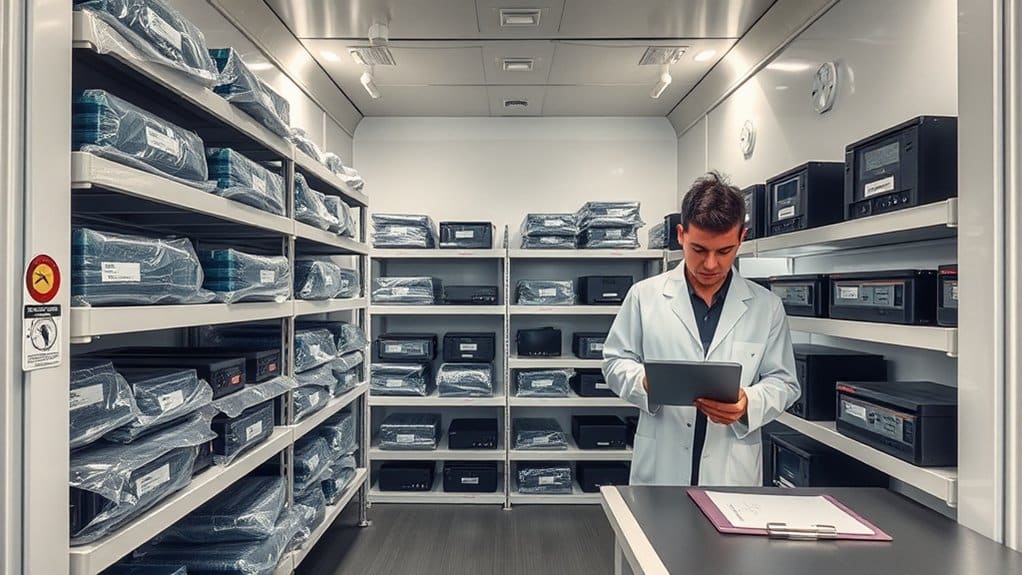
To keep your electronics in good condition, set up a regular inspection schedule to check their status.
Look out for moisture and dust, and consider using moisture control methods like silica gel packs.
Being proactive can help you identify potential problems before they cause damage.
Regular Inspection Schedule
Regular inspections may feel tedious, but they're crucial for keeping your electronics safe and in good working order. Set a suitable inspection frequency—quarterly and annual checks are a solid starting point.
Use a maintenance checklist to ensure you cover essential areas, such as checking HVAC systems, conducting security assessments, and monitoring humidity and temperature levels. It's also important to document each inspection to track trends and identify any issues over time.
Seasonal preparations, like summer cooling checks and winter heating inspections, play a vital role in maintaining optimal conditions. By sticking to this regular inspection schedule, you not only safeguard your valuable electronics but also improve the overall safety and functionality of your storage space.
Condition Monitoring Techniques
Condition monitoring techniques are vital for maintaining the health and longevity of your electronics through proactive maintenance and timely inspections.
For instance, vibration analysis can help identify problems like bearing wear in motors. Similarly, thermal monitoring using infrared imaging can detect overheating and misalignments, ensuring your equipment runs efficiently.
Incorporating temperature and vibration sensors allows for continuous tracking of equipment performance, enabling early detection of anomalies.
Electrical signature analysis can also be beneficial, as it monitors current and voltage, offering real-time insights into the condition of your equipment.
By employing these techniques, you can minimise unexpected downtime and boost reliability, ultimately saving costs and keeping your electronics in top shape.
Regularly reviewing data is crucial to stay ahead of potential issues.
Moisture Control Strategies
When storing electronics, effective moisture control is crucial to prevent damage and extend their lifespan.
Use dehumidifiers in your storage area to maintain optimal humidity levels. Silica gel packets can be placed in containers to absorb excess moisture and keep the environment dry. Regularly check humidity levels and replace moisture-absorbing materials as needed.
Avoid wrapping items in plastic, as this can trap moisture; instead, use vacuum-sealed bags or breathable materials to allow airflow. Additionally, store electronics on shelves to minimise the risk of water damage.
Budgeting and Cost Considerations
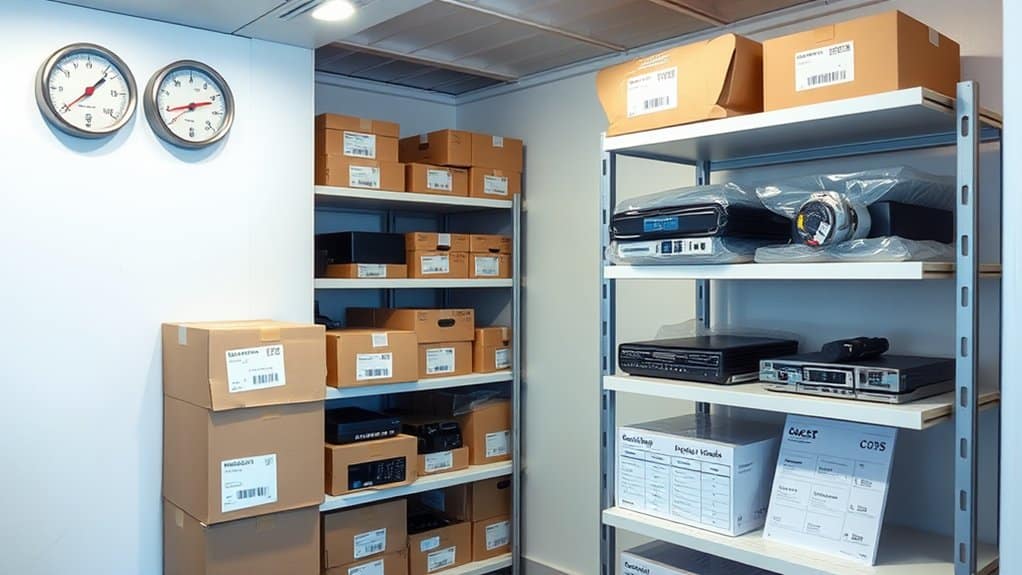
Budgeting for climate-controlled storage requires careful planning and an understanding of the associated costs. Generally, you can expect the initial price per square foot to be around 15% higher than that of non-climate-controlled units. Monthly rent typically increases by about £10, which is worth it for the protection it provides for sensitive electronics.
To ensure you get the best deal, conduct a thorough cost comparison among different facilities. While utility bills may be higher due to heating, ventilation, and air conditioning (HVAC) usage, these costs could decrease if the facility is operating at full capacity.
Additionally, consider investing in smaller units for fewer items; this can help keep your budget in check while ensuring your electronics stay safe.
Frequently Asked Questions
What Types of Electronics Are Safe for Climate-Controlled Storage?
In climate-controlled storage, laptops and gaming consoles are safe to store. These devices benefit from stable temperatures, which help prevent overheating and moisture damage, keeping your electronics in great condition for when you need them again.
How Long Can Electronics Be Stored Without Damage?
Electronics can usually be stored for several months to a few years without suffering damage, depending on the conditions. To protect them, it's best to keep them in stable temperatures and low humidity. For example, a dry, cool cupboard is ideal. By prioritising these factors, you can help ensure your devices remain in good condition during storage.
Can I Store Electronics in Non-Original Packaging?
You can store electronics in non-original packaging, but make sure to take protective measures. Use quality materials for cushioning to prevent movement. While original packaging provides the best protection, consider alternatives like sturdy boxes with bubble wrap or packing peanuts if you don't have the original boxes.
Are There Any Specific Temperature Ranges for Storage?
Did you know that high temperatures can speed up the breakdown of materials? To store electronics effectively, keep them between 10-27°C and control humidity levels between 40-60%. These ideal conditions help ensure your devices stay functional and safe for future use.
How Do I Choose the Right Size Storage Unit?
To choose the right size storage unit, start by measuring your items and considering the unit's dimensions. Use storage tips like efficient stacking to maximise space. Ensure the unit meets both your current and future storage needs for flexibility. For instance, if you're storing furniture, consider how much room you'll need for larger pieces and any additional items you might have later on.
Conclusion
Storing your electronics in climate-controlled units is vital for ensuring their longevity. By using proper techniques—such as padding, removing batteries, and positioning your devices wisely—you can keep them in top condition. Regular maintenance and inspections are crucial; overlooking this could turn your valuable gadgets into mere relics. With thoughtful planning and budgeting, you're not just storing electronics; you're protecting your tech treasures for the long haul!