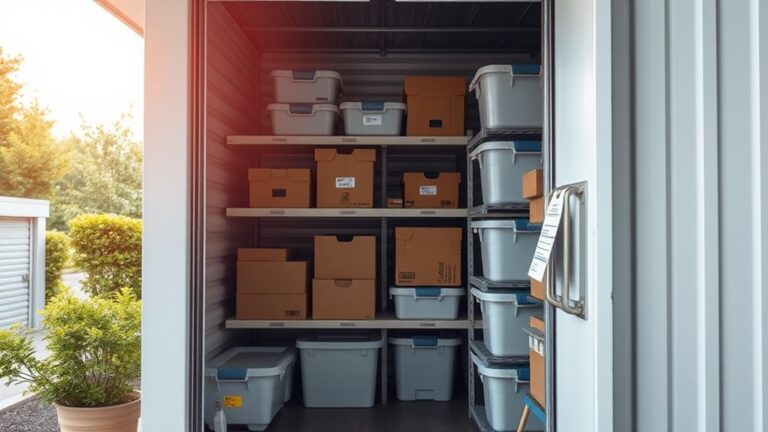

When comparing leasing extra office space to using storage units, it’s essential to look at both cost and flexibility. Office leases can cost as much as £50 per sq. ft., while self-storage units typically have lower, more predictable monthly rates. Storage units also offer better adaptability with short-term contracts, allowing for quick adjustments when needed. Don’t forget to consider hidden costs with office leases, such as early termination fees or insurance. Choosing the right option can save you money and improve efficiency, so take the time to weigh your choices carefully.
Key Takeaways
- Leasing office space in prime locations can cost between £50 and £80 per sq. ft., whereas a self-storage unit typically averages around £100 per month for a 10×10 space.
- Self-storage offers flexibility with month-to-month agreements, which is a stark contrast to the long-term commitments often required for office leases.
- Both options can include hidden fees that may increase overall costs, so it’s essential to scrutinise contracts to budget effectively.
- Storage units allow for scalable solutions to changing inventory needs without the added overhead of extra office space.
- The predictable monthly costs of storage units make budgeting easier, unlike the often variable costs tied to leasing office space.
Understanding Office Space Leasing Costs

As you explore office space leasing costs, it’s crucial to grasp how different factors affect pricing. Location is key; prime spots like London can cost £50–£80 per sq. ft., whereas up-and-coming areas like Manchester may range from £25–£40.
Despite a 19.2% vacancy rate in central business districts, demand for quality spaces remains strong. When negotiating your lease, take into account amenities and modern fit-outs, as these significantly influence costs. Additionally, the national office vacancy rate currently stands at 19.7%, indicating ongoing challenges in the market.
Also, the size of the office you require will impact your budget. With leasing volumes expected to rise in 2025, staying updated on these trends will help you make informed decisions that align with your workspace needs.
Analyzing Self-Storage Unit Expenses

When considering self-storage units, cost efficiency is crucial. Examining flexible rental terms can help you save money, particularly for short-term needs without the long-term commitment of leasing office space. Be wary of hidden fees that could affect your overall expenses, ensuring you secure the best value for your requirements. For instance, a unit that appears cheap may have additional charges for access or insurance. Additionally, the average cost of a 10×10 storage unit in Tampa is approximately $123/month, making it a competitive option compared to leasing extra office space. Always read the fine print! Furthermore, comparing prices among different storage providers can help you identify the best deal while ensuring quality and security are not compromised.
Cost Efficiency Analysis
When businesses consider their storage options, understanding the cost efficiency of self-storage units can significantly affect their finances.
Self-storage typically offers considerable savings compared to renting additional office space, with average monthly rates for a standard 10’x10’ unit around £100. By opting for self-storage, you can avoid overhead costs such as utilities and maintenance, boosting operational efficiency. Moreover, the flexibility of short-term contracts allows for easy adjustments to storage needs without incurring penalties, making it a smart choice for growing businesses. Additionally, average prices for storage units vary by location, which can further influence overall savings. Short-term storage is ideal for frequent access to items that may be needed on a regular basis. However, be mindful that extra charges for insurance or late payments can accumulate, so it’s important to account for these in your budget. Making informed decisions here can lead to improved financial freedom.
Flexible Rental Terms
Flexible rental terms for self-storage units offer businesses the freedom to adapt to changing needs without being tied to long-term contracts. Options such as month-to-month leases allow you to adjust your storage as your requirements evolve, whether that means upsizing or downsizing.
| Feature | Description |
|---|---|
| Rental Periods | Month-to-month, weekly, or a minimum three-month option |
| Cancellation Flexibility | Notice required to avoid charges for the next month |
| Scalable Solutions | Easily change the size of your unit as needed |
| Online Management | Reserve and manage your unit online |
| Indefinite Use | Rent for as long as necessary |
These adaptable storage solutions provide the operational freedom needed for your business to pivot quickly when circumstances change. Additionally, storing items in climate-controlled units ensures that sensitive materials are protected from extreme temperatures and humidity.
Hidden Fees Comparison
Understanding the hidden fees linked to self-storage units is crucial for making a well-informed choice. While the initial rental price might look appealing, these extra charges can soon accumulate.
Be prepared for additional costs such as setup fees, insurance, and access options, which many facilities impose without clear communication. If you lose your key, you may also face unexpected lock-cutting fees. Late payment fees and potential charges for insufficient funds (NSF) can further increase your overall expenses.
It’s essential to carefully review contracts for these unforeseen costs to keep your finances in check. Some providers offer transparent pricing with no hidden fees, so prioritising clarity can help you avoid unnecessary headaches.
Choose wisely to ensure a positive storage experience.
Flexibility in Contract Terms

When it comes to flexibility in contract terms, storage units are often more appealing due to their short-term rental options that meet immediate needs.
Many facilities offer early exit policies, allowing you to change your storage arrangements without being tied down to a long commitment.
In contrast, office leases usually require longer terms and come with stricter exit strategies, which can make it harder to adapt when your circumstances change.
Short-term Rental Options
Short-term rental options give businesses the flexibility to adapt to changing needs without long-term commitments.
By choosing short-term rentals, you can access versatile workspaces that allow you to scale your operations up or down as needed. These agreements usually involve lower upfront costs and fewer legal complications compared to traditional leases.
For instance, you can try different office locations to find the ideal space for your team’s productivity. Month-to-month agreements or coworking spaces can be customised to suit your requirements, offering a professional image with minimal risk.
In today’s fast-paced market, embracing short-term rentals is a smart choice that enables your business to thrive with confidence and adaptability.
Early Exit Policies
Flexibility in lease agreements is crucial as businesses face uncertain economic conditions. Early termination clauses can offer the freedom to adapt without being tied down by long-term commitments.
Here are some key points to consider during lease negotiations:
- Customisable terms tailored to your business requirements
- Notice periods of 90 to 180 days, allowing time to plan your next move
- Financial settlements to help offset any penalties
- Options for subleasing or lease assignments if you need to exit early
These considerations can help ensure your lease works for you, not against you.
Additional Costs and Hidden Fees

When considering the costs of leasing office space and using storage units, it’s important to be aware of additional expenses and hidden fees associated with both options.
Leasing office space often comes with security deposits, renovation costs, and variable common area maintenance (CAM) fees, which can lead to unexpected charges. For instance, if the CAM fees increase unexpectedly, it could strain your budget.
Similarly, storage units incur rental fees, handling charges, and possible access fees, along with mandatory insurance in some cases.
Moreover, both options may include penalties for early termination or late payments. By being aware of these hidden costs, you can make more informed decisions that align with your financial strategy and business objectives.
Maximizing Space Utilization and Efficiency

Maximising space utilisation and efficiency is crucial for any organisation looking to reduce operational costs and boost productivity.
By concentrating on space optimisation and effective resource management, you can turn underused areas into productive hubs.
- Assess capacity against occupancy rates to spot overcrowded or neglected spaces.
- Use workplace data analytics for real-time insights into usage trends.
- Introduce flexible scheduling to improve desk-sharing arrangements, making the most of your office space.
- Design layouts tailored for specific tasks, encouraging collaboration and focused work.
Assessing Business Needs and Suitability

To ensure your business flourishes, it’s vital to assess your space requirements and suitability before committing to office leases or storage units.
Start by evaluating your staff needs—how many employees require a workspace and how often they’ll be on-site. Factor in potential growth by allowing for an additional 10-20% in space for future expansion.
Consider the layout to promote collaboration and efficient space use, particularly with hybrid work models.
Location is key; ensure easy access for both employees and clients, as well as proximity to local amenities.
Lastly, ensure your choice aligns with your business objectives, allowing the space to reflect your brand identity while enhancing operational efficiency and employee morale.
Evaluating Cost-Saving Benefits and Practicality

When considering the cost-saving benefits and practicality of leasing office space versus using storage units, it’s important to look at both initial and ongoing costs.
Storage units generally have more predictable, lower monthly fees compared to the often hidden expenses that come with office leases.
- Flexible week-to-week agreements
- All-inclusive pricing covering security and utilities
- Easy scalability without the need to relocate
- No long-term contracts or penalties
These strategies not only make budgeting easier but also provide greater operational flexibility.
For instance, if your business experiences a sudden increase in stock, you can quickly scale up your storage without the hassle of moving to a new office.
Ultimately, opting for storage units can create a more efficient and manageable business model, reducing the risk of financial strain as your needs change.
Frequently Asked Questions
How Do Lease Lengths Differ Between Office Spaces and Storage Units?
Lease lengths vary significantly between office spaces and storage units. Office spaces typically require longer leases for stability, often ranging from one to five years. In contrast, storage units provide greater flexibility with short, month-to-month agreements. This adaptability is ideal for those with fluctuating needs, allowing you to scale your space as required. For example, if you’re a small business that experiences seasonal changes, a flexible storage option can be invaluable.
What Are the Common Payment Methods for Storage Units?
In today’s digital world, cash payments might seem old-fashioned, but many storage facilities in the UK still accept cash and credit card payments for your convenience. Consider the various options available to ensure your payment method suits your needs. For instance, using a credit card can offer added security and convenience, while cash may be preferred by those who want to avoid online transactions.
Can Businesses Access Their Stored Items Anytime They Need?
You can access your stored items whenever you need, but it depends on the facility’s opening hours. Efficient retrieval processes give you more freedom, yet be mindful of any restrictions that could affect your ability to get to your belongings when required. For example, some facilities may have specific access times or require advance notice for larger items.
Are There Any Insurance Options for Office Spaces?
Have you thought about the benefits of office insurance? It offers various coverage options, such as protection against property damage and liability claims, helping your business operate smoothly. Customising your policy can effectively address your specific requirements. For example, if you have valuable equipment or a busy footfall, tailored coverage can provide the reassurance you need to focus on growing your business.
How Does Location Affect the Cost of Storage Units?
Location significantly impacts the cost of storage units. In urban areas, prices often increase due to higher demand and better accessibility. For instance, a storage unit in central London will likely cost more than one in a rural area. While a facility closer to your home might save you time, it’s essential to weigh that convenience against the potential for higher costs.
Conclusion
When considering whether to lease extra office space or use storage units, it’s important to weigh flexibility and cost-effectiveness. While leasing can provide a larger workspace, self-storage often proves to be a more practical option, allowing you to avoid the constraints of long-term contracts. For example, if you only need to store seasonal stock or equipment, a storage unit might be ideal. Ultimately, the decision should align with your specific business needs, helping you save money and improve productivity.