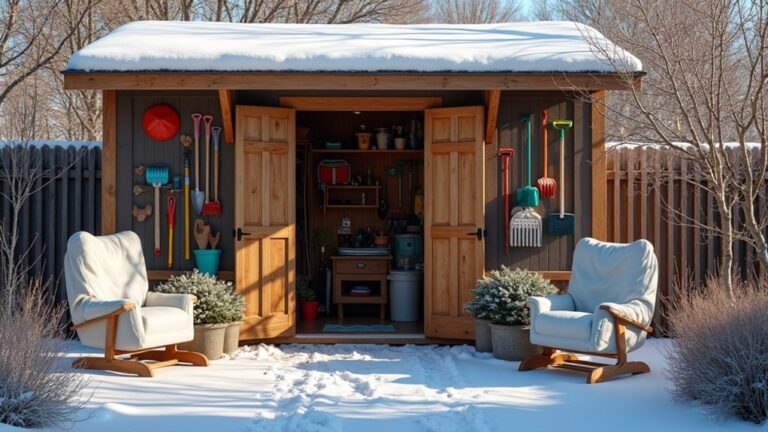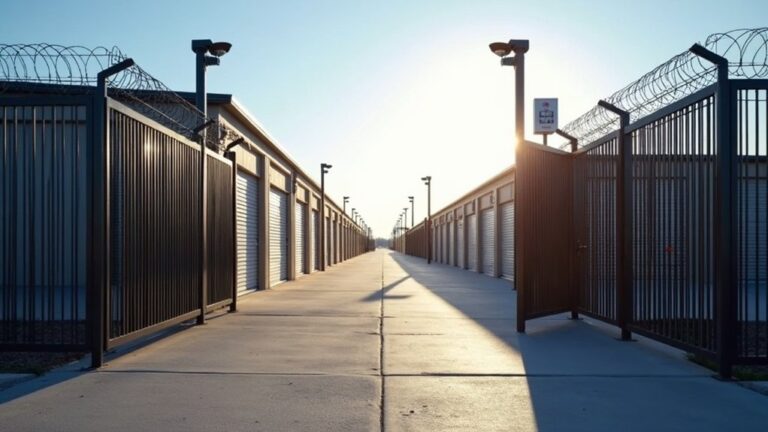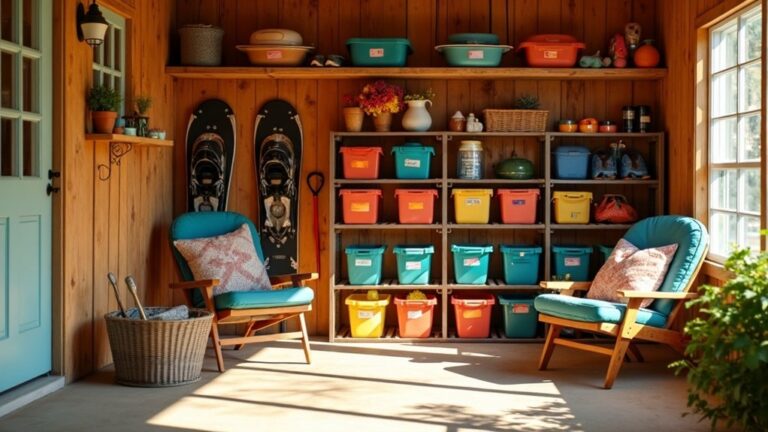
When comparing security for outdoor and indoor storage units, there are notable differences. Outdoor units typically use strong physical barriers such as steel fencing and monitored access points to prevent theft. In contrast, indoor units focus on secure building walls, advanced smart locks, and climate control to protect your belongings. Surveillance systems also differ; outdoor facilities often employ AI cameras for perimeter security, while indoor units are equipped with high-definition cameras and motion sensors. Would you like to learn more about these security features?
Key Takeaways
- Outdoor storage units require strong fencing and monitored pulse fencing to secure their perimeters, while indoor units rely on robust building walls.
- Access control for outdoor units often includes automated gates and number plate recognition, whereas indoor units use smart locks and keypads.
- Surveillance for outdoor units is enhanced with AI-powered cameras and individual alarms, while indoor units utilise high-definition cameras and video analytics.
- Environmental conditions play a significant role in security; indoor units offer climate control to safeguard items, while outdoor units are vulnerable to weather and pollution.
- Locking mechanisms differ; outdoor units typically use sturdy disc locks and shrouded padlocks, while indoor units favour simpler locks that are resistant to picking.
Physical Security Infrastructure
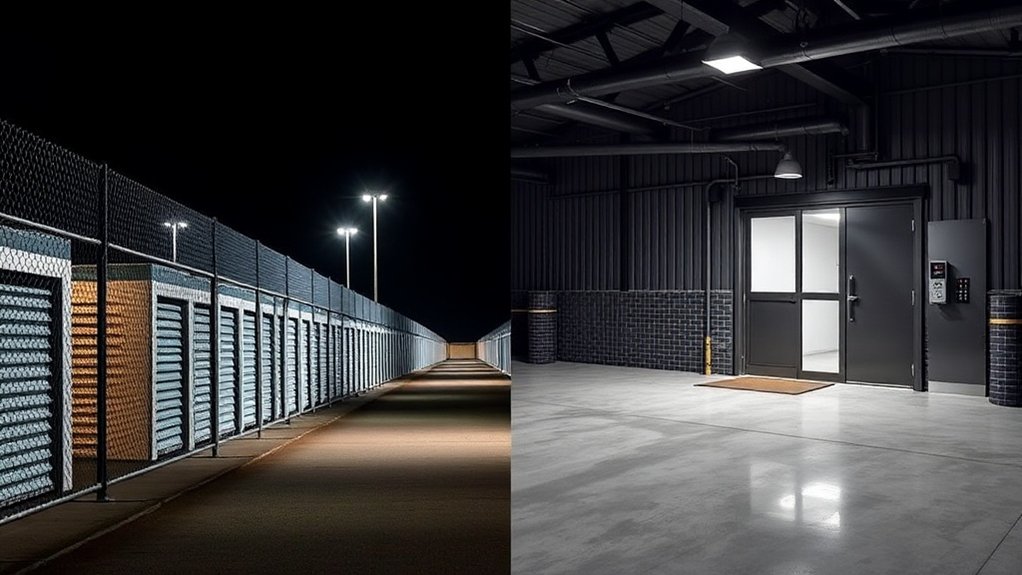
When assessing the physical security infrastructure of storage units, it’s important to recognise the distinct security requirements of outdoor and indoor environments.
Outdoor units generally necessitate strong fencing materials such as chain-link, steel, or barbed wire to establish secure perimeters. Additionally, consider implementing monitored pulse fencing or natural barriers for added protection. Strong access control is equally important to ensure that only authorized individuals can enter the facility.
In contrast, indoor units rely on secure building walls to prevent unauthorized access.
Lighting is crucial; outdoor facilities benefit from bright, well-placed lighting to eliminate hiding spots and enhance surveillance. Motion-activated lights can deter potential crime, while consistent lighting indoors helps prevent tampering.
Striking the right balance between these elements is vital for ensuring a secure storage environment that meets your specific needs.
Access Control Systems
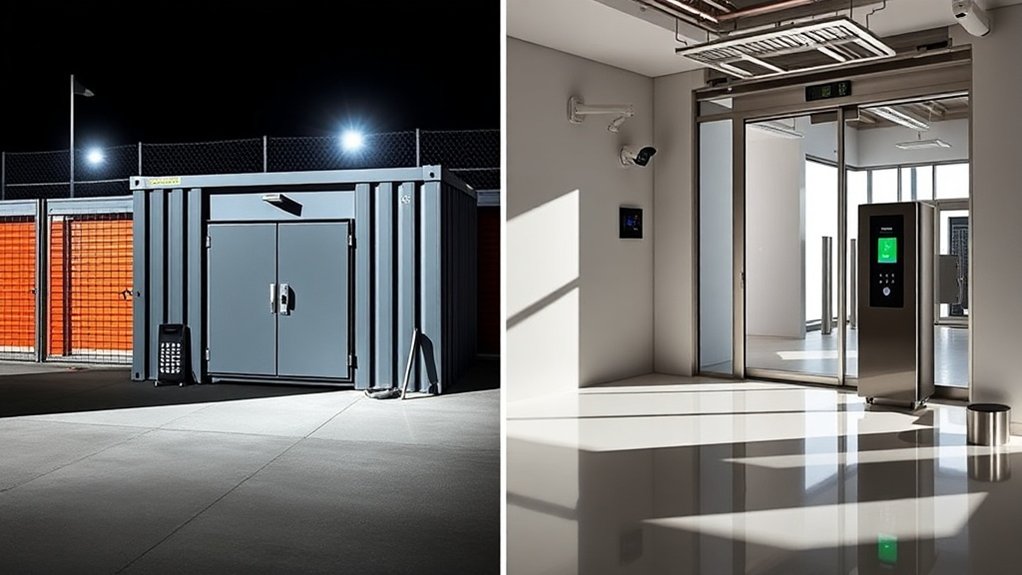
Effective physical security measures are crucial for establishing strong access control systems that protect both outdoor and indoor storage units.
By employing a variety of access control technologies, you can ensure secure entry through automated gates, keypads, and even biometric systems when needed. Integrating advanced security features into your access control can further enhance overall protection. For outdoor facilities, systems such as Number Plate Recognition can manage vehicle access, while indoor units may benefit from smart locks that sync with your smartphone. Individual unit access control enhances security at the individual unit level by reducing reliance on physical keys.
Authentication methods like PIN codes and card readers further enhance security by restricting access to authorised users. Additionally, cloud-based solutions provide real-time monitoring and easy integration with other security systems, offering a comprehensive approach to access management that evolves with your needs.
Surveillance and Alarm Systems
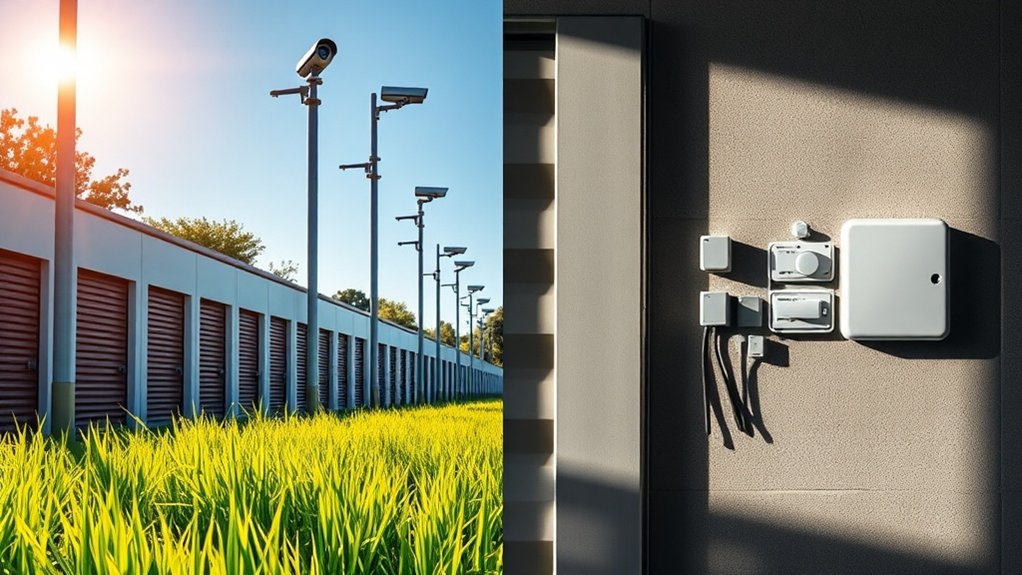
Surveillance and alarm systems are essential for protecting both outdoor and indoor storage units.
For outdoor units, advanced AI-powered cameras offer strong perimeter security, detecting incidents like fence jumping and sending immediate alerts. This is crucial as theft attempts at self-storage facilities have increased significantly, emphasizing the need for robust security measures. Additionally, many facilities are equipped with individual alarms on each unit, providing an extra layer of protection against unauthorized access.
Indoor units use high-definition cameras for clear surveillance of units and corridors, often enhanced by video analytics for quick identification of potential threats. Remote monitoring allows you to view footage at any time, keeping you informed of any suspicious activity.
By integrating alarm systems with surveillance, motion sensors can trigger instant alerts for unauthorized access. This combination ensures a proactive approach to crime prevention, giving you peace of mind while you manage your belongings.
Environmental and Site Considerations
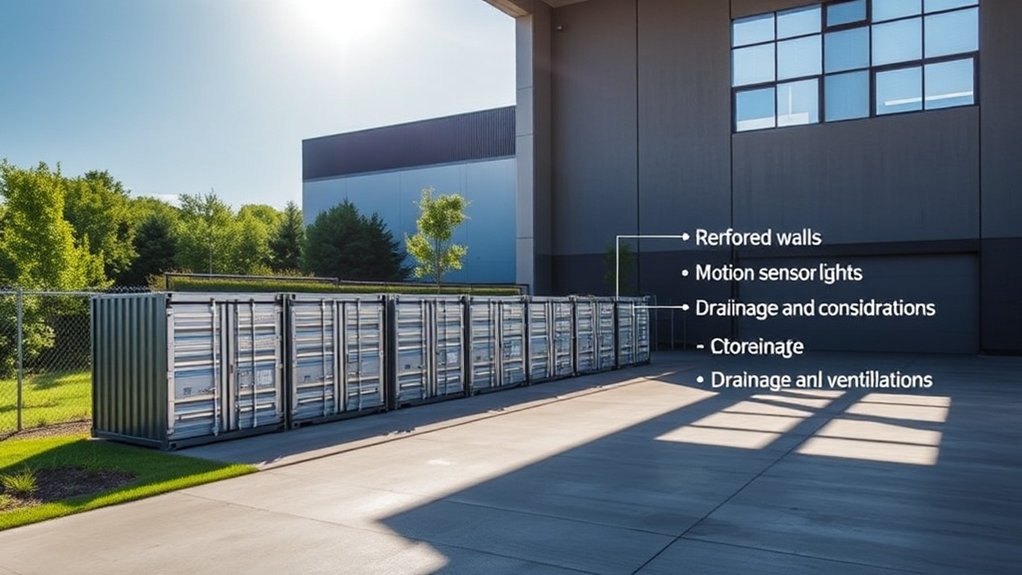
While both indoor and outdoor storage units aim to protect your belongings, their environmental factors play a crucial role in how well items are preserved. Indoor units offer significant advantages, such as climate control, which shields your possessions from moisture, temperature fluctuations, and pests. On the other hand, outdoor units are exposed to direct weather conditions and environmental pollutants. Additionally, items stored in indoor units benefit from stable environment that helps prevent mould, mildew, and rust.
| Feature | Indoor Storage | Outdoor Storage |
|---|---|---|
| Climate Control | Yes | No |
| Exposure to Elements | Minimal | Significant |
| Accessibility | Limited (corridors/elevators) | Easy drive-up access |
When selecting a storage option, it’s essential to consider these environmental aspects to ensure your items remain safe.
Locking Mechanisms and Theft Prevention
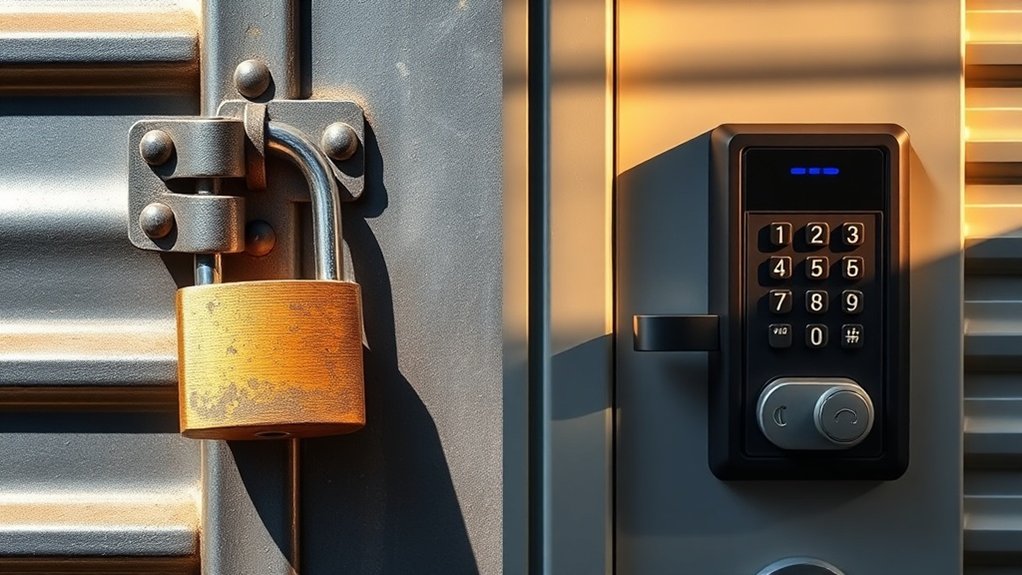
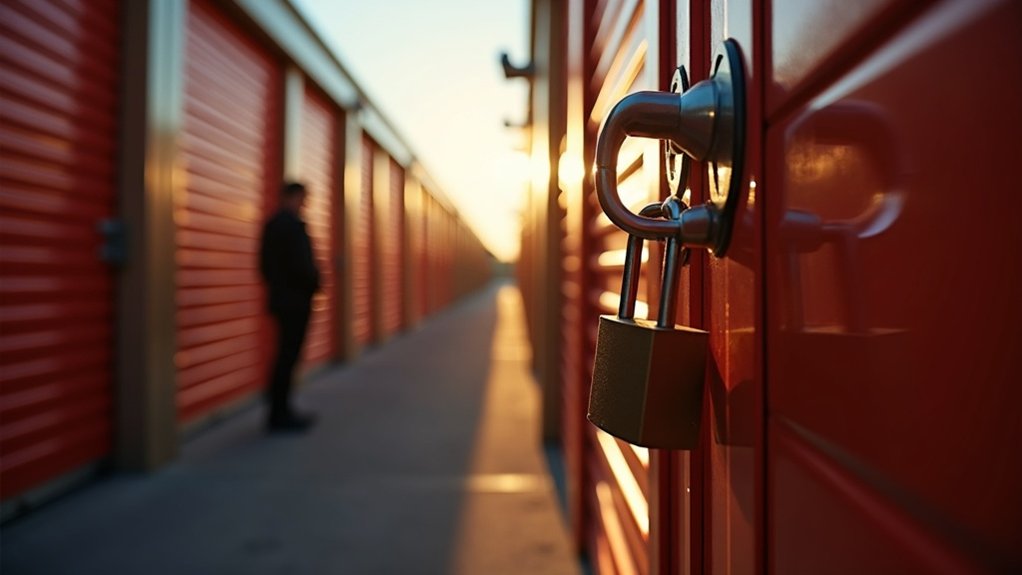
To secure your belongings effectively, it’s crucial to understand the different locking mechanisms used in both outdoor and indoor storage units. The type of lock you choose can significantly influence theft prevention.
For outdoor units, consider:
- Sturdy disc locks that are tamper-resistant.
- High-quality padlocks made from hardened steel with anti-corrosion finishes.
- Electronic smart locks that withstand weather conditions and offer monitoring features.
- Shrouded padlocks that make it difficult for bolt cutters to be used.
Indoor units usually use simpler locks, as they’re less exposed to the elements, but they still prioritise resistance to picking.
Features such as reinforced latches and electronic access control can further enhance security. By selecting the appropriate locking mechanism and understanding these features, you can better protect your property in both settings.
Liability, Insurance, and Safety Protocols

Understanding liability, insurance, and safety protocols is crucial for anyone considering storage options, as these factors can differ significantly between outdoor and indoor units.
Outdoor storage units often come with higher liability risks due to environmental hazards, which may lead to stricter safety measures and potentially higher insurance costs. Tenant insurance is vital, as many facilities require it to cover property damage.
On the other hand, indoor units, which are typically housed in controlled environments, face fewer risks and offer more flexible insurance options.
Implementing risk management strategies, such as enhanced surveillance and regular inspections, is particularly important for outdoor spaces to reduce the likelihood of claims.
Being aware of these differences will help you make informed decisions about your storage needs while ensuring your belongings are safe and protected.
Frequently Asked Questions
What Types of Items Are Best Suited for Outdoor Storage?
Outdoor storage is ideal for weather-resistant furniture, gardening tools, and outdoor sports equipment. Vehicles can also be stored outside, as long as you choose robust solutions that shield them from the elements while providing easy access.
How Do Weather Conditions Affect Outdoor Storage Security?
Weather significantly affects outdoor storage security. For instance, rain and humidity can lead to rusting of locks, while extreme temperatures can cause mechanisms to warp. To protect your items, it’s vital to use weather-resistant equipment and carry out regular maintenance.
Are Indoor Storage Units More Expensive Than Outdoor Units?
Yes, indoor storage units are generally more expensive than outdoor ones. This is due to factors such as climate control and improved security, which make indoor units a better choice for valuable or sensitive items. For instance, if you’re storing artwork or electronics, an indoor unit might be worth the extra cost for the added protection.
Can I Access My Storage Unit After Hours?
You can access your storage unit after hours if your facility allows it. Make sure to familiarise yourself with their specific after-hours access policies and security measures to protect your belongings and ensure your safety. For example, some places may provide a keypad entry system, while others might have staff on-site during late hours.
What Should I Consider When Choosing a Storage Facility?
Choosing a storage facility is akin to finding a secure home for your valuables. Prioritise security features and access control to ensure your items are safe while still being easily accessible when you need them. For example, look for facilities with CCTV, gated access, and individual alarms.
Conclusion
In conclusion, recognising the key differences between outdoor and indoor storage units is crucial for making the right choice. Think of it like selecting between a castle and a snug cottage: both offer protection, but each has its unique strengths. Outdoor units typically provide solid physical security and easy access, while indoor units focus on environmental control and surveillance. By considering these factors carefully, you can ensure your belongings are stored safely.