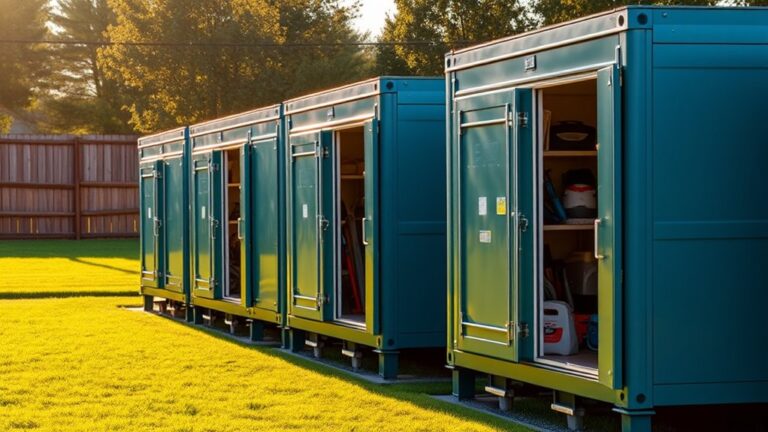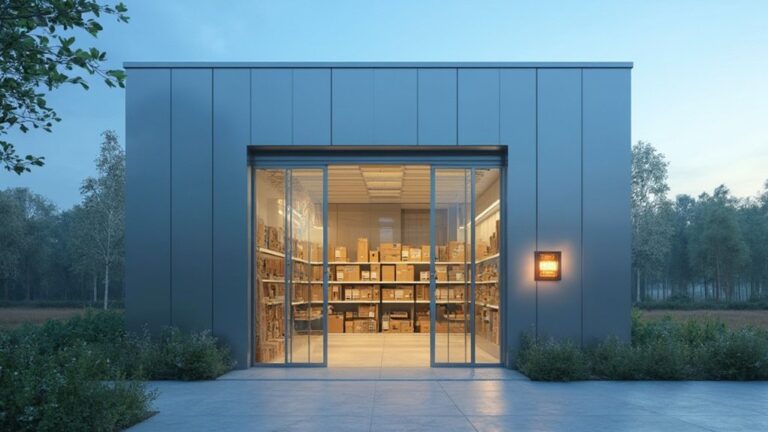
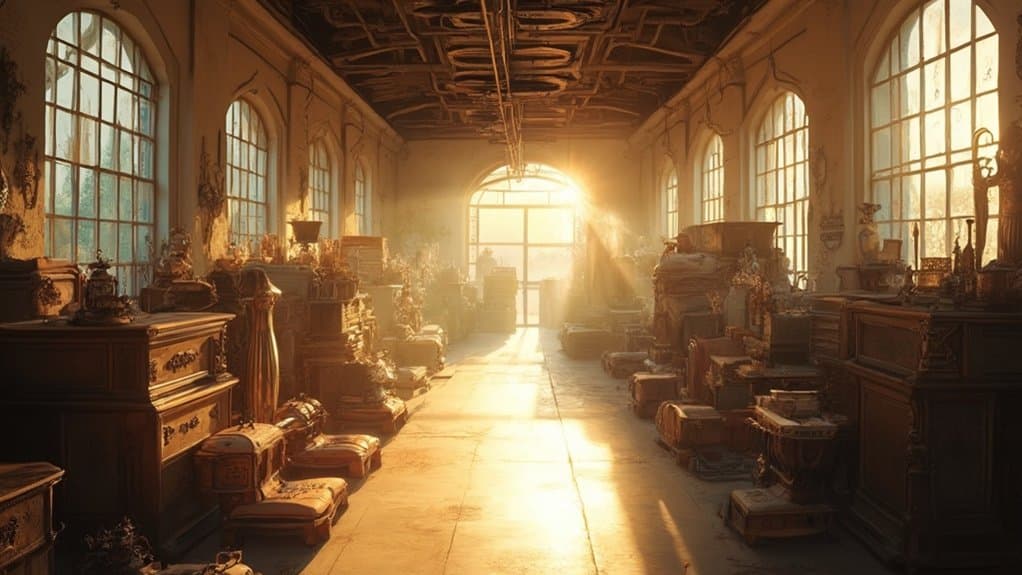
Climate control is crucial when storing antiques to avoid damage from humidity and temperature changes. Ideal humidity levels between 30% and 70% help prevent warping and cracking, while stable temperatures of 18-21°C (65-70°F) maintain finishes and structural integrity. Using appropriate packing materials also protects these valuable items. By ensuring a controlled environment, you can significantly extend the life of your antiques. Explore best practices and necessary security measures to safeguard your treasures.
Key Takeaways
- Climate control keeps humidity levels between 30%-70% RH, preventing moisture damage and degradation in antiques.
- Maintaining stable temperatures of 18-21°C (65-70°F) stops wooden items from warping or cracking and preserves their finishes.
- A controlled environment helps deter pests and reduces risks from dust, smoke, and pollution, ensuring antiques last longer.
- Advanced monitoring technology provides real-time adjustments, protecting valuable items from environmental changes.
- Regular inspections and proper packing techniques help identify potential issues early, safeguarding antiques during storage.
The Role of Climate Control in Preserving Antiques
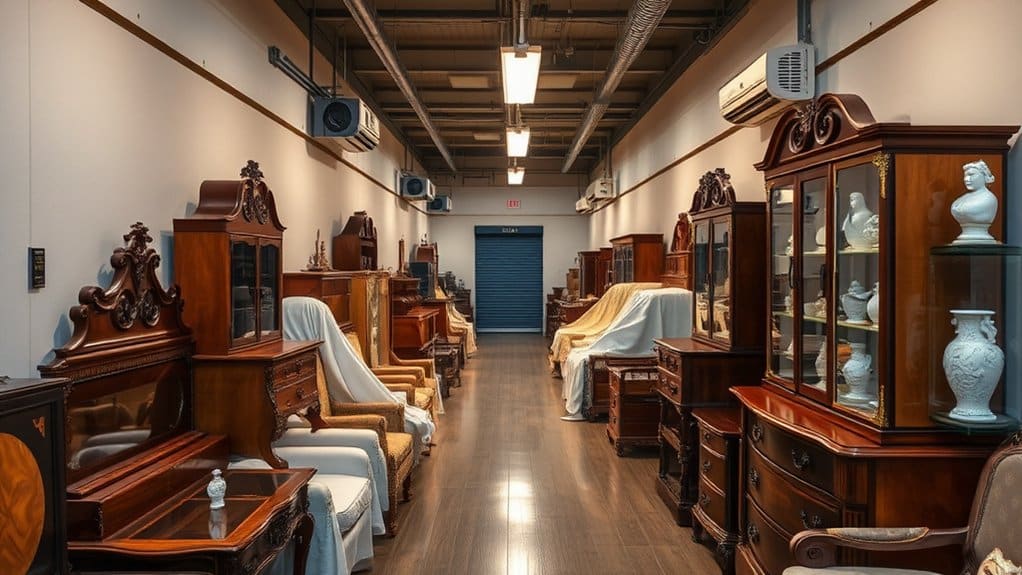
To preserve antiques, it's crucial to maintain ideal climate conditions. Keeping humidity around 55% helps prevent issues like moisture damage, mould growth, and material degradation. This is particularly important for organic materials such as wood and textiles, which can warp or become brittle without proper care. Using advanced climate monitoring technology allows you to track changes and make adjustments remotely, improving your antique preservation efforts. A controlled environment also helps deter pests and reduces risks from dust, smoke, and pollution. Additionally, a climate-controlled environment provides a stable setting that significantly reduces the risk of deterioration in sensitive materials. Choosing a unit with advanced security features can further protect your antiques from potential theft or damage.
Importance of Maintaining Consistent Temperature
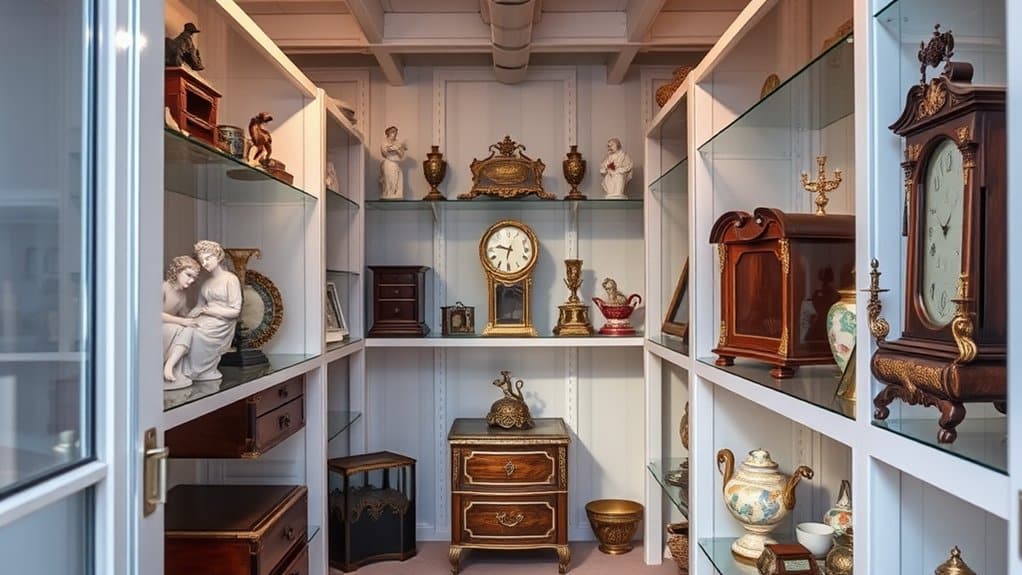
Maintaining a consistent temperature is vital for protecting antiques, as temperature extremes can cause irreversible damage. Here are some key points to consider:
- Temperature fluctuations can lead to cracking in wooden materials.
- Rapid changes in temperature may weaken glue joints, jeopardising structural integrity.
- The ideal storage temperature is between 18-21°C (65-70°F).
- High temperatures can warp intricate wooden designs.
- Consistent temperatures help preserve finishes and upholstery.
Proper temperature monitoring ensures your antiques remain safe from damage. Additionally, maintaining stable conditions helps prevent expansion and contraction that may displace old glue, further safeguarding the integrity of your pieces. By storing your valued pieces in a climate-controlled environment, you can extend their lifespan and maintain their historical significance. Moreover, climate-controlled units provide an extra layer of protection against environmental factors that can harm delicate items. Prioritising this aspect of care is essential for preserving the beauty and value of your collection.
The Impact of Humidity Control on Antiques
Controlling humidity is crucial for protecting your antiques from mould and mildew, which can cause serious damage. Keeping humidity levels between 30% and 70% relative humidity (RH) helps maintain the integrity of materials such as wood and leather, preventing issues like warping and cracking. General Prohibited Items such as damp items are banned from storage units to avoid such risks. Consistent humidity levels also safeguard against gradual degradation, ensuring your cherished items last longer. Stability of temperature and humidity is vital for the preservation of antiques, as fluctuations can lead to significant damage over time.
Mold and Mildew Prevention
Humidity is crucial in preserving antiques, as too much moisture can cause mould and mildew, which can irreparably damage valuable items.
To effectively tackle this problem, consider these strategies:
- Monitor humidity levels with hygrometers.
- Use dehumidifiers to maintain optimal conditions.
- Employ moisture absorbers, such as silica gel.
- Ensure proper ventilation to minimise dampness.
- Regularly check for early signs of mould using identification techniques.
Material Integrity Maintenance
Effective humidity management is crucial for preserving the integrity of antiques. Fluctuating humidity levels can lead to material deterioration, particularly in organic materials like wood and textiles, resulting in issues such as cracking and warping.
To protect these items, tailored preservation strategies are essential. For example, climate-controlled storage helps maintain stability for sensitive materials. Bronze items, for instance, require specific humidity controls to prevent corrosion, while artworks benefit from stable environments to avoid colour fading.
Regular monitoring and advanced HVAC systems can ensure optimal conditions, safeguarding your antiques from the harmful effects of humidity changes.
Optimal Humidity Levels
To preserve antiques, maintaining optimal humidity levels is crucial for preventing damage and ensuring their longevity. Aim for a relative humidity range of 35% to 50%.
Here's why monitoring and regulating humidity is important:
- Fluctuations can cause joints to swell, loosen, or crack.
- High humidity encourages mould and mildew growth.
- Low humidity can lead to warping and cracking in wood.
- Consistent humidity levels prevent rapid expansion and contraction.
- Regular inspections help identify humidity-related issues early.
Using hygrometers, humidifiers, and dehumidifiers can help you maintain a stable environment.
Protecting Various Types of Antiques With Climate Control
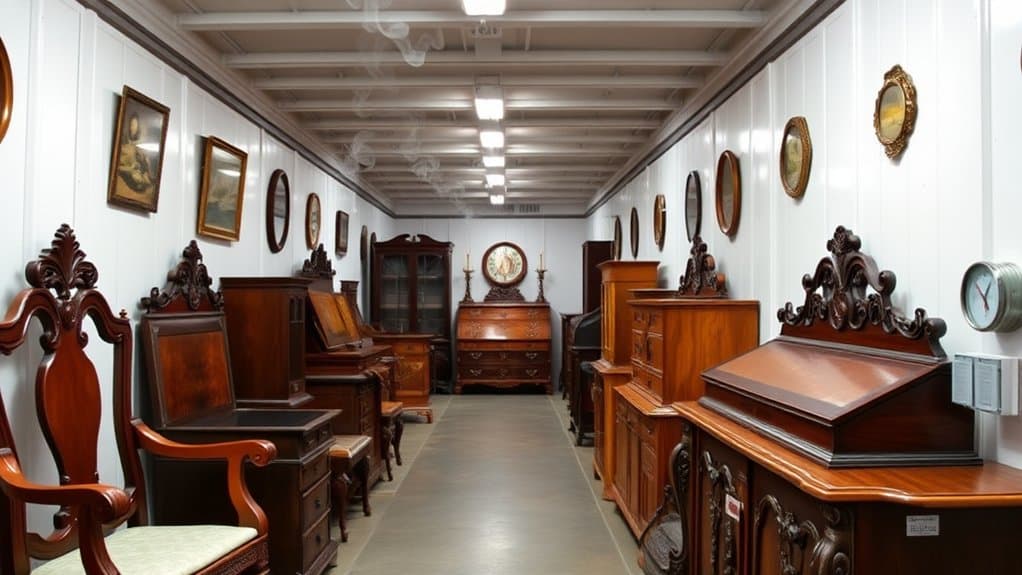
To protect your antiques, climate control is crucial for furniture, textiles, and artwork.
Keeping a consistent temperature and humidity helps prevent wooden furniture from warping, stops delicate fabrics from deteriorating, and maintains the integrity of artworks.
Knowing the specific needs of each antique type allows you to create tailored storage solutions for optimal preservation.
Furniture Preservation Techniques
Preserving antique furniture demands careful climate control, as fluctuations in temperature and humidity can threaten its integrity.
Here are some key preservation techniques:
- Maintain a temperature range of 20°C to 24°C (68°F to 75°F).
- Keep humidity levels between 35% and 65% to stave off mould and warping.
- Use gentle, non-abrasive cleaning products to care for the surfaces.
- Employ restoration methods suitable for the specific type of wood, as needed.
- Regularly inspect and monitor your storage conditions to catch any issues early.
These straightforward steps can help ensure your cherished pieces remain in good condition for years to come.
Textile Care Essentials
Antique textiles, like furniture, need careful handling to ensure they last and retain their unique charm.
It's vital to store them in a climate-controlled environment to shield against moisture, light, and extreme temperatures that can damage delicate fibres.
Before storing, clean the textiles to remove dirt and odours. Use acid-free archival materials such as tissue paper and muslin for wrapping and protection.
For rugs, flat storage is best, while long textiles should be rolled to keep them wrinkle-free.
Regularly inspect your collection to check its condition, and always keep storage containers clean and dry to avoid mould.
Art Protection Methods
To effectively protect your art and antiques, it's crucial to implement appropriate climate control measures tailored to each item's specific requirements.
Here are some key points to consider:
- Keep the temperature stable between 15°C and 27°C to prevent warping.
- Control humidity levels between 40% and 60% to deter mould and deterioration.
- Use UV protection for photographs and prints to prevent fading.
- Adjust storage conditions for mixed media art based on the sensitivity of materials.
- Regularly check and secure your storage area to prevent unauthorised access.
Best Practices for Packing and Preparing Antiques for Storage
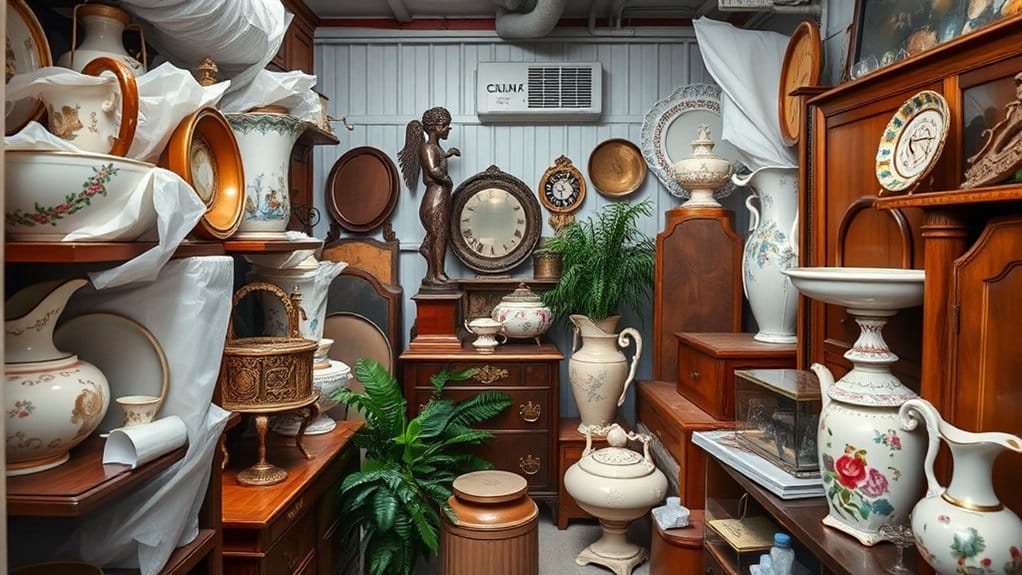
When preparing antiques for storage, using the right packing materials is crucial for their protection. Use archival-quality packing techniques, such as acid-free tissue paper and bubble wrap, to safeguard delicate surfaces from scratches.
For fragile items like ceramics and glassware, foam padding offers essential cushioning. Avoid plastic wraps, as they can trap moisture and lead to mould growth.
Make sure to clean each item thoroughly and document their condition with detailed descriptions and photographs, noting any imperfections for future reference.
Disassemble furniture when possible to save space and minimise the risk of damage. Always wear gloves to prevent transferring oils onto surfaces, and ensure all items are completely dry before storage.
Security Features to Look for in Storage Facilities
When choosing a storage facility for your antiques, it's crucial to consider the security features that will safeguard your treasured items.
Look for facilities that employ advanced security measures to ensure protection and peace of mind. Here are the essential features to prioritise:
- Strong perimeter fencing and secure gated access
- 24/7 CCTV surveillance with high-definition cameras
- Individual access control using keypad codes or biometric systems
- Intrusion detection systems with motion and sound sensors
- On-site security staff conducting regular patrols
These features will help ensure your antiques are well-protected.
The Importance of Insurance for Stored Antiques
Even with top-notch security measures, protecting your antiques goes beyond physical barriers. Insurance is essential for reducing risks such as theft, fire, or natural disasters. Familiarising yourself with different types of insurance and ensuring you have adequate coverage can help you avoid substantial financial losses.
| Insurance Type | Coverage Benefits | Key Considerations |
|---|---|---|
| Flood Coverage | Protects against flood damage | May require a separate policy |
| Theft Protection | Financial compensation for stolen items | Evidence of forced entry often needed |
| Natural Disaster | Covers damage from fires and storms | Additional riders may be necessary |
| Accidental Breakage | Covers damages from accidental incidents | Ensure you have a full appraisal for coverage |
| Transit Insurance | Protects items while in transport | Vital for high-value antiques |
Investing in the right insurance is crucial to ensure your collection remains safeguarded.
Maintaining an Inventory for Your Antique Collection
Keeping an accurate inventory of your antique collection is crucial. It protects your investment and simplifies management.
Organising your inventory digitally can make things easier and more accessible. Here are some useful features to consider:
- Centralised dashboards for a complete overview of your collection.
- Category organisation for better structure and easy access.
- Reminders for regular updates on valuations and locations.
- Cloud storage for automatic backups and remote access.
- Custom item cataloguing to track provenance and condition.
Using these tools will help you maintain a well-organised collection.
Frequently Asked Questions
How Do I Choose the Right Climate-Controlled Storage Facility?
To select the right climate-controlled storage facility, consider key features such as temperature regulation and humidity control. It's important to compare prices, aiming for a good balance between quality service and affordability that suits your specific storage requirements. For instance, if you're storing delicate items like antiques or electronics, prioritising a facility with robust climate control is essential, even if it costs slightly more.
Can I Store All Antiques in a Single Unit?
You can store all antiques in a single unit, but it's essential to ensure proper organisation and climate control. For instance, when storing furniture, consider wrapping pieces in protective materials and placing them on pallets to avoid dampness from the floor. This careful planning will help preserve your antiques while preventing damage from temperature and humidity fluctuations.
What Is the Ideal Temperature for Storing Antiques?
The ideal temperature for storing antiques is between 15°C and 24°C. It's important to avoid fluctuations in temperature and to maintain humidity levels between 35% and 50% to safeguard your valuable items from damage and deterioration. For instance, if you're storing wooden furniture, keeping it in a stable environment will help prevent warping and cracking.
How Often Should I Visit My Storage Unit?
You should visit your storage unit regularly, ideally every three months. This helps you keep track of your belongings, check how easy it is to access your unit, and sort out any issues that may arise. Regular visits ensure your items remain safe and in good condition over time.
Are There Any Items I Should Avoid Storing in Climate Control?
You should avoid storing non-climate-sensitive items, like basic tools or plastic containers, in climate-controlled units. Instead, consider using attics or basements for these less sensitive belongings to save costs and maximise space.
Conclusion
In conclusion, investing in climate-controlled self-storage for your antiques is essential, not just a precaution. Changes in temperature and humidity can cause serious damage, such as warped wood or faded fabrics. By storing your collection in an environment that maintains ideal conditions, you protect its integrity and value. Additionally, proper packing, security measures, and insurance are crucial. Your antiques deserve the best care, so ensure their preservation is not left to chance.