
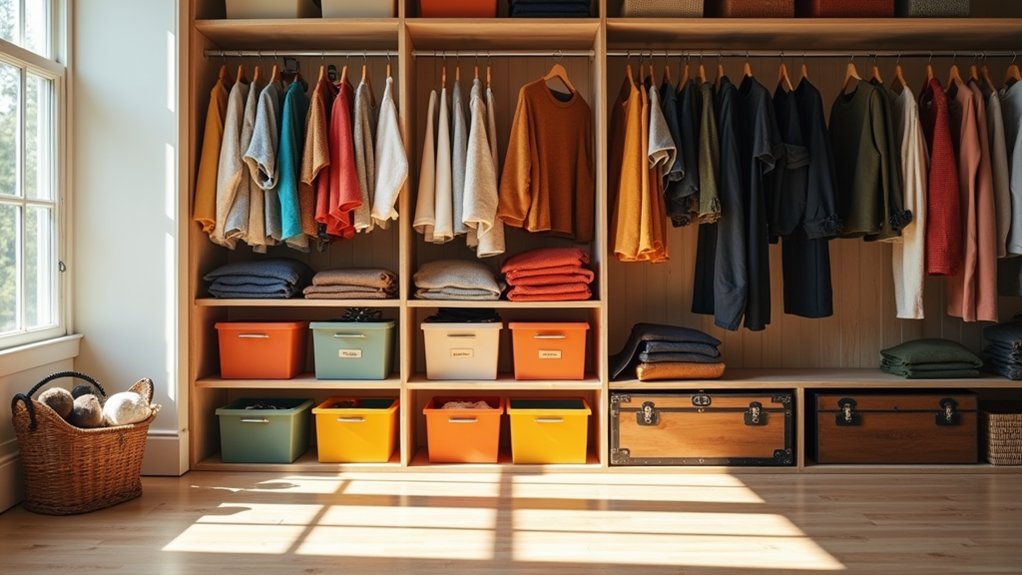
To store seasonal clothing for your family effectively, sort items by size and season, and label containers clearly for easy access. Use sturdy, airtight boxes to protect clothes and consider natural pest repellents like cedar wood. Keep the storage area cool and dry to prevent moisture damage, and check regularly for any signs of pests. Colour-code your storage for better organisation and routinely review your inventory. This straightforward approach keeps your wardrobe functional and tidy. For more storage tips and eco-friendly practices, keep reading!
Key Takeaways
- Use plastic storage boxes with airtight seals to protect seasonal clothing from pests and moisture.
- Colour-code boxes for each family member to make organisation easier and allow for quick access to their clothes.
- Store items in a cool, dry place with proper ventilation to prevent mildew and damage to fabrics.
- Regularly go through clothes and donate any unneeded items to minimise clutter and promote sustainability.
- Consider using natural pest repellents such as cedar sachets to keep stored garments safe from insects.
Understanding Seasonal Closet Switching
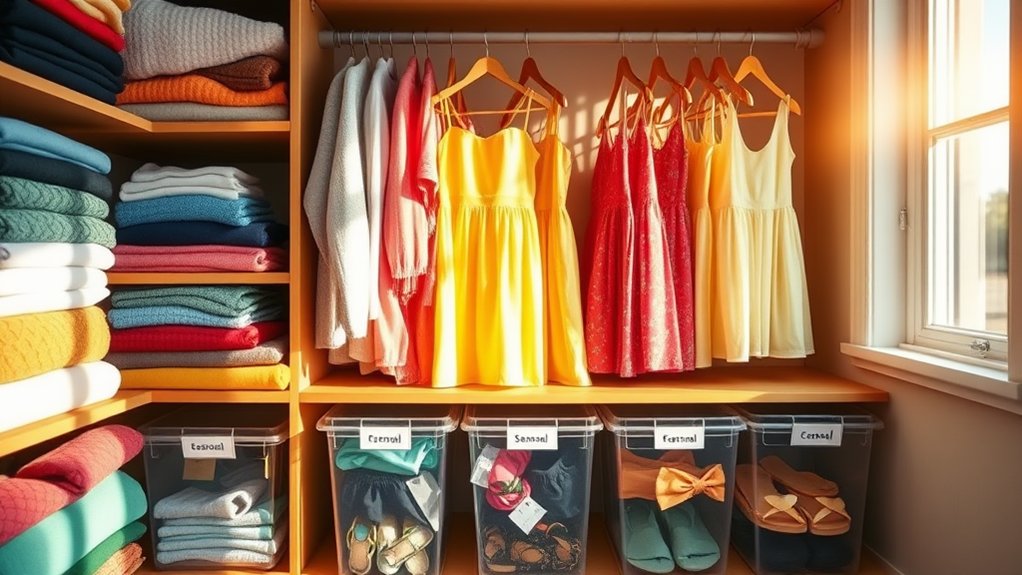
When you switch your wardrobe for the season, you’re not just swapping clothes; you’re making your life easier. This process helps keep your wardrobe organised by allowing you to assess each item. You can see what’s necessary, what fits well, and what needs replacing. Regularly evaluating your wardrobe promotes closet awareness, ensuring that you retain pieces that truly reflect your personal style and current needs. Additionally, decluttering serves as a transformative process, creating a blank canvas that encourages essential items only.
By clearing out off-season pieces, you reduce clutter, making it simpler to find outfits that suit the current trends. This also helps streamline your daily choices, cutting down on decision fatigue during busy mornings. Regularly switching out clothes encourages you to get rid of items you no longer wear, promoting a more sustainable approach to fashion. Plus, proper storage for off-season clothes protects them from damage, ensuring they stay in good condition for the next season.
Embrace this seasonal ritual for a more manageable wardrobe!
Choosing the Right Storage Solutions

Choosing the right storage solutions is crucial for keeping your seasonal clothing organised and protected. Here are some effective options to consider:
- Plastic Bins: Airtight and resistant to pests, these are ideal for bulkier items. Additionally, using climate-controlled units can further protect your clothing from temperature fluctuations.
- Vacuum Storage Bags: Excellent for saving space, but not suitable for delicate fabrics.
- Clear Sweater Boxes: Easy to see what’s inside and stack, although they may not be very sturdy.
- Archival Storage Boxes: Acid-free options are best for preserving antique garments. Additionally, consider using natural pest control methods like cedar sachets or mothballs to protect your clothing from damage.
To optimise your storage, sort clothing by season, maximise space, and ensure easy access.
Remember to label containers clearly and use fabric protection methods like cedar blocks to keep pests at bay.
Creating the Perfect Storage Environment
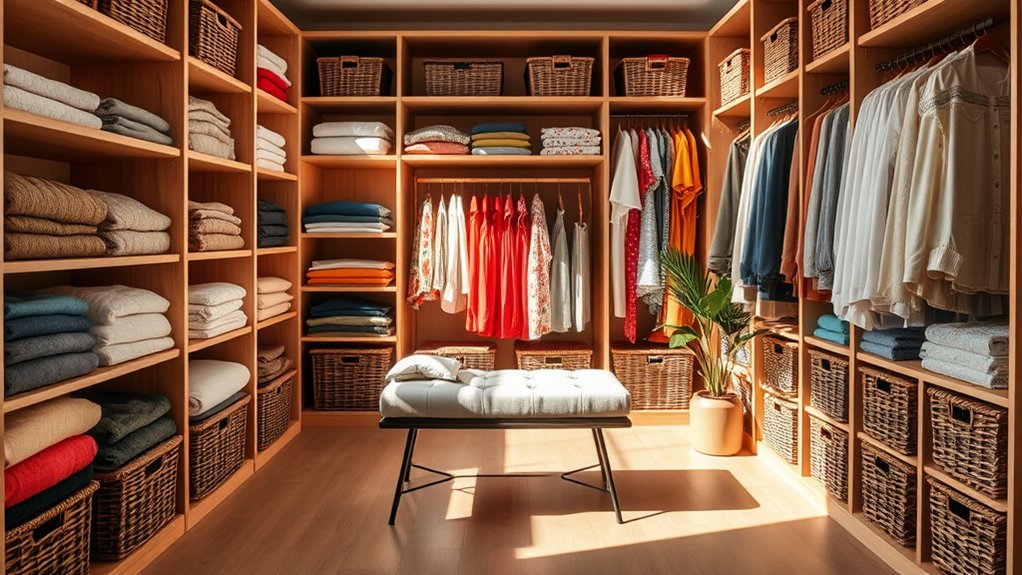
Creating the perfect storage environment for your seasonal clothing begins with ensuring the right conditions. Choose a cool, dry location to prevent moisture damage, steering clear of attics or basements where temperature and humidity can vary. Use climate control systems to maintain a stable environment, and consider humidity monitors for extra peace of mind. Maintaining proper ventilation is essential to avoid mustiness and protect delicate fabrics, as climate-controlled storage can significantly enhance the longevity of sensitive items. Opt for sturdy plastic storage bins with secure lids to keep pests out, but use breathable containers for more delicate items.
Regularly inspect your storage area for signs of pests or moisture and act quickly if you find any issues. This straightforward approach will keep your clothing in top condition and make it easy to access when needed.
Organizing Kids’ Clothes Effectively
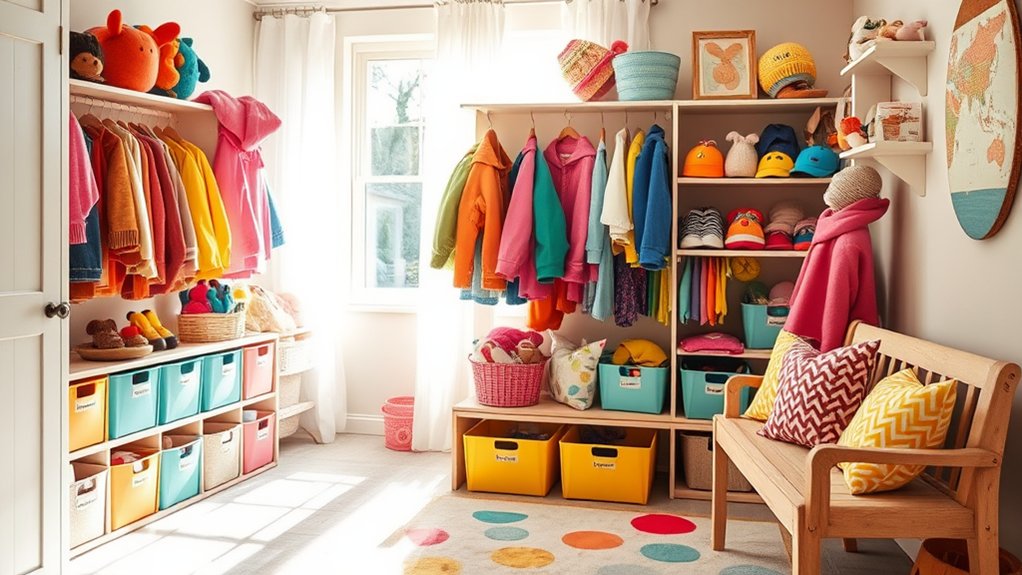
To effectively organise kids’ clothes, start by sorting them into sensible categories. Here are some simple strategies:
- Size categorisation: Sort clothes by size for easy access, particularly useful with hand-me-downs.
- Seasonal sorting: Keep only the current season’s clothes out and store the rest.
- Event grouping: Separate casual and formal outfits for quicker selection.
- Visual organisation: Use colour-coded boxes to make finding items more engaging.
These strategies not only simplify daily routines but also encourage kids to get involved.
Regularly review and remove items to keep the wardrobe clutter-free, ensuring it remains manageable and organised.
Implementing Sustainable Storage Practices
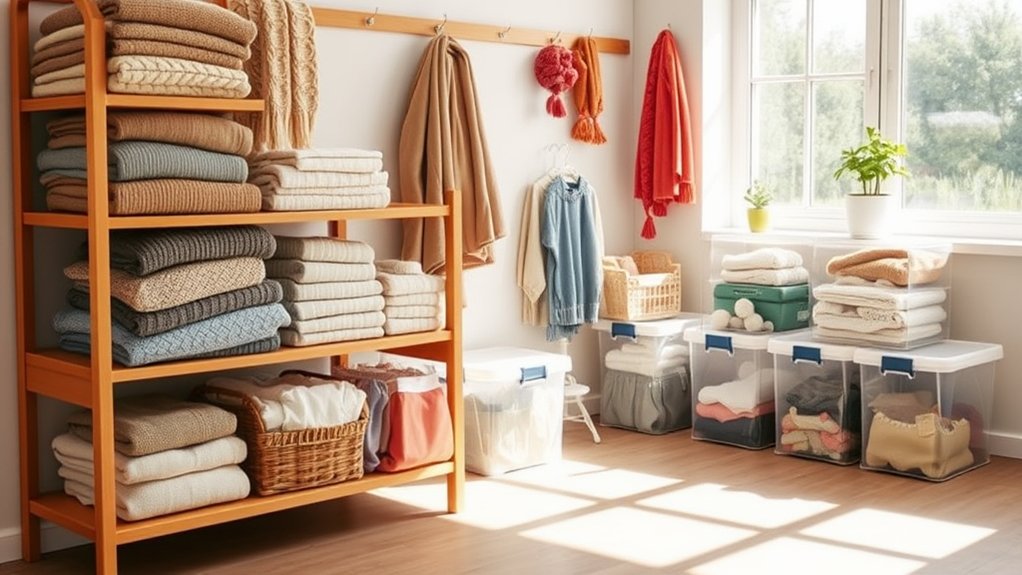
Implementing sustainable storage practices can help reduce clutter and promote eco-friendliness in your home.
Start with sustainable materials like bamboo boxes or fabric bins for storing seasonal clothing, ensuring they allow airflow and protection. Sort items by season and donate any unneeded clothes to minimise waste.
For moisture control, choose breathable materials and natural desiccants such as activated charcoal. Use natural pest repellents like cedar blocks or dried lavender sachets to protect your garments.
Regularly check your storage areas to prevent mould and mildew, and label your boxes for easy access.
These simple steps will help you maintain an organised and sustainable space for your family’s clothing.
Seasonal Inventory Management Strategies
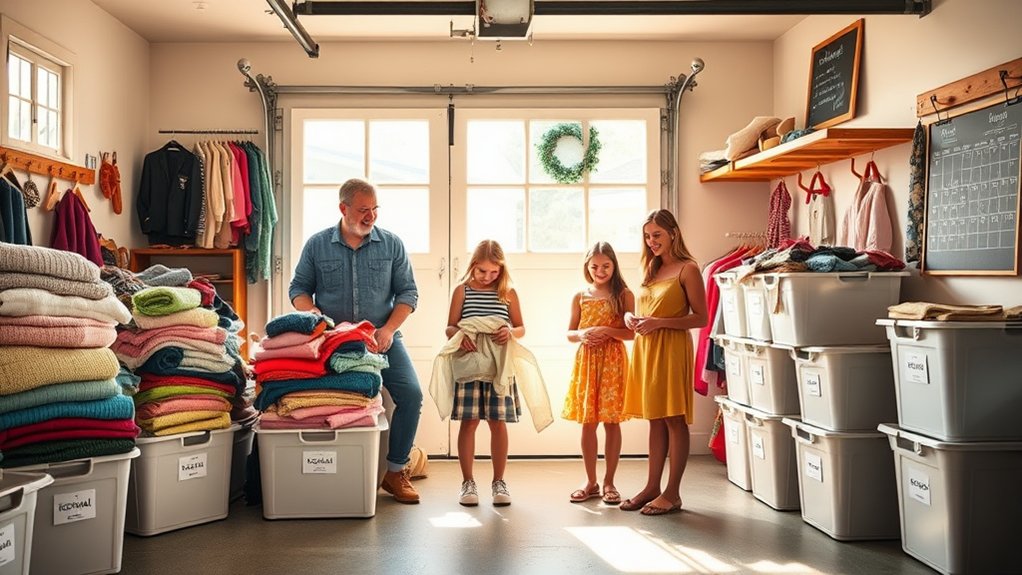
Effective seasonal inventory management strategies are crucial for maintaining optimal stock levels and meeting customer demand throughout the year.
To optimise your inventory, consider these key strategies:
- Inventory Forecasting: Accurately predict seasonal demand to prevent overstocking or running out of stock.
- Data-Driven Decision Making: Use historical sales data and market trends to make informed inventory choices.
- Flexibility in Plans: Be ready to adapt to sudden changes in demand, particularly in the fashion sector.
- ABC Analysis: Focus on inventory based on product value and how quickly it sells.
For example, if you notice a spike in demand for summer dresses, it’s wise to increase your stock in advance rather than scramble last minute.
Utilizing Pest Control Methods
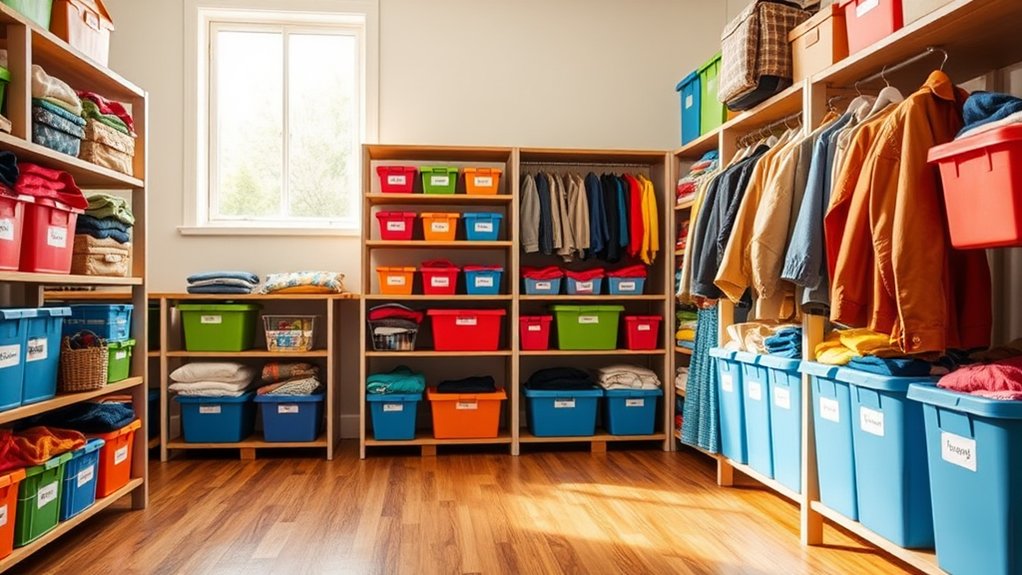
To keep your seasonal clothing safe from pests, use natural repellents like lavender sachets and cedar blocks.
Store your clothes in airtight containers and make sure they’re clean and dry.
Regularly check on your stored items and refresh them when needed to protect against unwanted pests.
Natural Repellents Selection
When choosing natural repellents for storing your seasonal clothing, it’s important to focus on those that effectively deter common pests such as moths and carpet beetles.
Here are some straightforward options to consider, each with its own benefits:
- Cedar Wood Products: These are long-lasting and environmentally friendly, releasing a scent that repels pests.
- Herbal Sachets: Simple to make, these sachets can include herbs like lavender and mint, providing a pleasant fragrance.
- Cloves and Cinnamon: Both are effective and budget-friendly solutions for pest control.
- Essential Oils: Combine oils like peppermint with water to create a refreshing spray that keeps pests at bay.
Effective Storage Practices
When storing your seasonal clothing, it’s important to use effective practices that help keep pests at bay. Start by washing all items to remove any dirt and odours that might attract unwanted visitors.
Sort your clothes by type and season for easy access, and fold them to save space. Choose sturdy, weatherproof plastic bins instead of cardboard, and make sure the containers are tightly sealed to prevent pests from getting in.
Use breathable materials and consider adding silica gel packets to absorb moisture. Designate specific storage areas and label your containers clearly.
Regular Maintenance Tips
Regular maintenance is crucial for protecting your seasonal clothing from pests and ensuring it’s in good condition.
Here are some straightforward tips to keep your garments safe:
- Clean stored clothes regularly to prevent dirt and oils from attracting pests.
- Check storage containers periodically for any damage or signs of infestation.
- Use natural pest deterrents like lavender or cedar to keep unwanted insects at bay.
- Ensure storage areas are dry to avoid mildew or moisture-related damage.
Color-Coding for Easy Access
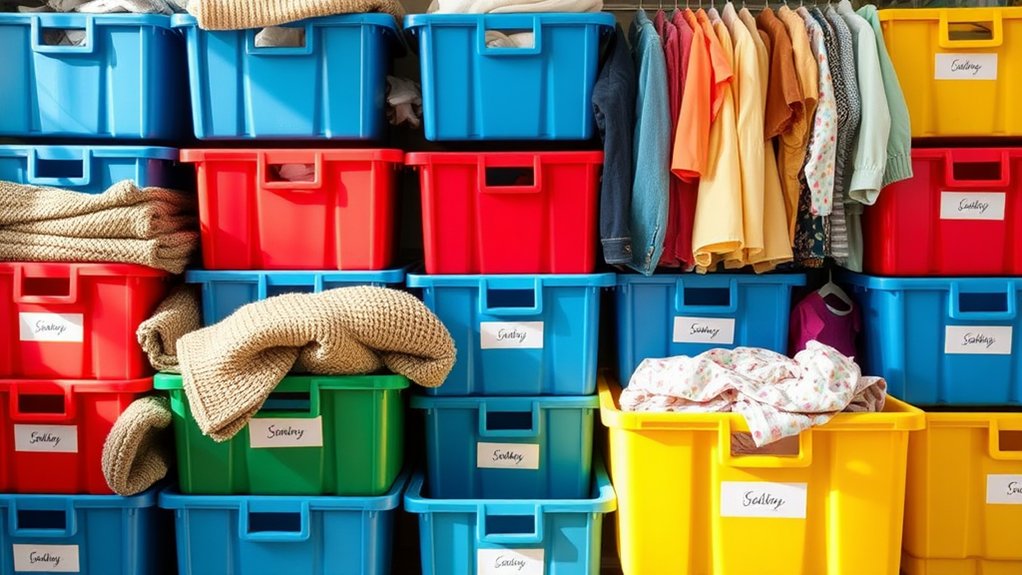
Colour-coding your seasonal clothing makes it easier to find what you need and helps family members quickly spot their items.
Assign different colours for each family member and use seasonal shades for your storage boxes.
This straightforward system improves organisation and simplifies the transition between seasons.
Family Member Identification
To simplify clothing access for each family member, a colour-coding system can significantly improve organisation. By assigning specific colours to each person, you can quickly identify whose clothes are whose.
Here’s how to set it up:
- Clear Labels: Use labels with names, clothing types, sizes, and seasons.
- Categorisation by Type: Sort clothes into tops, bottoms, and dresses.
- Distinct Bins: Use separate containers for each family member to keep items organised.
- Digital Inventory: Keep a digital list for easy updates and access.
This approach not only makes finding clothes easier but also respects individual preferences, streamlining the process for your family.
Seasonal Color Coding
When organising your family’s wardrobe, seasonal colour coding can simplify finding and accessing clothing. By sorting each family member’s clothes according to their seasonal colour palette, you create a cohesive look and use colour psychology to enhance outfit choices.
Begin by assessing everyone’s colours and consider investing in storage solutions, like labelled boxes or colour-coded hangers. This visual system makes selecting outfits quicker and reduces the time spent searching for items.
Additionally, it encourages you to make the most of what you already own, helping to avoid unnecessary purchases. Regularly review and adjust your colour-coded system to keep up with changing styles.
Adopting this approach will lead to a more efficient, stylish, and cohesive wardrobe for your family.
Regular Review and Maintenance

Regularly reviewing and maintaining your seasonal clothing is vital for keeping your wardrobe in good order. Aim to assess your stored items at least twice a year to ensure they remain in excellent condition.
Here’s how to keep your clothes in check:
- Sort and discard items that no longer fit or are unwanted.
- Check for stains, tears, or any damage that may have occurred during storage.
- Look out for pests like moths or silverfish, which can destroy your garments.
- Decide which items to bring into your current season’s wardrobe.
Tips for Storing Delicate Fabrics
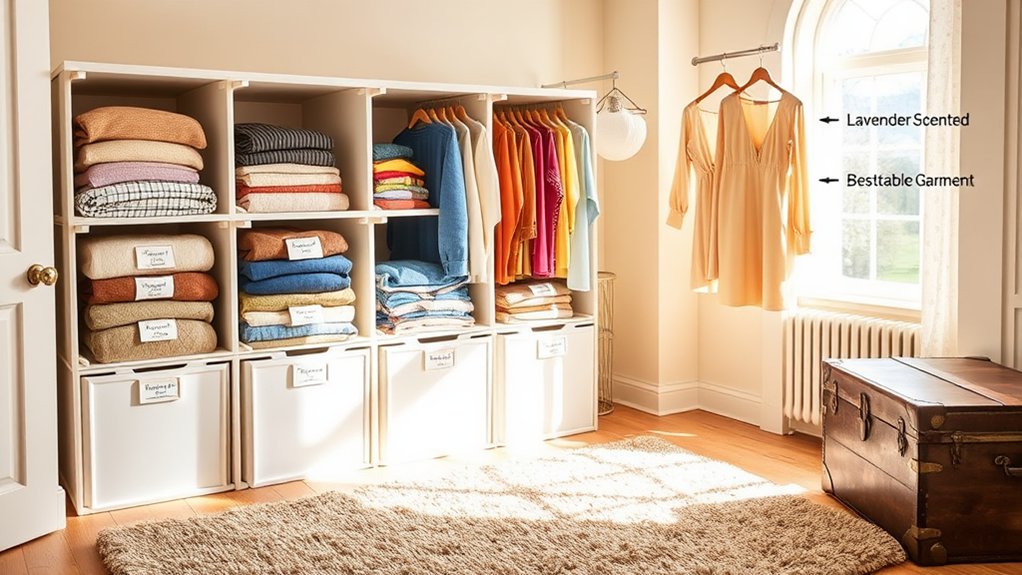
When storing delicate fabrics, it’s vital to take care to preserve their quality. Opt for breathable garment bags for items like silk or lace to keep moisture away.
Steer clear of vacuum-seal bags, as they can harm delicate materials. Instead, use acid-free tissue paper to line your storage containers and guard against stains.
Store your items in a cool, dry place, avoiding extreme temperatures and direct sunlight. Ensure there’s good air circulation to prevent mustiness.
Under-bed storage is a great option, but don’t overcrowd containers; stack them wisely. Consider adding natural pest repellents like cedar blocks to protect your fabrics.
Preparing for Seasonal Swaps
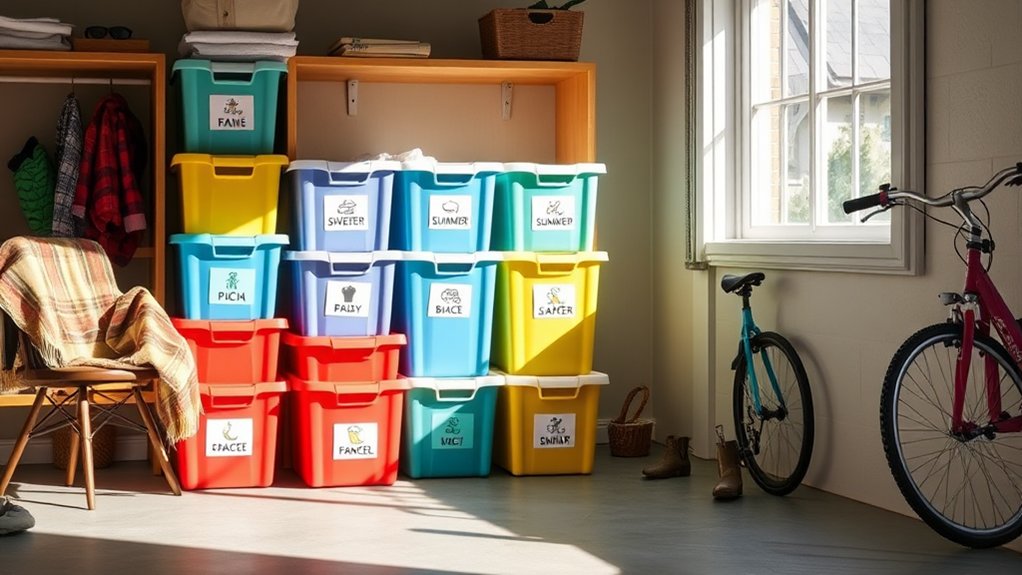
As you get ready for seasonal clothing swaps, it’s important to approach the task in an organised manner to ensure a smooth and efficient transition.
Here are some straightforward steps to follow:
- Make a list of your seasonal clothing.
- Sort items into four categories: “Keep,” “Donate,” “Store,” and “Discard.”
- Look for any maintenance needs, such as stains or repairs.
- Set aside a specific time for the swap.
This way, you’ll make the most of your wardrobe while helping others in the process.
Frequently Asked Questions
How Do I Handle Seasonal Clothing for Different Age Groups?
To manage seasonal clothing for various age groups, adopt age-appropriate strategies. Use storage boxes tailored to each child’s needs, making it easier for them to access and swap out clothing. For instance, a toddler might benefit from lower shelves, while older children can handle more responsibility with their clothes. This approach keeps their wardrobes organised and encourages independence in managing their outfits.
What Are the Best Methods for Cleaning Clothes Before Storage?
Did you know that 80% of stains can become permanent if they’re not treated? To ensure your fabrics are well cared for, concentrate on effective stain removal techniques. Always use the right cleaning methods and make sure to dry items thoroughly before storing them to avoid any damage.
How Often Should I Check on Stored Clothing?
You should check your stored clothing every three months, adjusting this based on the climate. Regular inspections help prevent issues like damp, pests, and fading, ensuring your garments remain in good condition without taking up too much of your time. For instance, if you live in a humid area, you might want to check more frequently.
Can I Store Clothes in My Garage or Shed?
Around 30% of people in the UK store clothes in their garages or sheds. You can do this safely if you ensure proper organisation and ventilation. Make sure your clothes are clean, dry, and stored in secure, moisture-resistant containers to prevent damage.
What Should I Do With Damaged or Stained Clothing?
First, assess your damaged or stained clothing. Look into repair options, like sewing up a tear or using a stain remover for marks. If the item is beyond saving, consider donating it if it’s still wearable, or recycling it. Remember to keep damaged items stored separately to stop them from worsening and to avoid any unpleasant smells spreading.
Conclusion
By adopting these seasonal clothing storage solutions, you’ll tidy up your wardrobe, simplify your routine, and save time. Establish an organised, sustainable system that keeps your children’s clothes easily accessible for every season. Start decluttering your closet today with intention, and relish the satisfaction of a neatly arranged space. With a bit of effort, you’ll turn seasonal swaps into a simple task, making family life that little bit easier.