

Climate control is crucial for the long-term storage of documents as it regulates temperature and humidity, which helps prevent deterioration. Keeping the temperature between 18°C and 22°C and humidity levels between 30-55% significantly reduces the risks of brittleness, mould growth, and discolouration. This not only safeguards sensitive materials but also enhances their historical value. By understanding how these conditions affect preservation, you can improve your document management strategies effectively.
Key Takeaways
- Keeping a stable temperature between 18°C and 22°C helps slow down document deterioration, preventing brittleness and discolouration.
- Maintaining humidity levels between 30-55% reduces the risk of mould, fungi, and pests that can damage your documents.
- Consistent climate conditions help avoid warping, wrinkling, and tearing of paper, protecting their structural integrity.
- Proper climate control boosts the historical value of documents, ensuring they remain accessible and legible for future generations.
- Investing in climate-controlled storage can save you money in the long run by minimising repair costs and preserving important records.
Benefits of Climate Control in Document Storage

You mightn't consider the environment where you keep important documents, but climate control is vital for their preservation. Maintaining the right temperature and humidity protects paper from becoming brittle or discoloured, ensuring it remains intact for years. Controlled conditions also prevent mould and fungal growth that can damage your documents. With a stable environment, you can access essential records without worry, knowing they'll remain readable over time. Moreover, keeping sensitive materials like legal and medical records in good condition avoids costly replacements or restorations. In addition to this, climate-controlled environments ensure that your documents are safeguarded against environmental threats, further enhancing their longevity. Additionally, climate-controlled units are designed to prevent issues like mould and warping, ensuring your important materials are protected. In short, climate-controlled storage isn't just about safeguarding documents; it's about preserving their historical value for future generations, allowing you to manage your important materials with confidence.
Importance of Temperature Regulation

Maintaining a stable environment is crucial for preserving documents, particularly when it comes to regulating temperature.
Here's what you need to know about how temperature affects your documents to avoid irreversible damage:
- The ideal temperature range is between 18°C and 22°C, which helps slow down degradation.
- Fluctuations in temperature can cause paper to expand and contract, leading to warping.
- High temperatures can cause paper to yellow and become brittle.
- Photographs are particularly vulnerable, as unstable conditions can lead to fading or warping.
- Consistent temperatures can save you time and money on repairs. Additionally, climate-controlled units are highly recommended for safeguarding sensitive materials.
- Consistent temperature maintenance is necessary across all storage areas to prevent accelerated deterioration.
Taking these steps can help ensure your documents remain in good condition for years to come.
Role of Humidity Control in Document Storage
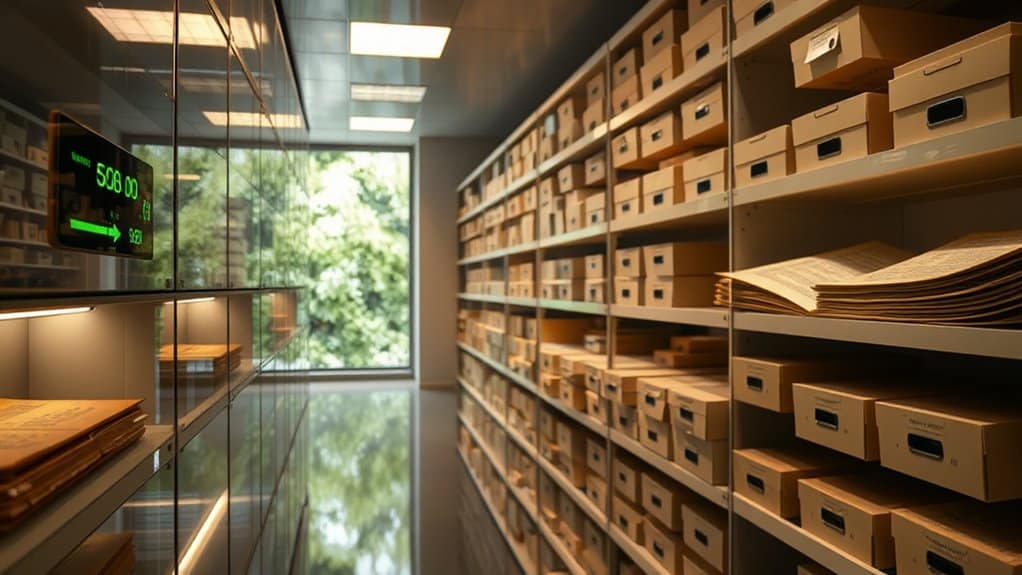
Controlling humidity is crucial for preserving documents, as it helps prevent mould growth that can cause significant damage. Ideal humidity levels should be maintained between 30-55% to ensure that paper remains flexible and stable. High relative humidity increases the risk of mould, fungi, and insect infestations, which can further deteriorate the quality of paper.
Preventing Mold Growth
To effectively prevent mould growth in document storage, it's crucial to manage humidity levels carefully. Keeping humidity below 50% and temperatures below 25°C (77°F) are key strategies.
Proper air circulation also helps reduce stagnant moisture, which encourages mould. Here are some practical tips:
- Use hygrometers to keep an eye on humidity levels.
- Install exhaust fans to remove damp air.
- Store documents in breathable materials to improve ventilation.
- Use silica gel packets or activated charcoal in storage areas to soak up excess moisture.
- Carry out regular maintenance checks to tackle any humidity issues promptly. Additionally, ensuring proper airflow and ventilation systems help maintain stable temperature and humidity levels, preventing moisture buildup and protecting stored items from damage.
Maintaining Paper Flexibility
Humidity management is crucial for preserving the flexibility and lifespan of paper documents. Since paper absorbs moisture, changes in humidity can alter its size and structure. If humidity drops too low, paper can become brittle and may crack when handled.
On the other hand, high humidity can lead to instability, which threatens the quality of archival materials. To prevent these issues, it's essential to maintain stable humidity levels. Fluctuations can accelerate deterioration, making it more difficult to preserve important documents.
Using climate-controlled systems helps keep humidity consistent, protecting against both brittleness and excess moisture. By maintaining the right conditions, you ensure your documents remain safe and manageable, allowing for easy access without the risk of damage.
Proper humidity control is vital for effective document preservation.
Ideal Humidity Levels
Maintaining ideal humidity levels is crucial for preserving your documents, as fluctuations can lead to deterioration. Aim for a humidity level between 30% and 50% to minimise damage from environmental factors.
High humidity above 55% can encourage mould growth and pest activity, while low humidity below 15% makes paper brittle.
To protect your documents, consider the following:
- Use dehumidifiers to control humidity effectively.
- Regularly check levels with automatic data loggers.
- Seal windows and doors to keep moisture out.
- Maintain stable humidity to prevent issues like warping.
- Seek advice from experts for tailored climate control solutions.
Materials Requiring Special Storage Conditions

When storing materials that require special conditions, it's crucial to understand their specific needs to preserve their integrity.
Temperature-sensitive documents, like archival materials, should be stored at a stable 20°C to prevent degradation.
Light-sensitive items, such as photographs, need to be kept in specialised containers that block direct sunlight to avoid fading.
Humidity-sensitive materials require controlled environments to prevent issues like mould and brittleness.
Additionally, documents that are chemically sensitive must be kept away from harmful substances.
For security-sensitive records, such as legal and medical documents, secure storage is vital to maintain confidentiality.
Cost-Effectiveness and Long-Term Savings
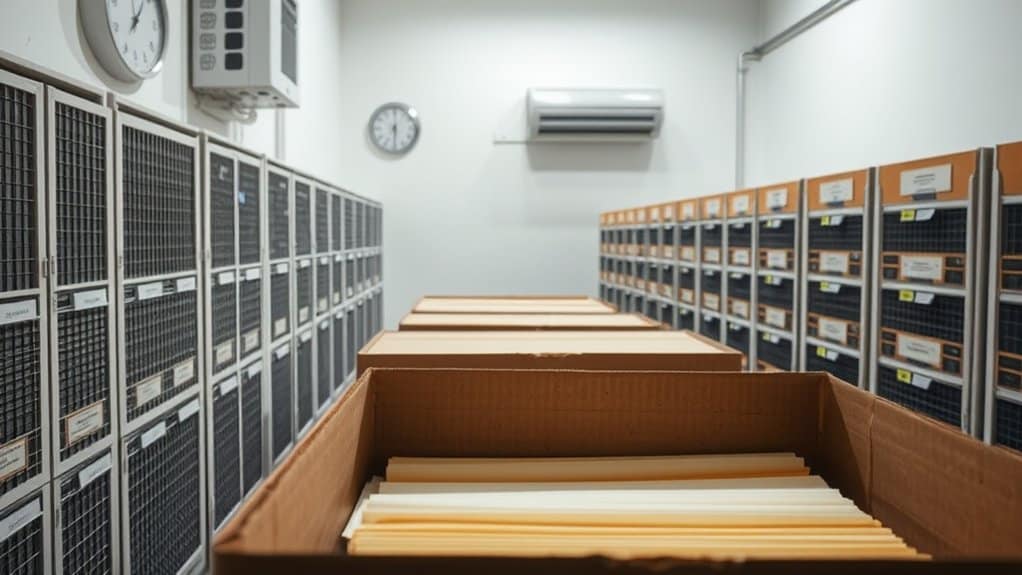
When assessing the cost-effectiveness of document storage, it's crucial to look beyond initial costs and consider the long-term savings that can come from smart choices.
For instance, investing in climate-controlled storage might seem expensive at first, but it can lead to significant cost savings and improved operational efficiency.
Here are some key benefits:
- Lower operating costs: Reduced labour expenses and infrastructure requirements.
- Long-term savings: Better rates through extended storage contracts.
- Optimised space: Frees up valuable office areas for more productive purposes.
- No hidden costs: Avoids maintenance expenses associated with in-house storage.
- Document preservation: Safeguards against deterioration and replacement costs.
Integrated Approaches for Document Preservation

Smart document storage choices not only save money but also establish a solid foundation for effective document preservation.
Focus on creating workflows that combine digital and physical preservation methods to ensure your documents remain intact and accessible.
Start with a thorough risk assessment to pinpoint vulnerabilities, which will help you devise strong preservation strategies across different formats.
Consider the sustainability of various formats and use preventative techniques like deacidification and encapsulation.
Digital migration is essential for keeping content accessible as technology evolves.
Enhancing Document Longevity With Climate Control

To enhance the longevity of documents, it's essential to control both temperature and humidity.
Keeping a stable temperature between 18 and 22°C helps prevent damaging expansion and contraction of paper.
Additionally, maintaining humidity levels between 40 and 55% protects your documents from mould and brittleness.
For instance, a damp environment can lead to mould growth, while excessive dryness can cause paper to crack.
Temperature Regulation Benefits
Effective temperature regulation is crucial for preserving documents, as it directly affects their physical condition. By keeping a stable environment, you can shield your documents from the damaging impacts of extreme temperatures and changing climates.
- Prevents paper from becoming brittle or yellow
- Stops warping and wrinkling caused by temperature shifts
- Maintains ideal storage temperatures (around 18°C to 21°C)
- Minimises the risk of tearing in cold conditions
- Safeguards valuable items, ensuring they remain readable for years to come
Humidity Control Importance
While many people focus on temperature control, managing humidity is just as crucial for preserving documents. High humidity can cause paper to absorb moisture, leading to deterioration and mould growth, which can irreparably damage your important papers.
To maintain a stable environment, it's essential to keep relative humidity between 40% and 55%. This can be achieved through regular humidity monitoring and using dehumidifiers, whether desiccant or refrigerant types.
Fluctuations in humidity can compromise the structural integrity of documents, so consistency is key. By effectively managing humidity, you not only prolong the life of your documents but also protect them from mould and bacteria that threaten their preservation.
In the long run, this proactive approach saves resources and maintains their historical value.
Frequently Asked Questions
How Does Climate Control Affect Digital Documents?
Climate control doesn't directly affect digital documents, but maintaining appropriate humidity levels in server rooms can significantly extend the life of hardware. To ensure reliable access to your data, it's essential to create ideal conditions that prevent equipment failures. For example, using dehumidifiers can help protect servers from moisture damage, which in turn safeguards your digital files.
Can Climate-Controlled Storage Prevent Insect Damage?
Imagine a sealed storage space where humidity and temperature fluctuations are eliminated. In this climate-controlled environment, pests such as moths and beetles struggle to survive, protecting your valuable belongings from damage. For instance, textiles and wooden furniture can remain safe from lurking threats and environmental changes, ensuring their longevity.
What Are the Signs of Document Deterioration?
Signs of document deterioration include discolouration, such as yellowing or fading, and brittleness, which makes the pages fragile. These problems often arise from poor storage conditions, compromising the integrity and readability of your documents. For instance, if you've kept papers in direct sunlight or a damp environment, you might notice these effects more quickly.
How Often Should Climate Control Systems Be Maintained?
You should maintain climate control systems twice a year to ensure they run efficiently. If you have an older system or it's used frequently, consider checking it every three months. This helps maintain consistent performance and can prevent costly breakdowns that disrupt your comfort.
Are There Specific Containers for Optimal Document Storage?
For optimal document storage, use archival boxes and acid-free sleeves. These specialised containers guard your documents against deterioration, keeping them intact and accessible over time. They also allow for easy organisation, making it simple to keep your important papers in order.
Conclusion
In summary, investing in climate-controlled document storage is not merely a cost—it's a protective measure for your important materials. While some may believe that standard storage suffices, the truth is that temperature and humidity fluctuations can cause irreversible damage. By opting for climate control, you ensure your documents remain in excellent condition, ultimately saving on future restoration expenses. Safeguarding your archives now means preserving their quality for future generations, making it a sensible and essential choice.