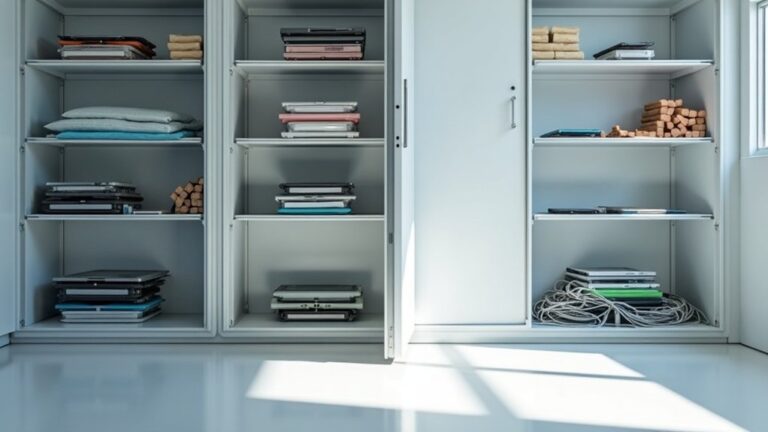

To store appliances safely and extend their lifespan, start by giving them a thorough clean to prevent dust and moisture build-up. Use a climate-controlled environment and wrap any delicate parts in bubble wrap for protection. Always disconnect appliances and secure loose components during transport. Regularly check your storage area for pests and inspect your appliances for any damage. Don’t forget to maintain a cleaning schedule for filters and coils. By following these simple steps, you can ensure your appliances remain functional and ready for use whenever you need them.
Key Takeaways
- Clean appliances thoroughly and ensure all parts are present before storing to avoid dust accumulation and potential damage.
- Store appliances in climate-controlled areas with good ventilation to maintain stable temperatures and minimise moisture risks.
- Use moisture-absorbing products and airtight containers to keep items fresh and prevent unpleasant odours during storage.
- Regularly check appliances for signs of damage or pest infestations, and lubricate moving parts as necessary.
- Stick to a routine cleaning schedule for filters and coils to boost appliance efficiency and extend their lifespan.
Importance of Cleaning and Maintenance

Prioritising cleaning and maintenance not only improves your appliances’ performance but also extends their lifespan. Simple tasks like wiping surfaces and vacuuming dust can prevent grime buildup that affects efficiency. This also reduces the risk of attracting pests to spills, helping keep your home clean and safe. Incorporate maintenance tips such as checking for loose electrical connections and regularly replacing filters to ensure your appliances run smoothly. Keep an eye on temperature settings to avoid excess strain, and inspect parts for wear and tear. Regular maintenance and periodic checks by experts can extend appliance life significantly, ensuring they serve you well for years to come.
Creating an Optimal Storage Environment
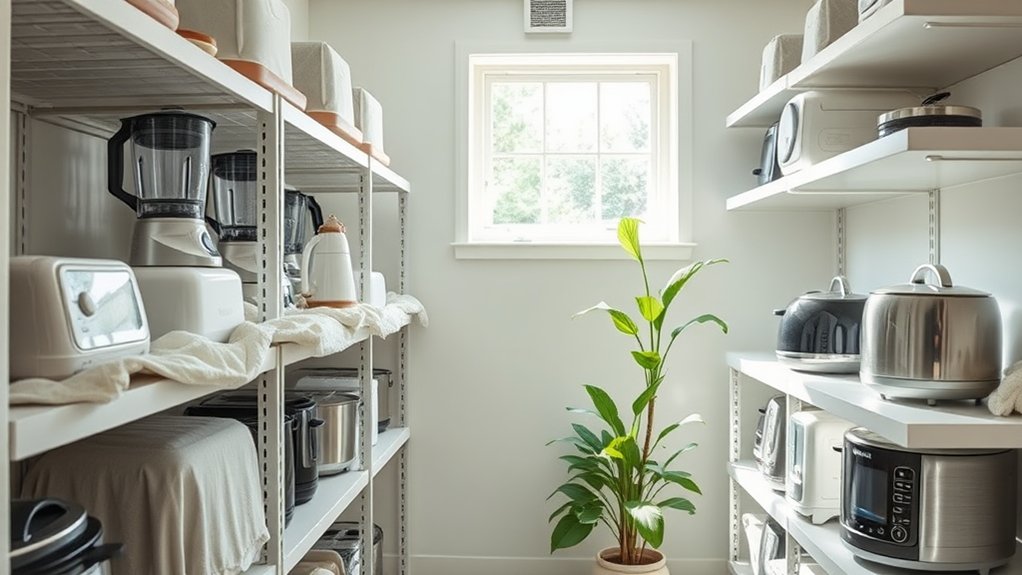
Cleaning and maintenance are essential for effective storage, ensuring your appliances stay in top condition. To create an optimal storage environment, focus on climate control and air circulation. Always store appliances in a climate-controlled area to maintain stable temperatures and low humidity, which helps prevent damage. If climate control isn’t an option, consider using moisture-absorbing products like silica gel inside your appliances. Additionally, protecting appliances during storage can significantly enhance their longevity, as climate-controlled storage safeguards items from environmental fluctuations.
| Storage Tip | Purpose | Action Required |
|---|---|---|
| Keep appliances upright | Prevents door misalignment | Store large items correctly |
| Allow space for air circulation | Reduces condensation risk | Arrange items with gaps around them |
| Use pallets to elevate appliances | Protects from floor moisture | Keep appliances off the ground |
| Regularly inspect conditions | Detects moisture or pests | Schedule periodic checks |
| Maintain cleanliness | Avoids dust and debris buildup | Keep the storage area tidy |
Securing Appliances During Transport
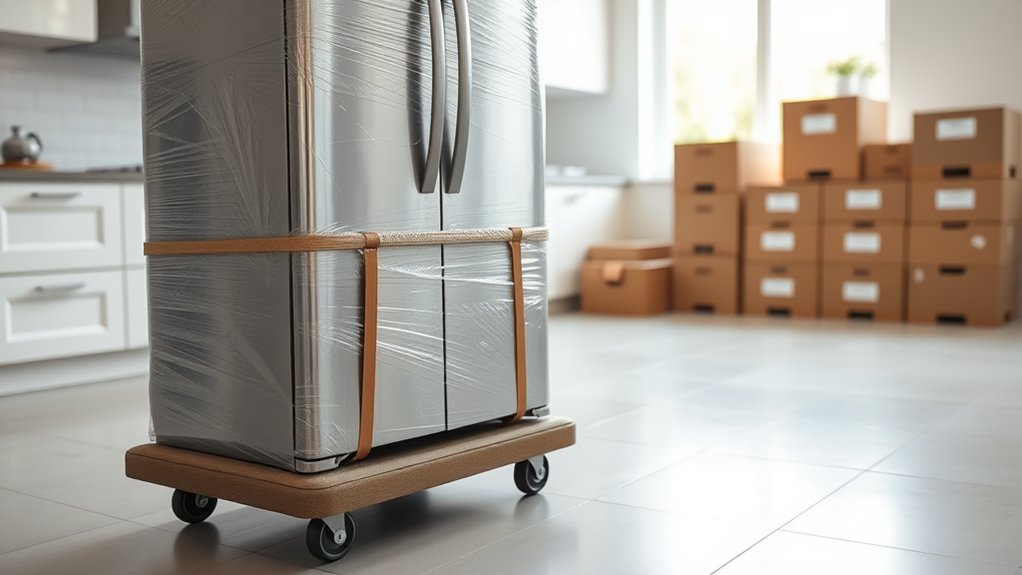
To ensure your appliances arrive safely at their destination, it’s crucial to take the right precautions during transport.
Start by disconnecting and cleaning your appliances, and secure any loose parts to prevent damage. For heavier items, use dollies and straps, and remember to lift safely to avoid injury. Additionally, using a heavy-duty appliance dolly can greatly reduce the risk of injury and damage while moving. Drive-up storage units offer convenient access for loading and unloading large appliances, making the process much easier.
Wrap delicate components in bubble wrap or moving blankets to guard against scratches. When loading, consider the size and weight of each appliance to determine the best handling method.
Secure appliances in the vehicle, filling any empty spaces with packing materials to minimize movement. Communicate with your team during loading to ensure everyone’s safety.
Following these steps will improve the safety of your appliances and help you enjoy your devices for years to come.
Strategies for Preventing Odors and Moisture
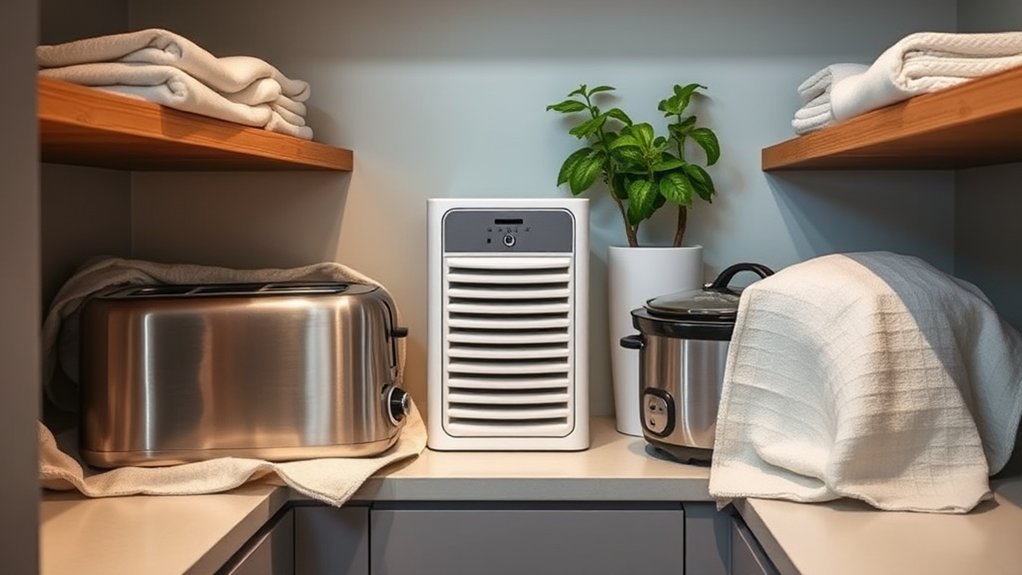
To keep your stored appliances free from odours and moisture, it’s essential to clean them regularly and absorb any excess moisture.
Simple practices such as using silica gel packets and maintaining cleanliness can make a noticeable difference. Additionally, regularly assessing cluttered areas in your storage space can help prevent the accumulation of dust and moisture that may lead to unwanted odours.
Absorb Moisture and Odors
When storing appliances, it’s crucial to manage moisture and odours to keep them in good condition.
Begin by using desiccants like silica gel to absorb excess moisture and control humidity. Install vapour barriers to prevent moisture ingress, and store appliances on pallets to keep them off damp surfaces.
To combat odours, ensure all items are thoroughly dry before storage, and use airtight containers to preserve freshness.
Adding baking soda or activated charcoal can help prevent unwanted smells. Good ventilation is essential, so ensure your storage area has adequate airflow to further reduce moisture and odours.
Regularly check humidity levels and adjust your methods as needed to keep your appliances in top condition.
Regular Cleaning Practices
Regular cleaning practices are crucial for ensuring your appliances work efficiently and last longer. If you neglect this, you may encounter unpleasant smells and moisture build-up.
Wipe down surfaces regularly with mild detergents or cleaners suitable for each type of appliance. It’s a good idea to clean up spills straight away to prevent odours and to check and clean filters frequently for optimal performance.
Also, inspect door seals and gaskets; keeping them in good condition ensures a proper seal and prevents leaks. Always dry the interior after cleaning to avoid moisture issues.
For a natural alternative, vinegar solutions can serve as effective deodorisers, keeping your appliances fresh without the use of harsh chemicals.
Effective Preparation for Storage
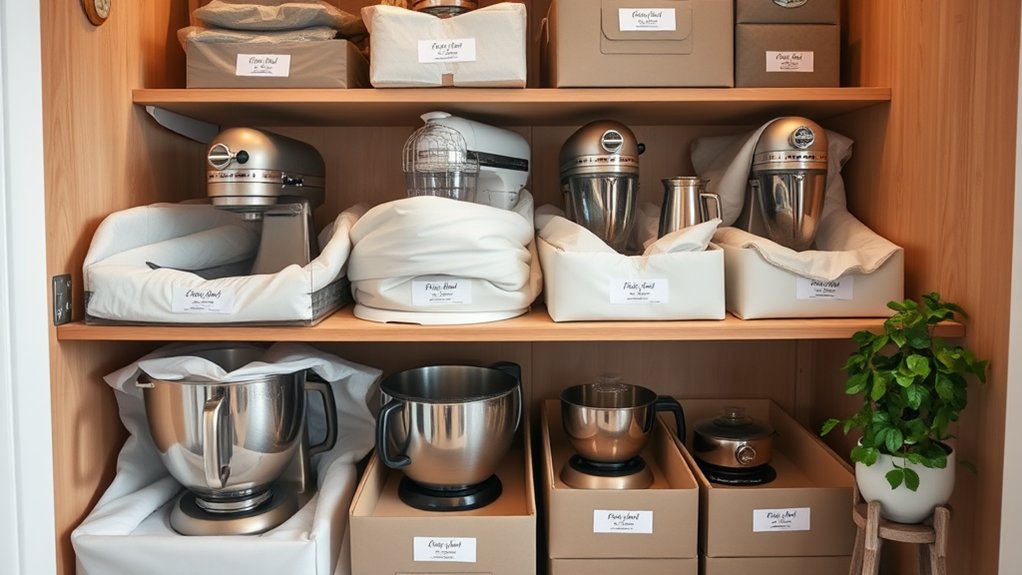
Effective preparation for storing appliances is crucial to ensure they stay in excellent condition.
Begin by making a list of all your appliances and taking photos for easy identification. Clean and sanitise each appliance with non-toxic solutions, ensuring they’re completely dry to prevent mould growth.
Secure any hoses and cords to avoid damage, and wrap the appliances in protective materials to guard against scratches and dust. Use tape to keep doors closed during transport, and consider placing items on pallets for better airflow.
Finally, organise your storage space for easy access, prioritising items based on how often you use them. Following these steps will help keep your appliances safe and ready for use whenever you need them.
Ensuring Power and Electrical Safety
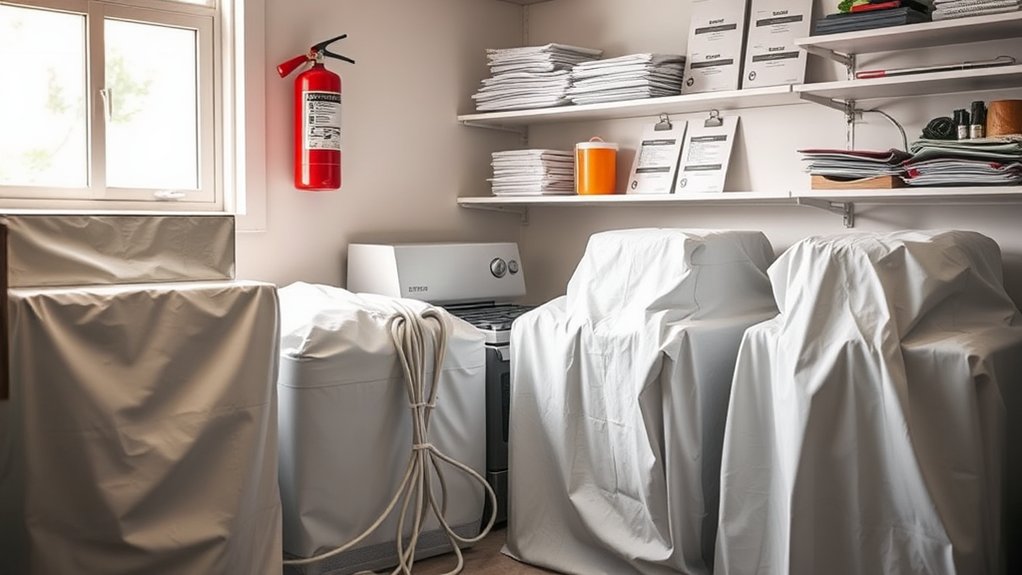
When using electrical appliances, safety is essential to prevent hazards and ensure functionality.
Start by adhering to the manufacturer’s installation guidelines and avoid overloading sockets to protect your circuits. Always use earthed sockets and check cords for any damage. If you’re uncertain about installation, seek professional help to mitigate risks.
Regularly inspect your appliances and cords to catch any issues early on. Keep appliances away from water and ensure proper ventilation to prevent overheating.
In wet areas, use safety devices like RCDs (Residual Current Devices) and avoid connecting multiple extension leads together. Store cords neatly to reduce tripping hazards.
Regular Maintenance Checks for Stored Appliances
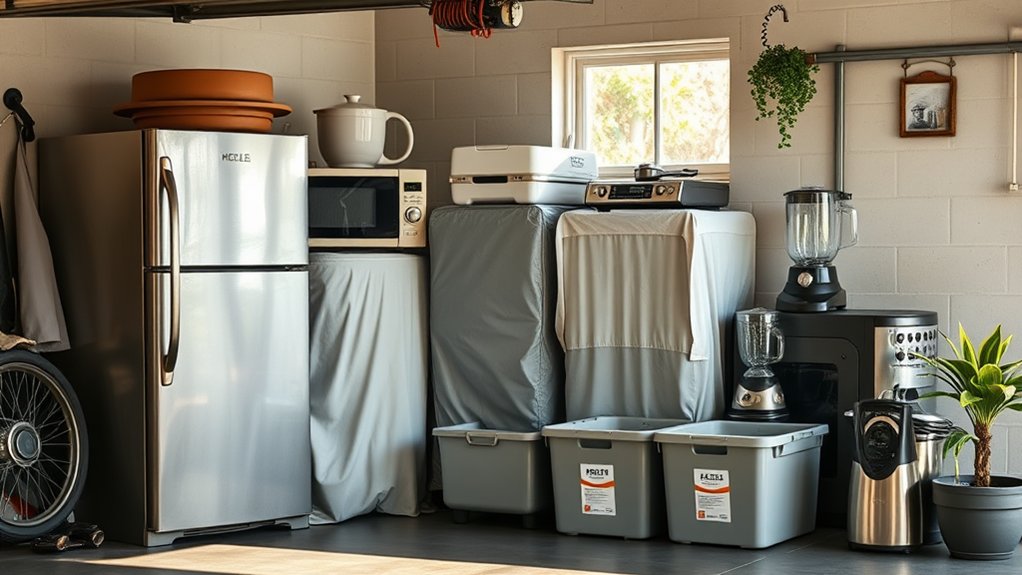
To keep your appliances in top condition while in storage, make regular maintenance checks a priority.
Start by looking for any signs of damage and ensure all components, such as shelves and drawers, are present.
Clean your appliances thoroughly to prevent dust build-up, which can reduce their lifespan.
Use breathable covers to protect them from dust and moisture.
Check periodically for pest infestations and ensure the storage area is dry to prevent dampness.
Lubricate moving parts and inspect seals for wear.
Organizing Your Stored Appliances
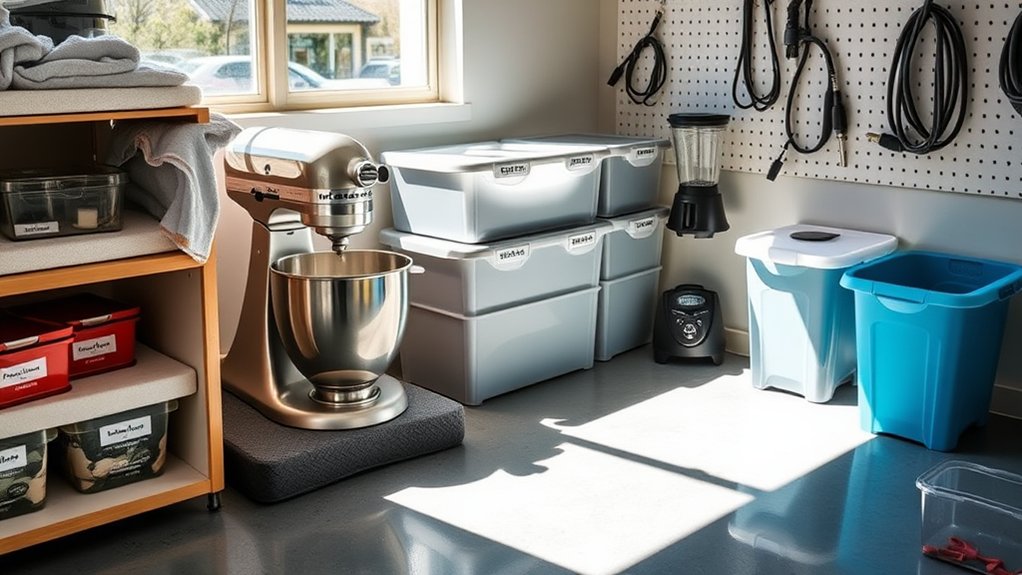
Once you’ve ensured your appliances are well-maintained in storage, the next step is to organise them effectively.
Start by categorising your appliances: keep daily-use items like blenders and mixers in easily accessible spots, while less frequently used gadgets, such as slow cookers, can be stored on higher shelves.
Use practical storage solutions like pull-out cabinets for quick access and shelf risers to make the most of your space.
Group similar appliances together—place baking tools in one area and cooking appliances in another.
For rarely used items, consider overhead storage or appliance garages to keep your worktops clear.
Regularly review your collection to remove any unused appliances, ensuring a streamlined, functional setup that suits your lifestyle and allows you to enjoy cooking without clutter.
Tips for Long-Term Appliance Care

To keep your appliances in good condition over time, set up a regular cleaning routine focusing on important areas like filters and coils.
If you notice any problems or just want to ensure everything is functioning well, don’t hesitate to call in a professional for maintenance.
Being proactive will help extend the lifespan of your appliances and keep them working efficiently.
Regular Cleaning Schedule
Establishing a regular cleaning schedule for your appliances is vital for their efficiency and longevity.
Start with your fridge: clean the condenser coils every six months and check the door seals monthly.
For washing machines, run a cleaning cycle once a month and clean the detergent drawer to avoid buildup.
Don’t neglect your oven and hob—deep clean the interior and wipe down the surfaces after each use.
Regular cleaning not only keeps your appliances safe by reducing fire hazards and bacteria but also ensures they work well for years to come.
Additionally, seasonal and annual tasks, like inspecting and replacing filters, will help maintain your appliances in peak condition.
Professional Maintenance Services
Regular cleaning is important for keeping your appliances in good condition, but professional maintenance services address the finer details that often get overlooked.
A professional inspection provides the expertise needed to extend the lifespan of your appliances. Here are some key benefits of maintenance:
- Extended Lifespan: Tackling issues early can prevent costly problems in the future.
- Energy Efficiency: Properly maintained appliances use less energy, which means lower bills.
- Peace of Mind: Knowing that qualified technicians are ensuring your appliances are safe and reliable lets you concentrate on what truly matters.
Investing in professional maintenance not only boosts performance but also allows you to enjoy your appliances without the stress of unexpected breakdowns.
Frequently Asked Questions
Can I Store Appliances Without Cleaning Them First?
While you can technically store appliances without cleaning them, it’s not advisable. Cleaning them beforehand is crucial to avoid issues like moisture, mould, and pests. For instance, if you store a blender without cleaning it, food residue can attract rodents or insects. Properly cleaned appliances will function better and last longer, ensuring they’re ready for use when you need them.
How Long Can Appliances Be Stored Safely?
You can safely store appliances for several months, but it’s important to ensure the right storage conditions. With proper care, you can significantly prolong their lifespan. Regular checks will help keep them in good condition, ready for your next use. For example, if you’re storing a fridge, ensure it’s clean and dry to prevent mould.
What Type of Storage Is Best for Large Appliances?
For large appliances, opt for a climate-controlled storage unit with protective padding. This helps avoid temperature changes and moisture damage, ensuring your appliances remain safe and functional for future use. It’s a good idea to check on them regularly for added peace of mind.
Should I Cover My Appliances While in Storage?
You may think covering your appliances isn’t essential, but using protective materials can prevent moisture build-up and scratches. This keeps them in good condition, ensuring they’re ready for use when needed, without any unwelcome surprises. For instance, covering a fridge with a dust sheet can keep it clean and dry, making it easier to use when you take it out of storage.
Are There Specific Storage Locations to Avoid for Appliances?
Avoid storing appliances in places with poor humidity control or temperature regulation, such as damp cellars or unventilated garages. These conditions can lead to rust, electrical problems, and significant damage over time.
Conclusion
Storing your appliances safely is essential for keeping them in good condition. Before putting them away, ensure they are clean and completely dry—just as you wouldn’t store a damp blanket. Regularly check on them and keep your storage area organised to help prolong their lifespan. Treat your appliances well, and they will serve you reliably for many years.