
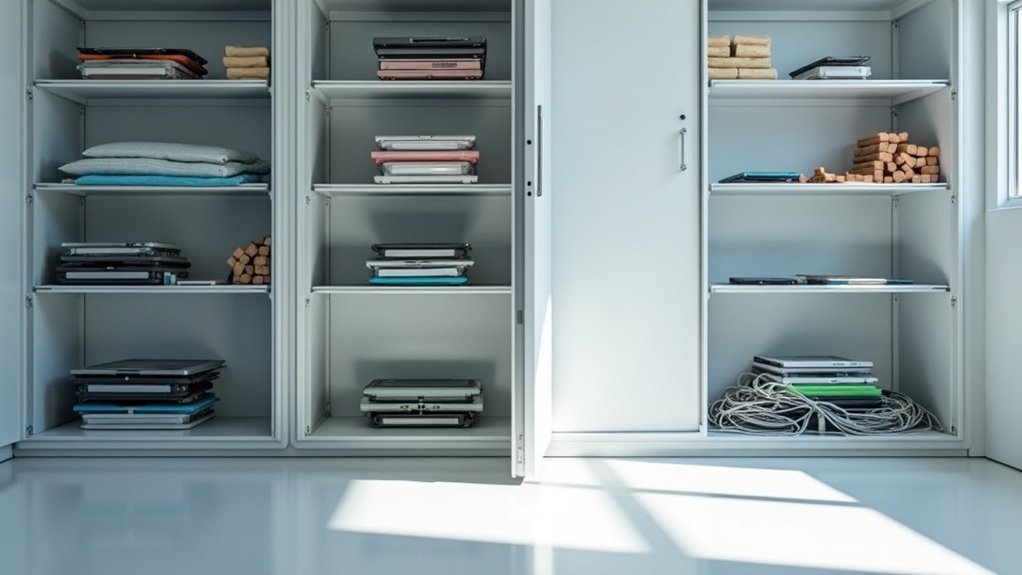
To store electronics safely in secure storage units, ensure a climate-controlled environment between 13°C and 29°C with 30-50% humidity. Use original packaging or snug boxes lined with anti-static bubble wrap for added protection. Clearly label everything and consider removing batteries to prevent corrosion. Implement robust security measures like CCTV and access control systems. Organising and tracking your inventory will make retrieval straightforward. By following these steps, your devices will remain protected.
Key Takeaways
- Ensure a climate-controlled environment, maintaining temperatures between 13°C and 29°C and humidity levels of 30-50%, to safeguard your electronics.
- Use the original packaging or sturdy boxes filled with anti-static bubble wrap to prevent any physical or static damage while in storage.
- Remove batteries and place detachable parts in dust-proof bags to avoid corrosion and dust build-up.
- Set up a clear inventory management system with detailed lists and labels for straightforward tracking and retrieval of your stored items.
- Boost security with surveillance cameras, access-controlled gates, and trained personnel to deter theft and damage to your electronics.
Importance of Climate Control for Electronics
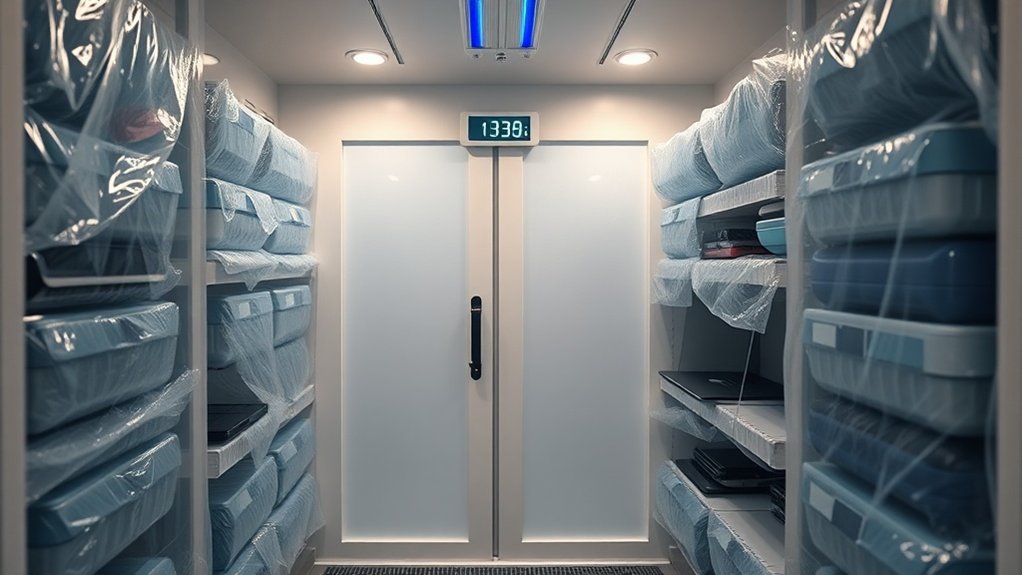
When storing electronics, it’s essential to maintain a controlled climate to ensure their longevity and functionality. Keep temperatures stable between 13°C and 29°C to prevent damage from extreme heat or cold, which can lead to thermal expansion that harms circuit boards and batteries. Consistent temperatures help reduce malfunctions and premature ageing, protecting against electrical failures. Additionally, utilizing climate control self-storage can provide an optimal environment for safeguarding your valuable electronics. Humidity levels are equally important; aim for 30-50% to minimise moisture build-up that can cause corrosion and mould growth. Regularly checking moisture control methods can further enhance the protection of your devices against environmental damage.
Safe Handling and Packaging Techniques
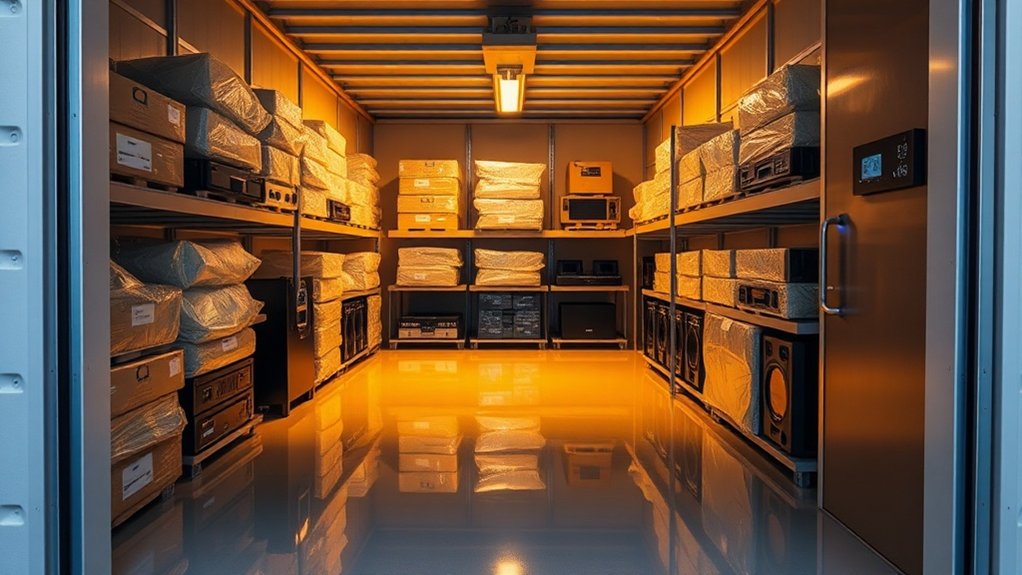
To ensure your electronics are stored safely, maintaining a controlled climate is just the beginning; proper handling and packaging techniques are essential.
Start with the original packing materials, such as custom foam inserts, for optimal protection. If those aren’t available, select snug-fitting boxes reinforced with cushioning materials.
Wrap each device in anti-static bubble wrap to guard against static damage, and fill any empty spaces with foam sheets. Always label boxes as “Fragile” and indicate the upright orientation to reduce the risk of mishandling. Additionally, using anti-static materials helps mitigate the risk of electrical damage during storage.
Consider using silica gel packs to control moisture inside the storage boxes, as this helps prevent corrosion and mold growth.
Remember to remove batteries and other detachable parts before packing, storing them separately in clearly labelled, dust-proof bags. This organised approach helps prevent damage and ensures your electronics stay in excellent condition during storage.
Effective Organization and Inventory Management
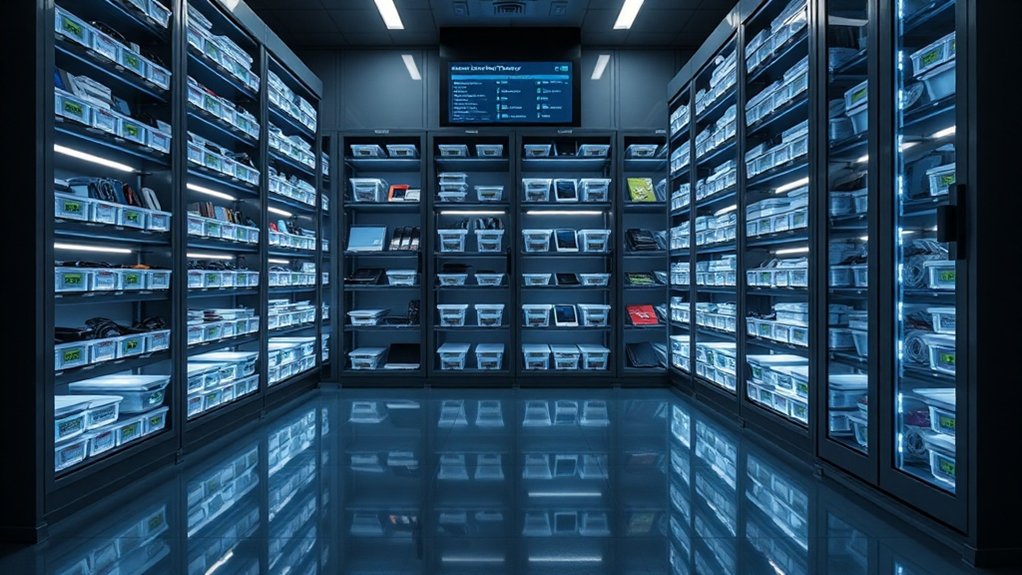
Effective organisation and inventory management are crucial for protecting your electronics and ensuring you can access them easily when required.
Begin by categorising your inventory; create detailed lists that include specifications, purchase dates, and warranties. Organise your items logically by type or usage to simplify tracking. Consider implementing a SKU system for precise management and separate consumables from repair parts. Having a scalable storage solution can further enhance your inventory management capabilities.
Utilise software automation by adopting inventory management tools that streamline tracking and updates. Barcode or QR code scanning can facilitate quick identification, and integrating your software with existing systems allows for real-time insights. Effective inventory management plays a crucial role in reducing lead times and stockouts, ensuring timely production and delivery of products.
Regularly review your inventory to identify obsolete items and make necessary adjustments, ensuring your storage remains efficient and responsive to your needs.
Security Measures for Protecting Stored Electronics
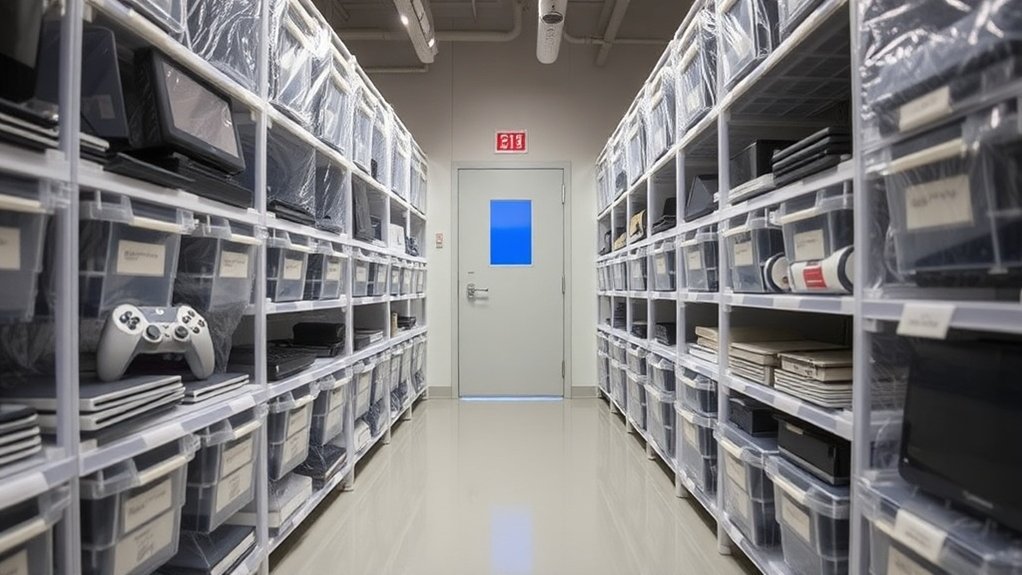
To ensure your stored electronics remain secure, implementing effective security measures is crucial.
Begin with solid physical security by installing tall, reinforced fencing and secure, access-controlled gates. Use surveillance systems, such as high-definition cameras and motion detectors, to continuously monitor all entry points. These systems not only deter theft but also provide immediate alerts for any suspicious activity.
Incorporate advanced access control methods, like smart locks and electronic gate systems, to ensure only authorised personnel can access the storage units.
Pair these with trained security staff to enhance overall monitoring and response. By combining these strategies, you’ll significantly reduce the risk of theft and damage, keeping your valuable electronics safe and sound.
Preparing Electronics Properly for Storage
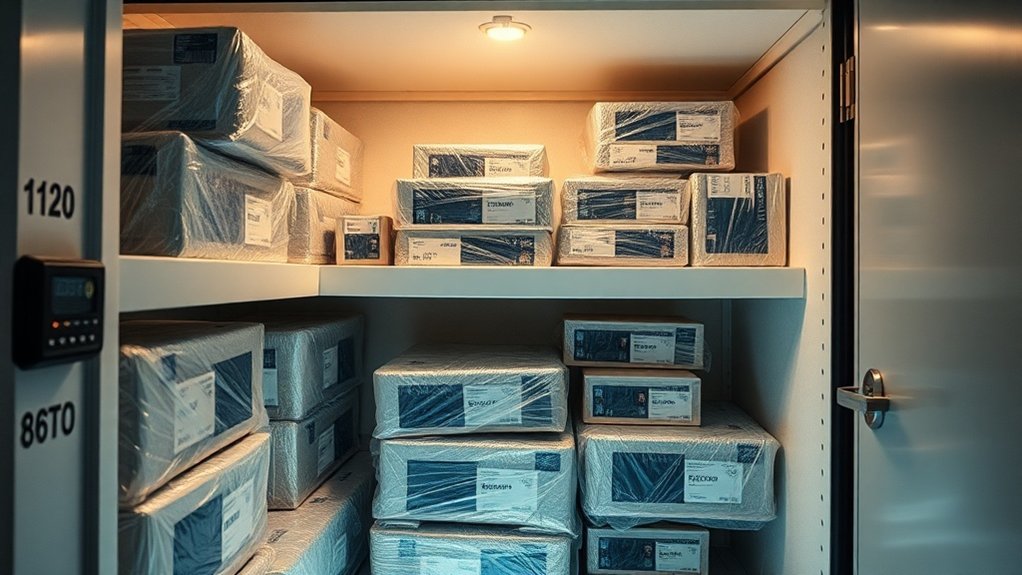
Properly preparing your electronics for storage is vital to ensure they stay in good condition. Start by cleaning them thoroughly to remove dust and debris. Remove batteries to prevent corrosion, and back up important data to avoid loss. Make a note of cable connections for easy reassembly later.
Here’s a quick checklist to help you get ready:
| Task | Purpose | Tools Needed |
|---|---|---|
| Clean devices | Prevent dust build-up | Microfibre cloth |
| Backup data | Avoid data loss | External hard drive |
| Label accessories | Make retrieval easier | Labels and markers |
| Use antistatic wrap | Reduce static damage | Antistatic bubble wrap |
| Store in a climate-controlled environment | Prevent damage from temperature and humidity | Thermometer, hygrometer |
Choosing the Right Storage Unit for Electronics
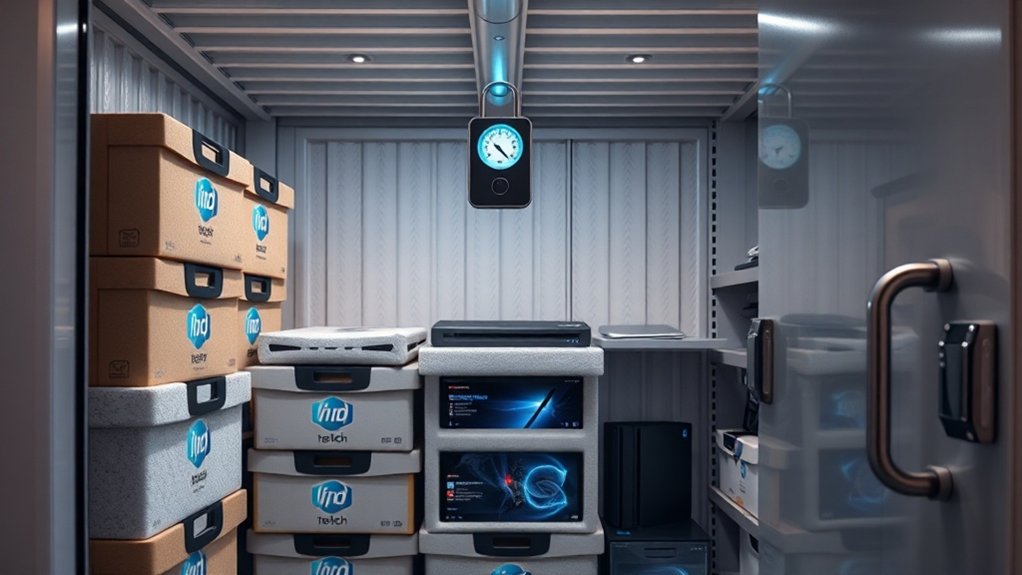
Once your electronics are ready for storage, the next step is to choose the right unit to keep them safe.
Look for a climate-controlled indoor space that maintains stable temperatures and humidity levels to protect your devices.
Check the unit’s size to ensure there’s enough room for proper arrangement without overcrowding.
Easy access is important, so opt for a facility with wide corridors or lifts for larger items.
Security features are crucial too; choose a facility with 24/7 surveillance and personal locks to keep your valuables secure.
If you expect to need regular access, select a unit that allows for easy retrieval.
Considering these factors will help ensure your electronics stay protected and in great condition.
Frequently Asked Questions
How Long Can Electronics Be Stored Without Damage?
Electronics can be stored for 5 to 10 years without incurring damage if you adhere to optimal storage conditions. To prevent any harm, manage humidity and temperature effectively, and ensure devices are stored securely to maintain their integrity over time. For instance, keeping them in a cool, dry place, away from direct sunlight, can make a significant difference.
Can I Store Electronics in a Non-Climate-Controlled Unit Temporarily?
Yes, you can temporarily store electronics in a non-climate-controlled unit, but take care. To protect them from damage, pack them securely—think bubble wrap or original packaging. Check on them regularly and minimise their exposure to moisture and temperature changes. For instance, avoid storing them near damp areas or in fluctuating temperatures, as this can affect their performance.
What Types of Electronics Require Special Storage Considerations?
Vintage electronics and delicate components require careful storage. It’s essential to keep temperatures and humidity levels stable. Use anti-static materials to prevent damage, and ensure they are protected from dust and physical impacts. For example, storing a vintage camera in a padded case can help keep it safe and functional.
How Do I Know if My Storage Unit Is Secure Enough?
How can you ensure your storage unit is secure enough? Look for strong security features such as alarms, CCTV surveillance, and controlled access. It’s also wise to read reviews from other customers to gauge their experiences. For instance, a facility with 24-hour monitoring and secure locks is likely a safer choice for your belongings.
Is Insurance Necessary for Storing Valuable Electronics?
Yes, insurance is essential for storing valuable electronics. It safeguards your investment against unforeseen damage or theft. Ensure you comprehend your insurance policy and confirm the value of your electronics to prevent any gaps in coverage. For instance, if your laptop is damaged in storage, having insurance can help you replace it without significant financial loss.
Conclusion
To keep your electronics safe in storage, be aware that nearly 30% of devices suffer damage from poor storage conditions. Ensure you choose a climate-controlled unit, pack your items securely, and implement robust security measures to protect your gadgets. For instance, use bubble wrap for fragile items and sturdy boxes for larger devices. Additionally, keep an organised inventory to make retrieval easier when needed. By selecting the right storage unit, your electronics will stay in excellent condition for years.