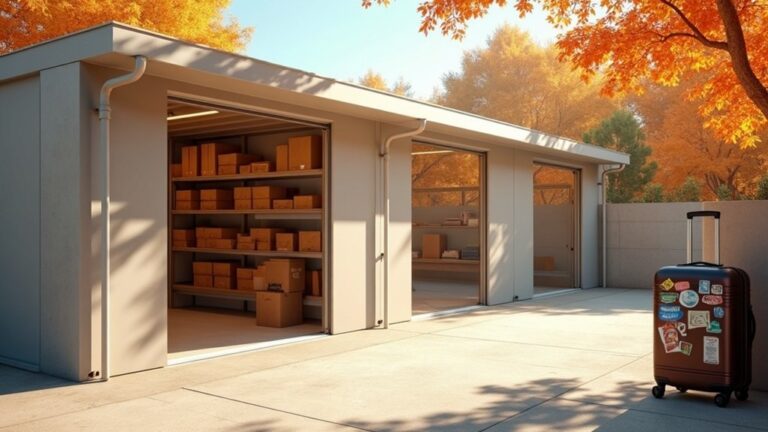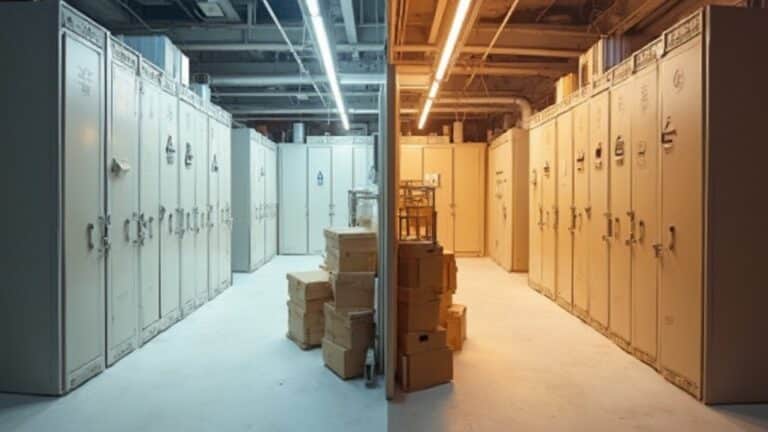

The history of self-storage shows a notable evolution from ancient methods, such as Roman horrea and underground storage pits, to today’s modern facilities shaped by consumer needs. In the UK, the concept gained traction in the 1960s and 1970s, largely due to increasing urbanisation and consumerism. As suburban living developed, garage-style units appeared alongside purpose-built storage facilities. Nowadays, the industry is thriving, offering various options, including climate-controlled units and advanced technologies like smart access systems. This transformation mirrors a growing demand for secure and flexible storage solutions. Continue reading to discover more about current market trends and future possibilities.
Key Takeaways
- Early storage methods included underground pits in ancient China and Roman horrea for public goods, showcasing a long-standing need for secure storage solutions.
- The self-storage industry began in the UK during the 1970s, spurred by increasing consumerism and the demand for easily accessible storage options.
- The mid-19th century saw the emergence of storage firms like Bekins, laying the groundwork for today’s self-storage facilities.
- The rise of suburban living in the late 1950s led to the popularity of garage-style units, reflecting evolving lifestyles and storage requirements.
- Technological advancements, such as smart access systems and mobile applications, have greatly enhanced self-storage operations and customer experiences.
Early Forms of Storage
When we examine ancient civilisations, it’s remarkable to see how resourceful they were in creating early forms of storage. These societies recognised the need to protect their resources, leading to inventive methods for preserving data.
For example, ancient China used underground pits to store food and personal belongings, while clay pots were essential for safeguarding valuables.
In ancient Rome, horrea served as public storage facilities, effectively holding vital goods like grain and wine.
The Incas employed a unique system called quipu, which utilised knotted strings to store and convey information, highlighting their advanced understanding of data preservation. Additionally, just as early storage methods evolved, modern advancements in technology have led to HDDs achieving 1 terabit per square inch in areal density, significantly increasing storage efficiency. Furthermore, the concept of self-storage has emerged as a modern solution to address contemporary storage needs.
These early storage methods not only addressed immediate needs but also reflected a desire for security and order.
The ingenuity of these civilisations illustrates a clear awareness of how resource management relates to survival.
Development in the United States
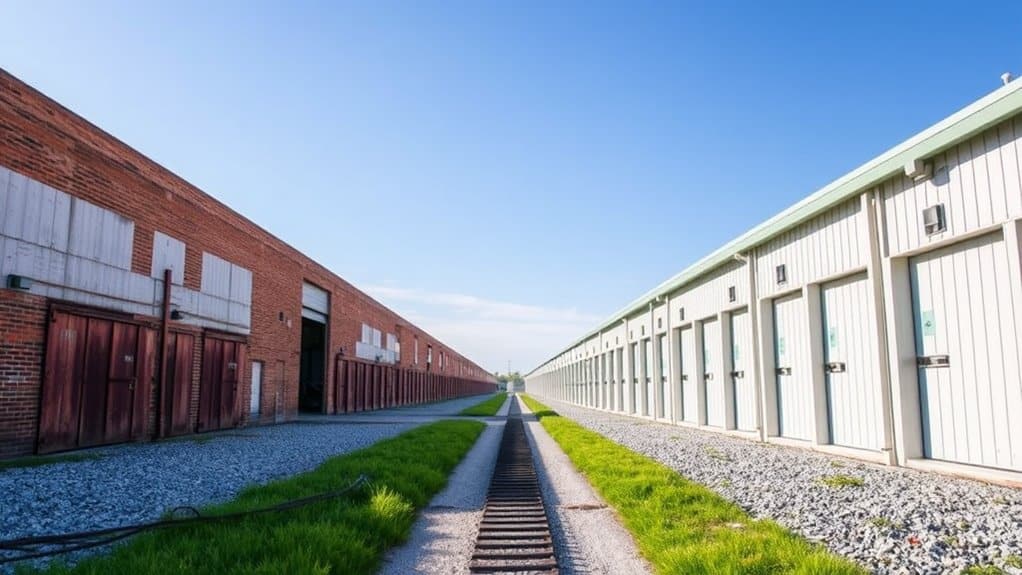
The concept of self-storage in the United States has significantly evolved from its early days to the thriving industry it’s now. The 1970s were a crucial period of growth, driven by entrepreneurs who saw the need for secure and accessible storage options. As technology improved facility design and security, self-storage became a vital part of American life, catering to both personal and business requirements. This evolution mirrors the trend of significant growth in the self-storage industry during this time, as facilities became commonplace across the U.S. Many facilities now offer enhanced security features, ensuring that customers’ belongings are well-protected.
Early Self-Storage Concepts
The early development of self-storage concepts in the United States stemmed from societal needs and innovative solutions. In the mid-19th century, companies like Bekins identified the demand for reliable storage options, paving the way for modern trends. Early facilities catered to both individuals and businesses, and the first storage facility established by Bekins in the 1850s marked a significant turning point in this industry. The advent of security features ensured that stored items were protected, further encouraging the growth of self-storage usage.
| Year | Milestone |
|---|---|
| 1850s | Bekins established the first self-storage facility. |
| 1906 | Bekins’ warehouse survives the San Francisco earthquake. |
| Pre-WWII | Increase in storage facilities for moving needs. |
| 1958 | Lauderdale Storage opens as one of the first modern facilities. |
| 1964 | A1 U-Store-It U-Lock-It U-Carry-the-Key opens in Texas. |
As suburbanisation took off in the late 1950s, the demand for flexible storage solutions grew. The emergence of garage-style units and purpose-built facilities reflected evolving customer desires for accessibility and security. These early innovations not only tackled practical storage issues but also marked the beginning of a thriving industry responding to the changing lifestyles of Americans.
Growth in the 1970s
The 1970s marked a crucial period of growth and innovation for the self-storage industry in the UK. This decade saw significant urban expansion and an increase in suburban living, largely due to the post-World War II housing boom. Families began moving into larger homes, but with their growing consumer habits came a surge in possessions, leading to a heightened demand for storage solutions.
Entrepreneurs such as Russ Williams and Wayne Hughes identified the potential of self-storage, investing in purpose-built facilities to meet this emerging need. They recognised that an increasingly mobile population required flexible storage options for temporary housing or life changes. Public Storage, founded in 1972, quickly became a key player in this expanding market, setting standards for future developments and showcasing the concept of self-storage facilities that catered to diverse customer needs.
Modern facilities began to emerge, featuring various unit sizes, climate control, and improved security measures. As investors saw the profitability and resilience of the self-storage model, the industry experienced rapid growth throughout the 1970s, establishing a strong foothold in British life.
Technological Advancements Impact
Technological advancements have transformed the self-storage industry in the UK, improving efficiency and enhancing the customer experience. Smart storage solutions, including AI and IoT, have revolutionised operations, allowing for predictive maintenance and personalised customer support. You can now interact with AI-powered chatbots for quick assistance, ensuring your queries are addressed promptly, day or night.
Digital security has also improved significantly, with biometric access and smart locks keeping your belongings safe. Real-time monitoring enables facility owners to oversee operations from anywhere, providing peace of mind for renters. Furthermore, automated inventory management using RFID technology simplifies tracking and boosts accuracy.
Convenience is key; mobile apps allow you to manage your storage unit remotely, while contactless payment options suit your busy lifestyle. Advanced security features, such as smart technology integration, enhance safety and operational efficiency. Augmented reality tools offer virtual tours, helping you visualise your items in the space before renting a unit.
These technological advancements not only streamline operations but also cater to your need for security, efficiency, and flexibility in managing your possessions. The self-storage industry is evolving to meet the demands of a tech-savvy customer base.
Modernization and Expansion
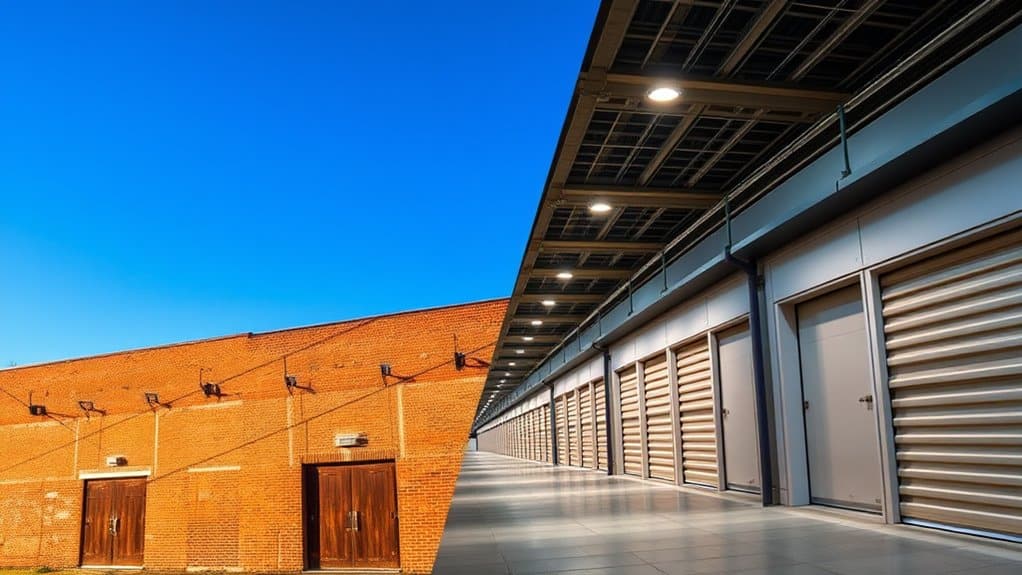
Modern self-storage facilities in the UK have seen significant improvements and expansion, catering to the changing needs of consumers in our increasingly urban world. As cities expand and living spaces become more compact, the demand for extra storage has risen sharply. This has led to innovative designs that enhance customer experience, such as climate-controlled units and 24/7 access, making storage not just necessary but also convenient for modern lifestyles.
Efficient facility layouts are crucial, maximising space use, improving accessibility, and prioritising security. Whether you choose a single-storey or multi-storey facility, you’ll find features like drive-up access and lifts to make your visit easier.
Added security measures, such as CCTV and individual unit alarms, ensure your belongings are safe. The rise of consumerism in the 1960s and 1970s highlighted the growing need for dedicated storage spaces, paving the way for the modern self-storage industry.
Self-storage has also expanded internationally, with facilities now available in Canada, Europe, and beyond. This global growth demonstrates a widespread need for flexible storage options.
As the industry continues to evolve, you can look forward to even more varied services and features tailored to your specific storage needs.
Market Trends and Statistics
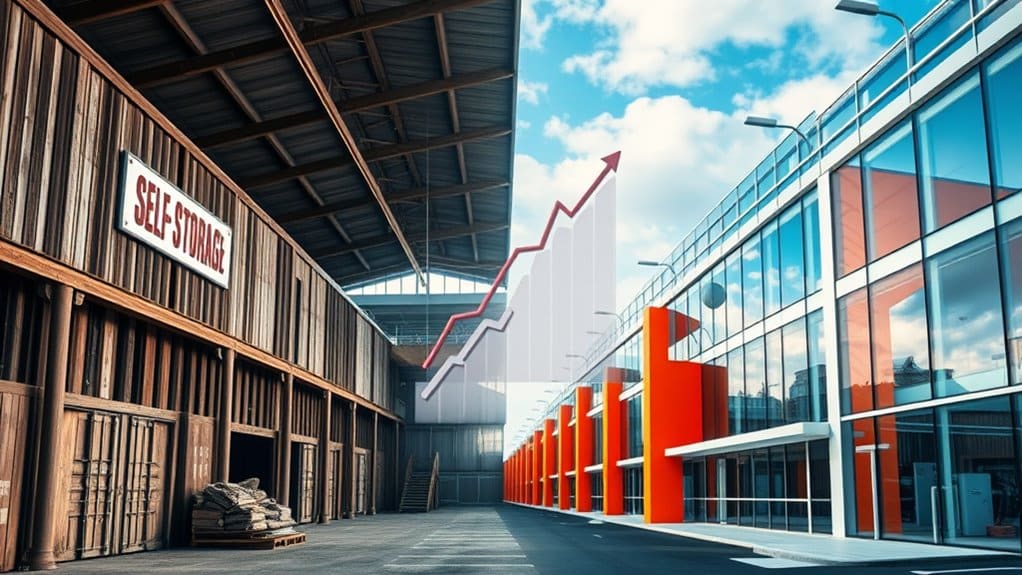
The global self-storage market is projected to reach a valuation of £60.41 billion by 2024, with a significant growth trajectory leading to £83.20 billion by 2030. In the UK, the market is expected to grow at a 5% compound annual growth rate (CAGR), driven by urbanisation and rising property prices. This growth aligns with the overall trend of increasing demand for storage solutions as urbanization continues to rise globally. These trends highlight not only growth but also shifting consumer preferences and market dynamics that are shaping the future of self-storage.
Global Market Valuation
The global self-storage market is on a significant upward trajectory, currently valued at around £58.26 billion in 2023 and expected to rise to £72.15 billion by 2028. This indicates a compound annual growth rate (CAGR) of 3.65% from 2019 to 2029, driven by various market trends.
Rising housing costs are leading individuals and families to downsize, increasing the demand for self-storage solutions. As more people and businesses seek flexible storage options for items like seasonal decorations, the market is responding. Additionally, the growth of the self-storage market correlates with trends in the housing market that impact the availability and pricing of units.
Technological advancements, such as enhanced security features and online booking systems, are making self-storage more user-friendly.
However, the industry does face challenges, such as zoning regulations and increasing property costs that could affect profitability. Still, the market remains appealing, characterised by low concentration and a wide range of customer needs being met through different unit sizes and services.
While North America currently leads the market, the Asia Pacific region is poised for the fastest growth, signalling significant opportunities for investment and development in self-storage facilities worldwide.
US Market Projections
A significant shift is occurring in the self-storage landscape in the UK, driven by key market trends and changing consumer behaviours.
With urban living on the rise, smaller living spaces are leading to increased demand for urban storage solutions. Additionally, the growth of online shopping means businesses need flexible storage options for managing their inventory.
In populous regions like London, Manchester, and Birmingham, the demand for self-storage is surging, driven by lifestyle changes and a consumer-driven culture.
Climate-controlled units are becoming more popular, as they help protect sensitive items. Flexible leasing options are now crucial, allowing you to tailor storage plans to your specific needs. The current market size is estimated at approximately USD 39 billion, highlighting the robust demand for self-storage solutions.
Market projections indicate that the self-storage sector is expected to grow significantly, with a market size forecast to rise from £35 billion in 2024 to £40 billion by 2029, achieving a compound annual growth rate of 2.44%.
This growth is fuelled by technological advancements that streamline operations, ensuring a seamless experience for consumers in this evolving market.
Growth Rate Analysis
The self-storage sector in the UK is seeing impressive growth, reflecting wider global market trends. The global self-storage market is set to increase from £59.03 billion in 2023 to £63.58 billion in 2024, showing strong momentum. By 2029, it could surpass £72 billion, with a compound annual growth rate (CAGR) of 7.9% from 2024 to 2028. Key factors driving this growth include urbanisation and rising property prices, leading to greater demand for storage solutions. People are increasingly looking for climate-controlled units and flexible leasing options that cater to their changing needs. Moreover, advancements in technology are improving security and convenience at storage facilities. Increased business awareness of storage costs significantly contributes to the expansion of the self-storage market.
In Europe, the UK stands out with a 34.6% market share, while the US leads globally with over 52,000 facilities. Notably, 18% of Americans currently use self-storage, with an additional 14% intending to rent. This highlights the significant market potential and the industry’s ability to adapt to evolving consumer demands.
Industry Evolution
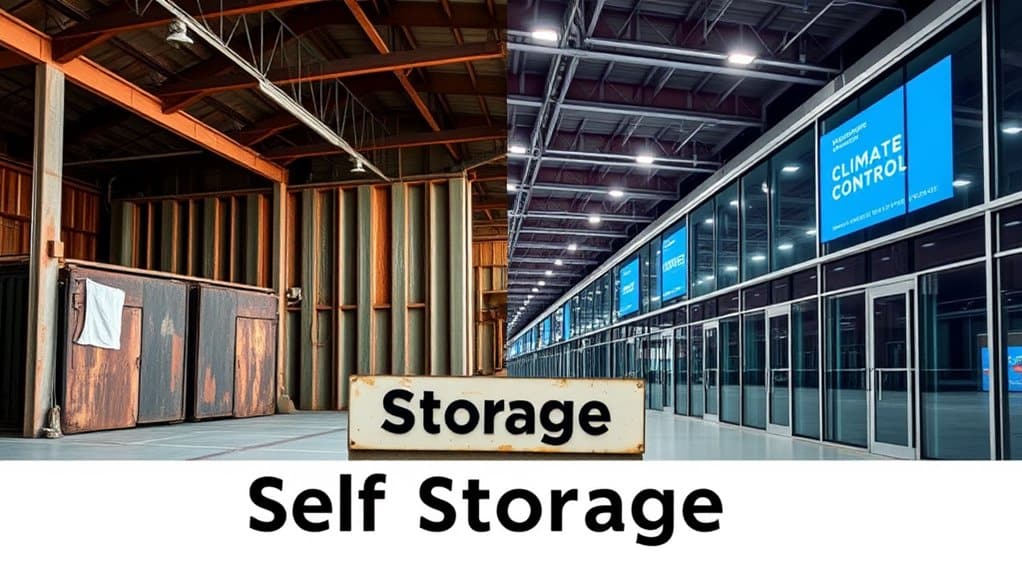
Self-storage has significantly evolved from its ancient roots, illustrating humanity’s enduring need for organised and secure spaces for belongings. The historical journey of self-storage highlights the impact of cultural influences. From underground pits in ancient China to warehouse services in 19th-century England, the demand for secure storage has remained consistent.
Today, the self-storage industry is a thriving sector characterised by:
- Technological Advancements: Modern facilities feature computerized gate access and climate-controlled environments, ensuring both security and convenience.
- Dedicated Structures: The rise of purpose-built self-storage units began in the 1950s, catering to a more mobile society.
- Varied Offerings: Facilities now provide a wide range of options, from garage-style units to specialised spaces for vehicles and business inventory.
This evolution demonstrates how self-storage has adapted to meet consumer needs while embracing innovation.
As you consider your storage options, think about how the industry’s growth mirrors a broader societal shift towards flexibility and organisation, enabling you to reclaim your space and improve your lifestyle.
Changing Demands in Storage
As urbanisation speeds up and housing costs increase, the demand for storage solutions is rapidly changing to meet evolving consumer needs. Many people are downsizing or embracing a mobile lifestyle, creating a need for flexible storage options that can adapt to their circumstances.
This shift is partly driven by economic factors, such as the rise in small businesses requiring space for inventory overflow, equipment, or seasonal stock.
The impact of e-commerce is significant; as online shopping grows, consumers are looking for secure and organised storage solutions. There’s a clear preference for smaller, climate-controlled units and additional services that enhance convenience and sustainability.
With occupancy rates rising and rental prices following suit, storage facilities must adapt quickly to these new demands. The move towards flexible leasing options highlights the importance of adaptability in today’s fast-paced environment.
Ultimately, the self-storage industry isn’t only responding to current needs but also anticipating future trends shaped by societal changes.
Technological Innovations
How has technology transformed the self-storage sector? Modern facilities now incorporate innovations that improve security, streamline operations, and enhance customer experiences. With smart access systems and automation, renters benefit from keyless entry through mobile apps, providing added convenience and independence.
Here are three significant technological innovations in self-storage:
- Smart Access: Keyless entry and automated kiosks allow you to rent units and manage payments without needing staff, catering to your preference for smartphone solutions.
- Data Analytics: Advanced management software assesses customer behaviour and occupancy trends, enabling operators to make informed decisions and optimise pricing.
- Security Monitoring: IoT devices, such as smart cameras and motion sensors, ensure real-time surveillance and alerts, offering peace of mind while securing your possessions.
Additionally, AI-driven customer service and virtual reality tours enhance the experience, allowing potential renters to explore facilities online and receive instant support.
As technology progresses, the self-storage industry becomes more efficient, secure, and user-friendly, giving you greater control over accessing and managing your belongings.
Future Outlook and Projections

The self-storage industry is poised for significant change, with forecasts suggesting substantial growth in the coming years. The global market is expected to rise from £46.5 billion in 2023 to an impressive £66.5 billion by 2028, driven mainly by urbanisation and the surge in e-commerce.
Increasing lifestyle changes and population growth are fuelling demand for flexible storage solutions, creating a prime opportunity for businesses to invest in this sector.
However, with growth comes challenges. As competition heats up, companies must continually innovate to stay ahead. For instance, the introduction of climate-controlled units and services like on-demand collection showcases the need for differentiation.
Furthermore, integrating digital solutions and sustainable practices will be crucial, as customers increasingly prioritise convenience and eco-friendliness.
In the UK, the market is projected to grow at a CAGR of 2.44%, signalling steady, albeit slower, expansion. Understanding these dynamics and effectively navigating market competition will be vital for seizing emerging opportunities in the self-storage landscape.
Your ability to adapt will ultimately determine your success in this evolving industry.
Investment Opportunities in Self-Storage
Investors are increasingly recognising the self-storage sector as a promising opportunity, thanks to its resilience and steady demand. This industry not only provides stable income streams but also offers various attractive investment options.
Here are three key factors to consider:
- Passive Income: Investing in self-storage REITs (Real Estate Investment Trusts) allows you to earn passive income with minimal involvement. These funds generate consistent rental income, often maintaining high occupancy rates, which can enhance your returns.
- High Earning Potential: Self-storage investments frequently yield high profit margins. The growing demand, driven by urbanisation and changing lifestyles, ensures that facilities remain profitable.
- Diverse Options: You can choose from various investment avenues, such as self-storage REITs, syndicates, or acquiring existing facilities. Each option caters to different capital requirements and risk levels.
As the self-storage market is projected to grow significantly, this sector presents an opportunity to diversify your portfolio while pursuing a low-risk investment with strong potential for passive income.
Exploring these options can align well with a financial strategy focused on freedom and flexibility.
Frequently Asked Questions
What Items Are Typically Not Allowed in Self-Storage Units?
You can’t store prohibited items in self-storage units, such as hazardous materials, flammable liquids, chemicals, firearms, or perishable food. Knowing these restrictions helps ensure your belongings stay safe and comply with regulations, preventing potential hazards.
How Can I Choose the Right Size Storage Unit?
Did you know that 30% of people underestimate their storage needs? To find the right size storage unit, start by assessing your belongings. Make a list of what you need to store, such as furniture, boxes, or seasonal items. Consider how you can optimise the space by stacking items and using boxes. Also, think about any future needs; if you plan to acquire more items, it might be wise to choose a slightly larger unit. This approach will help ensure a smooth and hassle-free storage experience.
Are Self-Storage Facilities Climate-Controlled?
Yes, many self-storage facilities in the UK provide climate-controlled units. These units keep a consistent temperature and humidity level, protecting your belongings from extreme weather conditions. For example, items like wooden furniture or sensitive electronics can be damaged by damp or fluctuating temperatures, so climate control helps keep them in good condition during storage.
What Security Measures Do Self-Storage Facilities Implement?
When you store your belongings, self-storage facilities in the UK employ strong access controls and advanced surveillance systems. They utilise keypad entry, RFID locks, and round-the-clock monitoring to ensure your items are secure and protected from unauthorised access.
Can I Access My Storage Unit Anytime?
You can access your storage unit at any time, but this depends on the facility’s access hours and policies. Some places offer 24/7 access, while others limit entry to certain hours. For example, a facility might allow access from 7 am to 9 pm. Always check the specific details of your chosen storage facility.
Conclusion
In summary, the evolution of self-storage mirrors changing societal needs and economic trends. While some may argue that traditional storage methods suffice, the rise of modern facilities highlights a clear demand for convenience, security, and flexibility. For example, families moving house or students needing temporary space during the summer break often turn to self-storage solutions. As technology advances in the industry, self-storage is likely to evolve further, catering to various consumer preferences. By investing in self-storage, you’re not just securing space; you’re engaging with a growing market that’s set for transformation.