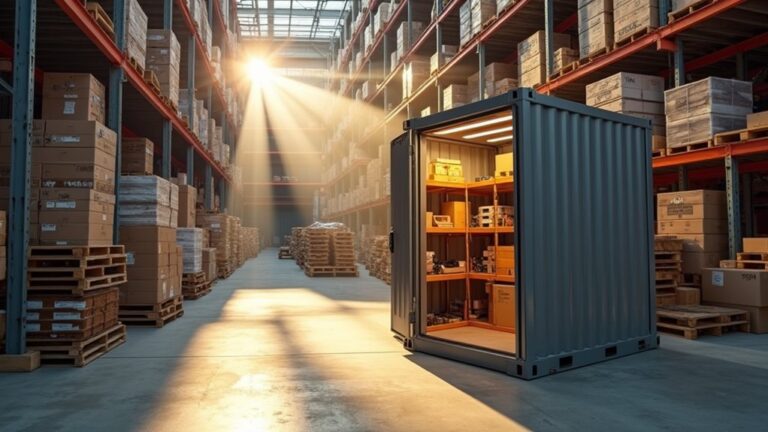

When it comes to self-storage units, sizes vary from 5×5 feet for smaller items to 10×30 feet for larger needs. Small units are ideal for seasonal items or small pieces of furniture, while medium units can accommodate the belongings of one- to two-bedroom flats. Large units are suitable for storing significant items, including vehicles. To select the right size, measure your items and consider the space you have available. If you’re storing sensitive items, think about opting for climate-controlled units. By understanding these dimensions and features, you can make a well-informed choice tailored to your requirements. There’s plenty more to discover about optimising your storage experience and efficiency.
Key Takeaways
- Storage units vary in size from 5×5 to 10×30 feet, catering to a range of needs from small personal items to larger vehicles.
- Small units are perfect for seasonal items like holiday decorations, while medium units can accommodate the contents of one- or two-bedroom flats, including larger furniture and appliances.
- Large units are suitable for significant furniture, appliances, and even vehicles, ideal for those requiring ample storage space.
- Use measurement techniques to evaluate your items and select the right unit size based on their dimensions and overall storage needs.
- Consider climate-controlled units for sensitive belongings, as they offer protection from temperature and humidity changes, ensuring your valuables remain in good condition.
Understanding Storage Unit Sizes
Understanding storage unit sizes is essential when considering your options. Storage units generally range from 5×5 to 10×30 feet, suitable for everything from small boxes to large furniture. Most facilities offer units with a standard height of 8 feet, though some may feature 10-foot ceilings for added vertical space. Additionally, medium units like 10×10 and 10×15 are popular for apartments or small offices, accommodating items such as bedroom furniture or home gym equipment. Climate-controlled units can also be beneficial for protecting sensitive items from environmental damage.
For larger needs, units like 10×20 or 10×30 are ideal for the contents of a larger home or even vehicles.
Storage units provide not just space but also security for your belongings. Facilities typically have advanced security measures, including gated access and surveillance cameras, ensuring your items are safe while you declutter.
Knowing these storage unit sizes will help you select the right option for your needs, offering peace of mind and flexibility in managing your possessions.
Small Storage Units Overview
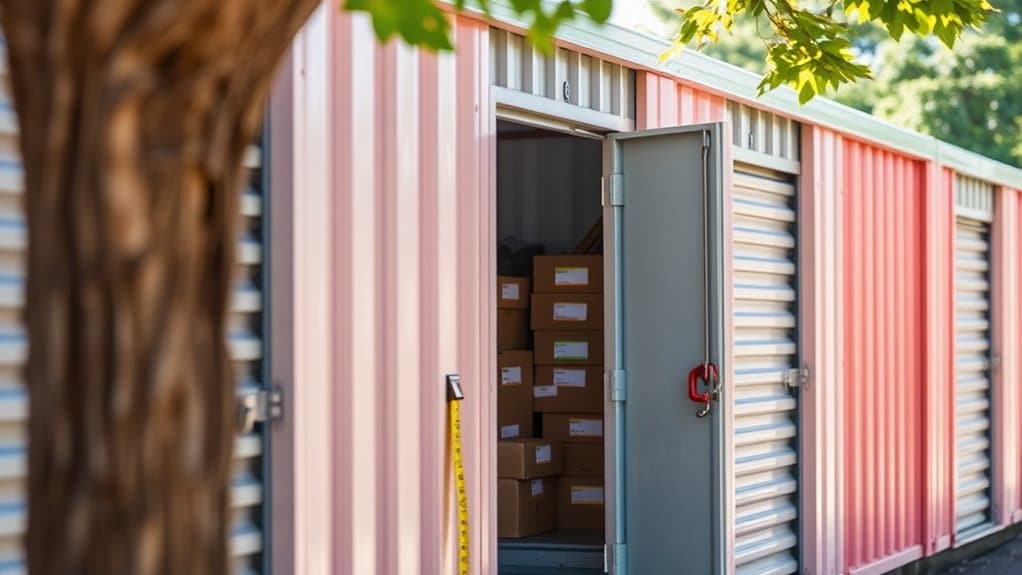
Small storage units provide an efficient solution for those needing extra space without the commitment of larger options. Typically measuring 1.5 by 1.5 metres, these units are similar to a small walk-in wardrobe, accommodating boxes, seasonal decorations, and small furniture items. They can hold the contents of a small room, such as a mattress, bedside table, and chest of drawers.
If you’re seeking seasonal storage, these units are ideal for stowing away Christmas decorations, summer clothes, or sporting equipment. You’ll find them easily accessible, as many facilities offer ground-level access or rolling staircases, making it simple to load and unload your items. Additionally, small storage units, such as 5×5 units, resemble a small walk-in closet and are suitable for standard-sized tubs and boxes. The variety of sizes available ensures that you can find the perfect fit for your specific needs.
For businesses, small storage units are invaluable for storing documents, excess stock, and small supplies, helping to manage space effectively.
With flexible month-to-month leases, you can opt for temporary storage without long-term commitments. Some facilities even provide climate control and security features like 24-hour video surveillance, ensuring your belongings are stored safely.
Whether for personal or business use, these compact units allow you to reclaim your space while keeping your items secure and accessible.
Medium Storage Units Overview

Medium storage units provide a practical solution for individuals and families needing extra space, whether for a move or long-term storage. Typically sized at 10×10 and 10×15 feet, these units can hold the contents of one- to two-bedroom flats. A 10×10 unit is similar in size to a small bedroom or a single garage, making it suitable for items such as king-sized mattresses, dressers, and medium appliances. Additionally, these units are ideal for assisting in decluttering homes, allowing for a more organized living space.
The larger 10×15 unit, akin to a bigger bedroom, can accommodate entire furniture sets and larger electronics. One key advantage of medium storage units is their flexibility. They can store oversized items like dining tables and, in some locations, even small vehicles. Additionally, choosing the right unit size ensures that you avoid paying for unused space while still adequately accommodating your belongings.
These units are frequently used during house moves or for long-term storage, making them a sensible choice for many. When comparing unit sizes, medium storage units offer a balanced option between smaller and larger units, catering to both short- and long-term needs. Prices usually range from £100 to £250 per month, making them a cost-effective option for residential and some commercial storage. Don’t forget to measure your items to ensure a good fit!
Large Storage Units Overview
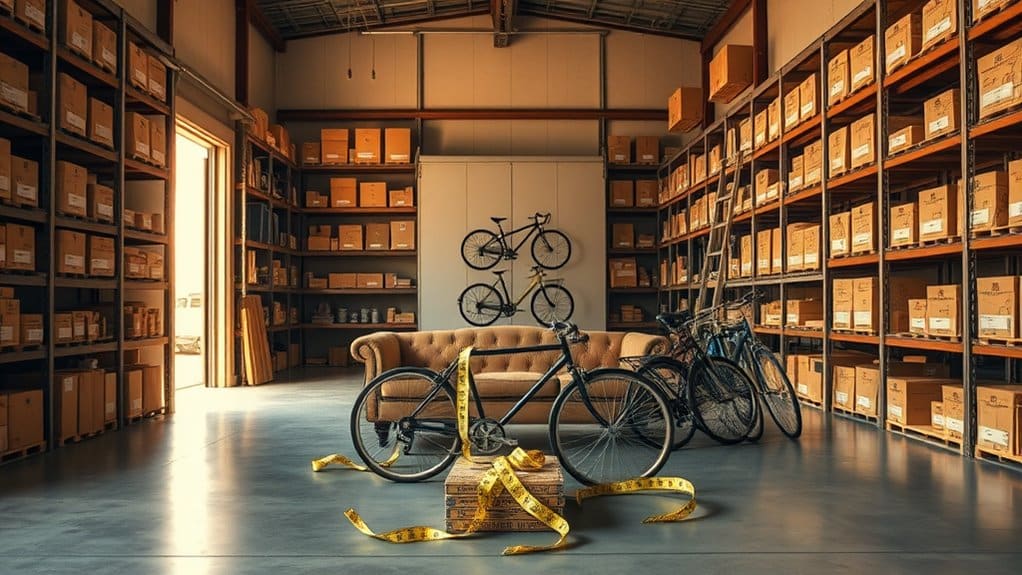
Large storage units are a great solution for those with significant storage needs, whether you’re downsizing, moving home, or running a business.
These spacious units come in various sizes, such as 10×20, 10×25, and 10×30, making it easy to store everything from furniture and appliances to vehicles like cars and vans.
One of the key benefits of large units is their flexibility; they can accommodate a wide range of items, from household goods to commercial equipment.
This makes them perfect for both personal and business storage. If you need to store vehicles, these units can comfortably house motorcycles, ATVs, and even boats, providing a secure space for your valuable assets.
With the capacity to manage substantial storage requirements, large units help keep your space organised and clutter-free.
You’ll have easy access to your stored items without the hassle of navigating tight spaces.
Additionally, their security features give you peace of mind, knowing your belongings are safe.
How to Choose the Right Unit

To choose the right storage unit, start by assessing what you need to store.
Make a list of all your items, such as furniture, boxes, or seasonal gear. Then, measure the space you have at home to ensure you select a unit that fits both your budget and your storage needs.
For example, if you need to store a sofa and several boxes, make sure the unit is spacious enough.
Assess Your Inventory
Assessing your inventory is crucial before storing items. Start by creating a comprehensive list of everything you plan to store, ensuring nothing is missed. This step helps you understand what you have and how to organise it.
Begin by categorising items into groups. Pay particular attention to larger items, as they often require different handling compared to standard boxes and furniture.
| Item Type | Size Category | Special Considerations |
|---|---|---|
| Small Furniture | Small (5’x5′) | Can be stacked |
| Medium Appliances | Medium (10’x10′) | Needs space for access |
| Boxes | Small to Large | Label for easy identification |
| Seasonal Items | Small (5’x10′) | Can be stacked |
| Irregular Items | Large (12’x30′) | Requires specific placement |
Consider the space each category requires and identify items that cannot be stacked. Also, think ahead about potential future storage needs. By fully understanding your inventory, you can select a storage unit that accommodates your current items and allows for future growth, keeping your storage adaptable to your lifestyle.
Measure Available Space
Measure Available Space
After assessing your inventory, the next step is to measure the available space to select the right self-storage unit. Use various measurement techniques to ensure you choose a unit that meets your needs.
The first method is counting doors: simply multiply the number of doors by the average unit size—usually 10×10 or 10×15 feet. This provides a quick estimate, but be mindful of any size variations.
Another option is to use Google Maps. Right-click on the facility and select “Measure distance” to outline the area, which gives you a more accurate square footage for your planning.
For a more hands-on approach, physically measure the space. Use a tape measure to mark out the unit’s footprint on the floor, helping you visualise how your items will fit, especially with the typical eight-foot ceilings for vertical stacking.
Lastly, interactive calculators can simplify your process. Input the dimensions of your items to estimate the required cubic feet.
Inventory and Measurement Tips
When planning your storage needs, it’s crucial to accurately estimate the sizes of items to make the most of the available space.
Think about how your storage requirements might change in the future, as this can affect your current choices. For example, if you plan to acquire more furniture or seasonal items, ensure you leave room for these additions.
Item Size Estimation
Accurately estimating the size of items for storage is crucial for optimising space and reducing costs. Here are some practical tips to ensure effective storage estimation:
- Measure Items: Take the length, width, and height of each item to determine its square or cubic footage.
- Count and Categorise: Create a detailed list of all items, including smaller ones and larger furniture pieces.
- Estimate Storage Needs: Use your measurements to work out the total square or cubic footage required.
- Use a Storage Calculator: Utilise online tools that help match item dimensions to the appropriate storage unit size.
- Consider Vertical Space: Most storage units are 8 feet tall, so stack items effectively to make the most of your space.
Future Storage Planning
Planning for future storage requires efficient inventory management and accurate measurements to make the most of your space. Start by sorting your items into categories based on size, how often you use them, and their fragility. This way, you can place frequently used items at the front for easy access, while larger items can go towards the back. Store fragile items in easily reachable spots to minimise the risk of damage.
Consider using inventory tracking systems to simplify the process. Record item descriptions, quantities, and purchase dates, and keep this information updated to reflect any changes. Digital tools like spreadsheets or inventory management software can help keep everything organised.
When measuring your belongings, ensure you take precise length, width, and height measurements to determine the required space. Choose a suitable storage unit based on these calculations.
Make the most of vertical storage and stackable shelves to optimise space. Plan your layout thoughtfully by grouping similar items together and leaving clear aisles for easy access. Regularly review your inventory to make necessary adjustments, keeping your storage efficient and adaptable.
Visual Tools for Selection
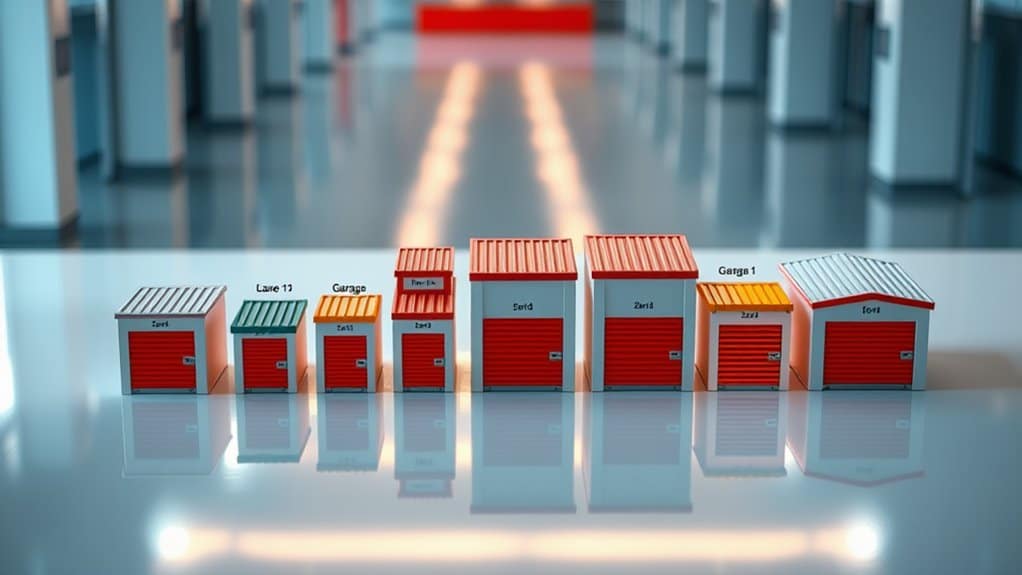
Choosing the right self-storage unit can seem daunting, but visual tools make it much easier. These user-friendly resources help you understand your storage requirements and make informed choices. Here are some popular options:
- Visual Guides: These help you picture how much space you need.
- Space Calculators: They calculate the total space required based on the dimensions of your items.
- Size Comparison Charts: These allow you to easily compare different unit sizes.
- Interactive Storage Calculators: Input your item dimensions for precise estimations.
- Storage Unit Layout Visualisers: These demonstrate how your belongings can fit into various storage units.
Using these tools can save you time and ensure accurate estimations, minimising the risk of overcrowding or wasted space.
They offer effective strategies for organising your items efficiently, helping you to optimise costs and maximise space.
Plus, you can access these tools online or on your mobile, allowing you to assess your storage needs wherever you are.
Embrace the ease of knowing exactly what you need; visual tools are invaluable in choosing the right self-storage unit.
Additional Storage Considerations

When considering self-storage, it’s essential to look beyond just the unit size to ensure efficiency and accessibility.
Begin by evaluating the layout of your storage unit. Ensure there’s sufficient aisle width and circulation space for easy access. Stacking items efficiently in units with at least 2.4-metre ceilings can significantly enhance your storage capacity.
Security features at the facility are crucial. Look for gated access, CCTV, and individual locks to keep your belongings safe while you benefit from off-site storage.
Additionally, consider access options that suit your lifestyle. Some facilities offer 24/7 access, which can be invaluable if you need to collect items outside regular hours.
Taking inventory of your items is also important. Measure their dimensions and sort them based on size and stackability. This careful planning will help you select the right unit and make the most of vertical space.
Finally, organise your storage wisely to save time and protect your belongings. Position heavier items at the back and frequently used items at the front.
Label boxes clearly and create a simple layout map for quick retrieval. By keeping these factors in mind, you’ll improve your self-storage experience.
Climate-Controlled Units

Climate-controlled units are essential for protecting your belongings from temperature and humidity fluctuations. These units maintain a stable environment, ensuring your items remain safe from the elements. With advanced HVAC systems, they offer several key benefits:
- Protection from extreme weather: Shields your belongings from scorching summer heat and freezing winter conditions.
- Humidity control: Prevents issues like mould, cracking, and warping, particularly for sensitive materials.
- Dust and pest control: Sealed and insulated spaces reduce environmental impacts and unwanted pests.
- Consistency: Provides a reliable environment throughout the year, unlike standard storage units.
- Item safety: Ideal for sensitive belongings such as electronics, fine art, and treasured possessions.
When storing delicate items, climate-controlled units are the best option. They’re suitable for everything from seasonal decorations to long-term storage of cherished items.
Although they may cost more than standard units, the peace of mind they offer is worth it. Make sure to choose a facility that prioritises temperature control and regular maintenance to keep your items in top condition.
With the right choice, you can store your valuable possessions confidently.
Packing and Organization Tips
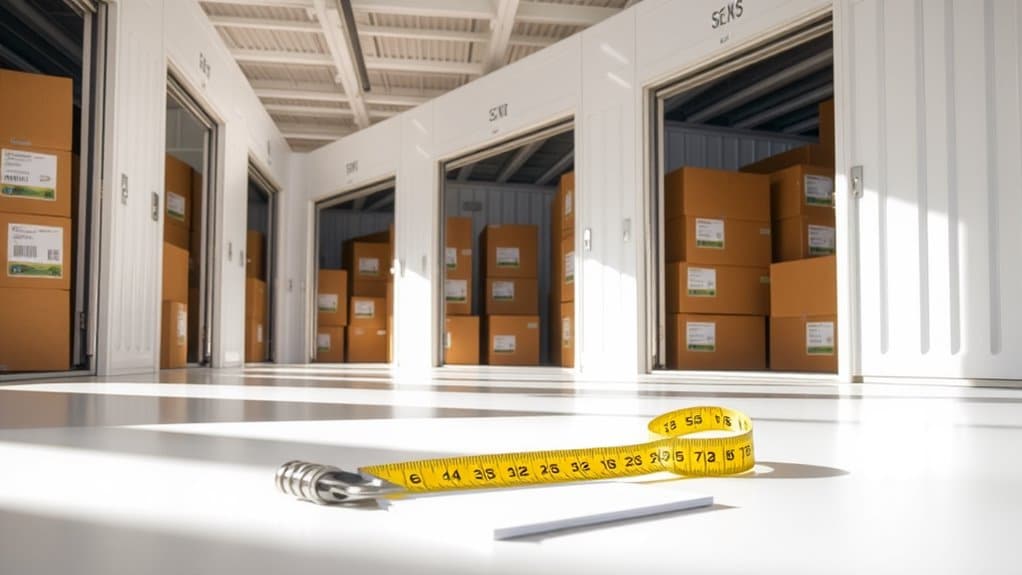
Storing your belongings in a climate-controlled unit provides excellent protection, but how you pack and organise those items is crucial for maximising space and ensuring easy access.
Begin by gathering essential supplies like boxes, bins, and labels. Make a list of the items you intend to store to estimate your storage needs and determine how many boxes to prepare.
When packing, use effective techniques: place heavier items at the bottom and lighter ones on top to maintain stability. Store bulky items upright and use shelving to optimise vertical space.
Group items by category or room, and label boxes clearly for quick identification.
Consider creating a storage unit map to help you navigate your space, placing frequently used items near the entrance. Leave clear pathways for easy access, and opt for clear plastic bins for better visibility.
Frequently Asked Questions
How Do I Reserve a Storage Unit Online?
To reserve a storage unit online, simply provide your personal details, specify your storage requirements, review the terms, make your payment, and sign the lease. For a hassle-free experience, consider these tips to streamline your reservation process.
What Are the Payment Options for Storage Units?
When it comes to paying for your storage unit, you have several options. You can pay with cash, cheques, credit or debit cards, and direct debit. Many facilities also offer online payment methods, making it easy to manage your account from home. Choose the option that works best for you to keep your storage experience hassle-free.
Can I Access My Storage Unit After Hours?
You can access your storage unit after hours if the facility permits it. Look for sites that offer 24-hour access and strong security measures to ensure your belongings are safe while you enjoy the convenience.
Are There Any Discounts for Long-Term Rentals?
Long-term rentals may seem pricey, but they often come with discounts. Many facilities provide reduced rates and special offers for extended stays. Always check the rental agreements for the best deals available. For instance, you could save significantly by opting for a monthly rate instead of a nightly one.
What Items Are Prohibited From Storage Units?
Avoid storing prohibited items such as perishable goods, hazardous materials, weapons, and valuable items. It’s important to understand storage regulations to ensure a safe environment and to steer clear of potential legal issues or infestations in your unit. For example, items like food, chemicals, firearms, and expensive electronics should not be kept in storage.
Conclusion
Choosing the right self-storage unit is essential for managing your belongings effectively. Understanding the different sizes available and how they match your needs can help you declutter your space. Whether you opt for a small unit for seasonal items or a larger one for furniture during a house move, selecting the appropriate size makes a difference. Embrace the process of organising, and enjoy the benefits of a tidy environment.