

To choose the right storage unit for your growing family, start by evaluating your current and future storage needs. Think about items such as toys, seasonal decorations, and any other belongings that are piling up.
Next, select a unit that suits your size requirements while considering your budget and the location for convenient access. It’s essential to assess security features and climate control options to safeguard your possessions. Look for practical amenities like drive-up access and flexible contracts.
Always keep your family’s changing needs in mind, as there’s plenty more to learn about efficient packing and organisation.
Key Takeaways
- Assess your current and future storage needs by thinking about family growth, seasonal items, and hobbies. This will help you choose the right unit size.
- Use size guides to find a unit that fits your furniture, toys, and equipment without stretching your budget, which typically ranges from £30 to £130 per month.
- Pick a location that’s easy to get to, with wide access paths and security features like CCTV and gated entry to keep your belongings safe.
- Consider climate-controlled units for sensitive items, especially in areas with extreme weather, to prevent damage and save on replacement costs.
- Look for promotions and flexible contracts, like month-to-month agreements, to adjust your storage as your family’s needs change.
Understanding Your Family’s Storage Needs

As your family grows, so do your storage needs. Understanding these requirements will help you make better choices. Changes in family dynamics—like new babies, moving house, or multigenerational living—often lead to increased storage demands. You may need space for seasonal decorations, hobby supplies, or additional furniture. Many families are opting to downsize or declutter, which can create a greater need for temporary storage solutions. Keep in mind that peak moving seasons may affect availability, and rental durations can vary across regions. Additionally, with the average occupancy rate of storage facilities at 96.5%, it’s important to plan your storage needs ahead of time. By assessing your specific situation, you can select a storage option that fits your lifestyle and allows for flexibility as your family evolves. Consider utilizing climate-controlled units for sensitive items to ensure they remain in optimal condition during storage.
Choosing the Right Size Unit

When selecting the right size storage unit, it’s important to consider your family’s current and future needs. Think about the amount of furniture, seasonal items, and toys you may accumulate as your family grows. Choosing a unit that meets your space requirements now will save you a lot of hassle down the line. For example, if you have young children, you might want to account for their growing collection of toys and equipment. Additionally, understanding the size guide available can help you determine what fits best for your family’s unique situation. Many families opt for large units as they provide ample space for furniture, appliances, and even vehicles, ensuring that you have the flexibility to store all of your belongings comfortably.
Popular Unit Sizes
Choosing the right storage unit size is key to managing your family’s changing needs.
Start with small options like 5×5 or 5×10 units, ideal for a few boxes and seasonal items. If you have larger furniture from a two-bedroom home, a 10×10 unit could be more suitable.
For bigger households, consider larger spaces such as 10×20 or 10×30 units, which can hold multiple furniture sets and appliances from a multi-bedroom house. Additionally, understanding unit sizes can help streamline your selection process.
Remember to measure your items and think ahead about future storage requirements as your family grows.
Finding the right size within your budget ensures you have enough space without overspending.
Family Storage Needs
Finding the right storage unit for your family’s needs is crucial as your household changes. Larger families typically require more space for their belongings.
If you’re living in a smaller property, a storage unit can help maximise your living area. Consider what items you need to store, from furniture to seasonal decorations.
Accessibility is important—choose units that are easy to access, particularly for larger items. Security features and climate control are vital for keeping your valuables safe.
Lastly, opt for a unit that can adapt as your needs evolve, providing the flexibility to support your growing family.
Assessing Location and Accessibility

When selecting a storage unit, consider its distance from your home or workplace for easier access.
Look for facilities with wide aisles and straightforward navigation to make your visits hassle-free. These aspects can save you time and effort as your storage needs increase.
For example, if you need to retrieve seasonal items or sports equipment regularly, a conveniently located unit will make a significant difference.
Proximity to Home
Having a storage unit close to home can significantly improve your family’s efficiency and convenience.
Choosing a nearby facility means easy access to seasonal items or baby equipment without disrupting your daily life. This proximity saves you time and effort, making it simpler to retrieve belongings when needed.
It’s particularly useful during emergencies when quick access to stored items is crucial. Families in busy areas or rapidly growing neighbourhoods often find that having a nearby storage unit is essential.
Prioritising location ensures that your family’s needs are met while allowing you to manage your possessions with ease.
Accessibility Features
How accessible is the storage unit you’re considering? Check the pathways to ensure they comply with UK accessibility standards.
Look for facilities that offer accessible parking and straightforward navigation to the units. Entry points, such as ramps and doors, should allow for easy access.
Assess unit features like user-friendly gate keypads and locks. Also, consider digital accessibility; the online booking system should be easy for everyone to use.
Facilities should provide a range of accessible unit sizes, including climate-controlled options, to suit your family’s needs.
Choose a location that adheres to accessibility guidelines, ensuring you’re storing your belongings in a space that promotes inclusivity.
Evaluating Security Features
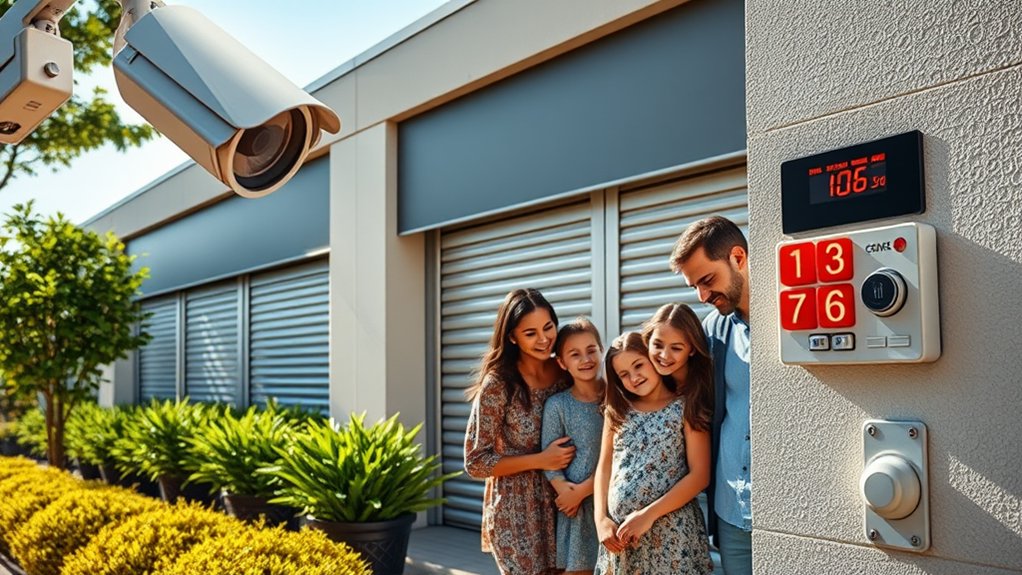
When choosing a storage unit for your growing family, it’s crucial to assess the security features to ensure your belongings are safe.
Look for facilities with robust security measures, such as secure fencing and access control gates, which provide effective perimeter protection.
Surveillance systems, including well-placed CCTV cameras, should monitor all entry points.
Opt for units equipped with intrusion detection systems that use motion and sound sensors to alert staff of any potential breaches.
Smart locks and automated management systems can enhance access control, allowing you to customise who can enter.
Lastly, check that digital security measures are in place, such as cloud integration for real-time monitoring and data protection, keeping your family’s items secure.
Considering Climate-Controlled Options
When choosing a storage unit for your growing family, climate-controlled options are worth considering.
These units maintain stable temperatures and humidity levels, which is crucial for protecting sensitive items like electronics, artwork, and delicate fabrics.
For instance, wooden furniture and fragile collectibles benefit from climate control, helping to preserve their condition and extend their lifespan.
In areas with extreme weather, such as hot summers or cold winters, climate control becomes even more important to prevent damage from temperature swings.
Although these units may come at a higher price than standard options, the protection they provide can save you money in the long run by avoiding costly replacements.
Prioritising climate control ensures your belongings remain safe and secure.
Understanding Rental Costs

What factors affect the rental costs of storage units? Firstly, size is key; small units typically cost around £34.99, while larger ones can be significantly more expensive. Location is crucial as well—urban areas usually charge more than rural locations. Additional features also impact costs; units with enhanced security or climate control tend to have higher rental prices. It’s sensible to compare prices across different facilities to find the best option for your needs. Generally, expect monthly costs to be between £30 and £80, but larger units can reach approximately £130. Understanding these factors will help you make an informed choice for your family.
Exploring Discounts and Promotions
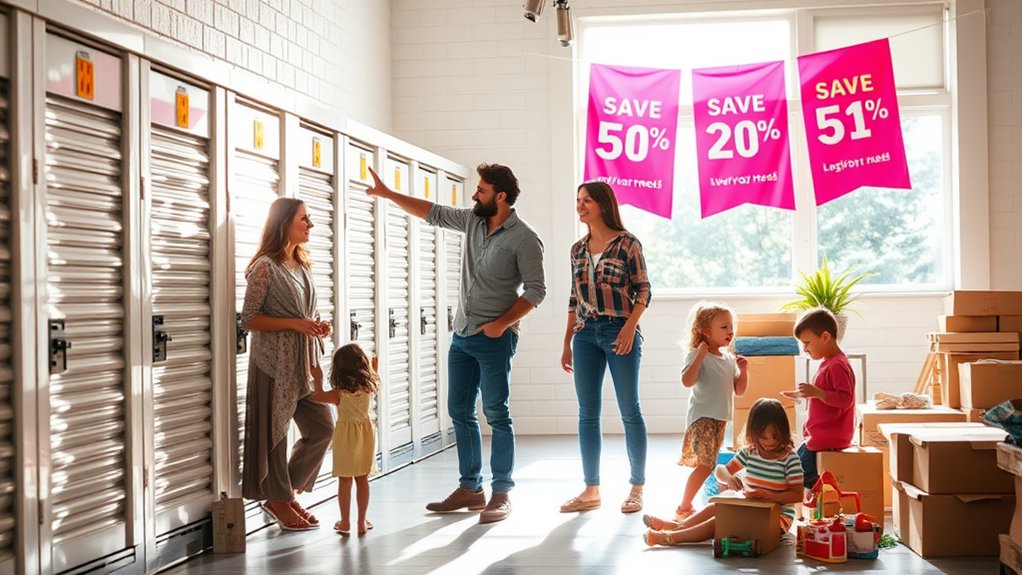
How can you optimise your storage unit costs? Start by looking into different types of discounts and promotional offers.
Many facilities provide options like “first month free” or percentage discounts—some can offer as much as 50% off.
Consider prepaid plans, as many places reward longer commitments with substantial savings.
Don’t forget to check for demographic-specific discounts; military personnel, students, and seniors often qualify for reduced rates.
Also, look for online booking incentives and promo codes for extra savings.
Keeping an eye on newsletters and following storage companies on social media can help you catch limited-time offers.
Amenities to Look For in a Storage Facility
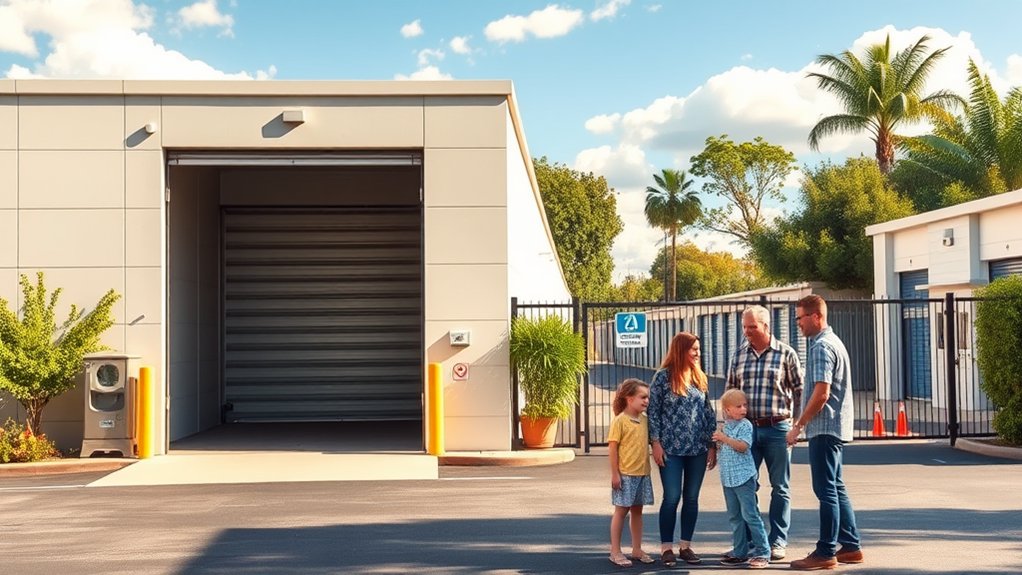
Once you’ve secured the right deal on your storage unit, it’s important to consider the amenities that can improve your experience.
Look for strong security features such as CCTV, gated access, and individual unit alarms to safeguard your belongings. Having on-site staff can also provide immediate assistance, giving you added peace of mind.
Think about convenience amenities like flexible or 24/7 access, so you can retrieve your items whenever you need them. Drive-up access makes loading and unloading easier, and climate control is essential for protecting sensitive items.
Services like packing supplies and online account management can further streamline your experience. Prioritising these features ensures your possessions remain secure and accessible while offering you the freedom and convenience you want.
Planning for Future Storage Needs

As your family expands, it’s crucial to plan for future storage needs to keep your home clutter-free. Consider what items you may accumulate, such as bikes, prams, and seasonal clothing.
By planning for these now, you can avoid the hassle of last-minute storage solutions.
Think about the size of the storage unit you might require; mid-sized units are often ideal for growing families due to their flexibility.
Don’t forget about seasonal items like Christmas decorations that only take up space part of the year.
Regularly review what you have stored to maximise space and keep costs down, ensuring you adapt to your family’s evolving needs smoothly.
Flexibility in Storage Contracts
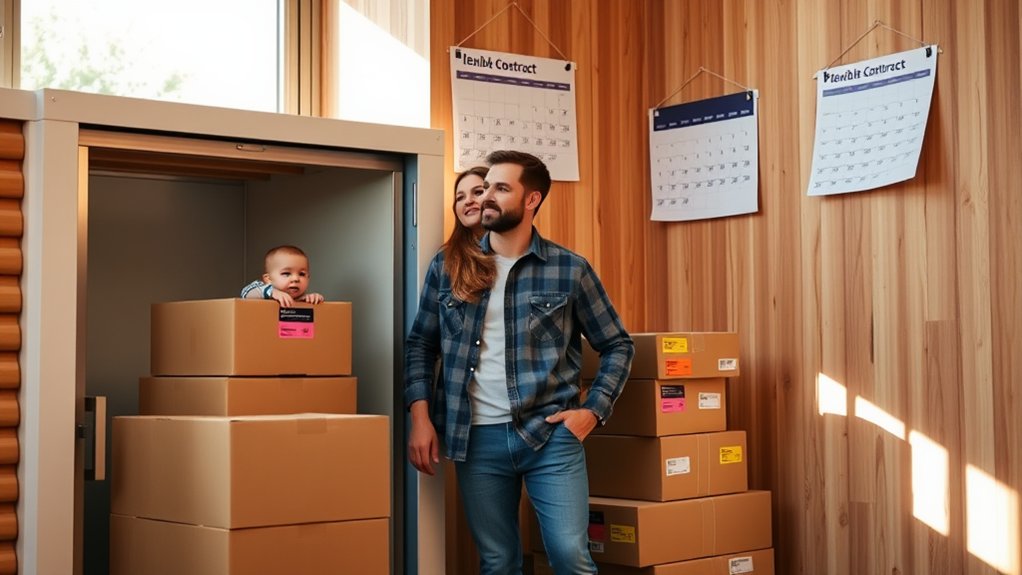
Considering future storage requirements means looking closely at the flexibility of storage contracts.
You’ll want a solution that adapts as your family’s needs change. Here are some key points to consider:
- Month-to-month agreements allow for easy cancellation.
- No long-term commitment means you can end your rental whenever you need to.
- Notice periods typically range from 3 to 30 days, so you have time to prepare.
- You can switch unit sizes or locations as your needs evolve.
- Rental periods can be adjusted based on your circumstances.
When negotiating your contract, pay attention to access policies to ensure you can retrieve your belongings whenever necessary.
It’s also wise to understand the payment schedule options and any arbitration clauses. This knowledge helps you secure a storage arrangement that genuinely suits your lifestyle.
Tips for Efficient Packing and Organization
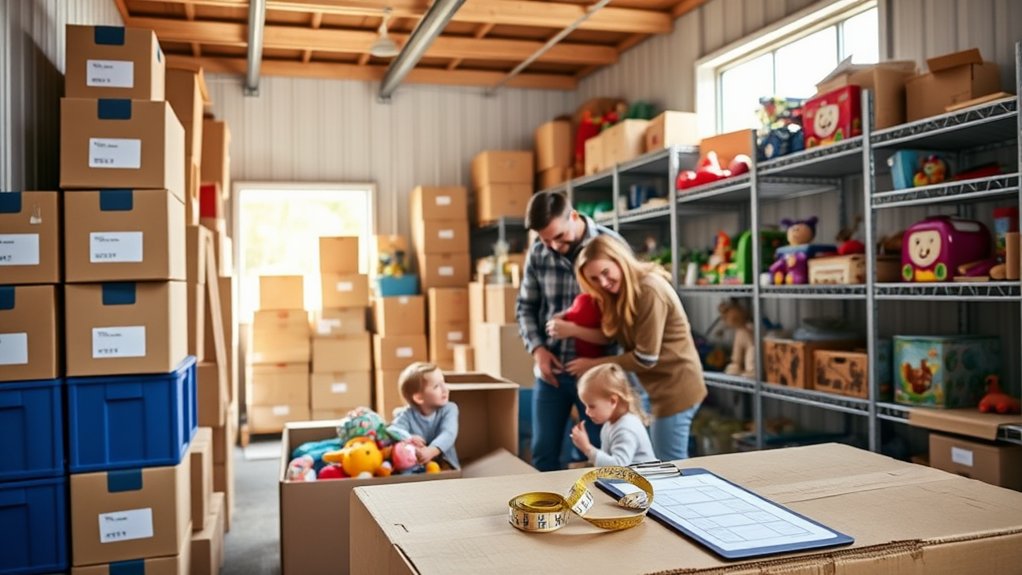
When preparing to pack for a storage unit, it’s important to have a clear plan. Focus on efficient packing and organised retrieval to make the process smoother.
| Task | Tips | Benefits |
|---|---|---|
| Prioritise Labelling | Clearly label each box | Makes retrieval easier |
| Categorise Items | Group similar items together | Simplifies search and organisation |
| Disassemble Bulky Items | Take apart large furniture | Saves space and eases storage |
| Use Clear Containers | Store frequently used items in clear boxes | Enhances visibility |
| Maintain Accessibility | Leave walkways in the unit | Improves ease of access |
These strategies will help you maximise space and reduce stress as your family expands.
Frequently Asked Questions
How Do I Determine Which Items to Store?
To decide which items to store, start by prioritising essentials. For instance, keep frequently used kitchen appliances accessible, while storing away seldom-used items. Next, think about seasonal storage, like putting away Christmas decorations after the festive season. This approach maximises your space and ensures your most important belongings are easy to reach.
What Size Moving Truck Do I Need for Storage?
So, you think you need a moving truck the size of a spaceship? Not quite! For storage, consider rental truck options such as 3m to 4.5m vehicles. They’ll accommodate your belongings without straining your budget or your back.
Can I Access My Storage Unit After Hours?
You can access your storage unit after hours if the facility permits it. Be sure to familiarise yourself with their security policies, as strict security measures can affect access times. Always check any specific access agreements before you go.
Are There Restrictions on What Can Be Stored?
When it comes to storage regulations, some items aren’t allowed. Hazardous materials, perishable goods, and anything that is living or deceased cannot be stored. Always check the facility’s rules to ensure a hassle-free experience.
How Should I Label My Storage Boxes Effectively?
To label your storage boxes effectively, consider using colour coding for quick identification. Assign specific colours for each room, such as blue for the kitchen and green for the living room. Ensure labels are clear and durable for easy access and organisation.
Conclusion
In summary, selecting the right storage unit for your growing family is crucial for staying organised and reducing stress. Did you know that around 10% of households in the UK use a storage unit? As your family’s requirements change, consider factors such as size, location, and security features. Planning ahead and being flexible with your storage agreements can ensure the space adapts to your family’s evolving needs. Efficient packing and organisation will further enhance your storage experience.