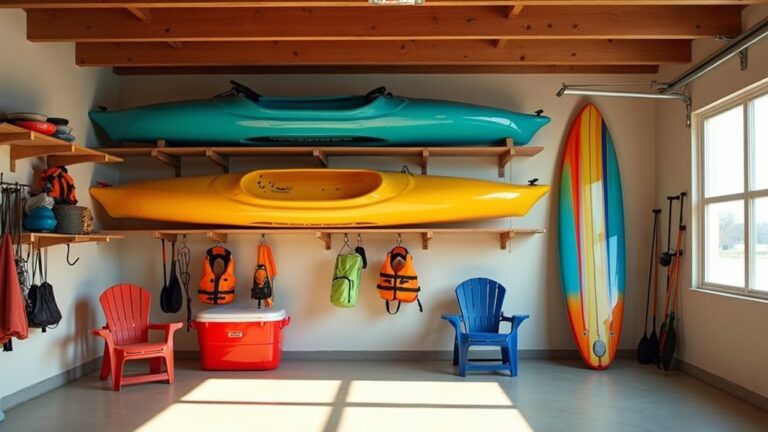
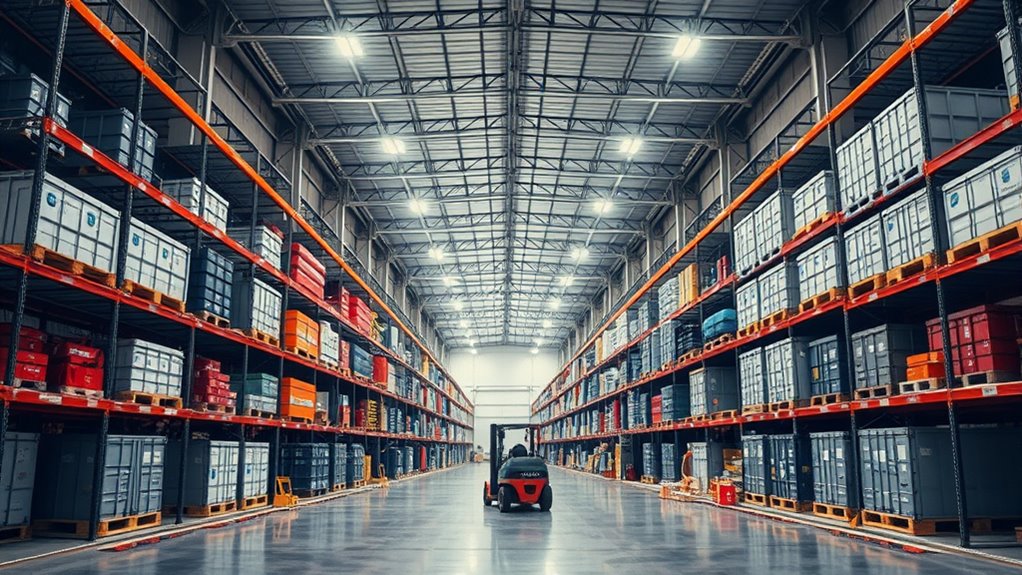
For large-scale storage needs, opt for units like 10×20 or 10×30 to maximise capacity. Climate-controlled features are essential to protect your belongings from temperature changes. Security is crucial, so select facilities with robust locks, strong perimeter fencing, and 24/7 surveillance. Accessibility features, such as ramps and clear signage, ensure easy use for everyone. Regular maintenance and energy-efficient systems will help reduce costs while improving reliability. Tailored storage solutions can meet your specific organisational requirements. By considering these factors, you’ll enhance both safety and efficiency in your storage experience.
Key Takeaways
- Opt for larger unit sizes, such as 10×20 or 10×30, which offer storage solutions similar to one- to three-car garages.
- Choose climate-controlled units to safeguard sensitive items from temperature and humidity changes, helping to prevent long-term damage.
- Keep a master inventory list for efficient tracking and organisation of your stored belongings, making them easier to access when needed.
- Prioritise strong security measures, including 24/7 surveillance and secure access systems, to protect your valuable items.
- Select flexible rental agreements with month-to-month leases to adapt to your changing storage requirements without being tied down to long-term contracts.
Scalability and Capacity
When it comes to storage solutions, understanding scalability and capacity is crucial for fulfilling your large-scale needs. Storage units like 10×20 and 10×30 provide scalable options, offering space similar to one- to three-car garages. This versatility allows you to store a wide range of items, from extensive inventory to vehicles and heavy equipment, making them suitable for both home and business use.
Effective capacity planning is essential. Evaluate the dimensions of your unit and optimise the layout by using vertical space with shelving and stacking. This approach maximises your storage capacity and improves accessibility. For example, a well-organised unit with clearly defined sections allows for easy retrieval of items, ensuring you can access what you need without hassle. Additionally, consider using climate-controlled units to protect sensitive items from potential damage due to temperature fluctuations.
Maintaining a master inventory list is important for tracking your belongings, so you know exactly what you have stored. Systematic organisation and clear labels enable you to navigate your space with ease. Moreover, large-scale storage units can effectively manage temperature-sensitive products, ensuring optimal conditions for sensitive pharmaceuticals.
Temperature Control Options
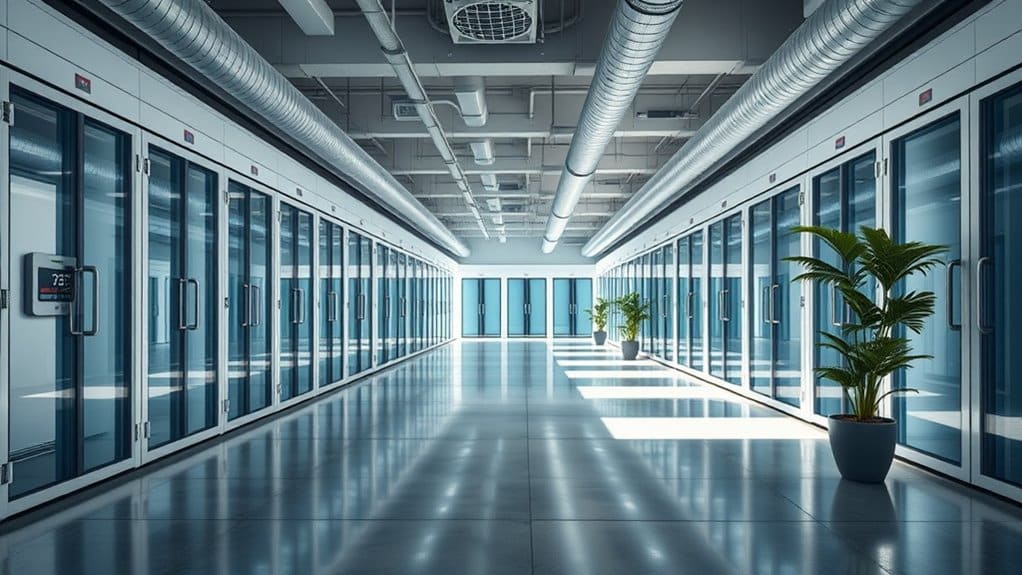
Temperature control options are crucial for protecting your valuable possessions, particularly in larger storage scenarios. When looking for storage solutions, opt for climate-controlled units that maintain specific temperature ranges, usually between 13°C and 27°C, to prevent damage from temperature changes. This is especially important for delicate items such as antiques, musical instruments, and important business documents. Additionally, many storage facilities offer climate control to enhance customer experience and comfort, which is essential during extreme weather conditions. Facilities equipped with advanced surveillance systems ensure that your stored items remain secure while being temperature-regulated.
Humidity control is another vital aspect. Many facilities use commercial-grade dehumidifiers to keep humidity levels between 50-55%, which helps to stop mould and bacterial growth. Storage facilities in warmer climates focus on cooling, while those in colder areas prioritise heating.
Although climate-controlled units typically incur higher operational costs, the protection they provide is invaluable. A cost-benefit analysis can help you assess these expenses against the potential damage your items might suffer in standard units.
To make the most of temperature control, carefully consider your storage needs. Think about the different types of items you’re storing and whether they require varying temperature settings.
Ultimately, selecting the right facility with effective temperature and humidity control can significantly enhance the preservation of your valuables.
Security Measures
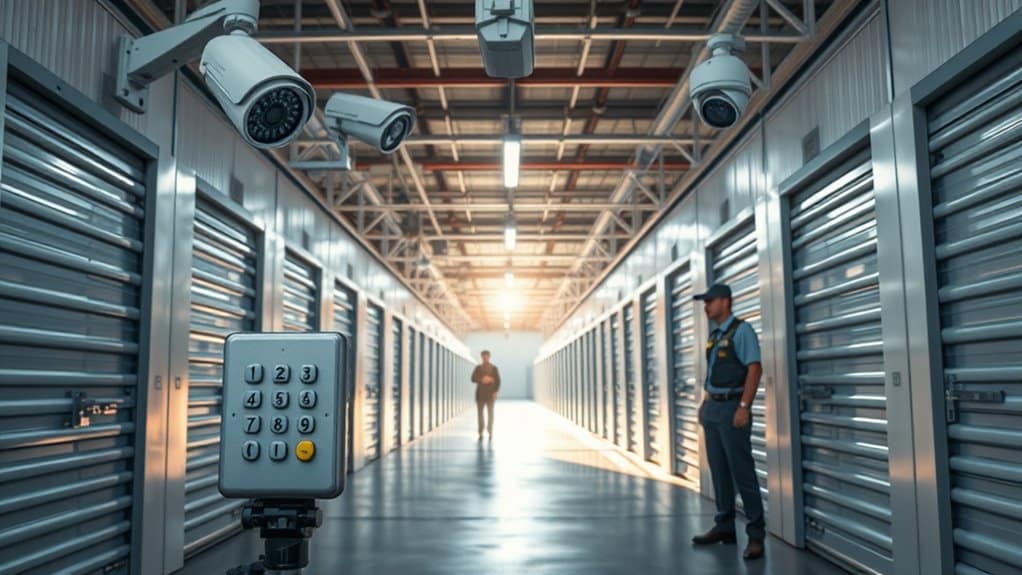
Protecting your stored items involves more than just temperature control; effective security measures are crucial. Start with strong perimeter protection. Heavy-duty fencing and secure gate access systems help prevent unauthorised entry, while perimeter intrusion alarms and on-site security personnel enhance surveillance.
For individual storage units, high-quality locks, keypad entry, and motion sensors create essential barriers against unauthorised access. Integrated alarm systems and 24/7 video surveillance deter potential intruders, ensuring constant monitoring. Moreover, incorporating advanced access control systems allows for better management and monitoring of entry to storage facilities, further enhancing security. Additionally, many self-storage facilities now utilize enhanced security features like individual alarms for each unit to further protect against theft.
Access control systems are vital too. Access readers linked to CCTV cameras improve oversight, while mobile credentials let you manage permissions from anywhere. Biometric authentication offers extra security for sensitive units.
Regular risk assessments help pinpoint vulnerabilities, enabling you to implement additional measures like intrusion detection systems and adherence to security standards.
Training users on security best practices not only boosts protection but also encourages a culture of vigilance.
Surveillance Technologies
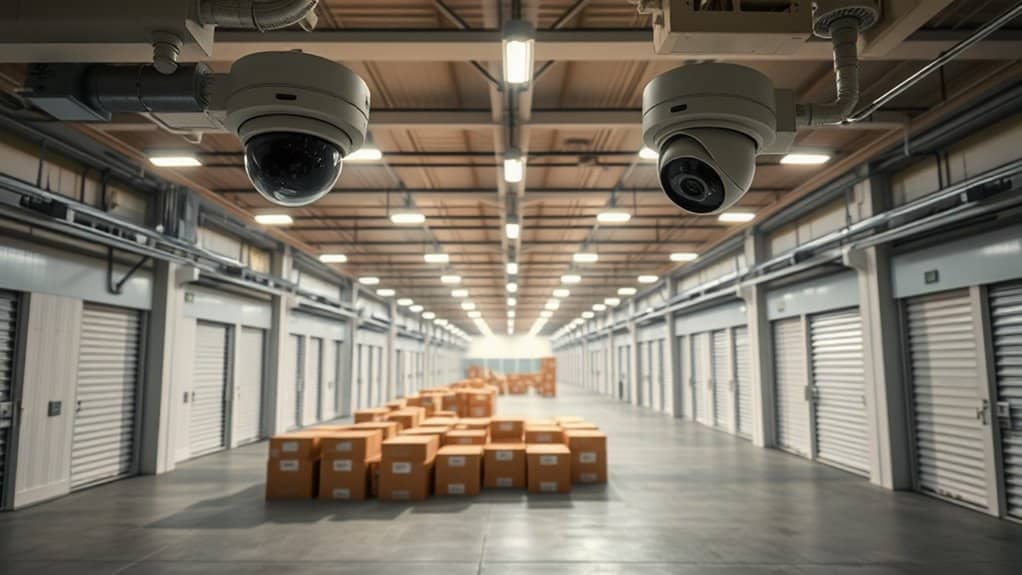
Surveillance technologies are crucial for enhancing security in large-scale storage facilities. By installing IP surveillance cameras in high-risk areas, you can effectively detect and record any suspicious activities. These cameras can be integrated with cloud management systems, allowing for remote monitoring so you can stay updated from anywhere.
With the option to programme the cameras to flag specific incidents, you’ll receive automatic alerts, enabling your security team to respond promptly.
Video surveillance storage solutions further strengthen your security approach. They provide scalable options for extended retention periods and use embedded metadata tags for quick searchability, making it easier to locate specific footage when necessary.
Additionally, their fault-tolerant platforms can seamlessly integrate with various video management systems (VMS), which optimises your storage infrastructure.
Incorporating perimeter security systems, including physical barriers and motion detectors, creates a comprehensive defence. When these systems work together with your integrated security technologies, they significantly enhance your facility’s overall safety.
You can monitor access points and adjust permissions remotely, ensuring you maintain control over who enters and exits, thereby safeguarding your storage needs effectively.
Accessibility Features
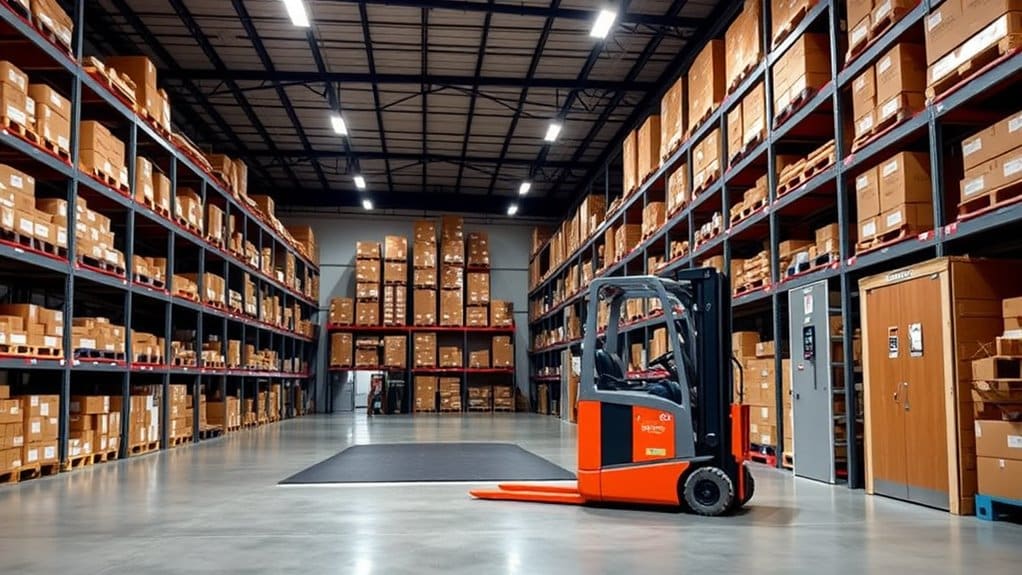
When considering accessibility features for storage units, having 24/7 access and flexible rental options is crucial.
These features ensure that all users, regardless of their physical abilities, can reach their belongings whenever they need to. For instance, someone with mobility issues may require access outside standard hours, while flexible rental terms accommodate varying needs.
24/7 Access Availability
Access availability is crucial in ensuring that storage facilities cater to the varied needs of all users, particularly those with disabilities. Features such as ramps at entrances provide seamless entry and exit for everyone, including wheelchair users. These ramps should cover the full width of the unit doors for easy loading and unloading.
Door accessibility is also vital. Installing pull handles or ropes, along with roll-up doors that meet UK accessibility standards, can enhance wheelchair access and save space. Electrical door openers can further simplify entry.
Effective signage is key for navigation. Clear, visible signs, paired with Braille, help users locate accessible units, fostering an inclusive environment.
To ensure compliance, regular accessibility audits and user feedback are essential. For instance, at least 5% of the first 200 units must be compliant with UK accessibility regulations, with ongoing requirements for additional units.
This ensures customers with disabilities have varied options, promoting freedom and accessibility for all users.
Flexible Rental Options
Flexible rental options enhance the accessibility of storage units, allowing users to choose solutions that suit their needs. With month-to-month leases, you gain short-term flexibility to adjust as your circumstances change. You won’t be tied to long-term contracts, enabling you to store items for as little or as long as necessary.
If your plans change, cancelling your lease is simple; most facilities require just 3 to 30 days’ notice. This makes it easy to adapt when life throws a curveball. You can also prepay for up to 12 months, locking in a rate that suits you while keeping the option to extend your lease without penalties.
Additionally, the variety of storage options, such as portable units and drive-up access, increases your convenience. Whether you’re storing large items or delicate belongings that need climate control, there’s a suitable choice for you.
The flexibility of rental agreements allows you to manage your storage needs without unnecessary stress or financial strain. You remain in control, ensuring your storage solution is as adaptable as your life.
Location Considerations
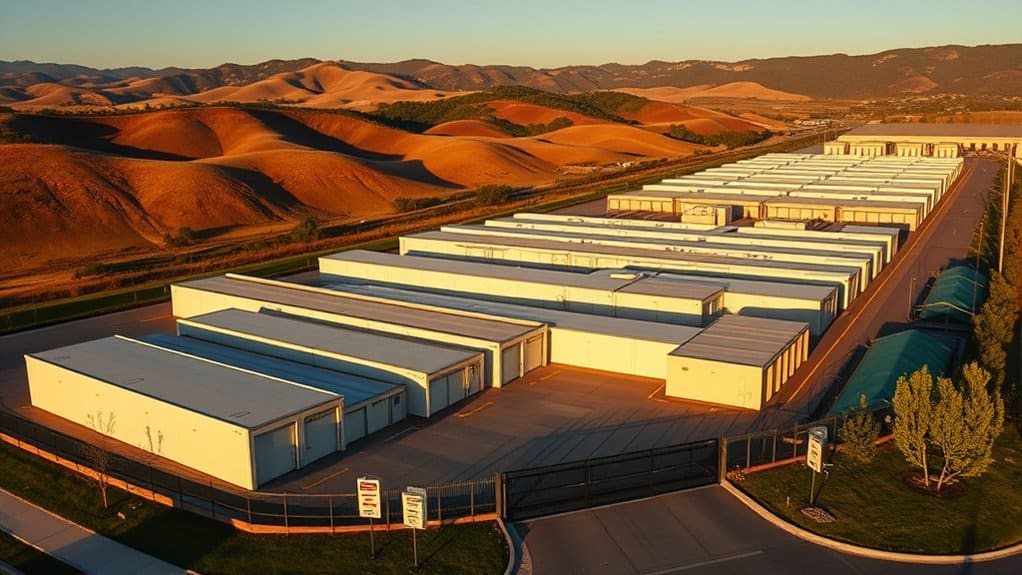
Selecting the right location for a storage unit is crucial for effectively meeting demand. First and foremost, accessibility is key; customers should be able to reach the facility with ease. Look for sites near major roads or busy areas, as this increases visibility and convenience. Additionally, consider the safety of the neighbourhood, as secure areas reduce the risk of break-ins and enhance customer confidence.
Conduct a demographic analysis to understand your target audience better. Assess population density, income levels, and housing trends to identify potential customers who may require storage solutions. Being close to residential areas, particularly multi-family properties, can improve accessibility and reduce transport costs for your clients.
It’s also important to evaluate the competition by examining existing storage facilities, their services, and pricing. Identify any gaps in the market that your unit could fill. Keep an eye on future developments in the area; new residential or commercial projects could increase demand for storage.
Finally, ensure compliance with local zoning regulations to avoid operational issues. By making well-informed location choices, you can lay the groundwork for a successful storage unit that caters to diverse needs.
Cost Efficiency

Finding cost efficiency in storage unit solutions is crucial for both facility operators and customers. You want affordable options that suit your needs without straining your finances.
Start by examining unit sizes and pricing: a 5×5 unit typically starts at £75, while larger options like a 10×20 unit can begin at £200. These differences allow you to make informed comparisons based on your specific requirements.
Remember that factors such as size, ceiling height, and minimum rental periods directly influence costs. Additional charges for late payments or climate control can also affect your budget.
Generally, facilities outside urban areas tend to offer better rates, and long-term rentals are usually more economical than short-term options.
Furthermore, innovative storage solutions can boost your cost efficiency. For instance, perforated panels and slatwall systems are modular and budget-friendly ways to maximise space without causing damage to your home.
Using underbed organisers or back-of-door storage can also help you stay organised with little to no extra cost. By focusing on these aspects, you can choose a storage solution that meets your needs while keeping your budget in check.
Energy Efficiency
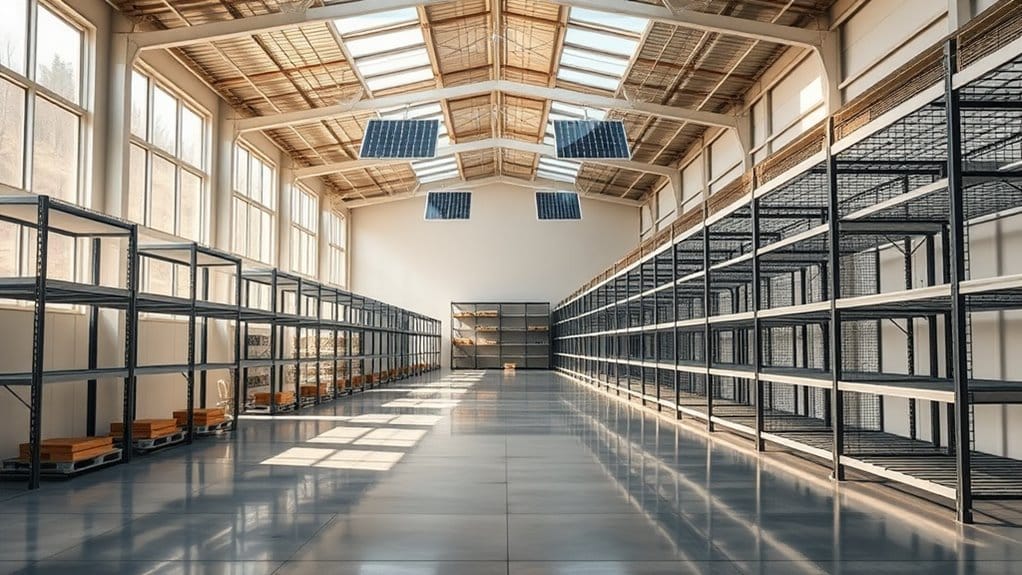
When you focus on energy efficiency in your storage solutions, you’re not just cutting down on power usage; you’re also setting yourself up for long-term savings.
Using methods like tiered storage and energy-efficient equipment can significantly improve your operations while promoting sustainability.
Reduced Power Consumption
Energy efficiency in storage units is crucial for reducing power consumption, lowering operational costs, and minimising environmental impact. To improve efficiency, start with energy audits and consumption tracking to pinpoint areas for enhancement.
Technologies like insulated walls and roofs can significantly enhance thermal performance, reducing the need for heating and cooling.
Switching to energy-efficient LED lighting can save up to 80% more energy compared to traditional lighting, keeping your units well-lit without excessive power use. Installing solar panels allows you to tap into renewable energy, reducing dependence on the grid.
Innovations such as insulated door curtains can minimise airflow leakage, achieving a 90% reduction in heat loss. Smart technology can automatically monitor and adjust internal conditions, optimising energy use without manual effort.
Modular designs also extend unit lifespan and reduce waste, while efficient temperature control systems maintain ideal conditions.
Long-Term Cost Savings
Implementing energy-efficient storage solutions not only boosts operational performance but also leads to significant long-term cost savings. By investing in distributed storage systems, you can reduce reliance on centralised infrastructure, which helps lower your electricity bills.
These systems, along with technologies like lithium-ion and flow batteries, offer high-efficiency energy storage, making them wise long-term investments.
Using phase change materials in your facilities can enhance HVAC efficiency, further reducing operational costs. Additionally, employing cost segregation strategies allows for accelerated depreciation of certain assets, resulting in substantial tax savings in the initial years.
Moreover, solar-integrated systems can lessen your dependence on the main power grid and promote energy independence.
The financial choices you make today can greatly improve your cash flow, ensuring your storage solutions remain cost-effective over time.
Sustainable Operations
In the realm of sustainable operations, energy efficiency is crucial for enhancing the performance of storage units. By implementing sustainable practices, you can significantly reduce environmental impact while optimising your operations. For example, using door curtain technology can cut heat loss by 90% and decrease air leakage by 98%. This not only conserves energy but also supports the use of eco-friendly materials.
Here’s a brief overview of sustainable features to consider:
| Feature | Benefits | Impact on Efficiency |
|---|---|---|
| Door Curtain Technology | Minimises air flow and heat loss | Surpasses energy guidelines |
| Eco-Friendly Lighting | Utilises LED to reduce electricity consumption | Lowers overall energy costs |
| Solar Panels | Harnesses renewable energy | Supports sustainable operations |
| Insulated Structures | Improves thermal performance | Decreases waste and energy needs |
Integrating energy storage systems can also help manage peak loads and stabilise the grid. By prioritising these features, you’ll enhance efficiency and move towards a future where sustainability is central to storage solutions.
Reliability of Systems
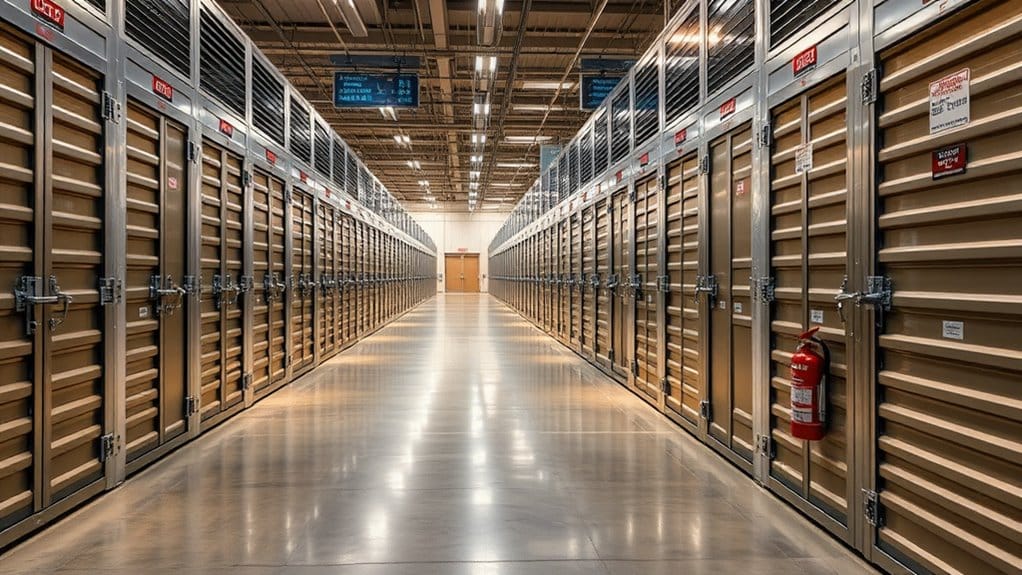
When assessing the reliability of large-scale storage systems, it’s crucial to grasp their design and architecture. Modular designs significantly improve scalability and simplify replacements, allowing you to adjust your system as requirements change.
Implementing redundancy, such as RAID configurations, is essential; this provides backup data in the event of component failures, thereby enhancing reliability.
Your evaluation should prioritise component reliability, as the interdependencies among hosts, racks, and data centres can influence overall system performance. Topology-aware frameworks are particularly useful as they monitor physical connections and failure dependencies, enabling a comprehensive reliability analysis.
To anticipate potential failures, consider advanced failure models like Weibull distributions, which evaluate the reliability of individual components.
Simulation frameworks can also help assess the overall reliability of your storage system, accommodating various failure patterns. By focusing on component-level and dependency analysis, you can gain valuable insights into how different parts of the system contribute to its reliability.
Maintenance Requirements
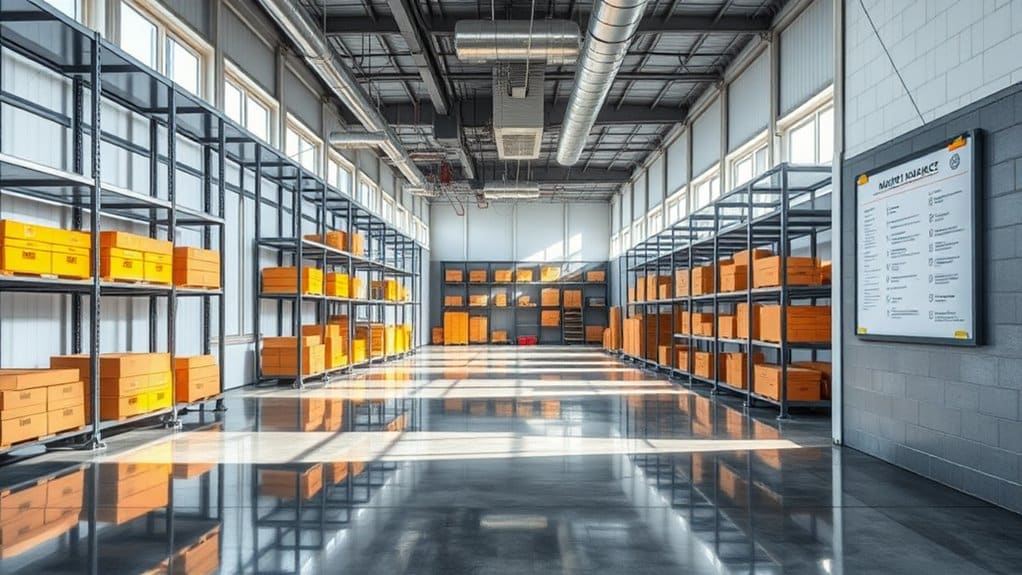
When managing large-scale storage units, grasping maintenance requirements is crucial for longevity and efficiency.
Implement regular inspection routines to identify issues early, balance maintenance costs with potential benefits, and opt for durable materials to reduce long-term repair needs.
Each of these factors is vital in keeping your facility functional and cost-effective.
For example, choosing high-quality shelving can save you money in the long run by preventing frequent replacements.
Regular Inspection Protocols
Regular inspections are essential for maintaining the integrity and security of storage units, ensuring they meet high standards. To effectively manage your storage needs, establish a routine based on inspection frequency.
Conduct quick checks of common areas and security systems daily. Weekly inspections of individual storage units help promptly address maintenance issues. Monthly reviews of security footage and exterior inspections enhance safety. Quarterly and annual inspections allow for thorough evaluations, ensuring compliance with safety regulations.
Key areas to inspect include the condition of storage units, security systems, common areas, and the facility’s exterior. Ensure that fire safety equipment is accessible and emergency exits are clear.
It’s vital to maintain detailed maintenance records, documenting all inspection results and repairs. This not only tracks the condition of your facilities but also aids in creating proactive maintenance schedules.
Maintenance Cost Considerations
Effective maintenance cost considerations are vital for efficiently managing large-scale storage facilities. Start by establishing a maintenance budget based on the facility’s replacement value, typically between 2-5% of the RAV. This should cover routine upkeep, repairs, and any seasonal variations in usage.
Organise your maintenance tasks into daily, scheduled, and seasonal categories for better prioritisation. Daily tasks, such as cleaning and security checks, ensure immediate issues are dealt with. Scheduled equipment inspections and seasonal maintenance enable you to prepare for future needs and avoid costly breakdowns.
It’s also important to monitor maintenance costs per square foot, as these can differ by industry. Regularly review your maintenance schedules and budgets to stay on track. Proactive maintenance can significantly reduce downtime by spotting potential issues before they develop into major problems.
Using calendars or scheduling tools can help streamline your processes and ensure nothing is overlooked. By focusing on these maintenance cost considerations, you can manage your large-scale storage facility more effectively and efficiently.
Durable Material Benefits
The durability of storage unit materials plays a crucial role in maintenance and long-term functionality. Opting for storage units constructed from high-quality materials, such as recycled steel, is a smart investment. This choice significantly lowers upkeep costs due to the material’s longevity.
Steel reinforcement and multi-layer protective measures ensure structural integrity while meeting strict safety standards, including the International Fire Code (IFC) and NFPA 30.
Features like rust resistance, explosion-proof lighting, and weatherproof coatings enable these units to endure tough conditions. This means you’ll spend less time and money on repairs and more on what truly matters.
Custom options, such as specialised heating and air conditioning systems, enhance usability without compromising safety.
Additionally, modular designs allow you to adapt to changing storage needs, ensuring your investment remains valuable over time.
The combination of robust construction and innovative features guarantees that your storage solution meets current safety standards and withstands the test of time.
Ultimately, choosing durable materials means peace of mind, letting you concentrate on your operations rather than ongoing maintenance.
Customization Capabilities
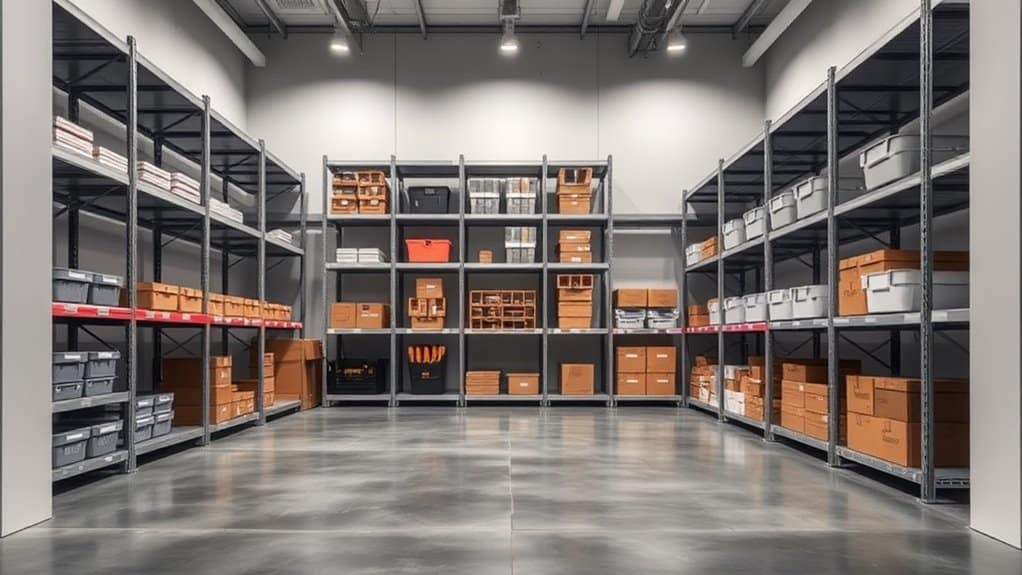
When it comes to storage solutions, having the ability to customise is crucial to meet the varying needs of users. Modular designs allow you to adjust and expand your storage as your requirements change, saving you from having to purchase a new unit.
For instance, Spacesaver’s Wheelhouse systems feature a low-profile, cost-effective modular design that maximises every inch of your available space.
You can create bespoke layouts with movable partition panels, allowing you to divide a single unit into separate compartments for specific items. This flexibility helps optimise space and minimise clutter.
Additional features like mezzanine levels and adjustable shelving further enhance the functionality of your storage solution.
Technology also plays a significant role in customisation. High-tech locks and climate control options safeguard sensitive items, while built-in accessories, such as workbenches and tool racks, cater to your specific needs.
Whether you’re organising a garage or a home office, customisable options enable you to tailor storage configurations to suit your lifestyle.
Ultimately, these capabilities ensure your storage solution adapts with you, providing the freedom to change as needed.
Backup and Redundancy Solutions
In today’s data-driven world, having strong backup and redundancy solutions is crucial for protecting your important information.
Whether you use cloud storage or local backups, it’s vital to have strategies that ensure data integrity and availability.
Here are some key points to consider:
- Data Replication: Employ real-time or asynchronous methods to keep your data consistent.
- Air-Gapped Backups: Safeguard against ransomware with secure, unalterable copies that limit access.
- Snapshot Technology: Take full data snapshots for quick recovery in the event of corruption.
- Continuous Protection: Track data changes continuously to enable detailed recovery options.
For businesses, integrating backups across various environments improves disaster recovery capabilities.
Scalable solutions ensure you can manage vast amounts of data while maintaining high reliability.
With managed IT services, you gain tailored backup strategies and round-the-clock monitoring.
Frequently Asked Questions
What Types of Items Are Suitable for Large-Scale Storage Units?
Large-scale storage units are ideal for storing furniture, seasonal items, vehicles, and business stock. These units offer ample space to keep your belongings organised and easily accessible, helping you manage your life more efficiently. For instance, you can store garden furniture in winter, or keep excess stock for your small business without cluttering your workspace.
How Do I Choose the Right Size Storage Unit?
When selecting the right size storage unit, approach it like solving a puzzle. Measure your belongings, estimate their dimensions, and consider both your needs and ease of access to determine the ideal fit. For instance, if you’re storing furniture, remember to account for larger pieces like sofas or beds that may require more space.
Are There Restrictions on What Can Be Stored?
Yes, there are regulations on what can be stored. You’re prohibited from storing flammable materials, toxic substances, perishables, weapons, or high-value items. Knowing these restrictions helps you optimise your storage space while staying within the rules. For example, avoid putting away items like paint, food, or firearms to ensure compliance.
Can I Access My Storage Unit Outside of Business Hours?
You can access your storage unit outside of business hours if the facility provides extended access hours. Just ensure that the security measures are strong, as 24-hour access typically demands additional safeguards to protect your items.
What Insurance Options Are Available for Stored Items?
When exploring insurance options for your stored items, you’ll come across two main types of policies: named perils and all-risk. Named perils cover specific events, such as fire or theft, while all-risk policies provide broader protection for most unforeseen incidents. Consider the value of your stored belongings to determine the best coverage for your needs. For instance, if you have valuable antiques or electronics, an all-risk policy might be worth considering for added peace of mind.
Conclusion
In summary, selecting the right storage unit features for large-scale needs is crucial for efficiency and peace of mind. Options such as scalability, climate control, and robust security measures allow you to customise your storage solution to suit your requirements. It’s essential to ensure your valuable items are protected and easily accessible. By considering these key features, you can make an informed decision that effectively meets your storage needs.