
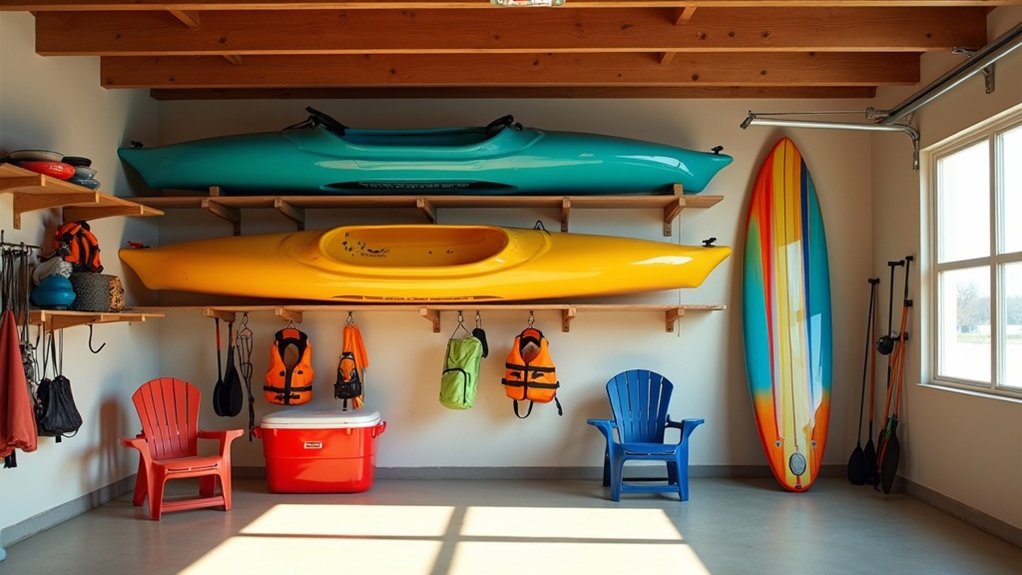
To winterise your summer sports equipment, begin by cleaning and checking for any damage. Use breathable storage solutions indoors, such as stacked bins and wall-mounted hooks, to save space. For outdoor gear, cover it with heavy-duty tarps and store it in sealed containers to shield it from the elements. Ensure all items are completely dry to prevent mould and rust. Incorporate moisture absorbers if necessary. Keep reading for more practical storage tips and solutions.
Key Takeaways
- Sort summer sports equipment for winter storage, separating items that need repairs from those in good condition.
- Store gear in climate-controlled units to safeguard against moisture and extreme temperatures.
- Clean and dry all equipment thoroughly to prevent mould and mildew during the off-season.
- Use breathable storage options, such as cloth bags for fabrics and sturdy boxes for delicate items.
- Implement clear, labelled bins for smaller items to keep everything organised and easily accessible when needed.
Preparing Your Equipment for Winter Storage
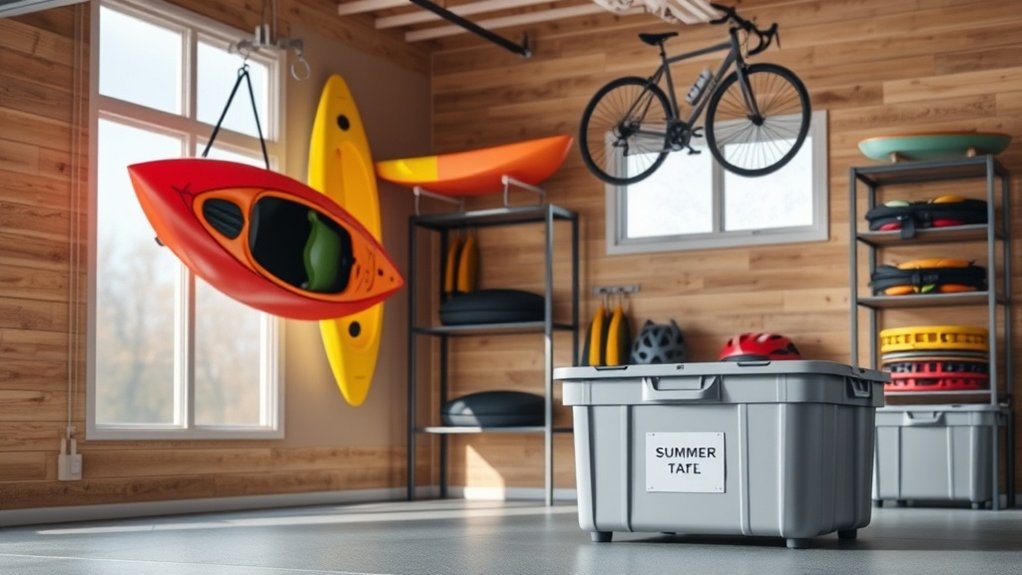
As you prepare your summer sports equipment for winter storage, it’s important to sort and categorise your gear effectively.
Start by separating items based on their storage needs; some can handle outdoor conditions, while others, like jerseys or padding, should be kept indoors in a dry environment. Posts and poles can be left outside while you focus on storing more delicate items. Self-storage offers a safe and secure location for valuable belongings that require protection from the elements.
Organise your equipment by sport and purpose to make future access easier.
Identify any gear that needs repairs and set aside any unsalvageable items to declutter your space.
For a smooth transition between seasons, group related accessories together to avoid misplacement.
Use stackable bins for clothing and gear, and label everything clearly.
This organised approach not only protects your investment but also makes shifting between seasons straightforward.
Cleaning and Inspecting Gear
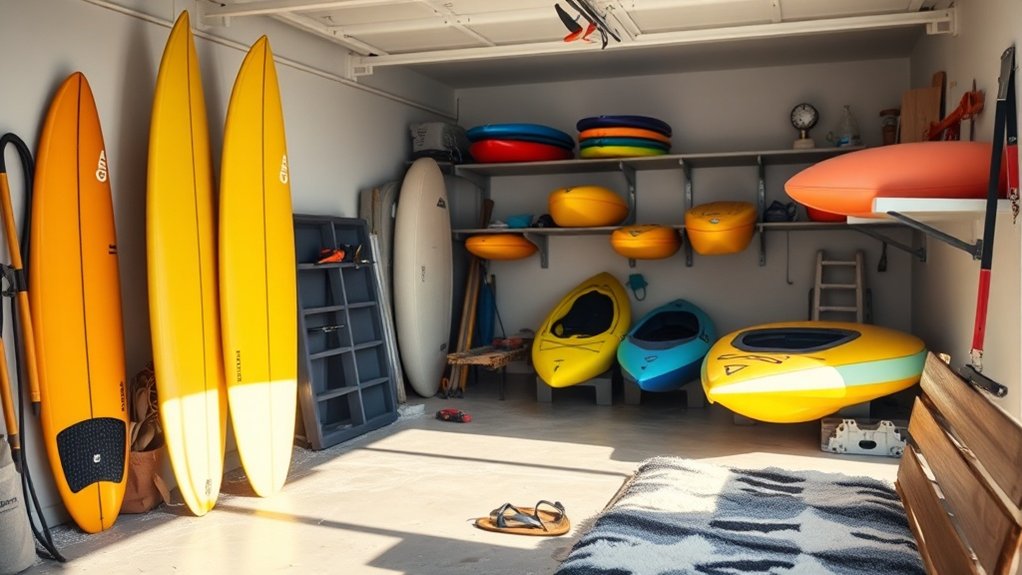
Before storing your summer sports gear, it’s important to check for any damage that might worsen over time. A good clean won’t only remove dirt and smells but also help you spot any wear that needs fixing. Use appropriate cleaning methods to ensure your equipment stays in excellent condition for next season, such as using Clorox™ Disinfecting Bleach to sanitize hard surfaces.
Inspect for Damage
Inspecting your summer sports equipment for damage is crucial for ensuring safety and optimal performance when the season kicks off. A thorough visual inspection can save you from costly injuries and repairs down the line. It’s important to ensure that structural integrity is maintained throughout your gear.
| Inspection Type | Key Focus Areas | Notes |
|---|---|---|
| Structural Integrity | Cracks, bends, and loose hardware | Ensure all parts are secure |
| Functional Assessment | Moving parts and wear-prone elements | Check for smooth operation |
| Safety Compliance | Equipment meets safety standards | Review protective gear |
Be sure to look for sharp edges and signs of wear on surfaces. Keeping records of inspections helps you stay on top of necessary repairs, ensuring your gear is ready for action come spring!
Thorough Cleaning Process
Cleaning your summer sports equipment properly not only extends its lifespan but also ensures it’s safe and ready for use when the season rolls around.
Start by applying specialised sports gear sprays as a pre-treatment—let them sit for about five minutes before washing for best results. For stubborn stains, white vinegar or vodka can be effective natural sanitising solutions that neutralise odours without damaging the materials.
When it comes to washing, use a gentle cycle in the machine for most items, while delicate gear should be hand washed in cold water.
After cleaning, let your equipment air dry to prevent heat damage. To tackle odours, try using baking soda in your shoes and make it a habit to clean insoles regularly.
Following these steps will keep your gear fresh and ready for your next adventure.
Indoor Storage Solutions
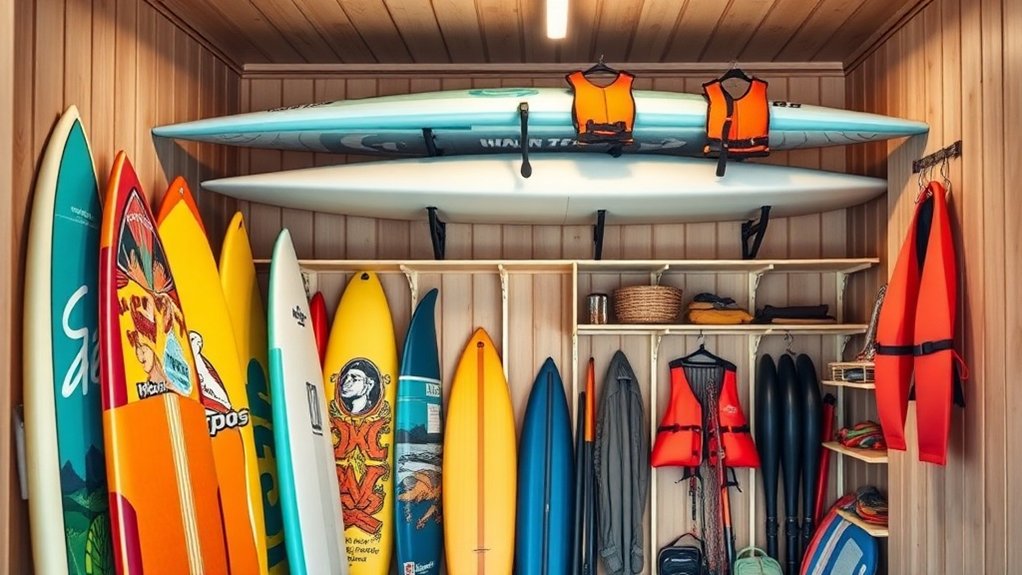
For storing your summer sports equipment indoors, ceiling-mounted storage racks are a brilliant solution.
They utilise vertical space effectively, keeping your gear secure and out of the way, which frees up valuable floor area.
Plus, opting for climate-controlled storage ensures your equipment remains in excellent condition, safeguarded from moisture and temperature changes. This type of storage also provides effective pest deterrence strategies, ensuring that your items are safe from potential infestations while maintaining their quality.
Ceiling-Mounted Storage Racks
If you’re aiming to maximise your garage space while keeping your summer sports gear organised, ceiling-mounted storage racks are a practical solution.
These robust steel racks can support between 136 to 363 kilograms, making them ideal for bulky items like surfboards and coolers.
With adjustable heights from 46 to 114 centimetres, you can easily customise the installation to fit your ceiling height for optimal storage.
Many models come with wire grid decking, allowing for airflow and reducing dust build-up.
Ensure you securely attach the racks to your garage’s ceiling joists for safety and explore versatile placement options to make the most of your space.
Available in finishes like Hammertone Grey or Black, these racks not only save space but also improve your garage’s appearance. Additionally, incorporating multi-functional furniture in your garage can further enhance your storage capabilities.
Climate-Controlled Spaces
While summer sports gear needs proper care even in the off-season, climate-controlled spaces provide an excellent solution for long-term storage. These environments keep temperatures steady and control humidity, preventing moisture-related issues that can damage your equipment. Here’s a quick comparison of storage options:
| Feature | Climate-Controlled Spaces | Traditional Storage |
|---|---|---|
| Temperature Stability | Yes | No |
| Humidity Control | Yes (around 55%) | No |
| Pest Protection | Yes | No |
| Air Circulation | Yes | Limited |
With these climate advantages, your sensitive gear is protected from warping, cracking, or rusting. Investing in climate-controlled storage ensures your equipment stays in top condition, ready for action next season.
Outdoor Storage Considerations
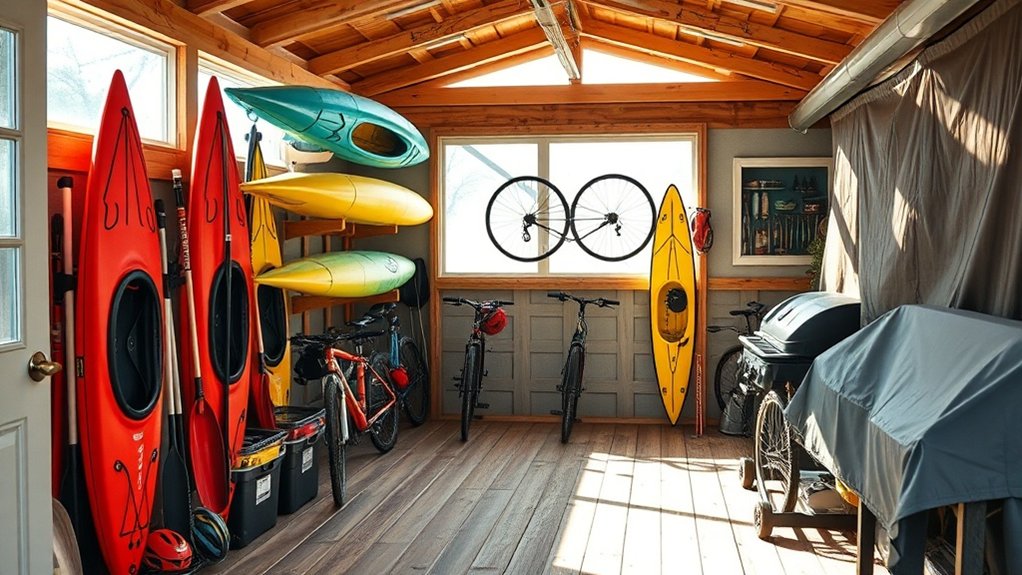
Choosing the right outdoor storage for your summer sports equipment is crucial for its longevity. Use breathable cloth storage rather than plastic, which can trap moisture.
Keep jerseys, nets, and balls indoors, while posts and poles can remain outside if properly protected. Cover immovable gear with heavy-duty tarps to guard against the elements, and avoid damp or sunny spots to prevent rust and UV damage.
Regularly check your gear for pests and store it in sealed containers to keep critters away.
Lastly, always clean and dry your equipment before storing it to avoid mould and mildew, ensuring it’s ready for your next outing.
Space-Saving Storage Methods
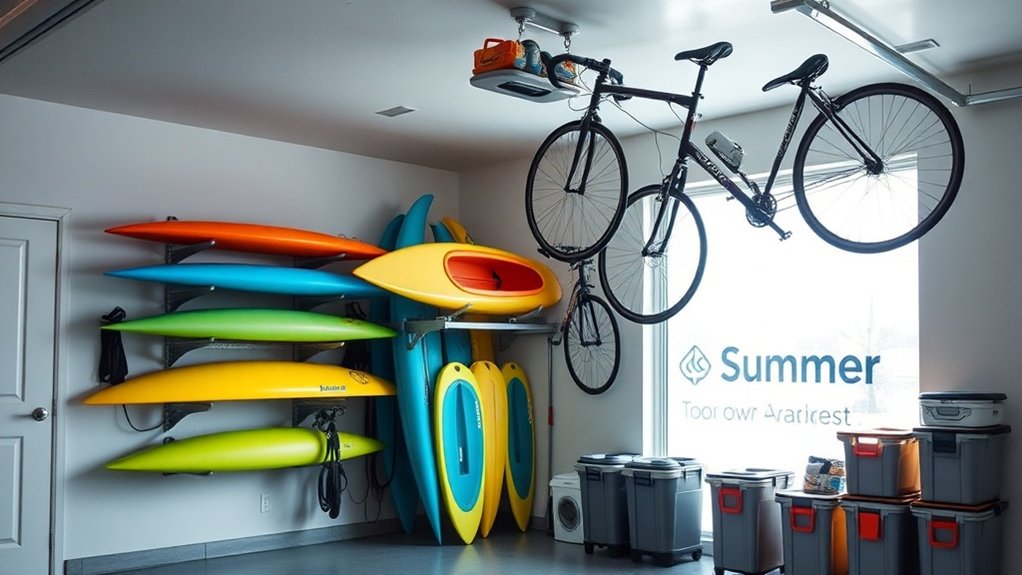
To make the most of your storage space for summer sports equipment, effective space-saving methods are essential.
Start with adjustable shelving units for vertical storage; these allow you to customise height and accommodate various items, keeping bulky gear organised.
Wall-mounted hooks and racks are excellent for freeing up floor space, making it easy to store bicycles and golf clubs.
For smaller items, use clear, labelled bins to improve visibility and simplify retrieval.
Stackable bins can help maximise horizontal space, while hanging systems are ideal for longer items like kayaks.
Seasonal Storage Facilities
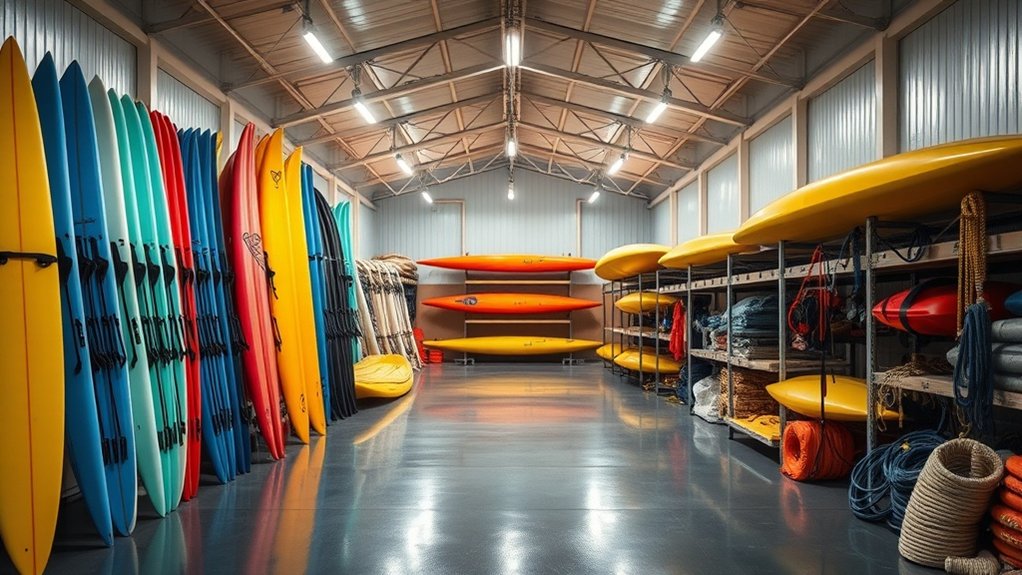
When considering seasonal storage facilities for your summer sports equipment, renting a unit has several advantages, including climate control to prevent damage.
Opting for a climate-controlled option is crucial for safeguarding sensitive gear against humidity and temperature changes.
Don’t forget about security features; they’re vital for keeping your valuable equipment secure during the off-season.
Benefits of Renting Units
Renting a seasonal storage unit offers several benefits for managing your summer sports equipment.
Firstly, it protects your gear from moisture, dust, and extreme temperatures, which can extend its lifespan. By keeping your summer equipment separate from fall and winter gear, you can maintain a clutter-free home.
Additionally, a dedicated storage space helps reduce exposure to pests and lowers the risk of rust or mould, safeguarding your investments.
With flexible rental sizes to suit your needs and budget, you can easily access your equipment when required.
In short, renting a unit not only protects your gear but also contributes to a safer and more organised living environment.
Choosing Climate-Controlled Options
Choosing climate-controlled storage is essential for protecting your summer sports equipment and ensuring it stays in top condition.
Here are the key factors to consider when selecting a facility:
- Consistent Temperature: Look for storage units that maintain a temperature between 10°C and 27°C to prevent warping and corrosion.
- Humidity Control: Ensure the facility keeps humidity around 55% to avoid mould and mildew.
- Indoor Access: Opt for indoor units for better protection from the elements.
- Organised Storage: Choose facilities with shelving and labelled containers for easy access to your gear.
Investing in climate-controlled storage will help keep your equipment in excellent shape for next summer.
Security Features to Consider
Storing your summer sports equipment properly goes beyond just climate control; security features at seasonal storage facilities are vital for protecting your gear.
Look for facilities with advanced security measures, such as 24/7 video surveillance and alarm systems that ensure a quick response to any incidents. Access control systems, like secure electronic gates and keypad entry, limit unauthorised access and boost your peace of mind.
Well-lit corridors and individual unit alarms also help deter tampering. Consider adding your own security measures, such as a high-security padlock.
It’s also wise to keep an inventory list of your equipment, which can assist in claims if necessary. By prioritising these security features, you can store your athletic gear without worry.
Rental Options for Off-Season Gear
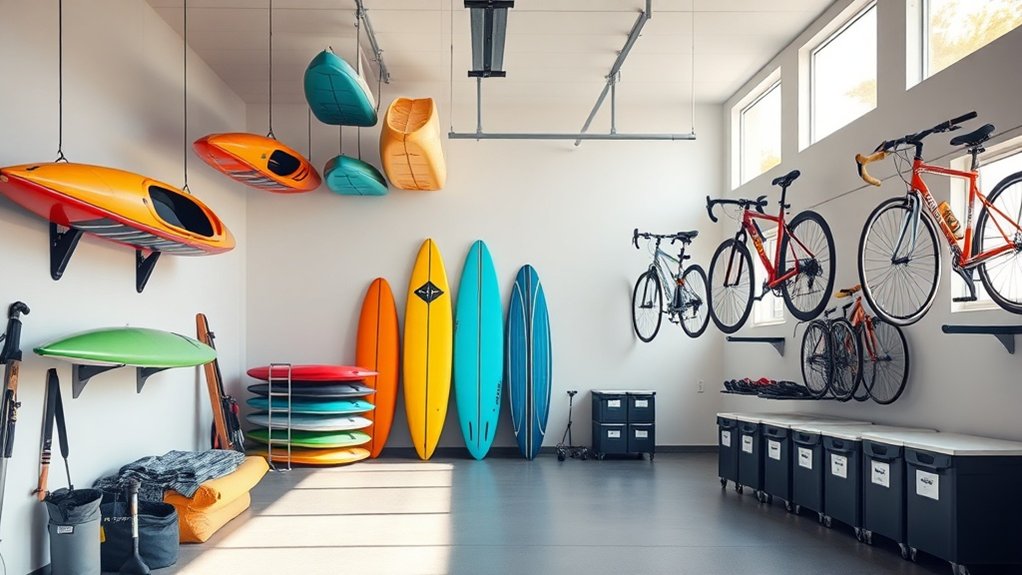
When the summer sports season ends, choosing the right rental options for off-season gear can greatly simplify your equipment management.
Here are some flexible options to consider:
- Monthly rental agreements allow you to rent storage without being tied down to a long-term contract.
- Short-term rentals are available for periods ranging from a few weeks to several months, catering to various sports schedules.
- Adjustable storage space enables you to change your unit size based on your equipment requirements.
- Contactless rental and virtual support streamline the rental process, making it more convenient.
These options can help you keep your gear safe and accessible throughout the off-season.
Maintenance Tips During Storage
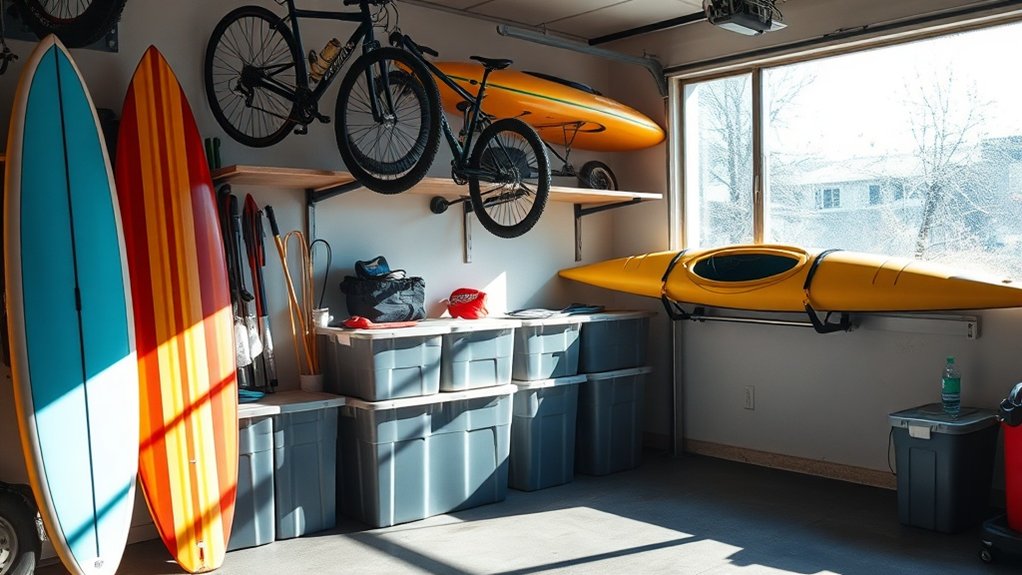
Once you’ve secured your off-season gear with rental options, it’s essential to focus on its maintenance during storage to ensure it stays in good condition.
Begin by checking your equipment for any cracks, chips, or wear and tear, and address any issues promptly to extend its life.
Clean all items with mild soap and water, then dry them thoroughly in a well-ventilated area to prevent rust and mould.
Use suitable storage containers: breathable bags for fabrics and sturdy boxes for fragile items.
Consider adding moisture-absorbing products like silica gel packets to tackle humidity.
Finally, store your gear in a cool, dry place, away from direct sunlight, to protect it from deterioration.
Regularly check on your equipment to keep it ready for your next adventure!
Safety Practices for Stored Equipment
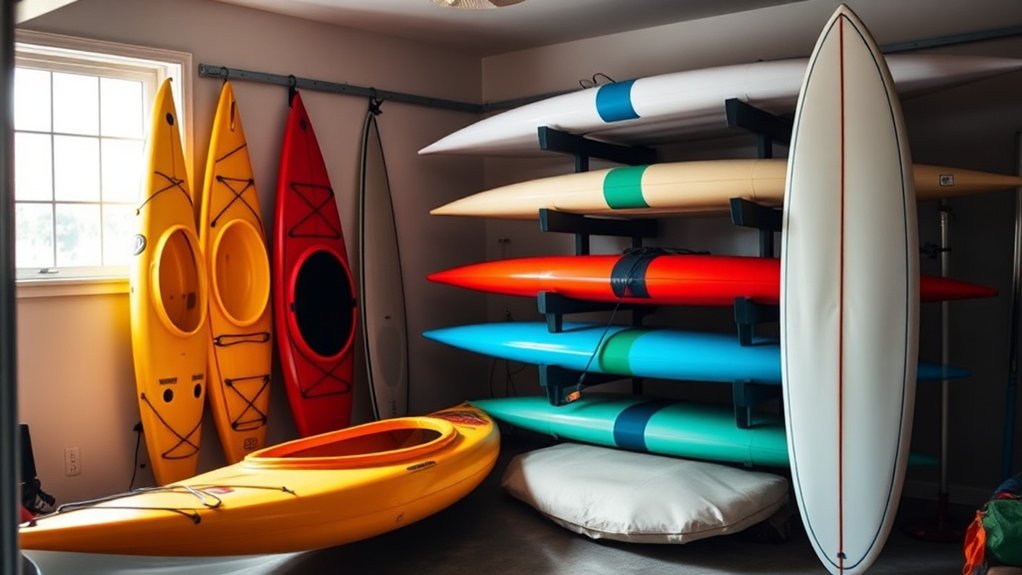
To ensure your summer sports equipment stays safe and in excellent condition during winter storage, follow these key practices:
- Store your gear in a climate-controlled space to protect it from dampness and temperature changes.
- Clean and thoroughly dry all equipment before putting it away to prevent mould and mildew.
- Use protective covers for delicate items and store them on racks to avoid damage and maintain their shape.
- Regularly check your stored equipment for signs of wear or pests, and address any issues promptly.
Organizing Your Storage Space
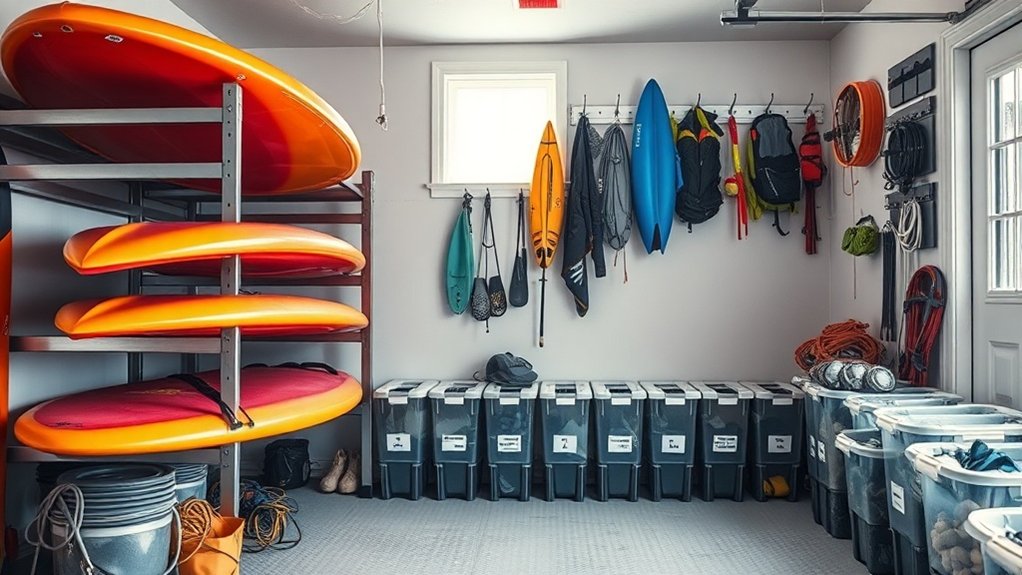
Organising your storage space effectively can make accessing your summer sports equipment quick and easy. Start by categorising your gear; group items by sport to simplify retrieval.
Use clear boxes and sturdy bags, labelling them with removable, colour-coded tags for easy identification. Maximise your space with vertical and overhead storage solutions like wall racks and ceiling hooks to keep the floor clear.
Create dedicated areas for different types of equipment, ensuring everything has its place. Lastly, maintain accessibility by clearly labelling containers and cleaning your gear thoroughly before storing it.
With these straightforward strategies, you’ll enjoy a tidy space that allows you to embrace your adventurous spirit.
Frequently Asked Questions
What Is the Best Way to Label Storage Containers?
To label storage containers effectively, use durable materials such as waterproof labels and permanent markers. Consider colour-coding for quick identification, and ensure the text is clear and easy to read. Make sure the labels adhere well but can be removed easily for updates when needed. For example, if you’re storing seasonal clothing, label containers by season and type—like “Winter Coats”—to find items swiftly.
How Can I Prevent Pests From Damaging My Stored Equipment?
Pests can be a real issue for stored equipment. To protect your gear, use sealed storage containers and consider pest deterrents like cedar blocks. Regularly check your items and maintain cleanliness to prevent any damage from pests.
Are There Specific Storage Solutions for Inflatable Items?
For caring for inflatable items, ensure you fully deflate them before storing. Clean and dry them thoroughly, then roll them up to reduce creases. Store them in a cool, dry place to avoid damage from moisture and temperature changes. For instance, a garden shed or cupboard can work well.
What Items Should Not Be Stored Together?
Storing incompatible items together is a recipe for disaster. Keep wet gear away from dry items, and ensure seasonal rotation – avoid placing rust-prone metals with delicate fabrics. For instance, don’t store your wetsuit with your cashmere jumper. This simple practice will help maintain the quality and longevity of your belongings.
How Often Should I Check on My Stored Equipment?
You should perform equipment maintenance with seasonal checks every 1 to 3 months. If conditions vary, check monthly to spot any issues early. This will help ensure your gear remains in good condition and ready for use when you need it. For example, if you store gardening tools, inspect them regularly to prevent rust or damage.
Conclusion
As you pack away your summer sports gear for winter, it’s easy to start dreaming of those sunny days ahead. While you’re storing everything, you’re also ensuring your equipment will be ready for the next season. Follow these straightforward storage tips to keep your gear in top condition. Remember, it’s not just about stowing away your items; it’s a commitment to future adventures.