

To securely store documents and valuables, combine physical and digital strategies. For physical items, use fire-resistant safes and label folders clearly for easy identification. Digitally, ensure strong encryption and implement multi-factor authentication (MFA) to limit access. Regularly conduct security audits to spot weaknesses, and avoid common password mistakes by using a password manager to create unique passphrases. It’s also important to understand legal requirements for document retention. With these practices, you can significantly enhance your security.
Key Takeaways
- Use fireproof safes or safety deposit boxes to store physical documents and valuables, safeguarding them against theft and fire damage.
- For digital documents, implement strong encryption and choose secure cloud storage solutions that adhere to strict compliance standards.
- Enhance security for accessing sensitive documents and accounts by adopting multi-factor authentication (MFA).
- Clearly label and organise both physical and digital documents for easy retrieval, while ensuring compliance with security regulations.
- Regularly conduct security audits and evaluate storage providers to pinpoint vulnerabilities and maintain ongoing protection of your information.
Understanding the Importance of Secure Document Storage

Secure document storage is crucial for protecting sensitive information and ensuring compliance with legal and regulatory standards. By implementing strong security measures, you prevent unauthorised access to personal, financial, and proprietary data. For instance, using encryption ensures that only those with permission can view or amend documents. Creating audit trails adds a layer of accountability and helps deter insider threats. Moreover, improved security measures enhance overall data protection and compliance, further solidifying your organisation’s commitment to safeguarding sensitive information. Additionally, implementing document management systems can streamline the document lifecycle, making access and retrieval more efficient.
Regular backups and disaster recovery plans also protect against data loss. By following compliance requirements, such as the GDPR or tax regulations, you reduce the risk of fines and legal issues. In the end, investing in secure document storage not only boosts data protection but also builds trust with clients and stakeholders, helping your organisation succeed.
Best Practices for Physical Document Storage

Effective physical document storage requires a well-organised system that enhances accessibility and security. Start by using filing cabinets for documents you need regularly. For those accessed less frequently, opt for archival boxes made from acid-free materials to ensure long-term protection. Clearly label all folders and boxes by date and document type to make retrieval straightforward. Implement a Records Management System that aligns with ISO 15489 to ensure compliance and efficient lifecycle management. It’s helpful to categorise documents, such as legal or financial, for better organisation. Additionally, maintaining optimal climate control is crucial for preserving the integrity of your documents. Store essential documents in fire-resistant safes or safety deposit boxes, and avoid keeping all important papers in one location to reduce the risk of loss in case of a disaster. Additionally, consider utilizing hybrid storage solutions to enhance both accessibility and security for your physical documents.
Effective Digital Storage Solutions

When selecting a digital storage solution, it’s essential to focus on security features such as encryption and access control. These elements protect your sensitive documents from unauthorised access and ensure your data remains secure. For instance, if you’re storing financial records or personal information, robust security protocols are crucial. Evaluating these options will help you choose the right platform for your needs. Many providers, such as Internxt prioritizing file security, offer strong encryption and compliance to enhance your data protection.
Cloud Storage Security Measures
As organisations increasingly rely on cloud storage for sensitive documents and valuables, implementing robust security measures is vital to safeguard against potential threats. Automated data discovery and classification can help identify where sensitive data is stored, reducing blind spots that could lead to breaches. Regular assessments of your cloud infrastructure ensure your systems are patched and compliant with data governance standards.
| Security Measure | Importance |
|---|---|
| Automated Data Discovery | Minimises blind spots |
| Secrets Management | Reduces exposure risk |
| Multi-Factor Authentication | Provides additional security |
| Regular Cloud Assessments | Preserves security posture |
For instance, using Multi-Factor Authentication means that even if a password is compromised, unauthorised access can still be prevented. By adopting these measures, you can significantly enhance your cloud storage security.
Encryption and Access Control
Encryption and access control are essential for secure document storage. Here are some effective strategies to protect your documents:
1. Use Symmetric Algorithms: Implement AES or other symmetric encryption methods. They offer strong security with quick performance, making them ideal for encrypting data.
2. Adopt Hybrid Encryption: This approach combines symmetric and asymmetric encryption, boosting security while allowing for secure document sharing.
For example, you can encrypt your symmetric keys with the recipient’s public key to keep access secure.
3. Enforce Access Control: Implement user authentication measures, such as multi-factor authentication (MFA), and utilise key management systems.
This helps govern who can access your documents, ensuring compliance and reducing risks.
Enhancing Cloud Security Measures
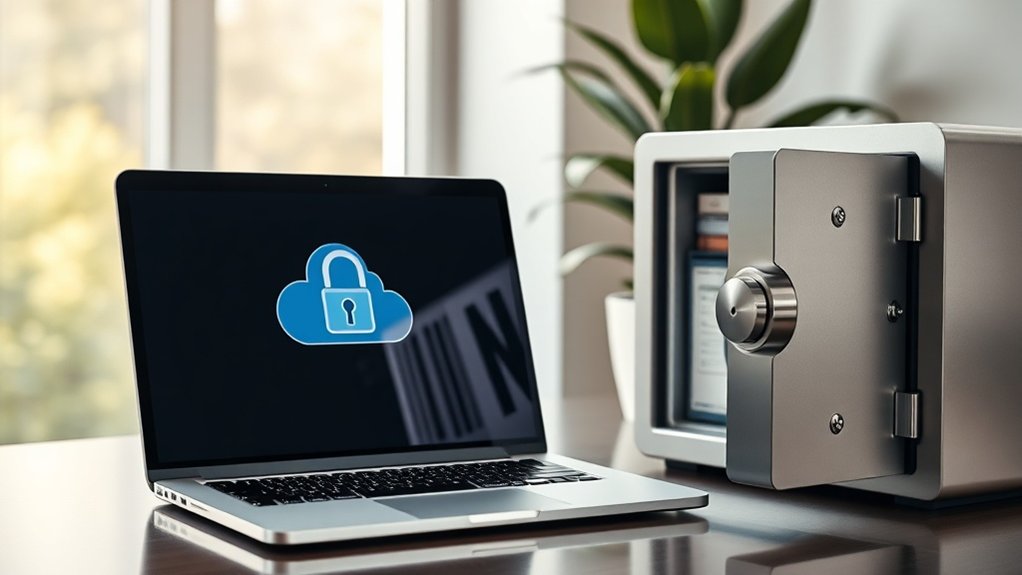
To enhance your cloud security measures, prioritise robust encryption protocols to safeguard your data both at rest and in transit.
Implementing multi-factor authentication is crucial, ensuring that only authorised users can access sensitive information.
Regular security audits will help you spot vulnerabilities and strengthen your overall security stance.
For example, if you’re storing customer data, encryption and multi-factor authentication are vital to prevent unauthorised access and data breaches.
Strong Encryption Protocols
When it comes to securing sensitive data in the cloud, using strong encryption protocols is crucial to protect against unauthorised access and potential breaches.
Here are some effective strategies:
- Use AES-256: This advanced encryption standard provides excellent security and speed, making it suitable for encrypting large amounts of data.
- Embrace Post-Quantum Algorithms: Consider adopting quantum-resistant encryption methods, such as CRYSTALS Kyber, to safeguard your data against future threats.
- Ensure Strong Key Management: It’s vital to manage your encryption keys securely to comply with data residency regulations and uphold digital sovereignty.
Multi-Factor Authentication Benefits
Many organisations underestimate the significance of multi-factor authentication (MFA) in their cloud security strategies, yet it stands as one of the most effective barriers against unauthorised access. The benefits of MFA are substantial: it can prevent around 99.2% of account compromises and significantly lower hacking risks. However, there are challenges to consider, such as user frustration and complexity.
| MFA Advantages | MFA Challenges |
|---|---|
| Prevents 99.2% of breaches | User frustration (33%) |
| Reduces hacking by 99% | Complexity (23%) |
| Enhances security with SSO | Legacy system integration |
| Adapts to high-risk scenarios | Managing shared accounts |
Implementing MFA can feel cumbersome, but its ability to safeguard sensitive information makes it a worthwhile investment for any organisation.
Regular Security Audits
Regular security audits are crucial for maintaining strong cloud security, as they help uncover vulnerabilities and ensure compliance with industry standards.
To improve your security measures, consider these steps:
- Set an audit schedule: Regularly plan audits to ensure ongoing evaluation of your cloud provider’s security policies and controls.
- Use security metrics: Implement data-driven assessments to keep track of your vendor’s security status, spotting any new risks or compliance concerns.
- Evaluate the attack surface: Employ advanced monitoring tools to map your assets and identify any unauthorised applications, focusing your security efforts on higher-risk areas.
Password Management and Access Controls

To secure your documents and valuables, effective password management and access controls are vital in protecting against unauthorised access.
Start by ensuring your passwords are complex; longer passphrases made up of unrelated words are easier to remember and stronger. Steer clear of common passwords and avoid reusing them to lower the risk of credential stuffing.
Using a password manager can help you generate unique passwords for each account, reducing password fatigue.
Additionally, implement multi-factor authentication (MFA) for better identity protection, as it significantly cuts down the chances of a breach.
Finally, be mindful when sharing passwords and educate yourself on risky behaviours, such as writing down passwords or using insecure storage.
These practices will help safeguard your sensitive information effectively.
Recognizing Risks and Statistics in Document Storage

Recognising the risks associated with document storage is crucial for protecting sensitive information. With concerning statistics highlighting the extent of exposure, it’s vital to take proactive steps for data protection.
Here are some key risks to consider:
- Human Factors: A staggering 68% of data breaches are due to human error or misuse, revealing vulnerabilities in how documents are handled daily.
- Cybersecurity Threats: Ransomware and phishing attacks target inadequate storage systems, putting your sensitive data at risk.
- Legal Liabilities: Failing to comply with regulations such as GDPR can result in significant fines and damage to your reputation, underscoring the need for secure practices. Implementing strong encryption algorithms can significantly enhance the security of stored documents and protect against unauthorized access.
Archiving Strategies for Compliance and Security

To securely archive your documents and comply with regulations, it’s crucial to implement effective strategies.
Begin by organising documents by subject and relevance for easy retrieval while ensuring their integrity. Create retention schedules that align with legal requirements to manage compliance effectively.
Use secure authentication methods and multi-level access controls to restrict access to authorised personnel only. Employ encrypted protocols for data in transit and maintain audit trails for accountability.
Opt for long-term preservation formats like PDF/A to prevent degradation. Regularly review archived records and maintain version control to track changes.
Utilizing Professional Services for Document Management

Managing documents in-house might seem straightforward, but using professional document management services can greatly enhance security and efficiency. Here are three main benefits:
- Improved Physical Security: Professional services employ robust security measures such as controlled access, CCTV, and climate control to safeguard your documents and valuable information.
- Efficient Document Retrieval: These services consolidate your documents in one central location, enabling quick access and significantly cutting down the time spent searching for files.
- Regulatory Compliance: By handling retention schedules and secure disposal processes, professional services help ensure your organisation complies with legal and regulatory standards, reducing risks linked to document management.
Opting for these services not only protects your information but also streamlines your operations, allowing you to concentrate on what truly matters.
The Future of Document Security Technologies

As organisations encounter increasingly sophisticated threats to their documents and valuable assets, the future of document security technologies is advancing swiftly. Key developments include quantum cryptography and AI analytics, both crucial for bolstering security.
| Technology | Expected Impact |
|---|---|
| Quantum-Resistant Cryptography | Safeguards against quantum attacks |
| AI-Powered Analytics | Identifies anomalies in real-time |
| Biometric Authentication | Enhances identity verification |
| Dynamic Security Policies | Adjusts access controls based on context |
With the rise of blockchain adoption and AI improving incident detection, it’s essential to prioritise these technologies now. By adopting quantum-safe algorithms and intelligent automation, you can ensure robust protection for your documents, creating a secure environment that supports your need for freedom.
Frequently Asked Questions
What Types of Documents Require the Highest Level of Security?
Legal documents and financial records require the highest level of security. It’s essential to safeguard sensitive information such as contracts, tax returns, and bank statements from unauthorised access to prevent identity theft and financial fraud.
How Often Should I Audit My Document Storage Practices?
To maintain effective document storage practices, conduct audits every three months. This regular check helps identify inefficiencies and ensures compliance, allowing you to concentrate on what really matters in your business. For example, if you find outdated files during an audit, you can streamline your processes and save time in the long run.
What Are the Signs of a Potential Data Breach?
Keep an eye out for signs of a potential data breach, such as unusual login attempts, unexpected system slowdowns, or changes to files you didn’t make. For instance, if you notice multiple failed login attempts on your account or your computer is running unusually slowly, these could indicate unauthorised access. Spotting these issues early allows you to take action to protect your data.
Can I Recover Documents After a Data Breach?
Yes, you can recover documents after a data breach. It’s important to act swiftly, using backups and recovery tools. For instance, if you regularly back up your files to an external hard drive or cloud service, you can restore lost data relatively easily. Additionally, implement measures to prevent future breaches, such as using strong passwords and keeping software updated. Stay proactive and vigilant!
How Do I Choose a Reliable Document Management Service?
To select a reliable document management service, assess cloud storage options and providers based on key factors such as security features, user-friendliness, integration capabilities, scalability, and support responsiveness. For instance, if you run a small business, you might prioritise ease of use and cost-effectiveness, while larger organisations may focus more on advanced security and integration with existing systems. Ensuring these elements align with your organisation’s needs will help you make an informed choice.
Conclusion
In today’s digital world, securing your documents is crucial. Did you know that 60% of small businesses that experience a cyber attack go under within six months? This statistic highlights the need for strong security measures for both physical and digital documents. By following best practices, using dependable storage solutions, and keeping up with new technologies, you can safeguard your important information and ensure your peace of mind in a risky environment.