Self-storage isn't just for personal belongings; many businesses use it for managing inventory and documents. Renting a unit can actually be more cost-effective than keeping larger properties, especially with flexible month-to-month contracts. Not all storage facilities provide the same level of security or amenities, and the idea that items deteriorate quickly is a misconception; with proper preparation and climate control, your belongings can be well-protected. Furthermore, many facilities offer 24/7 access, dispelling the notion that your stored items are difficult to reach. Discover more insights about self-storage to help you make informed decisions.
Key Takeaways
- Self-storage isn't solely for personal belongings; businesses often utilise it for managing inventory and important documents.
- Not all storage facilities provide the same features; security measures and access protocols can differ significantly.
- Self-storage can be cost-effective, with prices influenced by location, facility amenities, and potential hidden charges.
- With the right preparation and climate control, items in self-storage can be well-preserved, debunking the myth that they quickly deteriorate.
- Many facilities offer flexible month-to-month agreements, enabling users to adapt their storage solutions without being tied down by long-term contracts.
Common Misconceptions About Self-Storage
Many people have misconceptions about self-storage that can lead to missed opportunities and unnecessary costs. One common myth is that self-storage is only for personal clutter, or that it's too expensive.
In reality, renting a unit can be surprisingly affordable, especially when you compare it to the costs of maintaining larger homes or commercial spaces just for storage. Additionally, many facilities offer competitive pricing and discounts to make storage even more accessible.
Self-storage isn't just for individuals; businesses also use it for managing inventory and storing important documents. Whether you need space for a few months or several years, most facilities offer flexible month-to-month contracts that suit various needs and budgets.
You may be surprised to find out that self-storage can accommodate a wide range of items, from seasonal decorations to essential business equipment. This versatility helps you keep your home or workplace organised and free from clutter.
Security Features of Storage Facilities
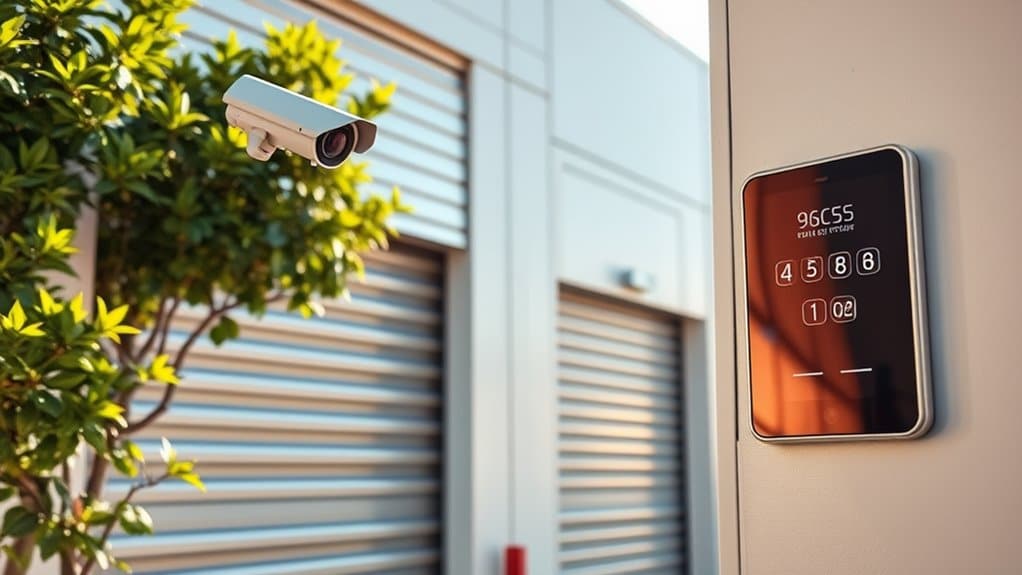
When selecting a self-storage facility, it's crucial to consider its security features to protect your belongings.
Look for advanced surveillance systems, robust access control measures, and secure unit features. For instance, facilities with 24-hour CCTV and gated access provide an added layer of safety. Implementing effective security measures can significantly deter potential intruders and enhance the overall protection of your stored items. Additionally, facilities equipped with individual alarms on each unit ensure constant protection and peace of mind for customers.
Advanced Surveillance Systems
In the self-storage sector, advanced surveillance systems are crucial for boosting security and providing peace of mind to customers. These systems utilise the latest surveillance technology to ensure comprehensive coverage, deterring potential intruders and aiding in incident investigations. Enhanced security features can lead to lower insurance premiums, as risk management improvements are viewed favorably by underwriters. Moreover, facilities often incorporate advanced security features that cater specifically to urban environments, ensuring a safe storage experience.
| Feature | Description | Benefits |
|---|---|---|
| CCTV Coverage | Cameras placed strategically to monitor all areas | Detects and records suspicious activity |
| IP Cameras | High-definition video feeds with incident flagging | Provides clear evidence during events |
| Aerial Surveillance | Drones equipped with AI for overhead views | Efficiently identifies unwanted behaviour |
| Real-Time Alerts | Cloud-based notifications for suspicious activities | Allows for quick responses to incidents |
| Security Integration | Links surveillance with access and alarm systems | Offers a comprehensive view of facility security |
With features such as real-time monitoring and automated alerts, you'll be aware of any unauthorised activity immediately. Enhanced security through integration with biometric authentication and smart locks adds an extra layer of protection. By opting for facilities equipped with these advanced systems, you're making a wise choice for your peace of mind.
Access Control Measures
Effective access control measures are crucial for protecting self-storage facilities and ensuring that only authorised users can gain entry. By using robust security technology such as keypads, card readers, and mobile credential systems, you can effectively restrict access. These systems not only boost security but also offer conveniences that traditional methods often lack.
Fencing and gates act as the first line of defence, limiting entry points and deterring potential intruders. Visibility-blocking fences enhance security by preventing outsiders from assessing what's inside your units. It's important to regularly maintain these barriers; any broken fencing should be repaired promptly to uphold perimeter security. Additionally, implementing perimeter intrusion alarms can act as an early warning system, further enhancing the overall security of your facility. Many facilities also feature 24/7 video monitoring to ensure constant surveillance of the premises.
Incorporating integrated technologies like IP surveillance cameras and motion detectors can significantly improve your facility's security. These tools work alongside access control systems, creating a multi-layered security approach.
Cloud-based management allows for real-time monitoring and notifications, keeping you informed about your storage environment. This technology ensures that facility managers can respond quickly to security breaches or issues, enhancing overall safety for all users.
Unit Security Features
When it comes to self-storage, basic security features just won't cut it. A robust approach to unit security is essential to protect your belongings.
Here are three vital features to consider:
- Individually Alarmed Units: Each storage unit should be equipped with its own alarm, so you'll be notified if anyone attempts unauthorised access.
- 24/7 Video Surveillance: Constant monitoring not only discourages theft but also provides crucial evidence in case of incidents, as video surveillance captures all activities on the premises.
- On-Site Resident Managers: With managers living on the premises, there's always someone available to respond quickly to any suspicious activity, enhancing overall security.
Additionally, many facilities offer high-security locks, biometric access, and advanced systems that connect surveillance with access controls.
These features ensure your unit remains secure. When selecting a self-storage facility, prioritise those with comprehensive security measures, as they're vital for safeguarding your possessions and allowing you to store with confidence.
The True Cost of Storage Units
The true cost of storage units is often underestimated, with many people fixating solely on the monthly rental fee.
While the national average is around £85.30, that's just the starting point. Hidden fees can significantly increase your total expenses. For example, climate-controlled units can raise your costs by 30-50%. Additional amenities like extended access hours or enhanced security features can also add to your bill.
Regional differences are significant as well. In busy urban areas, you can expect to pay more compared to rural locations. Prices can vary from as low as £30 for a small 5×5 unit to £250 or more for larger options. Local demand can further affect pricing, especially during peak seasons when rental rates tend to rise. Nationwide prices(14.4% decrease) are down compared to last year due to reduced demand linked to post-COVID recovery.
It's crucial to understand lease terms; short-term rentals often come with a premium, while long-term agreements may offer discounts.
Aligning your storage needs with your lease is key to avoiding unnecessary costs. By considering these factors and looking beyond just the monthly fee, you can make a more informed decision about your storage unit investment.
Flexibility in Storage Commitments
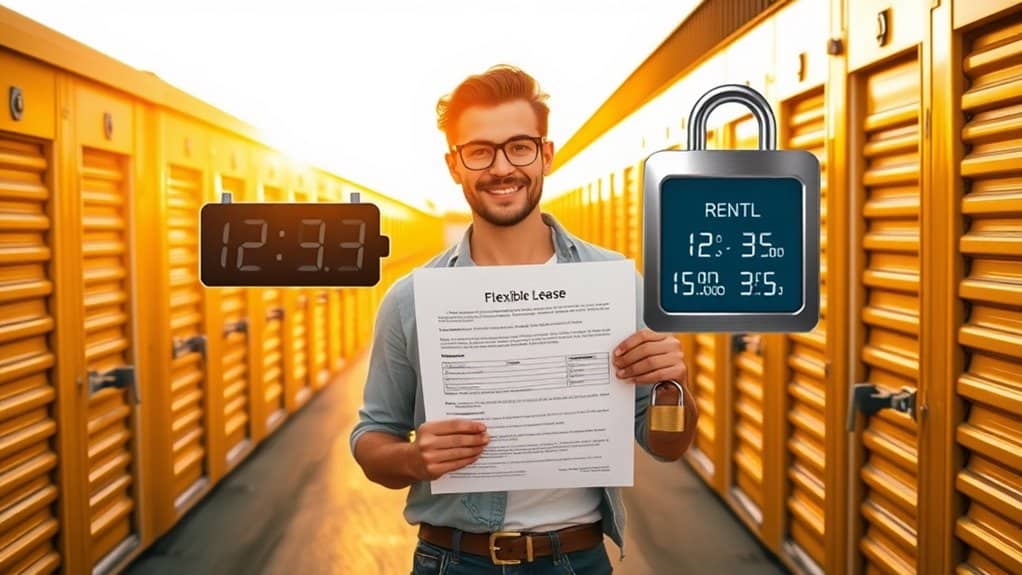
When considering self-storage, it's important to grasp the flexibility in leasing options available. Month-to-month agreements allow you to adjust your storage needs without being tied into long-term contracts. This makes it easy to choose between short-term and long-term solutions as your situation evolves. For instance, if you're moving house and only need storage for a couple of months, or if you're decluttering and require a space for a year, the adaptability of these agreements ensures you can manage your storage effectively. Additionally, the option for no penalties for scaling provides even more peace of mind as your business grows.
Month-to-Month Leasing
Choosing month-to-month leasing can significantly improve your storage experience by providing essential flexibility. Unlike traditional storage contracts that often tie you down for extended periods, month-to-month agreements offer several key benefits:
- No Termination Fees: You won't face hefty charges if you need to end your lease early.
- Increased Flexibility: You can easily upgrade, downgrade, or vacate your unit as your needs change.
- Cost-Effectiveness: Only pay for what you use, avoiding the pitfalls of long-term commitments.
These advantages make month-to-month leasing ideal for various situations, whether you're a student needing temporary space, someone renovating their home, or a business experiencing changing demands. Additionally, many facilities, like Homestead Storage, offer monthly agreements to eliminate the financial penalties associated with early termination.
Additionally, there's no need to worry about giving advanced notice or incurring penalties when cancelling. Your storage solution can adapt seamlessly to your lifestyle.
Month-to-month leasing isn't just convenient; it's a sensible choice for those who value freedom and adaptability in their storage options. Enjoy a storage experience tailored to your needs without the restrictions of traditional contracts.
Short-Term Storage Options
For those in need of temporary solutions, short-term storage options provide flexible arrangements without the hassle of long-term contracts. You can rent storage for just a few days or up to three months, making it perfect for various situations. In fact, around 17% of tenants choose storage for less than three months, illustrating the desire for flexibility. Additionally, these facilities often provide flexible lease terms, which allow you to adjust your storage duration based on your needs.
| Purpose | Storage Type | Duration |
|---|---|---|
| Moving Between Locations | Self-Storage Units | Days to Months |
| Seasonal Storage for Students | Portable Storage | Summer Breaks |
| Temporary Business Needs | Public Storage | Short-Term |
| Holiday Home Owners | Local Storage Facilities | Weeks to Months |
| Home Renovations | Climate-Controlled Units | Flexible |
With options like month-to-month leases, you can easily adjust your storage needs without the burden of long-term commitments. Companies such as Extra Space Storage and PODS provide convenient choices tailored to your requirements. Whether you're in a transitional phase or just need a short-term solution, these options enable you to store your belongings conveniently and affordably.
Long-Term Storage Flexibility
Long-Term Storage Flexibility
Choosing flexible long-term storage options can significantly improve your experience, particularly when your needs change over time. Many self-storage facilities offer month-to-month rentals, so you aren't tied to lengthy contracts. This flexibility comes with several advantages:
- Adaptable Terms: Easily adjust your rental period and space size as your requirements evolve.
- Cost-Effective Options: Long-term storage often comes with lower monthly rates, helping you manage your budget more effectively.
- Effortless Transitions: Move from short-term to long-term storage without complications. Additionally, the availability of adjustable rental durations allows you to tailor your storage experience to your specific timeline.
By selecting flexible pricing, you can scale your storage needs without the pressure of unnecessary commitments. Facilities cater to a range of needs, whether you're storing seasonal items or business stock, ensuring you pay only for the space you require.
Additionally, the ability to modify your storage solutions reduces stress and increases satisfaction. Look for facilities that offer flexibility rather than locking you into long-term contracts.
With the right storage option, you can feel secure knowing your belongings are safely stored and accessible when needed.
Who Uses Storage Units?

Who Uses Storage Units?
Many people think that self-storage units are mainly for those with lots of belongings, but in reality, a wide range of individuals and groups use these facilities. Understanding who uses storage units reveals various reasons that drive people to seek out these services.
| Age Group | Percentage Using Storage | Common Motivations |
|---|---|---|
| 18-23 | 12% | Limited possessions, lower income |
| 24-39 | 25% | Space constraints, moving assistance |
| 40-59 | 38% | Downsizing, family changes |
| 60+ | 27% | Seasonal storage, decluttering |
Currently, 18% of people in the UK use self-storage, with an additional 14% considering it. Millennials lead with 25%, followed by Gen X and Baby Boomers. Many cite space issues at home (42%) and the need for a smoother moving process (25%) as key reasons for renting. The rise of digital nomadism and smaller living spaces has contributed to this trend. Essentially, self-storage has become a flexible solution for various life situations and needs.
Cleanliness Standards in Storage

Understanding the users of self-storage units is just the start; ensuring cleanliness in these facilities is equally vital for a positive experience. High cleanliness standards not only safeguard your belongings but also enhance your sense of security and satisfaction.
Self-storage facilities follow strict cleaning protocols to maintain a tidy environment. Key practices include:
- Daily cleaning, such as sweeping floors and tidying shared areas
- Regular maintenance of unit doors and ventilation systems
- Proactive pest control measures, including inspections and structural upkeep
By adopting these rigorous standards, facilities ensure that your items are protected from dust and pests. Regular pest inspections are part of a comprehensive strategy to prevent issues, while effective sanitation helps stop infestations.
As a tenant, you also have a role to play in maintaining cleanliness. Keep your unit organised, dispose of unnecessary items, and use pallets to keep your belongings off the floor.
Legal Issues With Living in Storage

Living in a storage unit might seem like a quick fix for those struggling with housing, but it comes with serious legal risks.
Firstly, storage unit agreements usually prohibit residential living, making it illegal. If you're found living there, you could face immediate eviction, fines, or even legal action for breaching zoning laws. There's also a chance your belongings could be confiscated, meaning you might lose everything you've stored.
Moreover, this situation could negatively impact your legal record, making it harder to secure housing or employment in the future. Lease agreements typically state that living in the unit isn't allowed, and insurance policies for storage facilities back this up.
Enforcement is strict, with security cameras and staff regularly checking for compliance.
Safety is another concern. Storage units lack essential amenities like running water and electricity, which can lead to health risks. If children are involved, the situation could escalate to child endangerment charges.
While understanding your rights as a tenant is important, the law is generally not in your favour in this scenario.
Ultimately, seeking alternative housing options is the safest and most lawful route.
Climate-Controlled Storage Benefits

Climate-controlled storage is a vital solution for protecting your belongings from the harmful effects of extreme temperatures and humidity. By managing climate and moisture levels, you can prevent damage to your items.
Here are some key benefits of choosing climate-controlled storage:
- Protection from Harsh Conditions: Ensures your items are shielded from extreme heat or cold, which can damage materials like wood or plastic.
- Improved Air Quality: Maintains better air quality and prevents mould growth, reducing the risk of damage to delicate items.
- Preservation and Longevity: Keeps your possessions in excellent condition, particularly antiques, fine art, and vintage clothing.
Investing in climate-controlled storage isn't just a precaution; it guarantees that your cherished items remain safe.
With consistent temperature and humidity levels, you can relax knowing your belongings are protected from pests and environmental threats. This storage option allows you to keep your valuables secure without worry.
Short-Term vs. Long-Term Storage
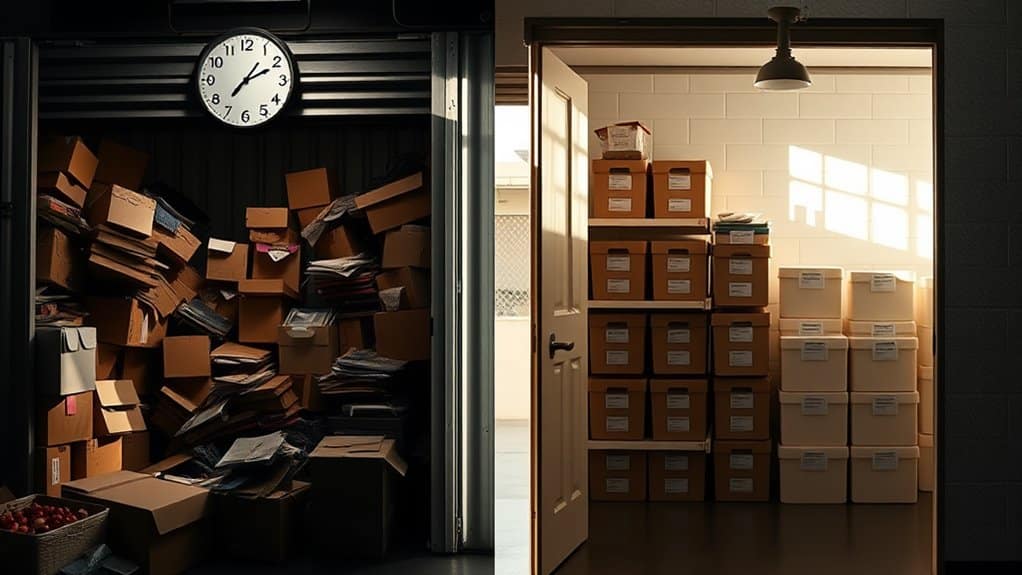
When deciding between short-term and long-term storage, consider your needs for flexibility, cost, and usage.
Short-term storage is ideal for temporary situations, such as house moves or renovations. For example, if you're decluttering before a sale, short-term options allow you to store items until everything is settled.
On the other hand, long-term storage is more economical for belongings you don't need regularly, like seasonal decorations or inherited furniture.
Understanding these differences will help you choose the best storage solution for your situation.
Flexibility in Duration
Understanding the flexibility in duration for self-storage is essential, as your needs can change over time. Whether you need a temporary solution for a short period or a long-term option, here's what you should know:
- Short-term storage is perfect for life changes such as home renovations or moving house, with rentals typically available for one to three months.
- Long-term storage provides an easy transition from short-term needs and often comes with reduced monthly rates.
- Storage assessments are crucial; knowing what items you have will help you determine the appropriate duration.
Many facilities, such as Extra Space Storage and CubeSmart, offer flexible month-to-month leases, dispelling the notion that long-term commitments are necessary.
By assessing your storage requirements, you can ensure the solution fits your lifestyle and budget. With various duration options available, you can adjust your storage plan as needed, allowing easy access to your belongings without any hassle.
Whether you need temporary space or a more extended arrangement, self-storage can cater to your changing circumstances. Embrace the flexibility and choose the option that best suits your needs.
Cost Considerations
Cost considerations are crucial when choosing between short-term and long-term self-storage options. Generally, short-term storage tends to be more expensive per month than long-term rentals, making it less economical for extended use. If you plan to store items for six months or more, many facilities offer discounted rates that can significantly lower your overall costs.
When reviewing your budget, consider factors such as location, unit size, and facility amenities, as these can impact prices. For example, storage in urban areas usually costs more than in rural locations. To save money, compare different facilities or negotiate prices where possible.
Before committing to a unit, assess how long you'll need storage and whether it's really necessary. While short-term options can be tempting for immediate needs, long-term storage often provides better value for extended periods.
Be cautious of hidden costs like administration fees and insurance, which can add to your monthly expenses. By understanding these cost factors, you can make informed decisions that suit your budget and storage needs.
Diverse Use Cases
Selecting the appropriate type of self-storage depends on your specific requirements, whether for a short or long period. Understanding the different storage options can help you make informed decisions.
Short-term storage is versatile and useful in various situations, such as:
- Moving Home: Store your belongings while relocating or preparing your home for sale.
- Seasonal Items: Keep your garden furniture or Christmas decorations safely stored until needed.
- Home Renovations: Protect your furniture from dust and damage during renovations.
Conversely, long-term storage is perfect for those looking to declutter. It allows you to store items you don't need regularly, whether personal belongings or business stock.
This option is also beneficial for students needing a place for their items during university breaks or businesses wanting to archive surplus equipment.
Ultimately, understanding whether your needs are temporary or long-term will help you choose the right self-storage solution, enabling you to manage life's changes with ease.
Storage for Businesses and Commercial Use
For businesses navigating the challenges of space management, self-storage provides a practical solution that goes beyond convenience. It helps reduce clutter, freeing up valuable office space by storing unused or seasonal items.
This flexibility is vital for any organisation, particularly when managing commercial inventory.
Modern self-storage facilities feature enhanced security measures such as 24/7 video monitoring and gated access, ensuring your stored items are safe.
These facilities are also cost-effective, often more affordable than moving to a larger office or leasing additional space, which can quickly drain resources.
With month-to-month leasing options, you can adjust your storage needs as your business grows.
Whether you're a law firm needing to archive documents or an e-commerce business managing stock, self-storage can streamline your operations.
Many facilities also offer climate-controlled units and packing supplies, dispelling the notion that self-storage is solely for personal use.
By utilising these resources, you can keep your workspace organised and maintain business agility.
Embrace self-storage to enhance your operational flexibility.
The Impact of Location on Prices
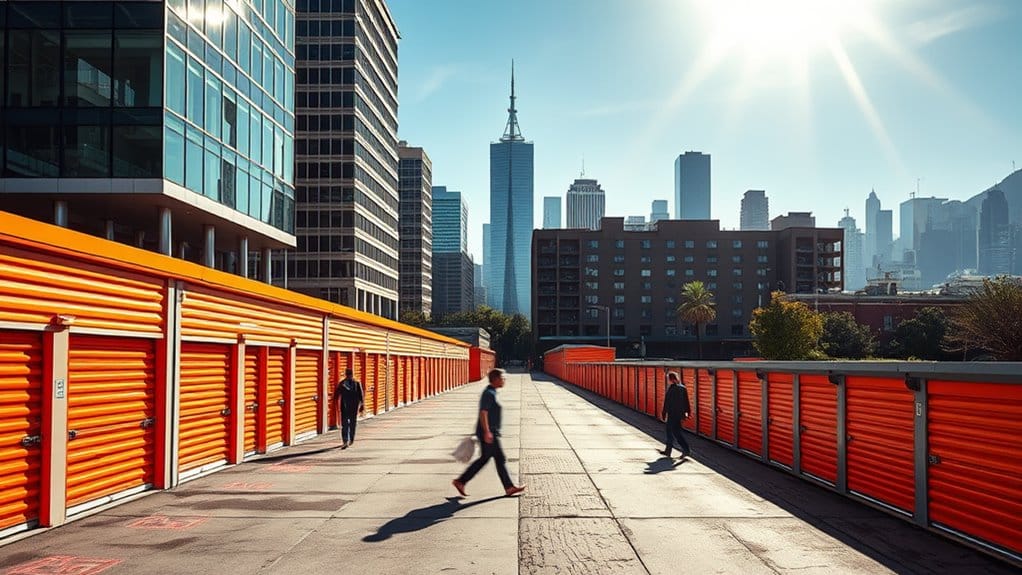
Location significantly impacts self-storage prices, affecting both demand and availability. Typically, urban areas command higher rents due to limited supply and greater demand, whereas rural pricing is more competitive, influenced by lower demand and operational costs.
Here are some key factors to consider regarding location's impact on pricing:
- Unit Accessibility: Ground-floor units or those near loading bays often come at a premium due to their convenience.
- Market Trends: Facilities need to adjust pricing strategies according to demand shifts and local economic conditions.
- Facility Amenities: Urban storage facilities frequently provide enhanced amenities, such as 24/7 access, which justifies their higher prices.
The differences between regions are pronounced; urban centres with high population density can support elevated pricing, while rural areas may need to adopt flexible pricing to maintain occupancy.
The competitive environment in your locality will also influence customer preferences, as self-storage facilities tailor their offerings to attract clients.
Understanding how location affects pricing enables you to make informed choices that suit your storage requirements and budget.
Choosing the Right Storage Facility

When choosing a self-storage facility, it's crucial to identify your specific needs. Begin by listing the items you'll be storing, as this will help you determine the right unit size and type. Online calculators can assist in estimating space requirements, and consider whether you need climate-controlled units to safeguard delicate belongings, such as antiques or electronics.
Next, assess the facility's features, prioritising security and accessibility. A secure perimeter with surveillance cameras is essential. Look for facilities that provide 24/7 access to your unit and convenient loading areas to make your storage experience smoother.
Here's a quick overview of key features to consider:
| Feature | Importance |
|---|---|
| Unit Size and Type | Adapts to your storage needs |
| Security Measures | Protects your belongings from theft |
| Climate Control | Vital for sensitive items |
| Accessibility Options | Ensures hassle-free access |
Preparing Items for Storage

Preparing items for storage requires careful attention to detail to ensure everything remains in good condition. To effectively protect your belongings, follow these essential tips:
- Sort and Purge: Decide what to keep, donate, or throw away based on how recently you've used items and their condition.
- Clean and Repair: Ensure all items are clean and in good working order to prevent damage while in storage.
- Pack Securely: Use suitable packing materials to protect your items.
Start by cleaning your belongings thoroughly. Dust, dirt, and moisture can cause mould and mildew. Use antibacterial cleaners for kitchenware and electronics.
For clothing, wash and dry or use a dry-cleaning service to prevent stains.
When packing, be careful. Use bubble wrap for fragile items, and disassemble larger pieces to save space.
Clearly label boxes and organise them by category for easier access. Place heavier items at the bottom to prevent damage.
Frequently Overlooked Storage Benefits

Storage solutions offer benefits that extend beyond just managing space, positively impacting both personal and professional lives in ways often overlooked. A key advantage is the versatility of self-storage units. They can effectively utilise spare areas in your home or office by storing seasonal items like Christmas decorations or winter clothing, freeing up space for everyday use.
Self-storage also promotes organisational efficiency. By keeping rarely used items in storage, you can maintain a clutter-free environment, which can enhance productivity and creativity. Businesses benefit as well; using storage for stock or equipment allows for better workspace management, making seasonal transitions easier.
Security is another important benefit. Modern facilities offer climate-controlled environments to protect sensitive items from damage, alongside strong security measures for peace of mind. This means you can safely store personal keepsakes or essential documents without concern.
In short, self-storage is more than just a space-saving solution—it can enhance your life and work. Embracing these advantages can lead to a more organised, efficient, and liberated lifestyle.
Frequently Asked Questions
How Do I Choose the Right Size Storage Unit?
To choose the right size storage unit, start by assessing your needs. Compare unit sizes to find the best fit, taking into account the dimensions of your items and any future accessibility or organisational requirements. For example, if you're storing a set of garden furniture, ensure you have enough space to manoeuvre around it easily.
Can I Access My Storage Unit at Any Time?
You might assume you can access your storage unit whenever you like, but it's important to note that most facilities have set hours. While some do offer 24-hour access, many impose stricter opening times for security reasons. For example, if you need to retrieve your belongings late at night, you might find the gates locked. Always check your facility's policy before planning your visits.
Are There Restrictions on What I Can Store?
Yes, there are restrictions on what you can store. Certain items, such as perishable goods and hazardous materials, are prohibited due to storage regulations. Always check the facility's rules to ensure compliance and avoid any potential issues.
What Payment Methods Are Accepted at Storage Facilities?
When looking at payment options for storage fees, you'll find several methods available. Credit cards, debit cards, and bank transfers are common, along with cash payments. Online management makes it easy to set up recurring payments, providing convenience and flexibility for your storage needs.
How Do I Prepare My Items for Storage?
To prepare your items for storage, start by collecting packing supplies such as strong boxes and bubble wrap. For delicate items, consider using climate-controlled storage to protect against dampness and temperature changes, ensuring they remain in good condition.
Conclusion
In conclusion, grasping the realities of self-storage can significantly improve your decision-making. Did you know that around 10% of households in the UK utilise a storage unit? This figure reflects the increasing need for storage solutions in our cluttered lives. By dispelling common myths and understanding what to expect, you can make choices that fit your requirements. Remember, self-storage is not just about having extra space; it's about convenience, security, and flexibility tailored to your lifestyle.