
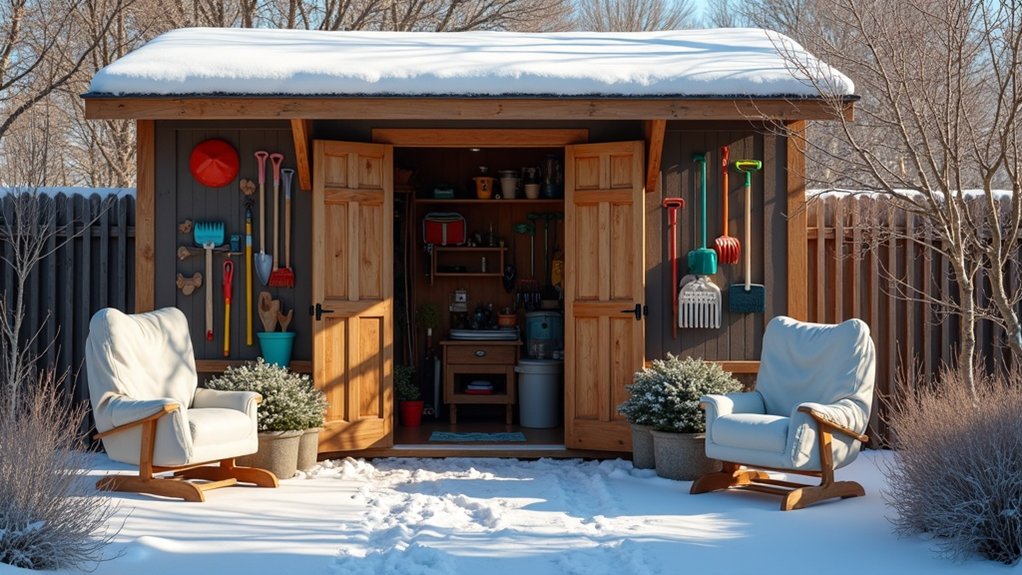
To store your gardening tools for winter, start by cleaning them properly and removing any rust. Dry the tools thoroughly and apply oil to the metal parts to prevent rusting. For outdoor furniture, give each piece a good clean, remove the cushions, and store them in a dry location. Use breathable covers to protect the furniture from moisture and dirt. Organise your storage so that frequently used items are easily accessible. Taking these steps now will help prolong the life of your tools and furniture.
Key Takeaways
- Clean gardening tools properly before storing them; ensure all dirt and rust are removed, and lubricate metal parts to avoid corrosion.
- Store tools in a dry, sheltered spot, off the ground, using weather-resistant boxes for easy organisation.
- Disassemble outdoor furniture to save space and protect it from damage during winter storage.
- Cover furniture with breathable, durable materials to shield it from moisture and prevent mould growth.
- Regularly check stored items for signs of rust or rot to ensure they’re in good condition and ready for use come spring.
Preparing Gardening Tools for Winter Storage
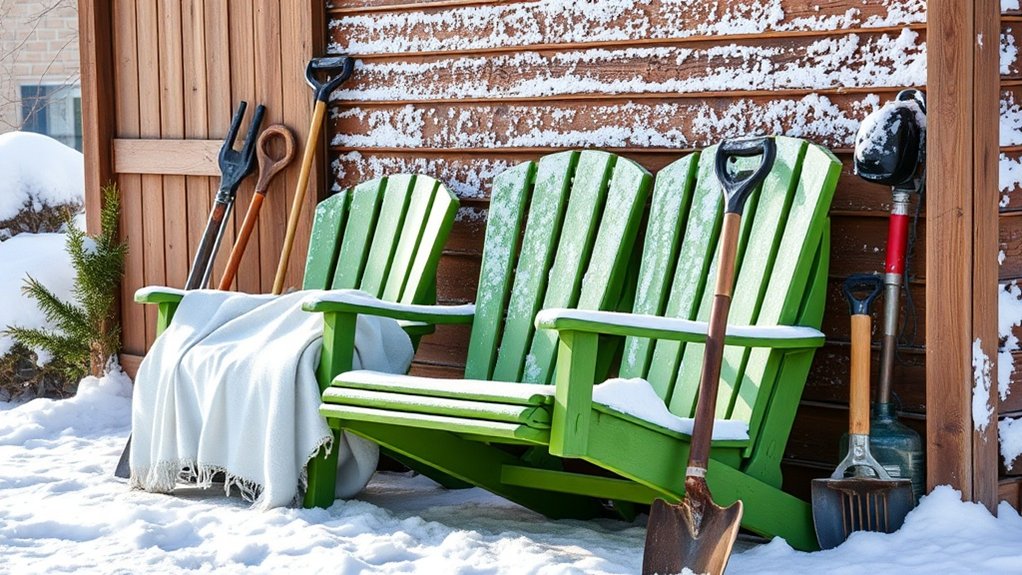
Preparing your gardening tools for winter storage is vital to keep them in good shape for the next growing season.
Begin by removing rust; soak rusty tools in white vinegar for 24 hours, then scrub off any residue with a scouring pad or a coarse metal brush.
Smooth down wooden handles with sandpaper to prevent splinters. Clean off any dirt using dry or damp cloths, and be sure to dry your tools thoroughly. Inspect everything thoroughly to ensure that tools are in optimal condition before storage.
To protect against moisture, wipe metal parts with motor oil or vegetable oil. For cutting heads and joints, use a specialised lubricant, and apply linseed oil to wooden handles.
Store your tools in a dry, sheltered place, off the ground to avoid damp. Regular checks will help maintain their condition.
Storing Outdoor Furniture Indoors
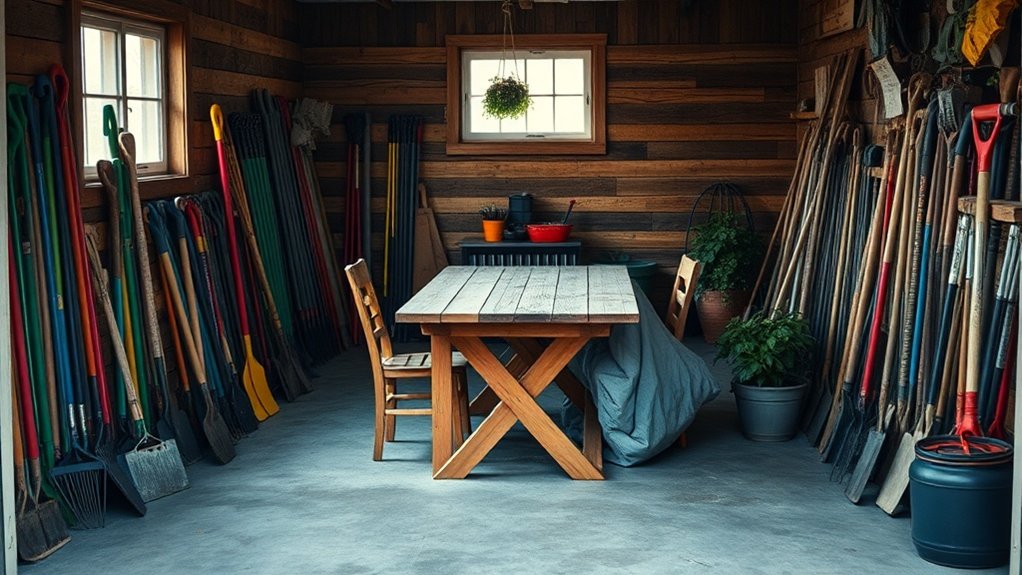
When storing outdoor furniture indoors, begin by cleaning each piece thoroughly to remove dirt and grime, as this helps prevent mould and staining during winter. Additionally, proper storage protects furniture from harsh elements and extends its longevity. If possible, disassemble any removable parts to save space and protect against damage. Choose a dry, well-ventilated area, such as a garage or shed, for storage. Elevating your furniture off the ground will further reduce moisture exposure and deter pests. Using weather-resistant storage solutions can also provide added protection to your furniture while stored indoors.
Cleaning and Disassembling Furniture
To ensure your outdoor furniture remains in excellent condition during winter storage, start by giving it a thorough clean and disassembling it where possible.
Use warm water mixed with mild dish soap or baking soda for an effective clean; scrub with a soft-bristle brush, following the grain if it’s wood. For plastic items that have mould, a vinegar solution is very effective. Regular maintenance can extend the lifespan of your outdoor equipment.
After cleaning, remove cushions and any detachable parts, washing them gently.
Disassemble furniture where you can to fold and stack items, optimising space and reducing strain on joints.
Lubricate any moving parts to prevent rust.
Make sure everything is completely dry before storing to avoid mould.
This careful approach will keep your outdoor furniture ready for the next season!
Choosing Ideal Storage Locations
Choosing the right indoor storage for your outdoor furniture can significantly prolong its lifespan and keep it looking good. Ideal locations include garages, which provide ample space and dry conditions, and basements that offer a cool environment—just keep an eye on humidity to prevent mould. If space is tight, indoor cupboards or spare rooms work well for smaller items.
Consider accessibility; you want to easily retrieve your furniture without causing any damage. Steer clear of damp areas and direct sunlight to protect finishes and materials. Use breathable covers for added protection and raise furniture off concrete floors to minimise moisture absorption. Additionally, ensure proper ventilation in your storage area to prevent mold growth and maintain a healthy environment for your belongings.
Using Outdoor Furniture Covers in Winter
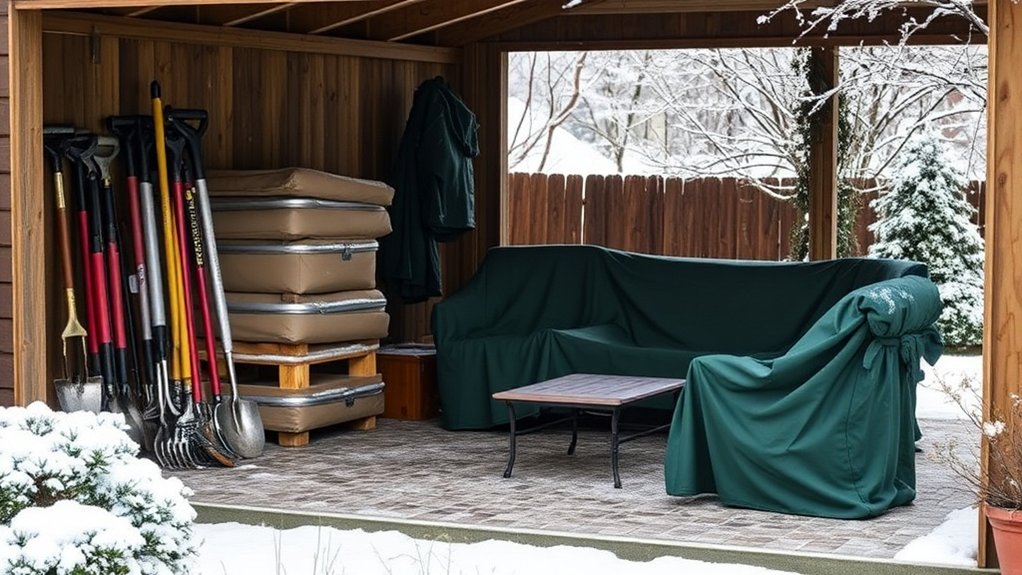
When selecting outdoor furniture covers for winter, opt for ones crafted from weatherproof, breathable materials to protect your furniture.
Ensure the covers fit snugly and are secured properly to prevent wind lift and moisture build-up.
This attention to detail keeps your outdoor pieces in excellent condition, ready for use when spring arrives.
Selecting Proper Covers
When choosing covers for your outdoor furniture during winter, consider materials and features that offer solid protection against harsh weather.
Look for heavy-duty vinyl or marine-grade polyester, which are both durable and resistant to cold cracking. Ensure the covers have waterproof linings and reinforced seams to keep moisture out and withstand the weight of snow.
Adjustable straps and breathable ventilation are important to prevent mould and ensure a snug fit. For uniquely shaped furniture, tailored covers provide the best protection.
Selecting the right covers will help protect your investment and keep your outdoor space enjoyable for years.
Securing Covers Effectively
To ensure your outdoor furniture stays protected throughout winter, it’s essential to secure your covers effectively. Using straps and buckles can enhance longevity by preventing them from lifting in strong winds. Here’s a quick guide to help you secure your covers:
| Method | Benefits | Tips |
|---|---|---|
| Straps & Buckles | Stability & proper fit | Buckle underneath the furniture |
| Zipper Closures | Easy access & moisture proof | Opt for rust-proof zippers |
| Eyelets & Bungee Cords | Enhanced wind resistance | Thread bungee cords through eyelets |
| Tenting Devices | Prevents water pooling | Space evenly over the table |
| Tightening Strategies | Ensures a snug fit | Align straps with the furniture |
These strategies will keep your furniture safe and allow you to enjoy your outdoor space come spring!
Protecting Materials Based on Furniture Type
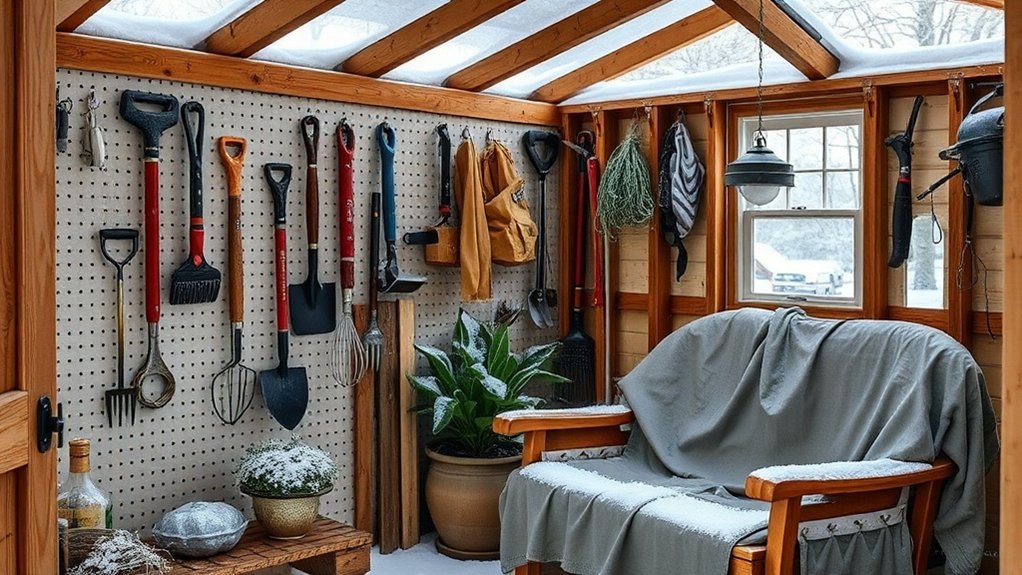
Protecting your outdoor furniture during winter is crucial for its longevity and appearance, as different materials require specific care.
For wooden furniture, clean it with warm, soapy water and then apply a sealant to guard against moisture damage.
Metal furniture needs a rust-resistant coating to prevent corrosion—ensure it’s thoroughly cleaned beforehand.
Although plastic furniture is generally durable, it can become brittle; store it in sheltered areas and avoid non-breathable covers to prevent mould.
For fabric cushions, clean them well and store in waterproof, breathable bags to keep them dry and free from mildew.
Storage Solutions and Space Optimization
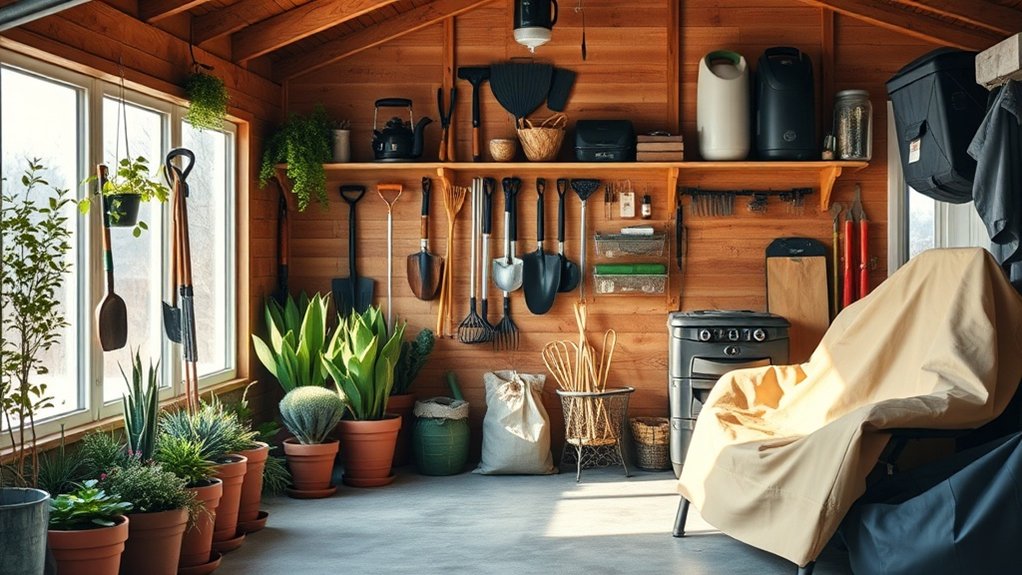
As winter approaches, it’s important to find effective storage solutions and optimise space for your gardening tools and outdoor furniture.
Start by using indoor shelving and organised racks to keep your tools accessible and dry. Disassemble larger furniture to save space, and label the parts for easy reassembly.
For outdoor items, invest in weather-resistant cabinets or storage boxes to protect against rain and snow. Choose ventilated designs to reduce the risk of mould, and consider stacking or folding chairs and tables to make use of vertical space.
Using labelled bins for smaller items will help you stay organised, while elevating storage boxes off damp ground protects your belongings from moisture damage. Additionally, considering climate-controlled units can offer enhanced protection for sensitive items during the winter months.
Implement these strategies for a hassle-free winter!
Ongoing Maintenance During Winter
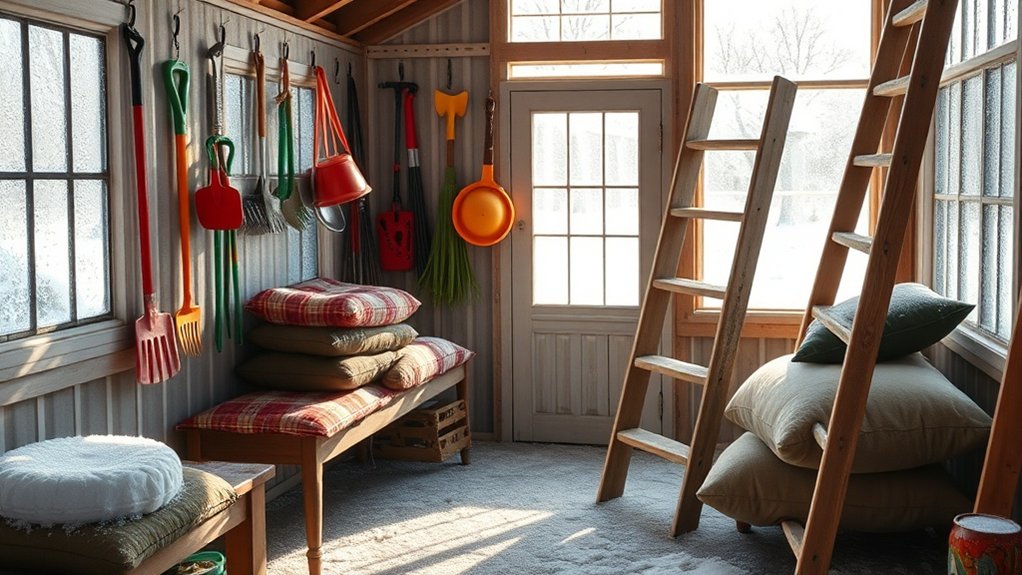
Once you’ve sorted your gardening tools and outdoor furniture for winter storage, ongoing maintenance is crucial to keep them in good condition during the colder months. Regular checks on your furniture are important; look for rust or rot during your winter inspections. Use breathable covers and ensure they’re secured properly. Here’s a straightforward guide to help you maintain your items:
| Task | Frequency | Purpose |
|---|---|---|
| Clean furniture | Monthly | Prevent mould and mildew |
| Inspect for damage | Fortnightly | Identify issues early |
| Remove snow/ice | As needed | Prevent weight damage |
| Check cushions | Weekly | Avoid trapped moisture |
Keep an eye on these tasks to ensure your outdoor items remain in top shape until spring.
Tips for Organizing Your Storage Space
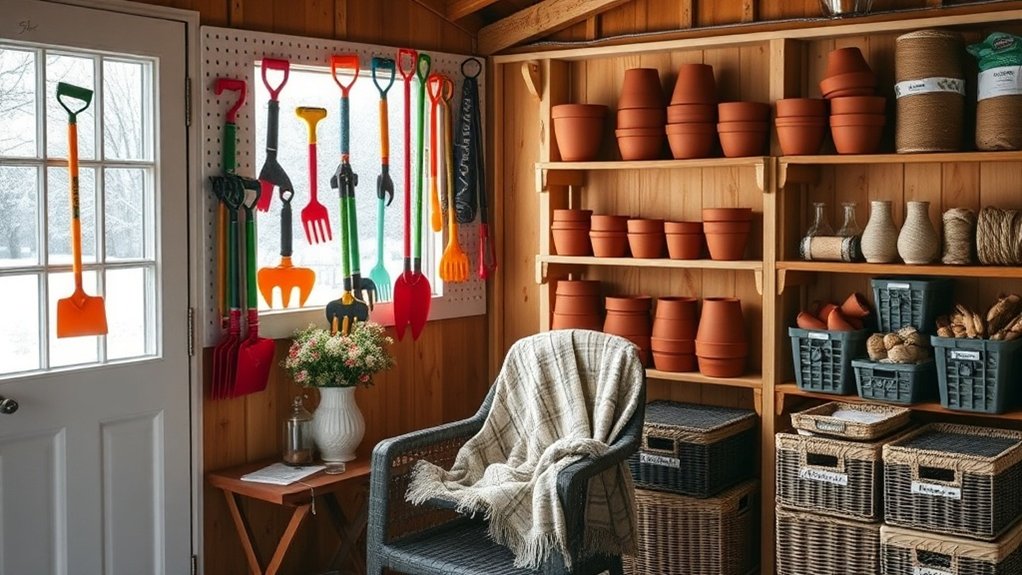
To keep your gardening tools and outdoor furniture organised during winter storage, it’s important to adopt a systematic approach that maximises space and efficiency.
Begin by taking a proper inventory of your items, identifying what you need and what can be discarded. Group similar tools and accessories in weather-resistant boxes, ensuring each box is clearly labelled for easy access.
Utilise vertical storage solutions such as shelving or wall-mounted racks to save space and keep items visible. Place frequently used items at the front for easy reach.
Disassemble larger furniture pieces to store them compactly. Regularly check your storage space to maintain organisation and prevent clutter.
This way, your tools and furniture will be ready for use when spring arrives!
Frequently Asked Questions
Can I Use Bleach to Clean Gardening Tools and Furniture?
You shouldn’t use bleach to clean gardening tools and furniture, as it can damage the surfaces. Instead, opt for alternatives like rubbing alcohol or Lysol, which are safer and effective for your cleaning needs.
What Types of Oils Are Best for Maintaining Tools?
For maintaining tools, mineral oil is excellent for rust protection, while vegetable oil can help create moisture barriers. These oils ensure your tools stay in great condition and are always ready for use.
How Often Should I Check on Stored Items During Winter?
You should check on stored items at least once a month during winter. After particularly severe weather, increase your inspections to prevent issues like damp, mould, or unexpected damage. Staying proactive will save you trouble in the long run!
Is It Safe to Store Tools in a Heated Garage?
Storing tools in a heated garage is a smart choice. A heated garage helps to prevent rust by maintaining a controlled environment, protecting your tools from moisture and temperature fluctuations. This means your tools are less likely to suffer from damage, extending their lifespan. It’s a practical solution for any DIY enthusiast or tradesperson.
Can I Stack Outdoor Furniture to Save Space?
Yes, you can stack outdoor furniture to save space. Just ensure you clean and protect each item properly to avoid any damage. Consider using covers for extra protection while storing, especially during winter, to keep them in good condition.
Conclusion
As winter draws near, it’s essential to prepare your gardening tools and outdoor furniture. By storing them properly, you can prolong their life and ensure they remain in good condition. Whether you’re placing them indoors or using protective covers, taking these steps now will help you avoid any unwelcome surprises in spring. Spend some time organising your storage space, and you’ll be ready to get back to gardening when the warmer weather arrives!