Climate-Controlled Storage vs. Humidity-Controlled Units: What’s the Difference?
Climate-controlled storage maintains both temperature and humidity, making it suitable for delicate items like electronics and fine art. On the other hand, humidity-controlled units focus exclusively on moisture levels, protecting documents and wooden furniture from damage. The right choice depends on what you need to store and the specific environmental conditions required. Understanding these differences can help you make an informed decision about your storage needs.
Key Takeaways
- Climate-controlled storage manages both temperature and humidity, making it ideal for sensitive items like electronics and artwork.
- Humidity-controlled units focus solely on moisture levels, perfect for preserving documents and wooden furniture.
- Climate-controlled storage maintains a consistent temperature between 13°C and 29°C, helping to prevent heat damage.
- Humidity-controlled units help prevent mould and mildew, which is especially useful for textiles and photographs.
- The choice between the two depends on your specific storage needs and the items you plan to store.
Understanding Climate-Controlled Storage

When it comes to storing valuable items, understanding climate-controlled storage is essential. These units maintain a consistent temperature between 13°C and 29°C, protecting your belongings from extreme temperature changes. With advanced heating, ventilation, and air conditioning (HVAC) systems, climate control also regulates humidity, which helps prevent moisture-related damage such as mould and corrosion. This environment ensures better air quality, reducing dust and allergens while discouraging pests. Unlike standard storage, climate-controlled units offer superior security and preservation for delicate items like electronics, artwork, and antiques. Additionally, climate control provides an extra layer of protection against pests, making it an even more attractive option for storing sensitive items. Moreover, security features like 24/7 video surveillance enhance the safety of your stored belongings. Although they may cost 25-40% more than non-climate-controlled options, this investment is worthwhile for the long-term protection of your cherished possessions. Prioritise climate control to effectively safeguard your valuables.
The Importance of Humidity-Controlled Units

Humidity-controlled storage units are vital for preserving sensitive items that can be damaged by moisture. High humidity can lead to mould and mildew, harming valuable photographs, textiles, and electronics. Effective storage solutions prevent wooden furniture from warping and protect electronics from rust and corrosion. Additionally, maintaining the right humidity levels keeps paper documents intact and free from brittleness or mould. A climate-controlled environment also deters insect infestations, which can further jeopardise your belongings. Furthermore, using energy-efficient materials in construction can enhance the overall sustainability of storage facilities while providing optimal conditions for your stored items. Investing in humidity-controlled units not only enhances the longevity and value of your items but also provides peace of mind for long-term storage.
Key Differences Between Climate Control and Humidity Control

When comparing climate-controlled and humidity-controlled storage, it's important to recognise their distinct approaches to temperature and moisture management.
Climate-controlled units maintain a specific temperature range and also regulate humidity levels, making them ideal for items sensitive to both conditions, like electronics or fine art. Additionally, climate-controlled storage is essential for items sensitive to moisture and temperature fluctuations.
In contrast, humidity-controlled units primarily focus on moisture levels, which is particularly beneficial for items such as documents or wooden furniture that are more susceptible to dampness.
Understanding the specific requirements of what you're storing can guide you in choosing the right option for your needs.
Temperature Management Techniques
While both climate control and humidity control are important for preserving sensitive items, their temperature management techniques differ significantly.
Climate-controlled storage uses advanced technology to maintain a steady temperature, usually between 13°C and 29°C.
Here's how these techniques stand out:
- Consistent Temperature: Protects against damage from heat and warping.
- Advanced Equipment: Employs HVAC systems, insulation, and sometimes dehumidifiers for effective management.
- Sensitive Item Preservation: Perfect for electronics, wooden furniture, and artwork, ensuring they last longer.
These innovations reduce temperature fluctuations, creating a protective environment that's far superior to standard garages or basements. This makes climate-controlled units essential for safeguarding your valuable belongings, especially when considering security features that enhance protection against environmental threats.
Humidity Regulation Methods
Understanding the differences in humidity regulation methods is crucial for preserving your stored items. Humidity control is all about managing moisture levels, using dehumidifiers to prevent mould and mildew. On the other hand, climate control involves both temperature and humidity management.
| Feature | Humidity Control |
|---|---|
| Purpose | Focuses solely on humidity |
| Ideal Humidity Level | Around 50% RH |
| Technology Used | Dehumidifiers and humidity sensors |
| Maintenance Impact | Reduces maintenance costs |
For instance, if you're storing documents or clothes, maintaining a stable humidity level can prevent damage. Opting for humidity control can save you money on repairs in the long run.
Ideal Use Cases
Selecting the right storage option depends on the specific requirements of your items. If you're facing issues with humidity or temperature changes, the type of storage is crucial.
Here are some ideal scenarios for each option:
- Climate-Controlled Units: Ideal for protecting furniture, electronics, and artwork from both temperature and humidity damage.
- Humidity-Controlled Units: Best suited for clothing, musical instruments, and delicate paper items, as they help prevent mould by regulating moisture levels.
- Temperature-Controlled Units: Appropriate for items that aren't overly sensitive to humidity but require stable temperatures, like certain metals.
Choose wisely to keep your belongings safe!
Benefits of Climate-Controlled Storage
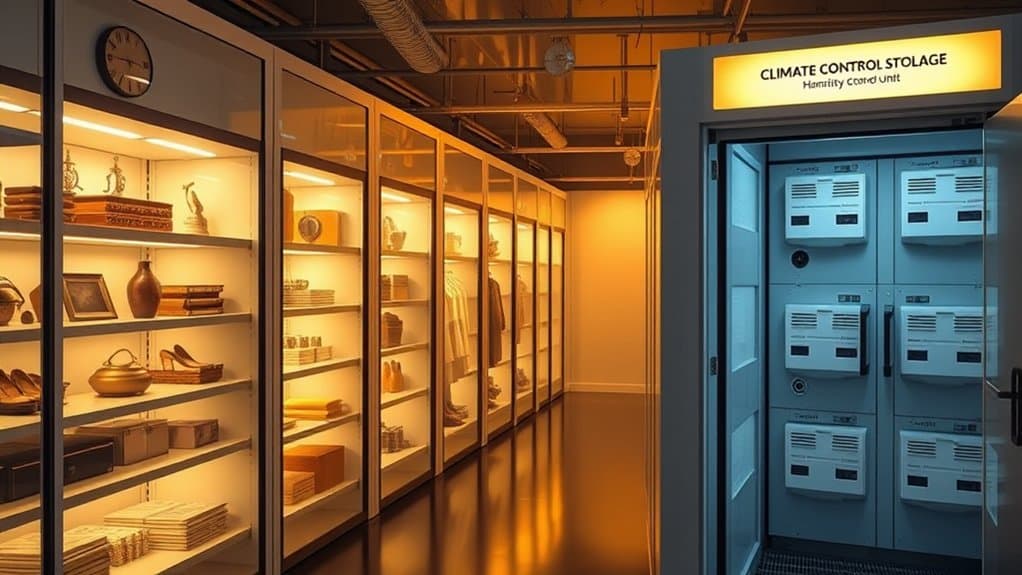
Climate-controlled storage provides essential protection for your valuable items against extreme temperatures and humidity. By keeping a consistent temperature between 10°C and 27°C, it helps preserve your belongings, ensuring they last longer.
The controlled humidity levels reduce the risk of mould and mildew, improving air quality through regular circulation. This stable environment minimises damage from temperature swings, giving you peace of mind that your items are safe and well-maintained.
While energy costs can be a consideration, modern HVAC systems are designed to be energy efficient, helping to keep expenses down.
Specific Use Cases for Humidity-Controlled Storage
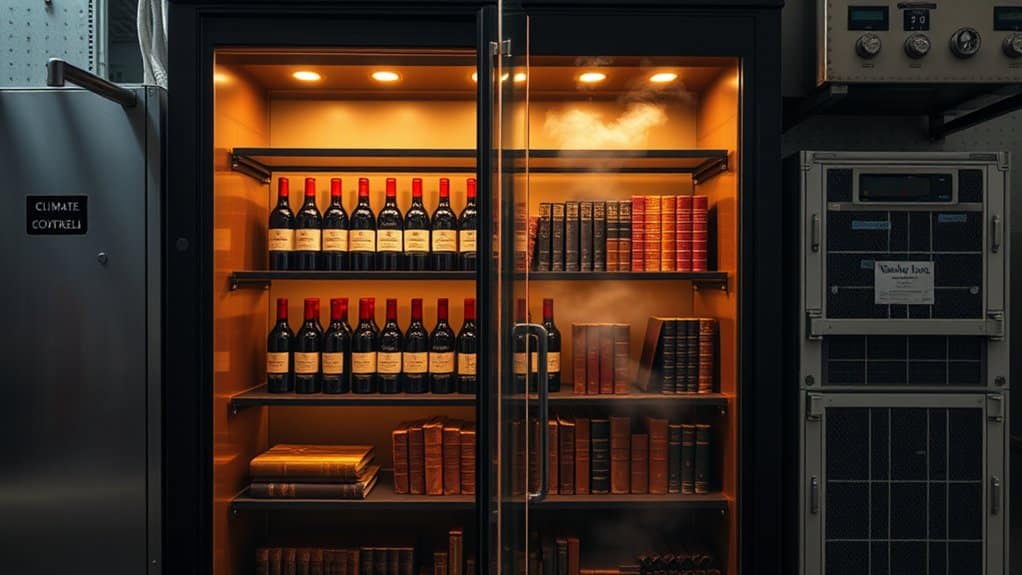
When it comes to storing valuable items, humidity-controlled storage is crucial for protecting against moisture-related damage.
Here are some specific use cases for items sensitive to humidity:
- Antiques and Artwork: Fine antiques and artworks need stable humidity levels to prevent deterioration and damage.
- Wooden Instruments: Musical instruments crafted from wood are highly susceptible to humidity changes, which can impact their sound quality.
- Documents and Textiles: Important documents and vintage clothing require controlled environments to prevent mould growth and paper decay.
Factors to Consider When Choosing Storage Options

When selecting a storage option, it's essential to consider a few key factors to ensure your belongings remain safe.
First, think about accessibility—choose a facility that's easy to reach for hassle-free access.
Next, security features are crucial; look for facilities with CCTV and gated access to protect your items.
Budget is another important aspect; compare prices and be aware of any hidden fees that could affect your overall costs.
Consider what you'll be storing and whether climate control is necessary for items that require specific environmental conditions, like antiques or electronics.
Lastly, check customer reviews to gauge the reliability and reputation of storage providers.
This approach will help you make an informed choice.
Comparison of Storage Types: Which Is Right for You?
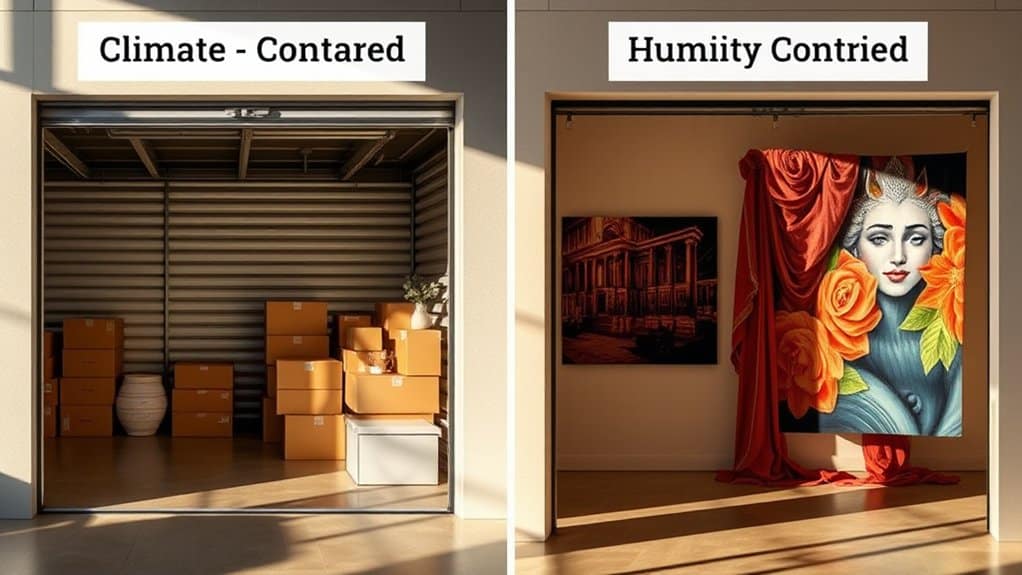
Choosing the right storage type hinges on your items' specific needs and their required conditions. Here are key factors to consider:
- Temperature Sensitivity: Items such as electronics and artwork benefit from climate-controlled environments.
- Moisture Sensitivity: Humidity-controlled units are crucial for delicate items like clothing and musical instruments.
- Budget: Consider the costs of storage in relation to the protection your belongings require.
If your items are sensitive to temperature changes, opt for climate-controlled storage.
For those vulnerable to humidity, go for humidity-controlled units.
Assessing your items' needs will guide you in making the best choice for their safety and longevity.
Frequently Asked Questions
How Do I Know if My Items Need Climate Control?
To know if your items require climate control, consider their sensitivity to temperature and humidity. For instance, electronics, artwork, and wooden furniture can be adversely affected by fluctuations in temperature and moisture levels. Keeping these items in a stable environment is crucial to prevent damage.
Can I Use Climate-Controlled Storage for Everyday Items?
Think of climate-controlled storage as a safe haven for your everyday items. By opting for this type of storage, you help maintain the quality and functionality of your belongings. It's particularly useful for preserving electronics, important documents, and seasonal clothing, ensuring they remain in top condition.
What Are the Costs Associated With Climate-Controlled Storage?
When looking at costs for climate-controlled storage, it's important to compare prices. Generally, you'll find that rental rates are higher due to factors like construction quality, energy usage, and ongoing maintenance. For example, a standard storage unit might cost £50 a month, while a climate-controlled one could be £80 or more. This difference affects your overall budget, so it's wise to factor in these expenses when making your decision.
How Often Should I Check on My Stored Items?
Regularly checking your stored items is essential, much like caring for a garden. For delicate items, aim to inspect them monthly, while sturdier items can be checked every few months. This ensures everything remains in good condition and prevents any issues from arising.
Are Climate-Controlled Units Available in All Storage Facilities?
Climate-controlled units aren't available in every storage facility. Your options often depend on the type of facility, with urban areas usually providing more choices. It's best to check local facilities for their specific availability and features.
Conclusion
When choosing between climate-controlled and humidity-controlled storage, it's important to understand your specific needs. Think of your belongings like sensitive equipment; they require the right conditions to remain in good condition. If temperature fluctuations could damage them, climate control is essential. On the other hand, if excess moisture is a concern, humidity control is the way to go. Consider the advantages and requirements of each option carefully, and you'll be better prepared to protect your valued items for years to come.