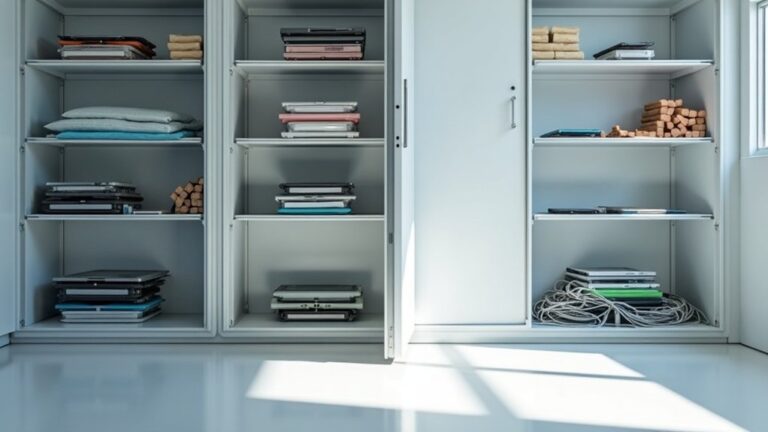

Self-storage is a fantastic resource for home decluttering projects. Begin by identifying items you seldom use and decide what to store. Select an appropriate storage unit size that can fit your seasonal items and furniture. Organise your belongings with labels and a simple inventory list for easy access. Regularly check your storage to ensure your items remain in good condition. Looking for more decluttering tips? There’s plenty more to discover.
Key Takeaways
- Use a self-storage unit to temporarily hold items you’re uncertain about, allowing you to declutter without feeling rushed to make decisions.
- Follow the 12-month rule to decide what to store or donate; keep only items you’ve used in the last year.
- Organise your storage with labelled, colour-coded boxes for easy access to items you might need during the decluttering process.
- Set regular decluttering sessions and use self-storage to tackle items gradually, preventing overwhelm and keeping your home tidy.
- Keep a digital inventory of stored items so you can easily track what you have and retrieve it when necessary.
Understanding the Benefits of Self-Storage

Self-storage can significantly help in decluttering your home. One of the main benefits is the extra space it offers, allowing you to store items you don’t need at the moment. This can greatly reduce clutter and ease stress. With an average of 7.3 square feet of storage available per person in the UK, you can use this space to sort through your belongings, boosting your motivation to declutter. Additionally, the self-storage industry was valued at approximately 58.27 billion dollars in 2023, reflecting its growing importance in providing solutions for space optimization. Self-storage also makes moving simpler by easing the packing process and minimizing the items you need to relocate. Moreover, using flexible rental agreements allows you to adapt your storage needs as your decluttering progresses.
Identifying Items to Store

How can you effectively identify which items to store? Start by sorting your belongings based on how often you use them. Prioritise everyday essentials and set aside rarely used items, such as seasonal decorations or bulky furniture, for storage.
Follow the 12-month rule: if you haven’t used an item in the past year, it’s likely a good candidate for storage or donation. Additionally, consider how decluttering can create a blank canvas that encourages you to keep only essential items.
Next, separate items by their condition and value. Items that can be repaired might be suitable for donation, while valuable items should be stored safely. With over 4,000 self-storage properties across the U.S., Extra Space Storage offers various options to help you find the right fit for your needs.
Finally, group similar items together and use practical storage solutions, like colour-coded boxes, for easy access. This approach not only clears your space but also makes it easier to find things in the future, allowing you to enjoy a more organised home.
Choosing the Right Storage Unit Size
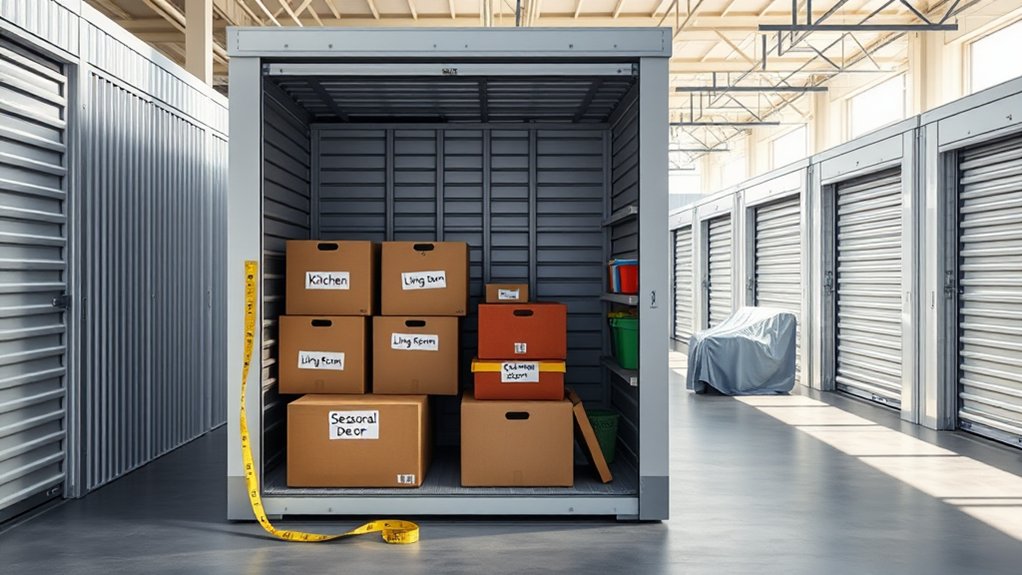
What size storage unit do you actually need? Start by assessing your belongings.
Small storage units (5×5) are ideal for items like seasonal decorations or sports equipment, while medium units (10×10) can accommodate the contents of a studio flat. Facilities often provide security measures to enhance peace of mind when storing your belongings.
For larger items, such as sofas or king-size beds, opt for a large unit (10×20). Medium units are often used for apartments and business storage, which can help you gauge the right size for your specific needs.
If you have sensitive items, consider climate-controlled units to safeguard electronics and artwork from temperature fluctuations and humidity.
Take the time to compare storage unit sizes to find the best fit for your needs. Choosing the right unit ensures you can declutter confidently, both now and in the future.
Make your choice wisely!
Organizing Your Storage Space Effectively
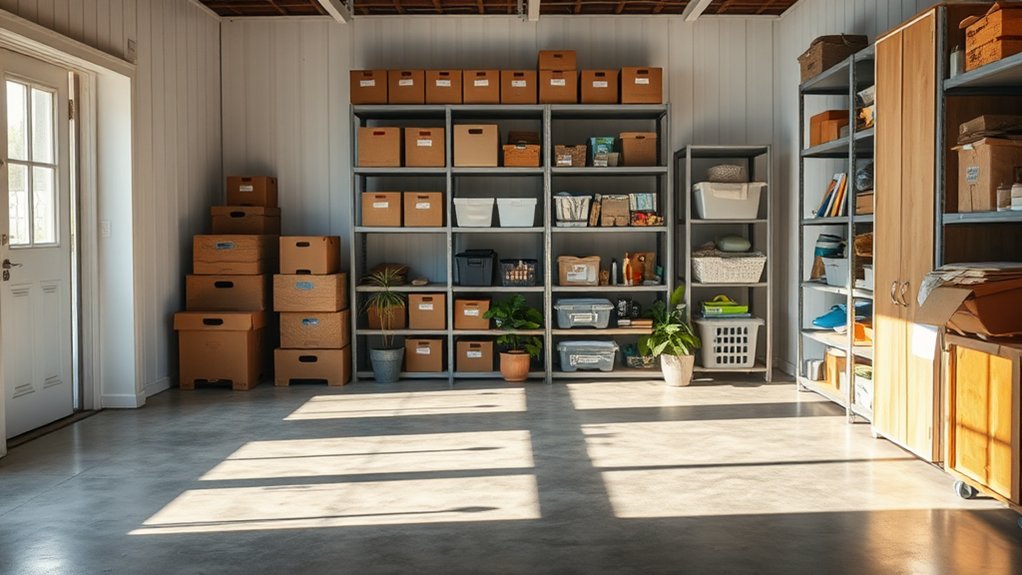
To organise your storage space effectively, begin with a solid inventory and labelling system. This helps you keep track of your items and makes it easier to find what you need.
For example, categorising boxes by room or type of item can save you time when searching.
Additionally, consider using vertical storage solutions, like shelves or wall-mounted racks, to maximise space and keep everything tidy.
Inventory and Labeling System
Organising your storage space relies on a well-structured inventory and labelling system. A good approach not only maximises space but also offers peace of mind.
Here’s how to create an efficient inventory system:
- Categorise: Group items by type or how often you use them, making access easier. For example, keep seasonal items like Christmas decorations separate from everyday items.
- Label Clearly: Use consistent labelling methods, such as colour coding, to enable quick identification. For instance, use blue labels for cleaning supplies and green for gardening tools.
- Utilise Digital Tools: Keep a digital inventory for easy updates and backups. Apps can help track what you have and remind you when to restock.
- Visual Documentation: Take photos of items or storage areas for easy reference. This can help you remember where everything is stored without rummaging around.
Vertical Storage Solutions
To maximise your storage space, vertical storage solutions are essential. By using shelving units, hanging racks, and overhead storage, you can make the most of the height in your storage area. This improves organisation and makes it easier to locate items.
The benefits of vertical storage include reduced clutter and enhanced safety, as items are kept off the floor and neatly arranged.
These solutions are ideal for storing bulky items, seasonal decorations, and tools, helping you maintain a tidy environment.
Embrace vertical storage to create a more spacious and organised storage experience.
Seasonal Items and Their Storage Needs
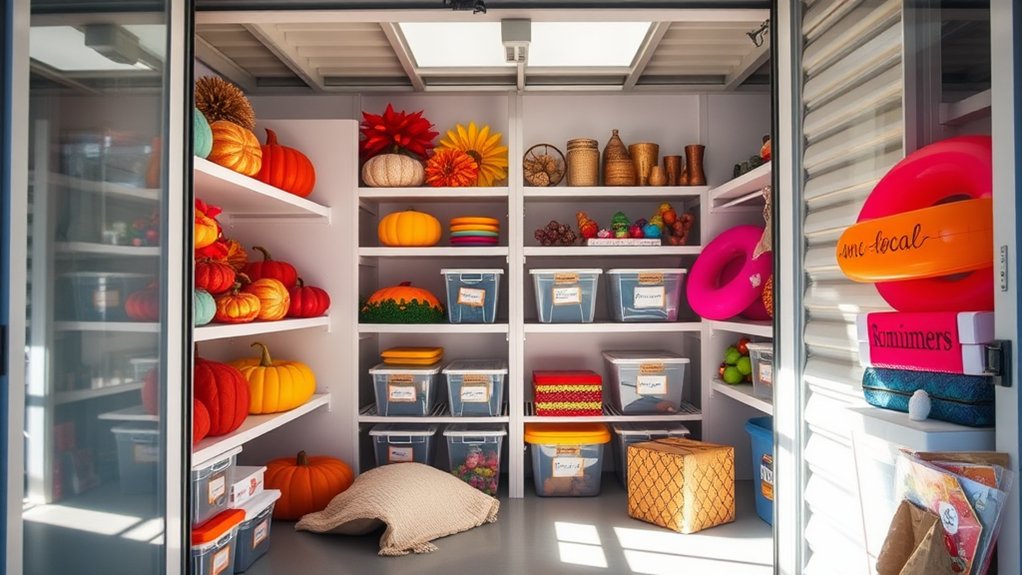
When it comes to seasonal items, storing holiday decorations and managing seasonal clothing properly can significantly improve your space.
It’s important to select the right storage solutions to protect these items from damage and keep them organised.
Let’s look at how to ensure your seasonal belongings remain safe and easily accessible.
Storing Holiday Decorations Safely
Storing holiday decorations safely requires proper planning and organisation to ensure your cherished items stay in good condition year after year.
Here are some straightforward tips for effective holiday storage:
- Create an inventory: Make a list of all your decorations to ensure nothing goes missing.
- Evaluate condition: Assess what to keep, donate, or throw away based on each item’s state.
- Use clear containers: Opt for transparent boxes so you can easily see and label contents for quick access.
- Protect fragile items: Wrap delicate decorations in bubble wrap to avoid damage during storage.
These simple steps will help keep your holiday decorations safe and sound for the next festive season.
Managing Seasonal Clothing Efficiently
How can you manage seasonal clothing effectively to keep your wardrobe organised?
Start by cleaning and drying your items to prevent musty odours and mould. Check for stains and repairs before storing to ensure your clothes stay in good condition.
Use airtight plastic boxes for heavier items, breathable garment bags for delicate pieces, and vacuum-sealed bags for bulky coats to save space.
Store everything in a cool, dry, and dark place, away from extreme temperatures. Label your containers by season or family member for easy access.
Remember to regularly check for damage or pests.
With these straightforward tips, you’ll maintain an organised seasonal wardrobe that’s ready when you are, allowing you to enjoy your clothing without the clutter.
Strategies for Decluttering Your Home
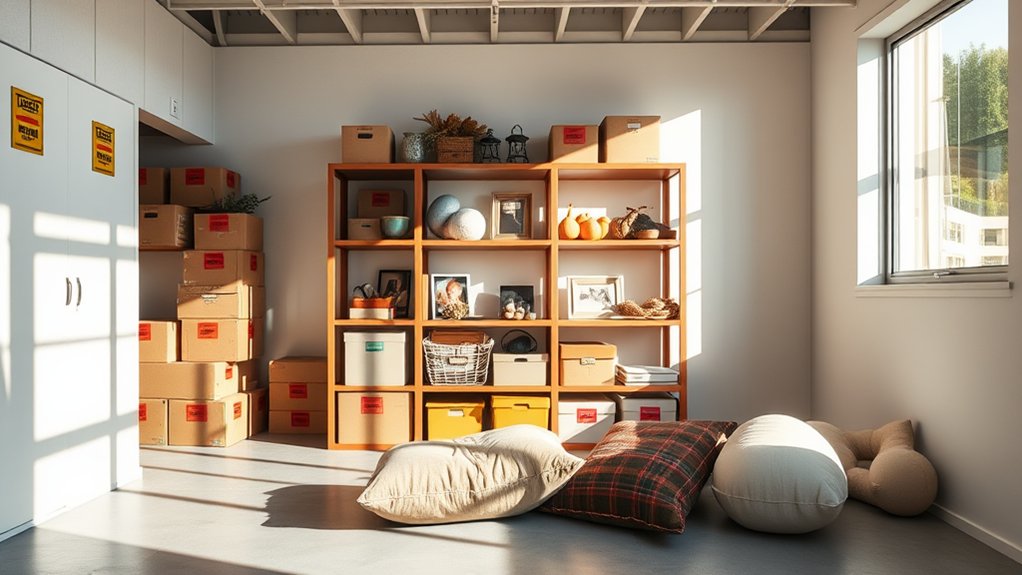
If clutter feels overwhelming, you’re not alone—54% of people in the UK feel the same way.
To reclaim your space and peace of mind, consider these practical decluttering techniques:
- Identify Clutter: Spot the items that are causing the mess, such as shoes left by the door or stray remote controls.
- Room-by-Room Approach: Tackle 2-3 rooms at a time to avoid feeling burnt out.
- Regular Decluttering: Set a monthly schedule to declutter, ensuring your home stays tidy.
- Organising Tips: Invest in storage solutions to help maintain order and prevent future clutter.
Managing Sentimental Items
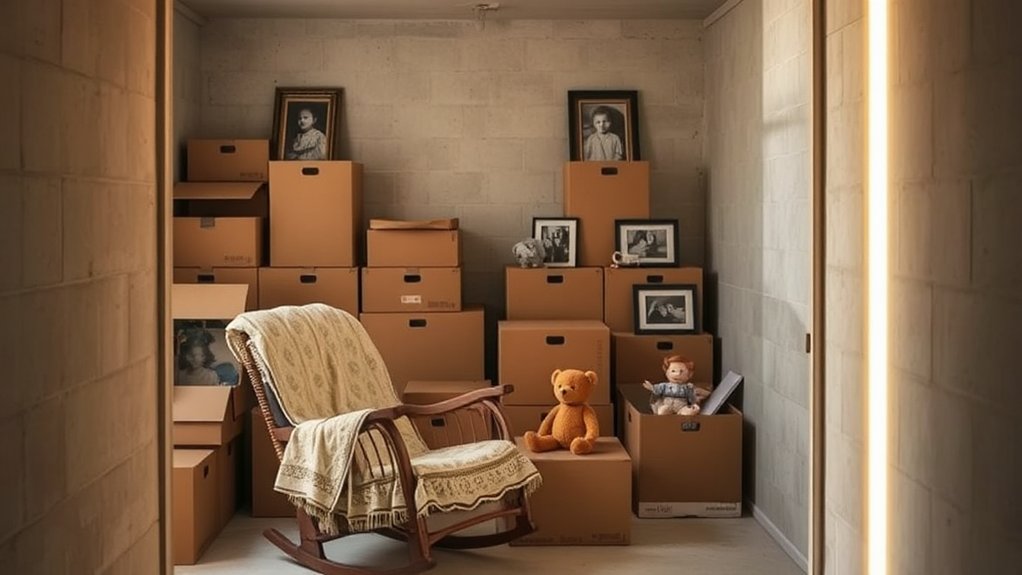
Why is it so difficult to let go of sentimental items? The emotional bonds we form with these objects can make decision-making tough. Self-storage can be an effective solution to manage these items while keeping your home clutter-free. Here’s a straightforward way to categorise your belongings:
| Category | Action | Storage Tip |
|---|---|---|
| Childhood Memories | Assess their emotional significance | Use memory boxes to keep things tidy |
| Family Heirlooms | Retain a few key pieces | Rotate which items are on display |
| Digital Alternatives | Digitise where feasible | Keep a list of what you have |
Utilizing Self-Storage During Home Transitions
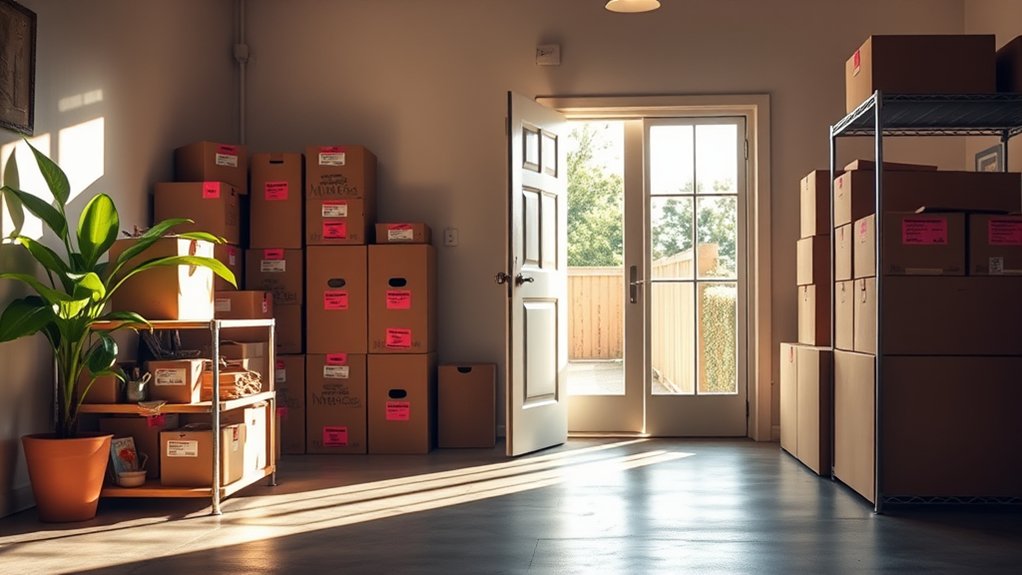
Moving can be a daunting task, but self-storage can make it a lot easier. Here are some key benefits of using self-storage during your home transition:
- Flexibility: Adjust your storage based on your moving schedule.
- Convenience: Store your belongings securely while avoiding clutter in your new home.
- Cost-Effective: With rental prices generally decreasing, self-storage is a budget-friendly choice.
- Reduced Stress: A gradual move allows you to take your time and organise your belongings without feeling rushed.
By taking advantage of self-storage, you can focus on settling into your new home without the hassle of excess items weighing you down.
It’s a practical solution for a smooth transition to your new life!
Maintaining and Reviewing Stored Items

To keep your stored items in good condition, arrange regular check-ups to evaluate their state.
Organising and categorising what you have will help you find items easily when needed. Remember to update your inventory list so you’re aware of what’s stored and ensure it meets your current needs.
For example, if you’ve got seasonal decorations, sort them by season to save time when the occasion arises.
Schedule Regular Check-Ins
Schedule Regular Check-Ins
It’s easy to overlook items stored away in self-storage, but scheduling regular check-ins is vital for managing your belongings. Set a consistent check-in schedule—perhaps every three or six months—to stay connected with your items.
Here’s a simple inspection checklist:
- Check for moisture, pests, or any damage.
- Ensure security measures, like locks, are intact.
- Maintain cleanliness by removing dust.
- Update your inventory list for accuracy.
These check-ins help prevent forgotten items and keep your valuables safe.
Organize and Categorize Items
Regular check-ins are essential for keeping track of your stored items, but organising and categorising them is equally important.
Begin by creating clear categories such as “furniture,” “appliances,” and “seasonal decorations.” Use practical organisation techniques like labelling boxes and placing frequently used items within easy reach.
Store seasonal items in labelled containers to reduce clutter. It’s also vital to securely store sentimental and valuable items.
Regularly review your stored items to identify non-essential pieces for donation or sale. This proactive approach not only keeps your space tidy but also ensures that your storage unit remains a source of freedom rather than a burden.
Update Inventory List
Updating your inventory list is crucial for managing your self-storage unit effectively.
Accurate inventory not only keeps you organised but also aids in your decluttering process. Here are four key actions to consider:
- Regularly check and update your list whenever you add or remove items.
- Include receipts for valuable items to keep track of their value.
- Create digital backups of your inventory for easy access and added security.
- Conduct regular inspections of your stored items to spot any damage.
Protecting Your Belongings in Storage

Protecting your belongings in storage is vital for keeping them in good condition and giving you peace of mind. Start by investing in high-security padlocks or disc locks for your unit. Consider electronic smart locks that prevent common theft methods and can be controlled via a mobile app.
Choose facilities with gated access and strong surveillance systems, including 24/7 video monitoring and alarm systems that respond to unauthorized activity.
When packing, wrap each item carefully and use sturdy boxes for fragile items. Leave some space between your belongings and the walls to avoid moisture damage. Clearly label your boxes for easier retrieval.
Frequently Asked Questions
How Much Does Renting a Self-Storage Unit Typically Cost?
Renting a self-storage unit in the UK usually costs between £30 and £400 per month, depending on the size of the unit and the location. For instance, a small unit in a rural area might be around £30, while a larger unit in a city could go for £400. Assess your storage needs and local prices to find the best fit for you.
Are There Any Restrictions on What Can Be Stored?
Yes, there are restrictions on what you can store. Prohibited items include hazardous materials, perishable goods, and live animals. It’s important to understand storage regulations to ensure your belongings remain safe and compliant in your unit. For example, you can’t store things like fireworks, food that can spoil, or pets.
Can I Access My Storage Unit at Any Time?
You can’t access your storage unit at any time. Check the access hours set by your facility, as most have specific times for when you can get to your belongings. For example, if you need to collect something after work, make sure the facility is open during those hours. Plan your visits accordingly to ensure you can retrieve your items when needed.
How Do I Choose Between Climate-Controlled and Standard Storage?
Choosing between climate-controlled and standard storage is like selecting the right coat for the weather. If you have sensitive items that require humidity control, opt for climate-controlled storage. For more robust belongings that can withstand fluctuating temperatures, standard storage is a cost-effective and straightforward choice.
What Should I Do if I Forget My Storage Unit Access Code?
If you forget your storage unit access code, begin by checking the recovery options available online or contacting the facility directly. Make sure to verify your identity as part of the security measures, ensuring a quick and safe recovery of access.
Conclusion
When decluttering your home, self-storage can be a valuable tool to help you organise your space. By using it effectively, you can free up room and bring order back into your life. Regularly check what you have stored and ensure your items are well-protected. With careful planning, you can transform your home from cluttered to calming, making it a sanctuary once again.