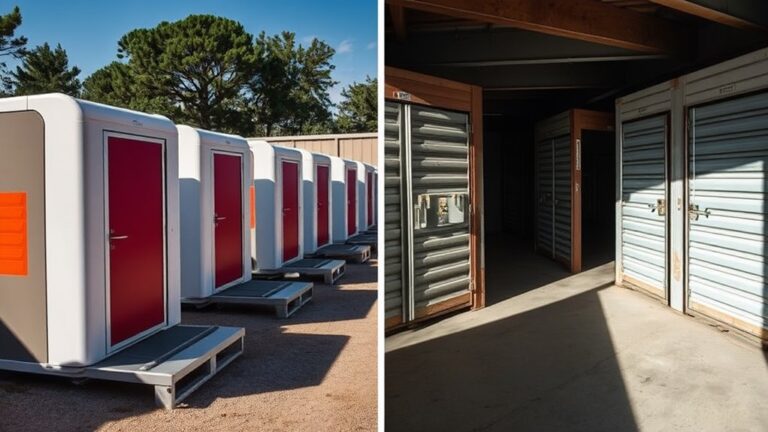
The Cost of Residential Storage: Tips for Budget-Friendly Solutions
To find budget-friendly residential storage in the UK, start by understanding current market trends and pricing. Assess your storage needs to choose the right unit size; smaller options can help you save money. Consider short-term rentals for added flexibility and check discount platforms for special offers. Timing your rental is vital too; you can often find better rates during off-peak seasons. Keep exploring your options for a clearer picture of consumer preferences and regional pricing differences.
Key Takeaways
- Consider smaller unit sizes, such as 5’x5’, to reduce costs while still meeting your storage needs efficiently.
- Look for seasonal promotions and discounts on websites like Groupon to discover affordable options.
- Assess local market rates to find competitive prices and avoid overspending on storage.
- Choose short-term rentals for flexibility, enabling you to adjust your storage solutions as needed without committing long-term.
- Research local pricing trends, as costs can vary significantly between regions, particularly in urban areas.
Understanding Self-Storage Market Trends

As the self-storage market changes, it’s essential to grasp the current trends to meet your storage needs effectively.
Despite challenges such as low moving activity and slower construction, demand is expected to rise in 2025, demonstrating the market’s resilience. Recently, average advertised street rates fell to $16.51 in March, indicating some fluctuations in pricing.
Initially, the pandemic spurred high demand due to remote work and shifting migration patterns, resulting in record occupancy rates. This demographic shift towards younger generations, particularly millennials, continues to drive the need for convenient storage solutions.
However, economic uncertainties and oversupply pose significant challenges. Rising housing costs are leading many to reconsider home expansions, increasing the need for storage solutions.
With demographic shifts towards smaller living spaces and a growing rental population, it’s crucial to stay informed about these factors.
Factors That Influence Storage Costs
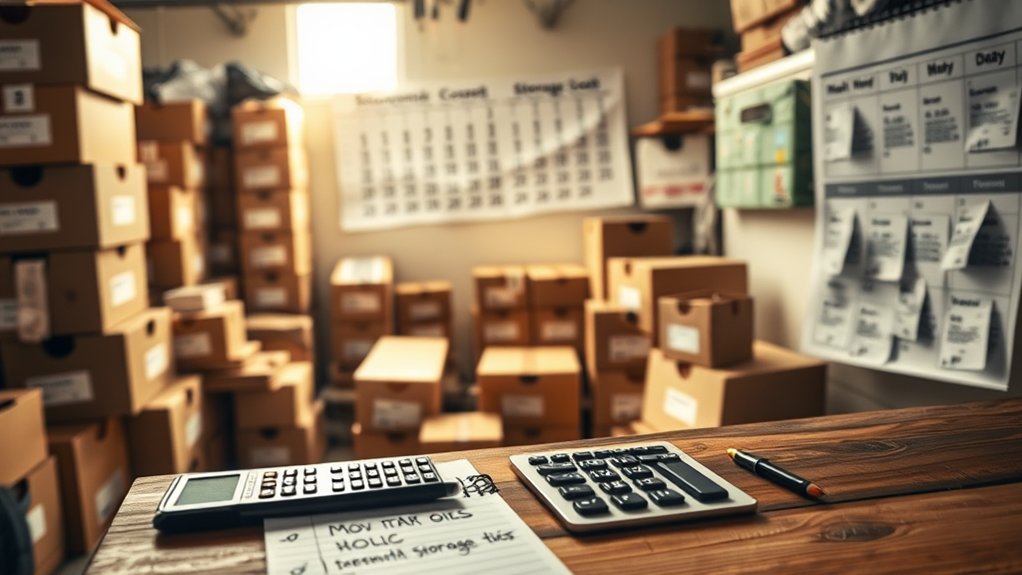
When it comes to storage costs, location and unit size are crucial factors that can significantly affect your expenses. Cities often have higher prices due to increased demand and property values, while opting for a smaller unit can lead to savings. Additionally, understanding economic occupancy can help you identify facilities that offer competitive rates while maximizing your storage experience. Many facilities also provide security features to ensure the safety of your items, which can be an essential consideration when evaluating costs.
Location Impact on Pricing
Understanding how location affects storage costs is crucial for budget-conscious choices. Prices in urban areas are typically higher due to increased demand and property expenses, while rural locations often provide more affordable options. For instance, storing your belongings in a small town could save you money compared to a bustling city centre. Regional differences also play a significant role; prices can fluctuate based on local economies and population density. Facilities near major transport links may charge higher rates, but they offer convenience for moving items in and out. Additionally, be aware that prices can rise during peak seasons, such as summer, when demand increases. In competitive markets, you might discover better rates, but always take note of the amenities included. Moreover, choosing to consider traveling to less central locations can lead to finding lower rates. It’s essential to evaluate the environmental conditions of the storage location, especially in severe weather areas, to ensure the protection of your belongings.
Unit Size Considerations
Selecting the right unit size is crucial for managing storage costs effectively. The dimensions of your chosen unit can significantly impact your budget, so keep these points in mind:
- Size Options: Consider whether you require a small 5’x5’ unit or a larger 10’x20’ space.
- Cost per Square Foot: Larger units often provide better value, helping to reduce costs in the long run.
- Type of Contents: Think about the nature of your belongings—bulky items will necessitate a larger unit for efficient storage.
- Inventory Check: Take stock of what you’re storing to identify the best unit size for your needs.
Make sure your choice aligns with what you need to store to avoid unnecessary expenses.
Choosing the Right Unit Size

Choosing the right storage unit size is crucial for making the most of your space and budget.
Begin by assessing your needs based on your living situation. For a studio flat, a 5×5 or 5×10 unit will usually suffice, while a one-bedroom may require a 5×10 or 5×15. A 10×10 unit is ideal for larger items, and a 10×15 can accommodate the contents of a two-bedroom home.
When comparing units, think about how to utilise space effectively: use vertical shelving, stack boxes, and disassemble furniture if needed.
Benefits of Short-Term Rentals

Once you’ve identified the right size storage unit, it’s time to consider the benefits of short-term rentals.
These rentals provide notable advantages that cater to your need for freedom and flexibility. Here are four key benefits:
- Cost Savings: Rental prices have decreased by 24% since 2023, making short-term rentals a more economical choice.
- Flexibility: You can easily adapt your storage requirements as your situation changes, such as when moving or downsizing.
- Convenience: Modern technology simplifies the rental process, ensuring management is straightforward and efficient.
- Increasing Demand: Regions like New Hampshire and Oregon are seeing a rising need for flexible storage solutions, which can accommodate your short-term needs.
Take advantage of these benefits to streamline your storage experience without straining your budget.
Finding Discounts and Promotions
How can you stretch your storage budget? Start by checking discount platforms like Groupon and SimplyCodes, which provide verified vouchers for savings, such as 15% off at Public Storage or reduced rates for your first month.
Local promotions can change, so keep an eye on your area, especially during different seasons. New customers often enjoy discounted first-month rates, and military personnel can find special deals at places like Life Storage.
Remember to read the terms carefully, as some offers may have restrictions on unit sizes or require a promo code.
Timing Your Rental for Cost Savings
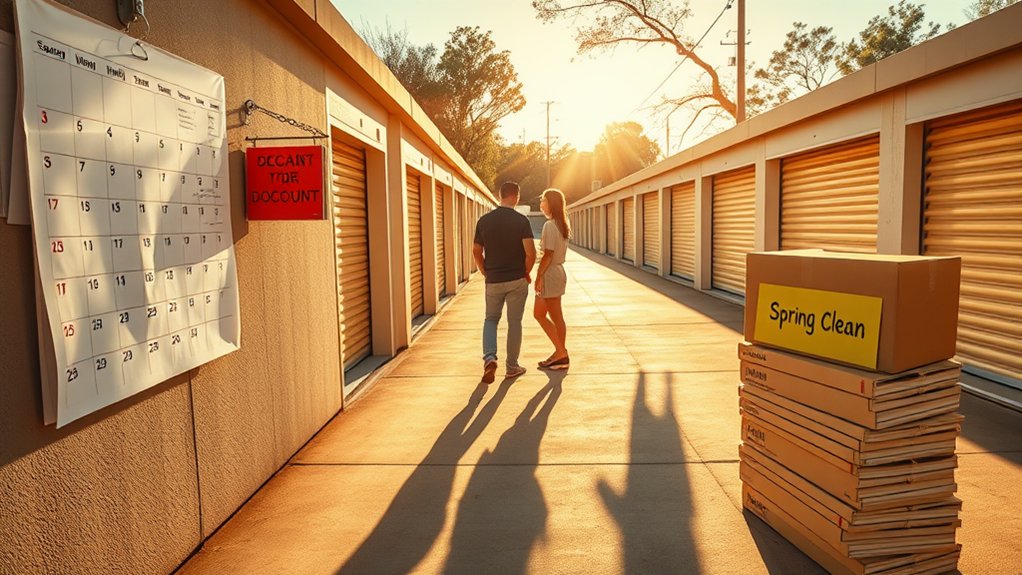
Timing your storage rental wisely can significantly reduce costs and stretch your budget. Here are some straightforward strategies for optimal timing:
- Rent Off-Peak: Opt for autumn and winter when demand is lower, leading to better rates.
- Research Pricing Trends: Familiarise yourself with seasonal fluctuations to make informed choices.
- Choose the Right Size: Smaller units typically cost less, helping you keep expenses down.
- Consider Location: Facilities in areas with lower living costs often offer more affordable options.
Harnessing Technology for Better Deals

As technology advances, you can benefit from innovative solutions that make storage more affordable and efficient. For instance, improvements in battery technology, such as lithium iron phosphate, have reduced costs by nearly 90% over the past decade. Additionally, government incentives and smart charging systems optimise energy storage according to real-time prices, helping you lower bills and enhance energy efficiency.
| Feature | Benefits |
|---|---|
| Energy Storage | Long-term savings |
| Smart Charging | Optimises energy usage |
| Government Incentives | Tax credits and rebates |
Embracing these technologies can lead to significant savings and a more sustainable energy future.
Navigating Regional Market Dynamics

When considering self-storage options, it’s crucial to understand regional market dynamics. For instance, coastal cities in the UK may see higher prices due to increased demand.
In contrast, areas in the North may have different factors affecting storage needs, such as economic conditions or housing trends.
Furthermore, regions with an oversupply of storage facilities can present more choices but may also lead to lower prices.
Being aware of these regional differences will help you make informed decisions about your storage needs.
Coastal City Pricing Trends
Coastal city pricing trends highlight the intricate relationship between supply and demand, which significantly affects self-storage rates. Here are some essential points to consider:
- Coastal Demand: Rapid population growth in affluent areas increases the need for storage solutions.
- Pricing Fluctuations: Cities such as Brighton and Bournemouth have experienced notable rate increases of 6.6% and 6.2%, respectively.
- Limited Supply: A shortage of storage units drives up prices in densely populated coastal regions.
- Economic Factors: A robust local economy sustains high demand, keeping prices elevated.
Being aware of these trends allows you to make better decisions regarding storage options.
Northeastern Demand Factors
The Northeast’s high population density and bustling urban environment mean there’s a growing demand for residential storage solutions. Many urban homes lack sufficient space, leading people to seek off-site storage options.
With a constantly changing population and a significant influx of students, short-term storage needs are common. Seasonal tourism further increases demand, particularly for businesses that require flexible storage arrangements.
Operators respond by offering pricing strategies that address these short-term needs while navigating zoning regulations and limited land availability.
Climate control features are crucial due to the region’s diverse weather. To stay competitive, many facilities provide flexible leases and enhanced security, making it easier for you to find affordable storage options that suit your specific needs.
West Coast Storage Challenges
The West Coast encounters distinct storage challenges due to its ever-changing market conditions. Here’s a concise overview of these issues:
- High Demand: In densely populated areas, the demand for storage often exceeds the available options.
- Limited Supply: A shortage of new storage developments leads to soaring rental prices, particularly in cities like Irvine.
- Affluent Residents: Wealthy individuals contribute to rising costs, making high-quality storage increasingly difficult to find.
- Economic Growth: Rapid economic development continues to drive storage needs, placing additional strain on existing facilities.
Understanding these factors can help you navigate the complexities of coastal living.
Consumer Preferences in Storage Solutions
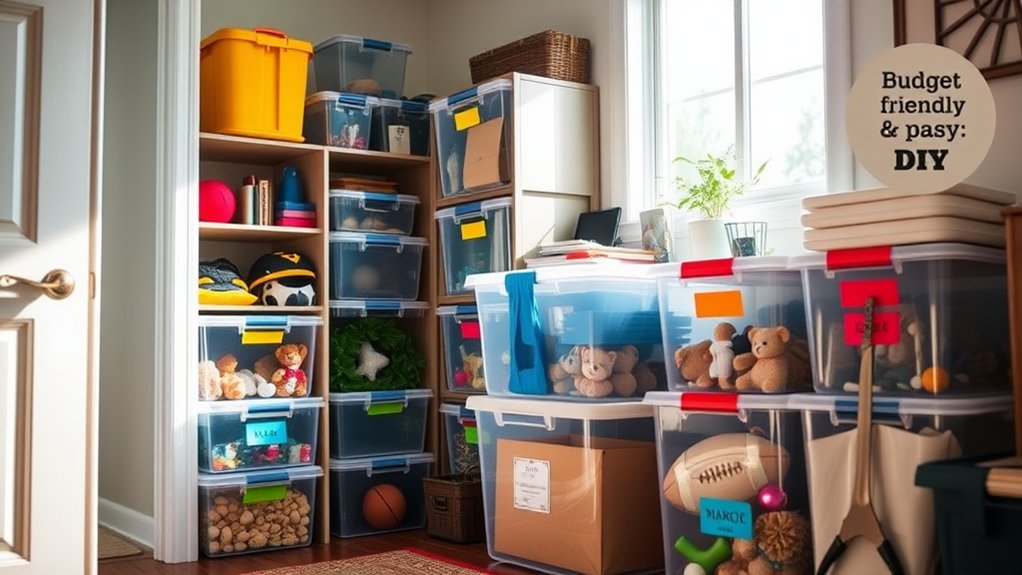
How do consumer preferences influence today’s storage solutions? Your storage choices mirror your lifestyle and living situation.
With urban living trends resulting in smaller homes, many are opting for self-storage to meet their needs. Renters, in particular, seek flexible options due to frequent moves.
Affluent families in suburban areas are also increasingly using storage solutions as they navigate various life changes.
The rise of hybrid work has further spurred demand for external storage, as people adapt their home spaces.
Additionally, stable rental prices and modern facility features—such as online booking and enhanced security—are shaping your storage preferences.
As demand rises, understanding these trends can help you make informed and cost-effective decisions.
Frequently Asked Questions
What Are the Average Sizes of Residential Storage Units Available?
When looking for residential storage, you’ll typically encounter sizes such as 5’x5′ for small items like boxes or seasonal decorations, 10’x10′ for the contents of a one-bedroom flat, and larger 10’x20′ units for bigger items like furniture or appliances. Each size is designed to meet different storage needs effectively.
How Do Climate-Controlled Units Differ From Standard Units?
Climate-controlled units provide advantages such as regulating temperature and humidity, which helps protect sensitive items like electronics, artwork, and antiques. In contrast, standard units are prone to temperature fluctuations, making them less suitable for storing valuable or delicate belongings that require careful preservation.
Can I Change My Rental Unit Size Later?
Yes, you can change the size of your rental unit later. Most providers offer flexible options within month-to-month agreements, allowing you to upgrade or downgrade as your storage needs change without any long-term commitments. For instance, if you’ve downsized your home and need less space, you can move to a smaller unit. Conversely, if you’re taking on a new hobby that requires more room, upgrading to a larger unit is straightforward.
What Security Measures Should I Look for in a Storage Facility?
When selecting a storage facility, ensure it has strong access control systems and advanced surveillance. These features enhance security, deter break-ins, and provide peace of mind while you store your items. For instance, facilities with keypad entry and 24-hour CCTV are ideal choices.
Are There Additional Fees I Should Expect When Renting a Storage Unit?
When renting a storage unit, it’s important to be aware of potential hidden charges. Always read the rental agreement thoroughly. You may encounter fees for security, insurance, and late payments that can accumulate quickly. For instance, if you miss a payment deadline, you could face a late fee that adds to your overall cost.
Conclusion
Finding budget-friendly residential storage solutions can feel like navigating a maze, but it’s definitely achievable. Start by keeping an eye on market trends and selecting the right unit size for your needs. Timing your rental can also lead to significant savings. Look for discounts or promotions, and use online platforms to compare prices and find the best deals. With a little planning, you can manage your storage needs without straining your budget, ensuring your belongings are safe and secure.