To store seasonal clothing effectively, begin by cleaning each item and treating any stains. Use breathable containers and store them in a cool, dry, dark place. Fold or roll garments to save space and maintain their shape. Organise items by season and activity for quick access. To prevent pests, consider using cedar blocks and regularly check for any signs of damage. Following these guidelines will help keep your wardrobe in good condition.
Key Takeaways
- Ensure all garments are thoroughly cleaned and dried before storing to prevent mildew and pest issues.
- Opt for breathable fabric bins or clear plastic boxes to keep your clothing organised and protected.
- Store items in a cool, dry, and dark place; avoid basements and attics to maintain stable conditions.
- Fold or roll clothing properly, and use padded hangers for delicate pieces to help retain their shape.
- Regularly check stored clothing for pests and rotate seasonal items to keep your wardrobe fresh and manageable.
Cleaning and Preparing Seasonal Clothing

Before storing your seasonal clothing, it’s crucial to clean each item thoroughly to keep it in great condition.
Start by checking for stains and pre-treat them with a suitable stain remover before washing or dry cleaning. For delicate fabrics like silk or wool, opt for dry cleaning to maintain their texture and prevent permanent marks. Additionally, dry cleaning effectively eliminates lingering odors that may have built up over time. Proper storage conditions are essential for preserving your clothes during the off-season, as they help prevent moisture damage and deterioration.
Use mild detergents and adhere to the care labels, choosing cold or warm water for washing. Make sure to dry garments completely to prevent mildew, as excess moisture can cause unpleasant smells. This also helps ensure that your clothing remains fresh and wearable when you bring it out again.
Also, inspect for loose threads or small tears; addressing these promptly will ensure your clothes are ready for the next season. Regular maintenance of your stored clothing can help extend its lifespan and keep your wardrobe in top condition.
Storage Location and Environmental Conditions
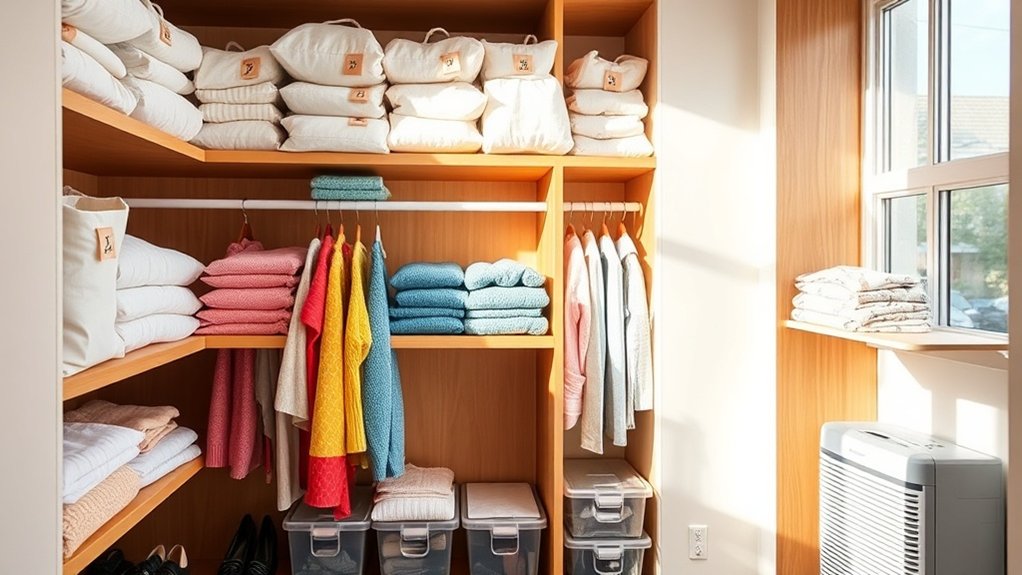
To keep your seasonal clothing in good condition, select storage spaces that are cool, dry, and dark. Avoid places like basements and attics where temperature fluctuations and dampness can damage your fabrics. Instead, use wardrobes or climate-controlled rooms that provide stable conditions for your garments. Additionally, ensure that you clean clothes before storing them to prevent pests from being attracted to any faint stains. Utilizing climate-controlled storage is an effective way to maintain optimal temperature and humidity levels that protect your clothing from environmental damage.
Ideal Storage Environments
When storing seasonal clothing, it’s important to choose the right environment to maintain fabric quality. Aim for storage spaces that are cool, dry, and dark.
Here are some key points to consider:
- Use wardrobes or rooms with a stable temperature and climate control. Climate control is essential for preventing deterioration of fabrics.
- Steer clear of basements and lofts, as they often have high humidity and temperature changes.
- Ensure the storage area is easily accessible for regular checks and rotation of your clothes.
- Keep the space well-ventilated and shielded from direct sunlight. Additionally, proper storage helps protect garments from damage caused by pests and humidity.
Avoiding Temperature Fluctuations
While many may not realise it, choosing the right place to store your seasonal clothing is vital to keeping it in good condition. Avoid basements and attics as their dampness and temperature changes can lead to fabric damage and mould growth.
Instead, opt for wardrobes or interior rooms that maintain a stable temperature throughout the year. Garages are also risky due to significant fluctuations in temperature and humidity unless they’re climate-controlled.
Keep your clothes away from heat sources like radiators, and store them in dark areas to prevent fading from sunlight. Using silica gel packs can help control moisture and combat humidity spikes.
Regularly check and air out your clothing to protect them from temperature variations, ensuring they stay in excellent condition.
Storage Methods and Containers
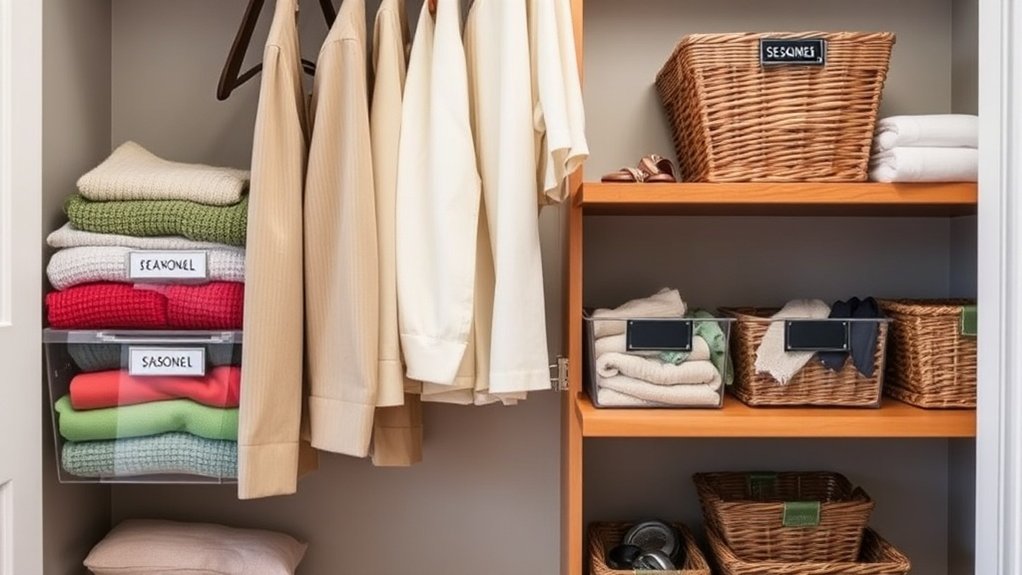
Choosing the right storage containers is crucial for protecting your seasonal clothing.
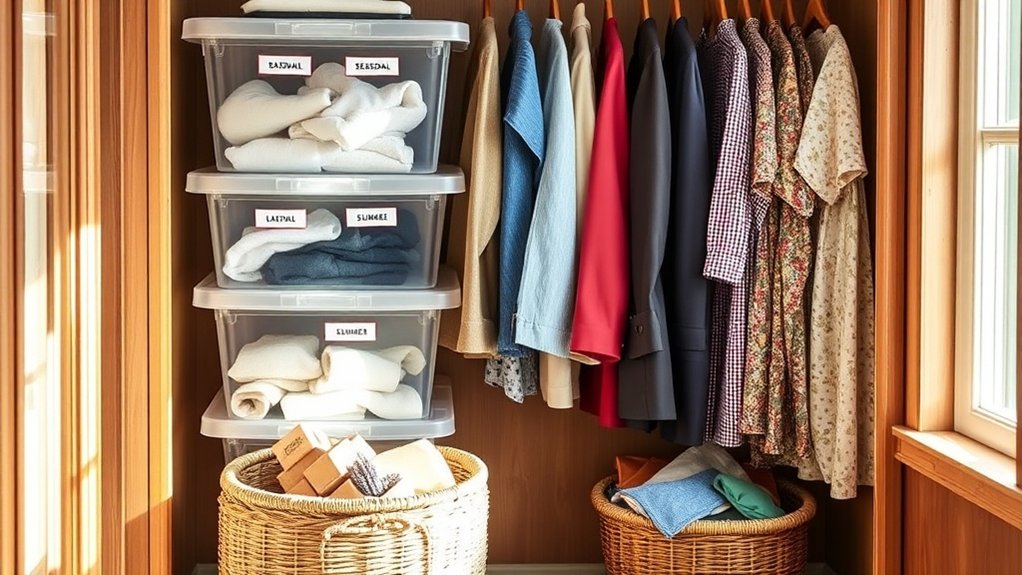
Use breathable fabric bins for delicate items, and opt for clear plastic boxes to keep everything visible and tidy.
To prevent pests, consider placing cedar blocks or lavender sachets inside your containers for added protection.
Ideal Storage Containers
Choosing the right storage containers for your seasonal clothing is essential for keeping them in good condition. Here are some effective options to consider:
- Vacuum bags: Ideal for robust fabrics, they maximise space but aren’t suitable for delicate items.
- Breathable bags: Opt for cotton or linen to allow airflow and protect finer fabrics from mildew.
- Plastic and fabric bins: These are versatile and moisture-resistant, helping to keep dust and pests away.
- Seasonal suitcases and specialty boxes: Perfect for bulky items and long-term storage; just ensure they’re clean and dry before use.
In addition, use appropriate hangers for hanging solutions to maintain the shape of your garments.
Pest Deterrents Options
To protect your seasonal clothing from pests, effective storage techniques are key. Use sealed plastic containers with tight-fitting lids to keep moths and beetles away; avoid cardboard boxes as they attract pests. For extra protection, consider natural repellents like cedar blocks and lavender sachets. These not only deter pests but also leave a pleasant aroma. Here’s a quick summary of your options:
| Storage Method | Natural Repellents | Notes |
|---|---|---|
| Sealed Plastic Bins | Cedar Blocks | Replace regularly |
| Vacuum-Sealed Bags | Lavender Sachets | Check periodically |
| Cotton Garment Bags | Essential Oils | Use breathable materials |
Combining these methods will provide the best protection for your clothes!
Folding and Hanging Techniques
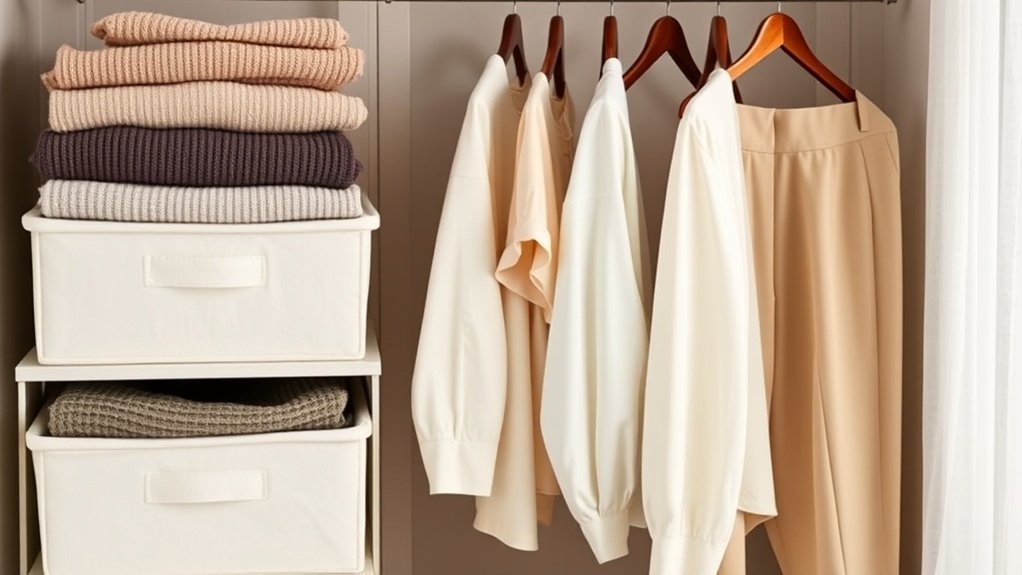
Effective folding and hanging techniques are key to preserving the shape and condition of your seasonal clothing. Here’s how to do it properly:
- Fold trousers flat by laying them out, placing one leg over the other, and then folding cuffs to the waistband.
- Roll trousers tightly from the waistband to the hem for compact storage, which is particularly handy when travelling.
- Hang structured jackets and dresses on suitable hangers to avoid creasing.
- Use padded hangers for delicate fabrics to prevent marks and distortion.
Organization by Season and Activity
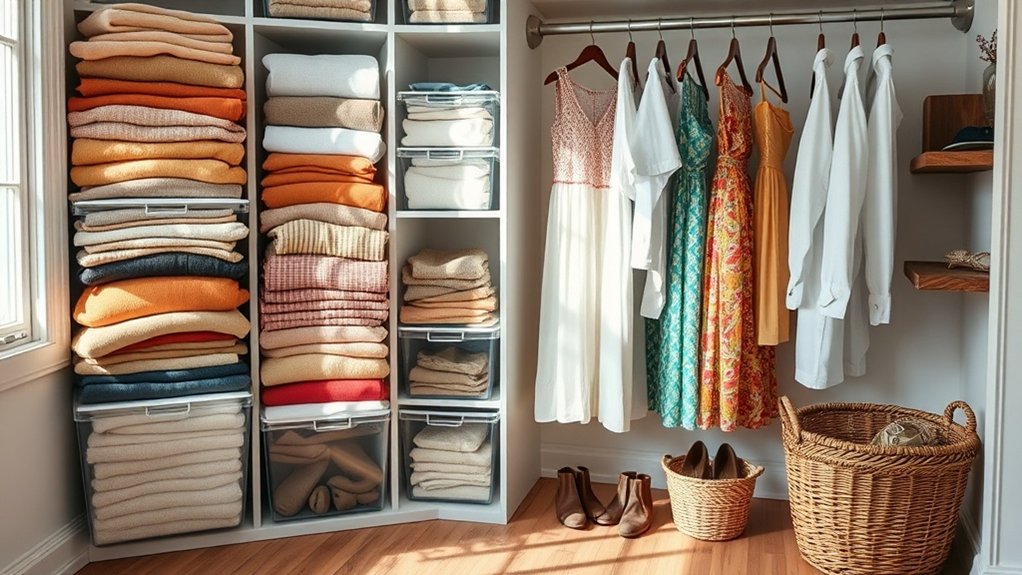
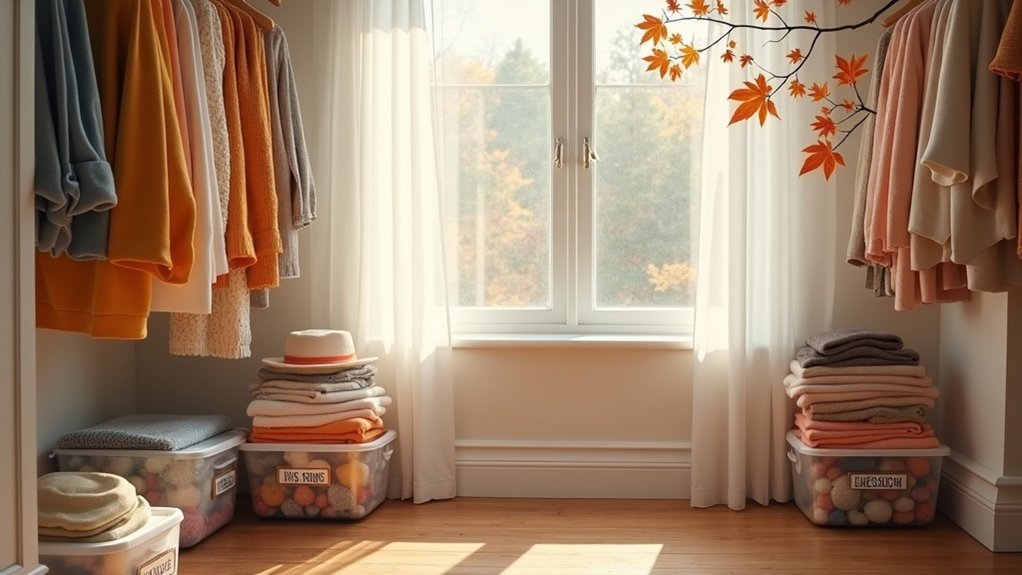
To keep your seasonal clothing organised and easily accessible, start by sorting items by season and planned activities. This makes retrieval straightforward.
Within each season, categorize clothing by weather conditions—like heavy rain or mild temperatures—to suit specific needs. Keep specialty outerwear separate to protect delicate items.
Use clear labels on storage boxes for quick identification. For activity categorisation, sort clothes by primary use, such as casual wear or sports gear. Keep related accessories together, so you have everything ready.
Use separate bins for seasonal footwear and maximise space by grouping items with similar storage needs. This method allows you to enjoy your wardrobe hassle-free.
Maintenance and Inspection
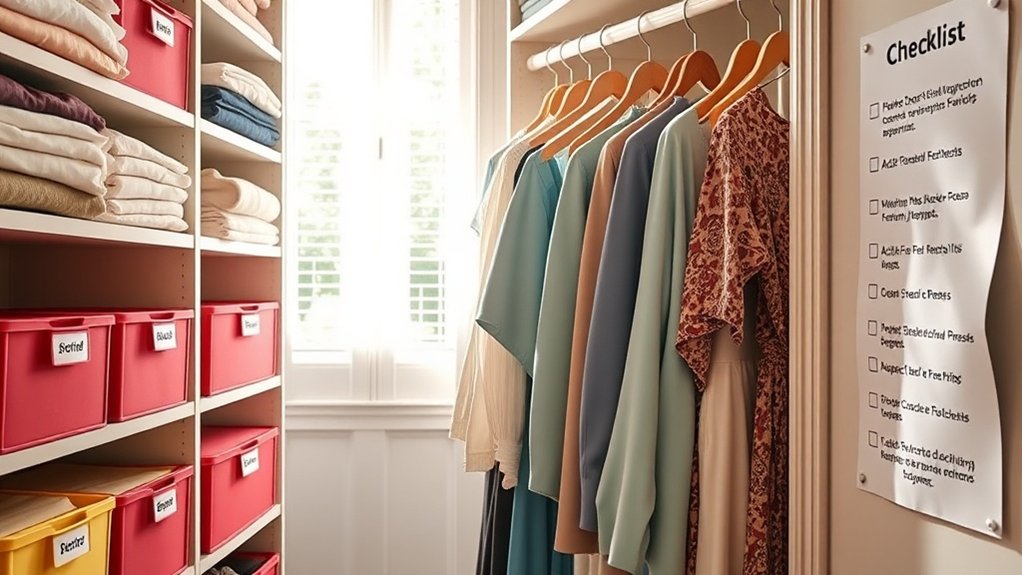
Maintaining your seasonal clothing requires regular inspection and care to keep it in top condition.
To prevent fabric deterioration and ensure garments retain their shape, follow these steps:
- Check stored clothing for holes, tears, or stains.
- Look for signs of moisture damage and changes in colour or texture.
- Address any issues straight away to prevent further damage.
- Keep an eye on storage conditions, ensuring it’s dry and clean.
Before wearing clothes that have been stored, give them a freshen up and check they’re clean.
Regularly reshaping garments during inspections helps maintain their structure.
Pest Prevention Strategies
As the seasons change, it’s crucial to protect your clothing from pests that can damage your wardrobe. Start by storing your clothes in airtight containers to keep moths and carpet beetles away.
Always wash and dry your garments thoroughly before storage to remove any oils or stains that might attract pests. Consider using natural repellents like cedar blocks or lavender sachets for extra protection.
Moth traps can help catch adult moths early, preventing infestations. Keep your storage area clean, dry, and well-ventilated, and reduce clutter that can provide hiding spots for pests.
Regularly check your stored clothing for any signs of pest activity to ensure your wardrobe stays safe and intact all year round.
Tips for Efficient Space Management

Once you’ve safeguarded your clothing from pests, it’s time to enhance your storage efficiency.
Here are some straightforward tips for organising your clothes:
- Opt for clear plastic boxes with secure lids to keep your garments safe from dampness and pests.
- Sort items by season and purpose, folding bulky jumpers to maximise space.
- Make use of under-bed storage and suitcases for off-season clothing, freeing up valuable closet space.
- Clearly label containers so you can easily find what you need, preventing clutter and confusion.
Frequently Asked Questions
How Long Can I Store Seasonal Clothing Without Damaging Them?
You can store seasonal clothing for up to six months without causing damage, as long as you adhere to proper storage practices. Make sure the items are clean and dry, and store them in a cool, dry place. For instance, using breathable garment bags or boxes can help maintain their condition.
Can I Store Clothes in Vacuum-Sealed Bags?
Yes, you can store clothes in vacuum-sealed bags. This method helps manage moisture and saves space, keeping your garments protected. However, steer clear of delicate fabrics and make sure not to compress items that need to maintain their shape, like tailored suits or structured dresses.
Is It Safe to Store Shoes With Clothing?
Storing shoes with clothing isn’t advisable. While it’s important to keep your shoes organised, it’s crucial to protect your clothes from dirt, moisture, and pests. Using separate containers ensures your wardrobe stays in good condition and free from damage. For example, keeping muddy trainers away from delicate blouses can save you from unnecessary laundry.
How Do I Prevent Odors in Stored Clothing?
To prevent odours in stored clothing, use breathable storage materials and add odour neutralisers such as cedar blocks or baking soda. Ensure that clothes are clean and thoroughly dry before storing them to keep them fresh and free from smells.
What Should I Do if I Find Pests in Storage?
Discovering pests in your storage is akin to finding a hole in your roof. Start by isolating the affected items and checking for any damage. Clean the area thoroughly to remove any traces of pests. Finally, consider using airtight storage solutions to prevent future infestations.
Conclusion
By following these best practices for storing seasonal clothing, you can ensure your garments remain in excellent condition and are ready for use when needed. The right storage conditions and methods can significantly impact the lifespan of your clothes. It’s a common misconception that all clothing can be stored in the same way; different fabrics require specific care. Take the time to organise and protect your items, and you’ll enjoy them for years to come. For example, delicate fabrics like silk should be stored in breathable bags, while heavier items like knitwear benefit from being folded rather than hung.