

To choose the right size storage unit, begin by listing all the items you wish to store. Sort them by size and how often you'll need them, making sure to measure larger items accurately. Here's a quick guide to unit sizes: small units are suitable for boxes or small furniture; medium units can hold the contents of one to three bedrooms; large units are ideal for multiple bedrooms or even vehicles.
Consider how long you intend to store your belongings, your budget, and how frequently you'll need access to them. Plan the layout of your unit for easy access and make the most of vertical space. By following these steps, you can ensure your items are stored securely and conveniently. For more tips on efficient packing, keep reading!
Key Takeaways
- Make a list and measure all your items to determine the total volume and space required for storage.
- Think about how often you'll need to access your items and sort them by size and weight for efficient packing.
- Get to know the various storage unit sizes available, from small lockers to larger units, to find what suits you best.
- Plan how to arrange the unit to maximise space and accessibility, using shelves and stacking items vertically.
- Seek advice from storage professionals and consider using technology for managing your inventory and calculating space.
Assessing Storage Needs
When selecting the right size storage unit, it's crucial to assess your storage needs carefully.
Begin by listing all items you intend to store, regardless of size. This will give you a clearer picture of how much space you'll require. Group items by size, weight, and how often you use them to refine your requirements.
Don't forget to identify any larger items, like bulky furniture or fragile electronics, that may need additional room.
Next, measure your larger items and calculate the total volume. It's sensible to allow for some extra space for future additions and easy access. Online calculators can help estimate your needs, and visual guides can assist with planning an efficient layout. Additionally, consider the types of items you have since different categories may require different storage solutions. For instance, climate-controlled units are ideal for protecting sensitive belongings from temperature fluctuations.
As you evaluate your storage options, consider whether you need climate control for sensitive items and assess security measures to safeguard your belongings.
With a growing trend towards eco-friendly storage, you may want to look for facilities that prioritise sustainable practices.
Lastly, consulting with storage professionals can provide you with tailored advice. Share your inventory and budget to receive personalised recommendations that suit your lifestyle.
Understanding Storage Unit Sizes

When selecting a storage unit, it's important to understand the various types and sizes available. Ensure you measure your items accurately to choose a unit that suits your requirements. Familiarising yourself with the dimensions and capacity of each option will aid in making an informed choice. For example, a 3×5 ft unit is ideal for storing boxes and small furniture, while a larger 10×10 ft unit can accommodate the contents of a one-bedroom flat. Additionally, many facilities offer medium storage units that can fit items from a one or two-bedroom apartment, providing more options for your storage needs. Understanding your storage duration is crucial in determining the appropriate size as it influences how much you plan to store over time.
Types of Storage Units
Understanding the various types of storage units can simplify your decision-making process. When considering storage options, it's essential to know the different sizes available.
Small storage units, such as 5×5 and 5×10 units, are ideal for personal items or small pieces of furniture. In contrast, 10×10 and 10×15 units can hold the contents of a one-bedroom flat or even a two-bedroom space. Additionally, some of these units are suitable for motorcycle storage, providing versatility for your storage needs. Some units also offer climate control options to protect sensitive items from extreme temperatures.
For larger needs, consider big storage units like 10×20, 10×25, and 10×30, which can accommodate items from multiple bedrooms or even vehicles. If you require heavy-duty storage, oversized warehouse units provide ample space for business inventory or large equipment.
Each type of unit has its features, so think about what's important for your situation, whether it's drive-up access or climate control.
Keep in mind that larger units typically come at a higher price, but they can be cost-effective if you have many items to store. By understanding these options, you can choose the right unit that fits your lifestyle and budget.
Size Measurement Guidelines
Now that you understand the different types of storage units, it's time to measure and assess your storage needs accurately. Knowing the dimensions of your belongings is crucial for effective size comparison and space optimisation.
Here are three straightforward steps to follow:
- Create an inventory: List all items while noting their size and weight. This helps you visualise what needs storing.
- Measure larger items: Use a tape measure to determine the dimensions of bulky items like furniture. Record the height, width, and depth for accurate calculations.
- Think about packing efficiency: Consider how items can be disassembled or stacked to maximise space, which can significantly reduce the size of the unit you require.
Remember, standard storage unit heights are usually 8 feet, with sizes ranging from 5×5 to 10×30 feet.
Calculating both square and cubic footage will provide a clearer picture of your space needs. If you're ever uncertain, don't hesitate to ask for advice from storage facility staff to ensure you choose the right size unit for your requirements.
Estimating Space Requirements
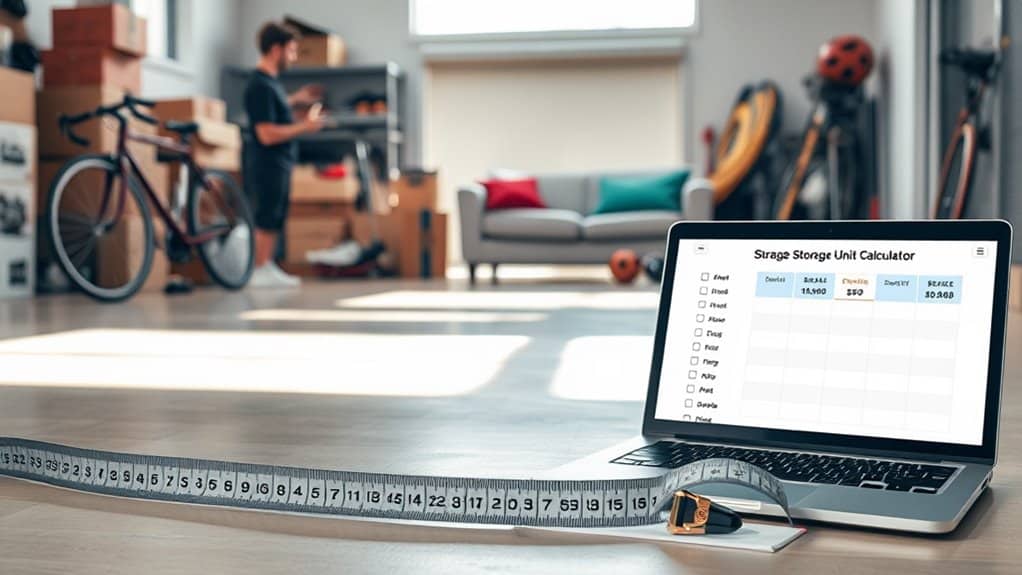
Estimating space requirements for a storage unit requires thoughtful planning. Begin by listing the items you wish to store, categorising them by size, weight, and how often you use them. Make sure to note any items that need climate control or are particularly large.
Accurately measure your belongings using a tape measure. Record the height, width, and depth of larger items, then calculate the space they'll occupy by multiplying these dimensions for both square footage and cubic feet. This will assist in optimising the available space.
When selecting the right unit size, consult size guides. Small units are suitable for boxes and seasonal items, while medium units can hold the contents of one to three bedrooms. Large units are ideal for bigger collections.
Also, consider how easily you can access your items; you don't want to be rummaging through stacks to find what you need.
Lastly, visualise how to arrange your unit. Aim for efficient stacking and ensure there are walkways for easy access. With careful planning, you can choose the perfect storage unit for your needs.
Key Factors for Choosing
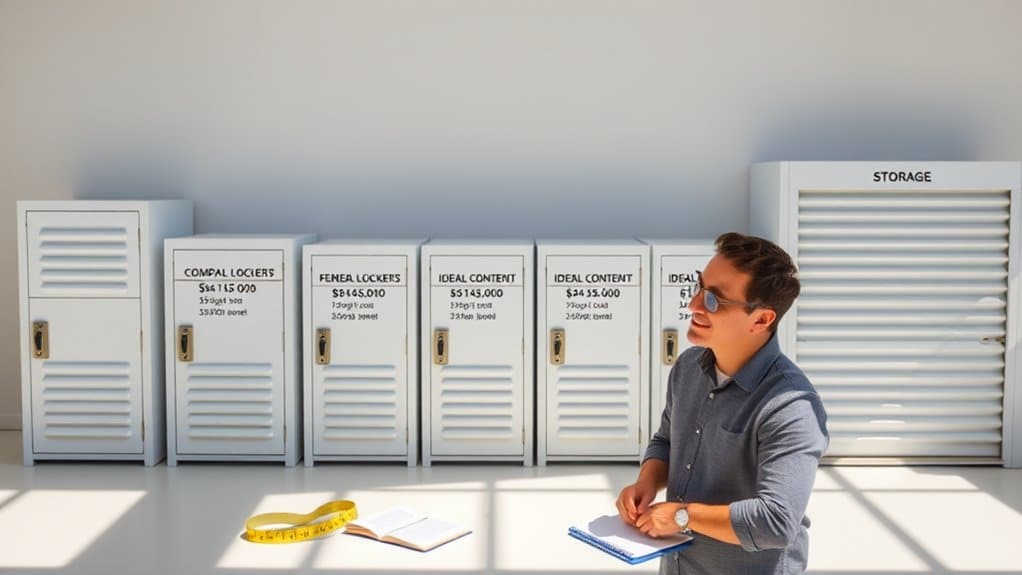
Choosing the right size storage unit involves several key factors that can significantly influence your decision. By considering these elements, you can find a practical solution to meet your needs.
- Types of Items: Consider what you plan to store. Bulky or delicate items may need more space and protection. If you have belongings that require specific temperatures, a climate-controlled unit is a must.
- Frequency of Access: Think about how often you'll need to access your items. If you require regular access, choose a larger unit that allows for easy navigation. For items you won't need often, a smaller unit may be adequate.
- Budget Considerations: Keep your budget in mind. Larger units typically cost more per square foot. It's important to balance your storage requirements with your financial limits to ensure you get good value for your money.
Whether you're in need of long-term storage or just a temporary solution, understanding these factors will help you choose wisely and enjoy the flexibility of storing what you need without unnecessary complications.
Organizing Your Storage Unit

Organising your storage unit effectively can turn a disordered space into a tidy environment. With a strategic layout and optimal use of space, you can improve accessibility and efficiency. Here's a concise guide to get you started:
| Tip | Details |
|---|---|
| Plan a Layout | Create clear pathways and prioritise items you use often. |
| Utilise Vertical Space | Use shelves and stack boxes wisely to save floor space. |
| Categorisation & Labelling | Group similar items together and label boxes for easy access. |
| Optimise Accessibility | Arrange items based on how frequently you use them. |
Start by planning a layout that allows for easy movement, ensuring larger items are readily accessible. Use shelves to make the most of vertical space. Group similar items and label your boxes clearly to find what you need without digging through clutter.
Finally, sort items by how often you use them—keep frequently used items within easy reach and place less-used items higher or further back. Regularly review your inventory to maintain organisation and enhance space utilisation. With these strategies, your storage unit will work for you, not against you.
Consulting Storage Professionals

After organising your storage unit, it's a good idea to consult storage professionals to ensure you're making the best choice for your needs. These experts can offer valuable insights to help you find the right fit for your belongings.
Here's how to make the most of their advice:
- Ask for Recommendations: Seek advice on reputable storage facilities in your area. Professionals can direct you to reliable options that suit your requirements.
- Inquire About Unit Sizes and Features: Don't hesitate to ask about the different unit sizes and what features are available. They can clarify the distinctions between units and advise on what might work best for your items.
- Visit Facilities: If possible, take the time to visit facilities and tour various unit sizes. This hands-on approach allows you to visualise the space and assess what meets your needs.
Consulting storage professionals not only saves time but also helps you make informed decisions.
By utilising their expertise, you'll find a unit that fits your budget, accessibility needs, and future storage plans.
Take this step for a smooth storage experience!
Utilizing Technology for Storage

When selecting the right size storage unit, technology can be incredibly helpful.
Inventory management software allows you to keep track of your items effectively, while virtual space calculators offer accurate measurements for your storage requirements.
These tools simplify your decision-making, helping you save both time and money.
For example, using a space calculator can prevent the common mistake of renting a unit that's too small or too large.
Inventory Management Software
Efficient inventory management is crucial for optimising your storage operations, and using specialised software can make a significant difference. Implementing inventory management software can enhance your efficiency and streamline processes.
Here are three key benefits:
- Improved Inventory Tracking: With barcode and tracking features, you can accurately monitor your stored items, minimising errors and discrepancies.
- Cloud-Based Access: Access your inventory data from anywhere, at any time, ensuring you always have up-to-date information readily available.
- Automated Billing and Payments: Simplify your financial processes with integrated payment solutions and electronic signatures, which can enhance customer satisfaction.
Investing in the right software supports your daily operations and scales with your business growth. You'll gain valuable reporting tools for informed decision-making and enjoy cost savings through better storage utilisation.
When selecting software, consider your specific needs, opt for user-friendly interfaces, and ensure it integrates seamlessly with your existing systems.
Virtual Space Calculators
Maximising your storage needs requires effective inventory management and leveraging technology. Virtual space calculators can significantly improve your storage selection process with their many advantages. These tools offer accurate estimates of the space required, helping you avoid the inconvenience of renting a unit that's either too large or too small.
When using these calculators, seek an intuitive user interface for a smoother experience. A well-designed tool allows you to input detailed inventories and measurements with ease. Customisation options based on item types ensure precise calculations. Additionally, features like inventory management can simplify your planning.
Another key benefit is the time saved. Rather than measuring manually, you can quickly calculate your needs and compare them with available units. This straightforward approach enhances customer satisfaction and streamlines your decision-making.
Before selecting a virtual calculator, check user reviews to assess its effectiveness. The right tool can be invaluable during home renovations or business inventory checks, giving you the confidence to manage your space effectively.
Embrace technology to achieve optimal storage solutions.
Special Considerations for Items

Special considerations for items are crucial in choosing the right size storage unit to meet your needs. Here are three key factors to keep in mind:
- Item Size and Shape: Accurately measure your larger items, and consider disassembling bulky furniture to save space. Use a flexible measuring tape for precise dimensions and create an inventory list to help visualise what you need to store.
- Item Type and Frequency of Use: Store frequently used items in easily accessible locations. For delicate items, ensure you use suitable packaging to prevent damage. Place heavier items at the bottom of the unit to maintain stability.
- Duration of Storage: Consider how long you'll need the storage unit. Smaller units are often enough for short-term needs, while larger units may be necessary for long-term storage. Look for units with flexible contract terms to accommodate any changes in your requirements.
Tips for Efficient Packing
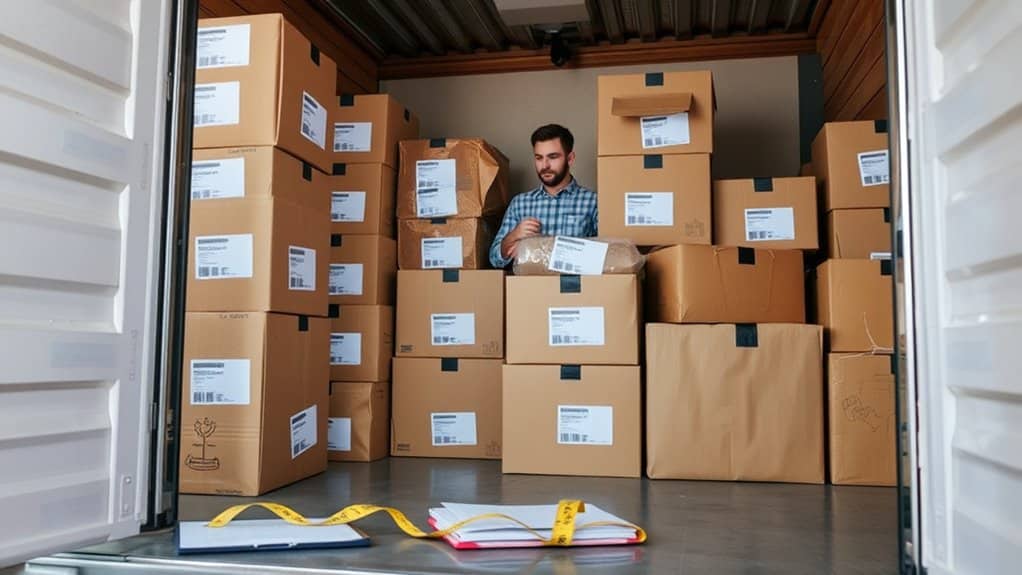
Once you've assessed the needs of your items, it's time to pack them effectively. Start by gathering quality packing materials, such as sturdy boxes and bubble wrap, to protect your belongings.
Measure larger items and disassemble them when possible to save space. Use space-saving techniques, like packing vertically and placing smaller items inside larger ones, to make the most of your storage unit.
When packing, position heavy items at the bottom and lighter ones on top. Store large, bulky items upright against the walls to free up floor space.
To stay organised, label boxes clearly with their contents and create a simple layout map of your unit. This way, you can easily locate what you need without rummaging through everything.
Consider using clear bins for better visibility and uniform box sizes for efficient stacking. Additionally, leave aisles between rows for easy access.
Frequently Asked Questions
What Items Should Not Be Stored in a Storage Unit?
You shouldn't store hazardous materials such as flammable items or toxic substances, nor should you keep perishable goods like food. These items pose safety risks and can lead to deterioration, making your storage experience less secure and more troublesome.
How Long Can I Rent a Storage Unit For?
You can rent a storage unit with flexible terms, usually on a month-to-month basis. This means you can easily adjust your rental period to suit your needs. Whether you're looking for short-term storage while moving house or a long-term solution for excess belongings, you have the freedom to choose what works best for you.
Are There Insurance Options for Stored Items?
Did you know that around 30% of renters take out storage insurance? There are various coverage options available, such as named perils and all-risk policies. Make sure to check with your provider to ensure your stored items are properly covered.
Can I Access My Storage Unit After Hours?
You can access your storage unit after hours, but this varies by facility. Check their after-hours access rules and security measures to ensure your belongings remain safe while you retrieve them.
What Are the Payment Options for Renting a Storage Unit?
When renting a storage unit, you have various payment options: cash, cheques, debit or credit cards, and direct debit. Review your rental agreement for details and pick the method that fits your lifestyle for easy management. For instance, setting up a direct debit can help you avoid missed payments.
Conclusion
When selecting the right storage unit, it's essential to approach the task with clarity. By assessing your needs and familiarising yourself with different sizes, you can prevent unnecessary costs or the frustration of insufficient space. Think of your items like pieces of a jigsaw puzzle; each has its designated spot. With a bit of planning and organisation, you'll turn a potentially chaotic storage situation into a tidy and efficient one, ensuring your belongings are safe and easy to access whenever required.