
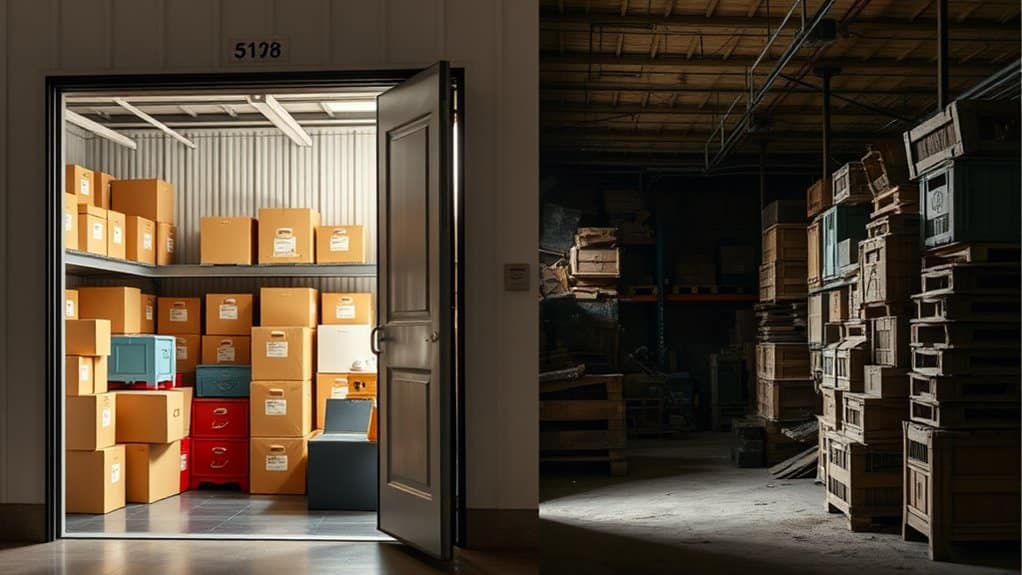
When choosing between short-term and long-term self-storage, it's crucial to consider your needs, budget, and how long you'll require the space. Short-term storage is flexible and perfect for situations like moving house or home renovations, but costs can quickly add up. In contrast, long-term storage usually offers lower monthly rates and better security, making it ideal for items you don't use often.
However, both options come with potential downsides, such as the risk of damage or difficulties accessing your belongings. Think about the types of items you'll be storing and how frequently you'll need to get to them. By weighing these factors, you can determine the best storage solution for your situation. For further guidance on your decision, more insights are available.
Key Takeaways
- Assess your storage duration: short-term is perfect for transitional needs, such as moving house, while long-term offers better rates for extended storage.
- Consider the type and sensitivity of your items: climate-controlled units are ideal for valuable or delicate belongings, while non-climate-controlled units are suitable for sturdier items.
- Evaluate how often you'll need access: opt for short-term if you need to retrieve items frequently, and long-term if you rarely visit.
- Compare costs: short-term typically comes with higher monthly rates, whereas long-term contracts can yield significant savings.
- Factor in security features: prioritise facilities with strong security measures for long-term storage to protect your possessions.
Understanding Self-Storage Options
When exploring self-storage options, it's important to consider your specific needs alongside what's available. Current trends highlight a move towards flexibility and convenience, with improvements in facility design enhancing user experience.
You'll encounter various types of storage, from short-term solutions ideal for temporary moves to long-term options for seldom-used items. Identifying personal storage requirements is crucial for effective organization, ensuring you select the right type of storage for your needs.
Cost is another vital consideration. Generally, longer rental agreements offer lower monthly rates, making long-term storage a sensible choice for extended periods.
Security is paramount in both scenarios, ensuring your belongings remain safe. Reflect on how often you'll need access to your stored items, as this will influence your decision.
If you're storing sensitive items, think about climate-controlled units. This modern feature provides extra reassurance, especially during times of change or relocation.
By assessing your storage needs, the types of items you'll store, and your budget, you can effectively navigate your options.
Whether you choose portable storage, self-storage facilities, or online platforms, understanding your choices will help you find the best solution for your needs.
Short-Term Storage Advantages
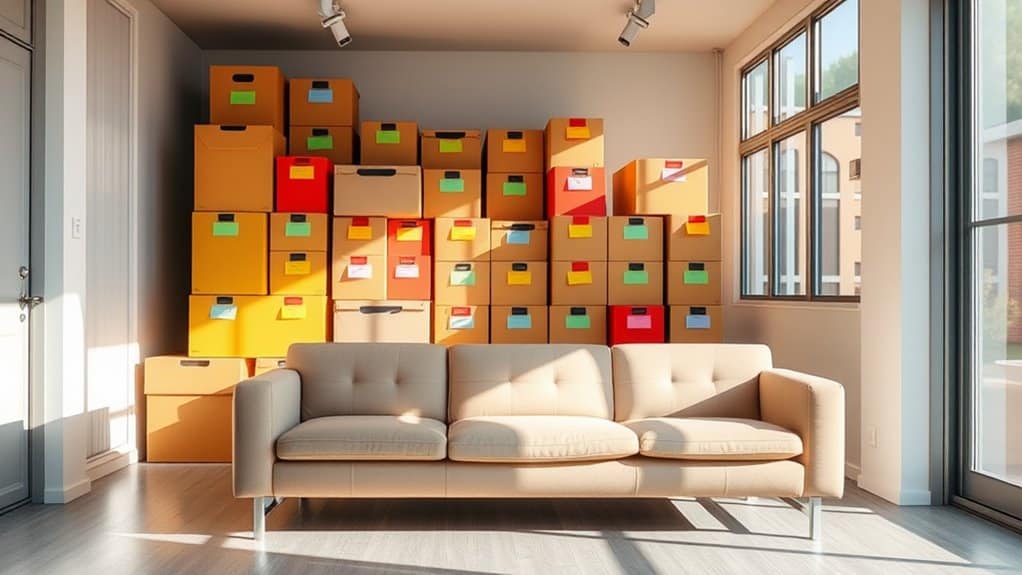
In today's fast-paced environment, short-term storage provides a practical solution for individuals and businesses seeking flexibility without long-term commitments. These temporary options are ideal for various situations, whether you're moving house, travelling, or need seasonal space for items like Christmas decorations. With flexible contracts, you can select rental periods that suit your needs.
Short-term storage is especially useful during home renovations, keeping your belongings safe and accessible. It's also a reliable choice for students and military personnel who require temporary space during courses or deployments. Additionally, this service is particularly beneficial for those experiencing transitional periods in their lives, such as moving to a new location. The ability to choose month-to-month contracts allows for easy adjustments to your storage needs without stress.
Businesses benefit by managing inventory without additional overhead costs. Cost-effective pay-as-you-go models mean you only pay for the time you actually use the unit, making it accessible for various budgets without the burden of maintaining permanent space.
With easy access and secure facilities, short-term storage options, such as those offered by Juujbox, not only provide convenience but also peace of mind, ensuring your items remain safe and readily available when you need them.
Short-Term Storage Disadvantages

When considering short-term storage, be aware that monthly rates can be quite steep, especially if you end up needing the space for longer than anticipated. For instance, if you only need to store a few boxes, but find yourself needing to store larger items too, you may struggle with limited unit sizes. Additionally, the cumulative costs of short-term storage can add up quickly if you require the unit for an extended period. These issues can significantly affect your experience and the costs involved with short-term storage. Furthermore, the lack of security features in some facilities may leave your belongings vulnerable during longer storage periods.
Cost Considerations
When exploring short-term storage options, be prepared for some surprising cost factors. While the flexibility of short-term arrangements may initially attract you, a closer look often reveals higher monthly rates and limited discounts. Storage facilities typically favour long-term commitments, which tend to be more cost-effective for extended needs. Additionally, many facilities offer wider range of unit sizes for long-term storage, allowing you to better match your needs. Moreover, short-term storage often lacks the flexible rental options that can help you save money during temporary moves or renovations.
| Cost Factors | Short-Term Storage |
|---|---|
| Monthly Rates | Higher than long-term |
| Discounts | Rarely available |
| Space Availability | Often insufficient |
| Risk of Item Damage | Increased due to frequent access |
| Potential Additional Costs | Higher transport expenses |
As you weigh your options, keep in mind that extra fees for climate control or enhanced security can drive up costs even more. If you think you might need storage for a while, those higher monthly payments can add up quickly. The limited discounts and space can complicate your plans, leading to unexpected expenses. Understanding these cost considerations will help you make an informed decision about your storage needs.
Accessibility Limitations
While short-term storage can provide quick solutions, it often comes with significant accessibility issues that may affect your experience. Many short-term facilities lack climate-controlled units, putting sensitive items at risk from environmental changes. Additionally, you may find yourself hurriedly packing and unpacking, leading to disorganisation and added stress. The need for frequent access to your belongings can complicate organisation, making it difficult to store and retrieve items efficiently. Moreover, without proper long-term security, your items could be vulnerable during storage.
Accessibility concerns can further complicate matters. Although storage facilities are required to comply with ADA regulations, not all offer sufficient options for individuals with physical challenges, affecting everything from office areas to parking and restrooms.
To ensure easy access to your items, careful planning is essential—label boxes clearly and consider using transparent bins for better visibility. Without a strategic approach, frequent access can disrupt your initial organisation plan, making it harder to find specific items when you need them.
Keep these limitations in mind when deciding if short-term storage is right for you.
Long-Term Storage Advantages

Long-term storage offers several benefits that can improve your financial situation and provide peace of mind. By opting for this solution, you can save money while keeping your belongings secure and well-preserved.
| Advantages | Details |
|---|---|
| Cost Savings | Generally lower rates than short-term storage, helping to cut costs. |
| Security Features | Enhanced surveillance and fire protection ensure the safety of your items. |
| Convenience Benefits | 24/7 access and flexible contract terms make management easy. |
Long-term storage is ideal for situations such as downsizing or keeping rarely used items. With climate control options, delicate possessions are protected from environmental damage, keeping them in top condition. Additionally, taking advantage of current market conditions can lead to significant savings on long-term storage rates.
Moreover, the flexible contracts allow you to change your storage duration as your situation evolves. This adaptability, coupled with professional management, ensures your belongings are secure and easy to access whenever needed. In essence, long-term storage simplifies your life and gives you the freedom to manage your possessions on your own terms.
Long-Term Storage Disadvantages

When considering long-term storage, it's crucial to evaluate the disadvantages alongside the benefits. A major concern is the risk of damage or loss; despite your best efforts, items can be affected by extreme temperatures, humidity, or pests. Climate-controlled units can help mitigate these risks, offering protection for sensitive items against environmental damage.
Dust and dirt can accumulate, making it particularly hard to care for electronics and furniture. Additionally, the threat of theft or vandalism highlights the need for a secure facility.
Financially, long-term storage can become quite expensive. Monthly fees can add up, especially for larger units, and you might find yourself paying for space you don't actually need.
Access can also be an issue, as retrieving items may require careful planning and inconvenient trips.
Uncertain future plans can create flexibility problems. If you misjudge the size of the unit, you might need to upgrade later, incurring further costs.
While insurance can help safeguard your belongings, it's essential to note that certain items, like electronics and perishables, aren't suitable for long-term storage. Understanding these drawbacks can help you make informed decisions.
Assessing Your Storage Needs
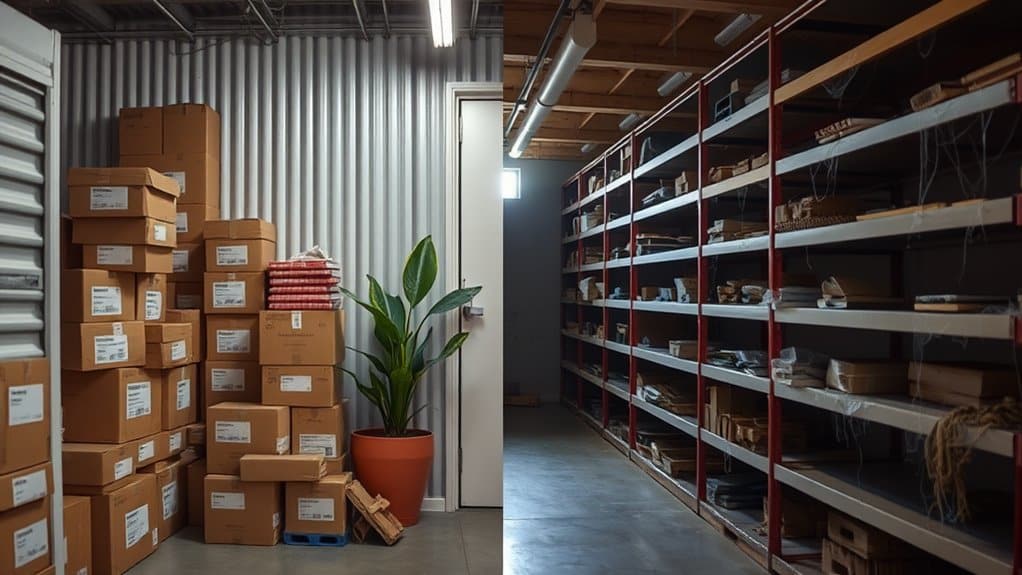
Assessing your storage needs involves understanding the downsides of long-term storage. Begin by identifying what items you intend to store. Are you considering seasonal items, business inventory, or perhaps furniture? Knowing what you're dealing with aids in planning the space and selecting the right unit.
Think about how often you'll need access to these items. If you need quick access for urgent situations or frequent visits for business, short-term storage may be better. For things like archived documents or seasonal decorations, infrequent access works well.
Your budget is crucial. Compare monthly costs for short-term storage against discounted long-term rates, and consider security, insurance, and possible price hikes. Additionally, consider the pricing structure when evaluating different storage options as it can significantly impact your overall costs.
To gauge your space requirements accurately, use storage calculators and measure your items. This helps in selecting the right unit size while allowing for organisation.
Also, consider any future needs; you may require extra space later, particularly for vehicles or items needing climate control. Evaluating these factors will enable you to make a well-informed decision that suits your lifestyle.
Evaluating Duration Requirements
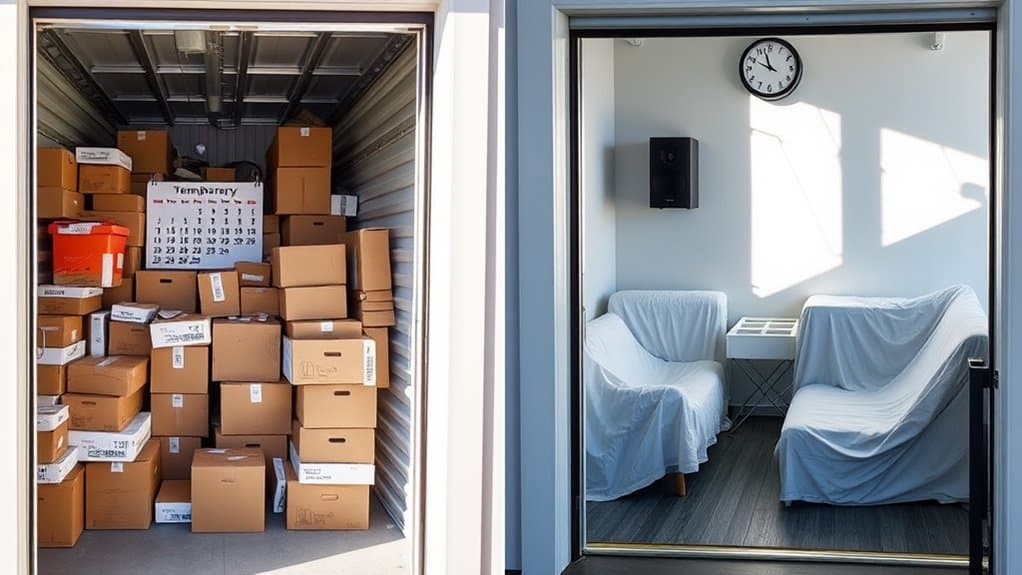
Evaluating your storage duration requirements is crucial when selecting a storage solution that suits your needs. Understanding how long you'll need storage affects your choices regarding cost, security, and accessibility.
Consider these three key factors:
- Temporary Needs: If you're moving house or renovating, short-term storage can meet your needs without long-term commitments.
- Access Frequency: If you plan to access your items regularly, short-term options offer greater flexibility and easier access compared to long-term solutions. This is especially important for those who may require frequent access to their belongings during transitional periods.
- Climate Control and Security: Think about the nature of your stored items; delicate or valuable belongings may need specific climate controls and security features, which can influence your duration choice.
In general, longer storage periods may lead to lower monthly rates, but short-term options can be more economical for brief needs.
Many facilities offer flexible leasing, allowing you to switch between options as your situation changes.
Budget Considerations for Storage
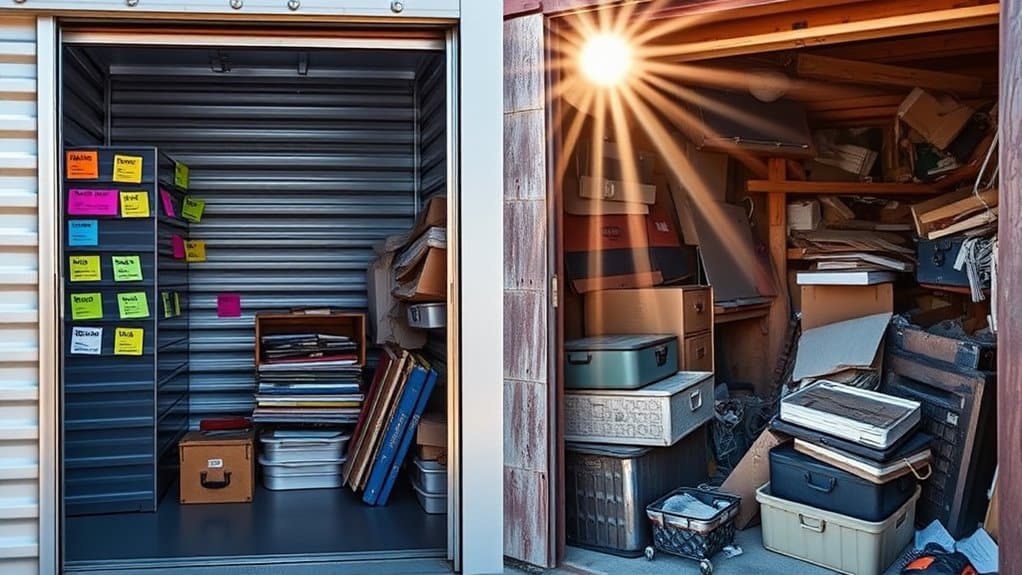
When exploring storage options, it's vital to carry out a detailed cost comparison to ensure you secure the best deal. Look out for discounts and promotions, as these can significantly lower your expenses. However, be cautious of hidden fees that could increase your total costs. For instance, a storage facility might advertise a low monthly rate but charge extra for access or insurance. Additionally, the typical costs of building a self-storage facility range from $25 to $70 per square foot, which can affect rental rates and overall pricing.
Cost Comparison Analysis
Navigating the world of self-storage can be tricky, especially when it comes to understanding costs, which can significantly impact your choice. Familiarising yourself with the pricing structures for both short-term and long-term storage will help you find the right option for your needs.
Here are three key cost factors to consider:
- Size and Capacity: Smaller units, like a 5' x 5', typically cost between £40 and £60, while larger units, such as a 20' x 20', can range from £350 to £500 per month.
- Duration of Use: Long-term storage often offers lower rates, making it more economical for extended periods. On the other hand, short-term storage is flexible but can become costly if you need frequent access.
- Accessibility and Security: Consider how often you'll need to retrieve your items. Facilities with enhanced security features generally come at a higher price but provide added peace of mind.
Discounts and Promotions
Finding the right self-storage solution often relies on taking advantage of discounts and promotions that can significantly cut your costs.
Seasonal offers can help you secure better rates during quieter months, such as autumn and winter, rather than the busy summer period. Many facilities provide attractive monthly deals, like half-price for the first two months or even a free month on selected unit sizes.
Websites like Groupon and VoucherCodes can also offer substantial savings through easy-to-find vouchers.
If you only need storage for a short time, look out for facilities that offer promotions like one month free or discounted rates for limited periods.
For long-term storage, loyalty schemes can boost your savings. Some facilities reward long-term customers with extra discounts or special rates for advance payments.
Always compare different facilities and their offers to make the most of your savings.
Hidden Fees Awareness
Many self-storage facilities in the UK impose hidden fees that can significantly impact your overall budget. To avoid unwelcome surprises, it's crucial to be aware of common charges that may not be clearly stated in your rental agreement. Here are three key areas to consider:
- Setup and Administrative Fees: These mandatory fees are often hidden in the small print and can considerably increase your initial costs.
- Mandatory Insurance Fees: While it's important to protect your belongings, these extra monthly charges can quickly add up if you're not prepared.
- Additional Services and Retail Merchandise: Facilities may charge for enhanced security features or sell essential items like locks and boxes at inflated prices.
Understanding fee transparency is vital for effective budgeting. Many facilities implement frequent rent increases, often with little notice, which can add to your expenses over time.
Analyzing Item Types
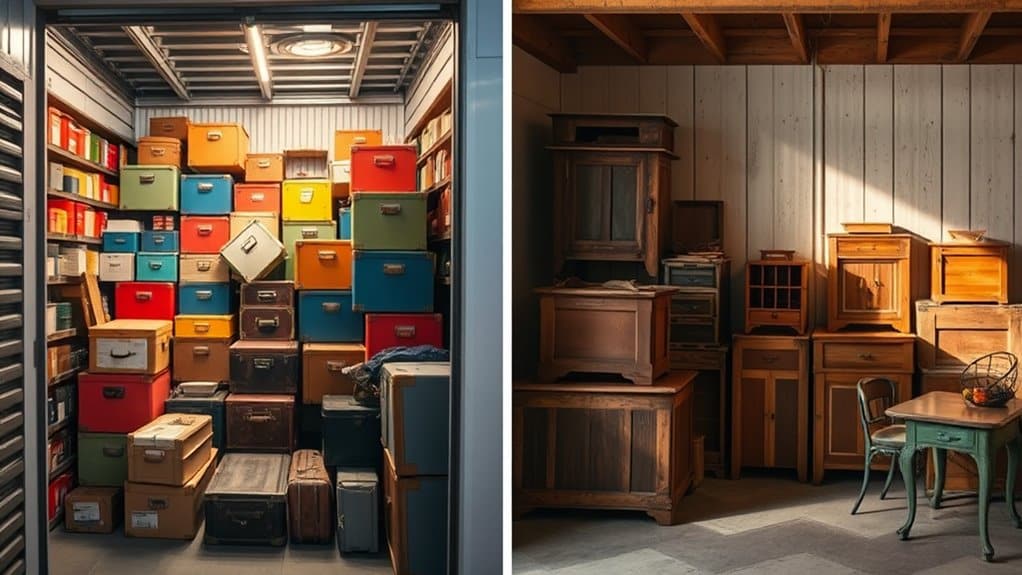
When it comes to self-storage, knowing the types of items you plan to store can significantly influence your choices.
Whether you're looking for short-term or long-term storage, proper organisation and space management are crucial.
Short-term storage is perfect for temporary items, such as furniture waiting to be delivered, seasonal decorations, or belongings needed during home renovations.
If you expect to access these items frequently, short-term storage makes retrieval straightforward.
In contrast, long-term storage is tailored for items you rarely use, like archived documents, sentimental heirlooms, or off-season furniture.
These items benefit from a clutter-free environment, ensuring they remain safe until you require them again.
When assessing your belongings, consider how often you'll need to access them.
Perishable goods or business inventory needing rotation are best suited for short-term solutions.
Meanwhile, items like seldom-used household goods or important documents can be stored long-term.
Future Plans and Storage Choices
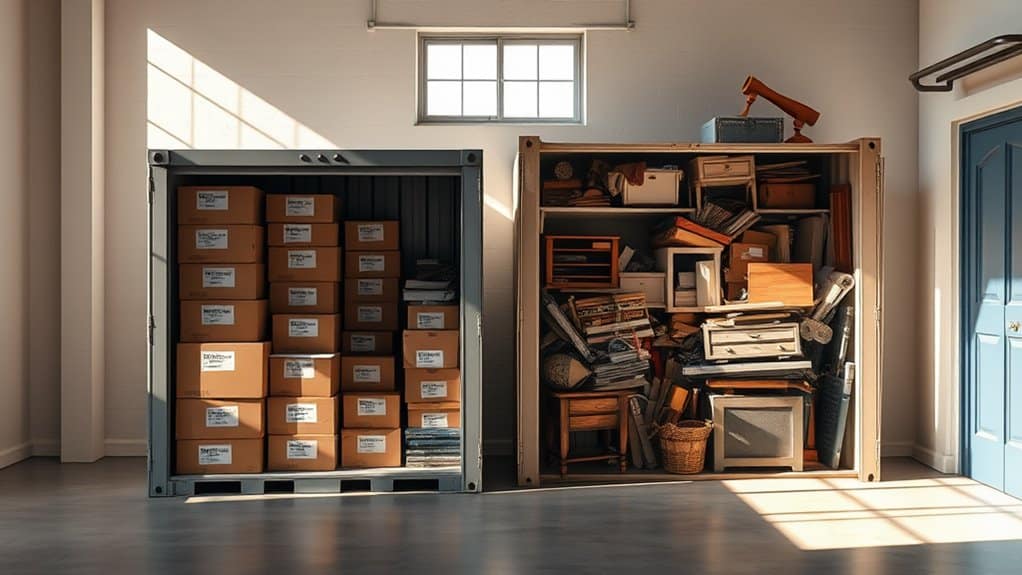
When choosing storage options, think about how your plans, lifestyle changes, and potential relocations may influence your decisions.
Whether your needs are short-term or long-term can significantly affect your budget and the flexibility of your storage solution. For instance, if you're moving to a new city in a few months, a short-term rental might be ideal.
On the other hand, if you're setting down roots for the foreseeable future, a long-term option could be more suitable. By matching your storage duration to your future plans, you can make choices that fit your changing circumstances.
Anticipated Timeframe Considerations
Anticipating your storage needs is crucial as your plans evolve. Whether you're dealing with a life change or planning for seasonal items, your choice will depend on your expected timeframe. Here are three key considerations:
- Rental Flexibility: Short-term storage offers monthly rentals, making it ideal for those experiencing transitions. You can easily adjust your unit size or cancel as your circumstances change.
- Access Frequency: If you require regular access to your belongings, choose ground-floor or drive-up units. This ensures easy retrieval and helps you stay organised, allowing for clear labelling of items for quick identification.
- Climate Control and Security: For valuable or sensitive items, look for facilities with climate control and strong security measures. These features will safeguard your possessions and give you peace of mind.
Lifestyle Changes Impacting Storage
As lifestyle changes occur, your storage needs may change significantly, prompting a reassessment of your options. Whether you're downsizing, managing generational storage, or dealing with mobility issues, it's important to understand these factors.
For many, particularly empty nesters and retirees, moving to smaller homes often requires effective organisation and space optimisation.
Health issues can also impact your choices; if mobility is limited, long-term storage for items you don't need to access frequently can ease the burden of lifting heavy boxes. Conversely, short-term storage can provide flexibility during transitions, such as moving or adapting to seasonal changes.
Emotional considerations, such as caring for elderly parents or adjusting to retirement, can also affect your storage decisions. Recognising these changes allows you to choose the right storage solution.
Future Relocation Plans
Understanding your future relocation plans is crucial for selecting the right storage solutions to meet your needs. Your moving logistics will influence whether you should choose short-term or long-term storage. By assessing your plans, you can make an informed decision that balances flexibility and cost-effectiveness.
Consider these three key factors:
- Uncertain Timeline: If your moving date isn't set, short-term storage offers the flexibility you require during transitional periods.
- Access to Items: Think about how often you'll need to reach your belongings. Short-term storage is suitable for frequent access, while long-term storage works well for items you won't need right away.
- Storage Duration: If you're moving for a specific period, long-term storage can be more economical, especially for items you won't need for six months or more.
Comparing Costs of Storage
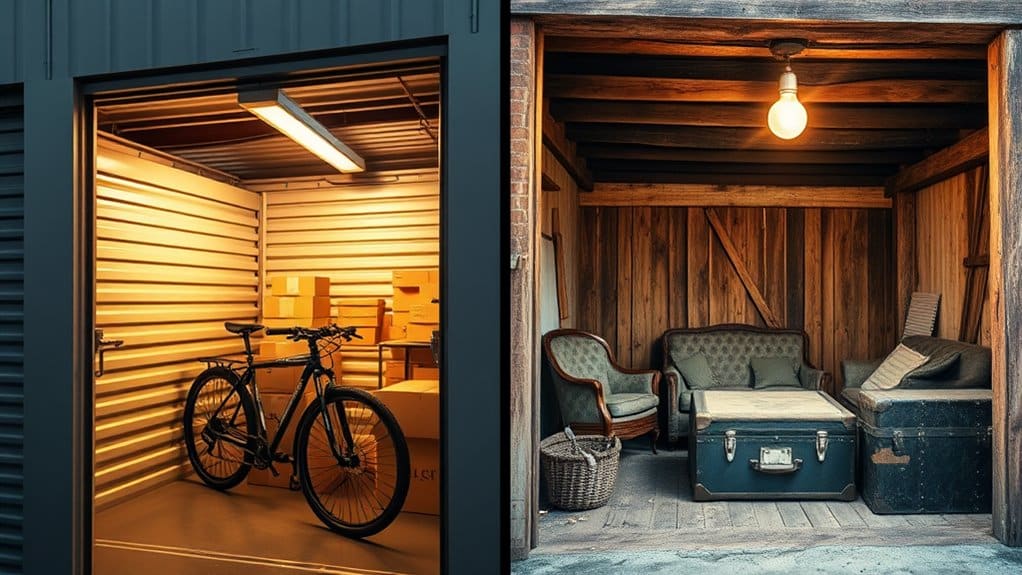
When considering your self-storage options, comparing costs is crucial for making a well-informed decision. The storage market shows clear pricing differences between short-term and long-term storage. Short-term storage offers flexibility but typically comes with higher monthly rates. It's ideal for temporary situations like moving or renovations but can become costly if needed for longer durations. In contrast, long-term storage usually provides lower rates, often with discounts for commitments of six months or more, making it a more economical choice for extended needs.
Here's a quick cost comparison:
| Storage Type | Monthly Rates |
|---|---|
| Short-Term | Higher |
| Long-Term | Lower |
| Flexibility | Adjustable |
| Contract Commitments | Required for long-term |
| Average Prices | Varies by location |
As you make your choice, keep in mind how location affects pricing and seasonal demand fluctuations. It's important that your preferences align with the services offered and any innovations that enhance customer satisfaction. Ultimately, finding the right balance between flexibility and cost will lead you to the best self-storage solution for your needs.
Importance of Access Frequency
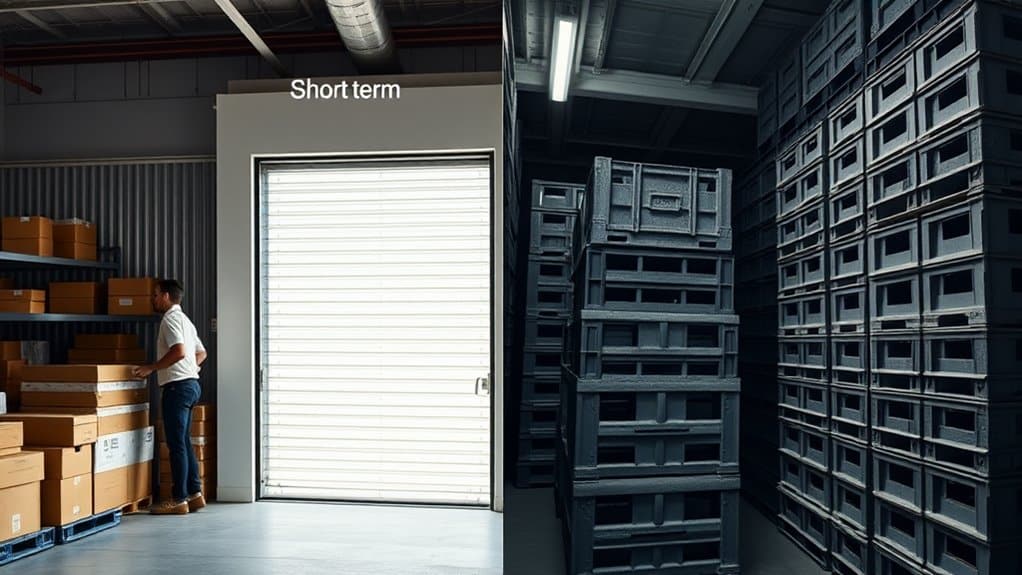
Choosing the right self-storage option involves more than just looking at costs; access frequency is crucial in finding the best fit for your needs.
If you're considering short-term storage, think about how often you'll need to access your items. If you need to visit frequently, short-term solutions are ideal for transitional situations such as moving, renovating, or decluttering.
Here are three key points to consider regarding access frequency:
- Regular Access Needs: If you intend to visit your unit regularly, short-term storage offers the convenience you require.
- Security Measures: Regular visits not only allow you to retrieve items but also help deter potential break-ins, as frequent use makes the unit appear active.
- Cost-Effectiveness vs. Access: While long-term storage may be cheaper, regular access could come at the expense of convenience and security.
Understanding your access frequency is essential to choosing a storage solution that fits your lifestyle while keeping your belongings safe.
Storage Conditions to Consider
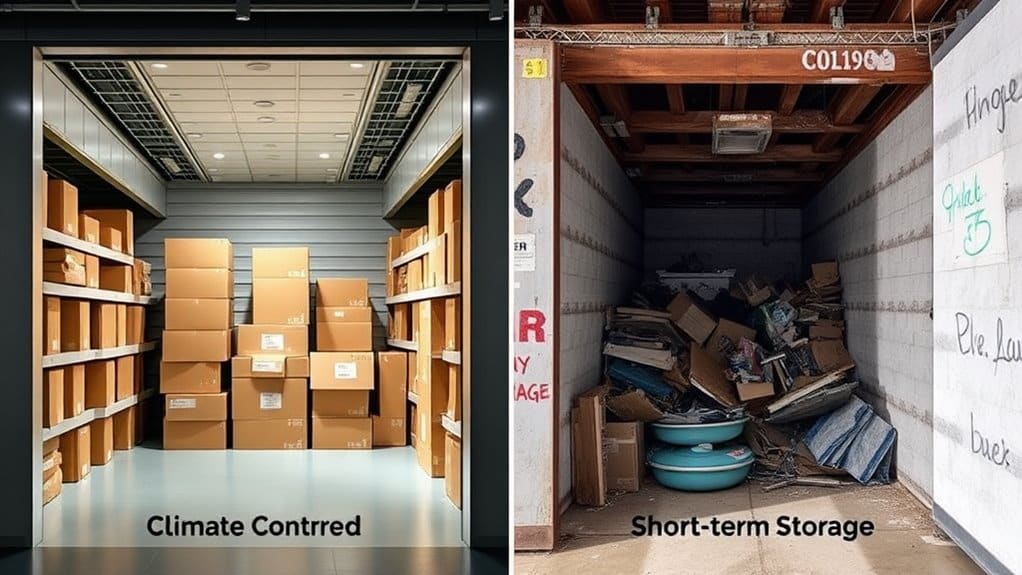
Storage conditions are crucial for ensuring the safety and longevity of your belongings. When considering self-storage options, it's essential to assess the importance of temperature and humidity control based on what you're storing.
For short-term storage, a non-climate-controlled unit may be a cost-effective choice, though this exposes your items to temperature and humidity fluctuations. This setup is suitable for robust items such as garden tools and kitchenware.
On the other hand, for long-term storage, climate-controlled units offer vital environmental protection. These units maintain a consistent temperature between 13°C and 29°C and regulate humidity, making them perfect for sensitive items like wooden furniture, artwork, and electronics.
While climate-controlled storage is typically 25%-40% more expensive, it can prevent moisture damage and help ensure your possessions remain in good condition over time.
Ultimately, your decision between short-term and long-term storage should reflect what you're storing and how long you intend to keep it. By understanding the specific storage needs of your items, you can protect your belongings and make a well-informed choice that suits your requirements.
Finding the Right Balance
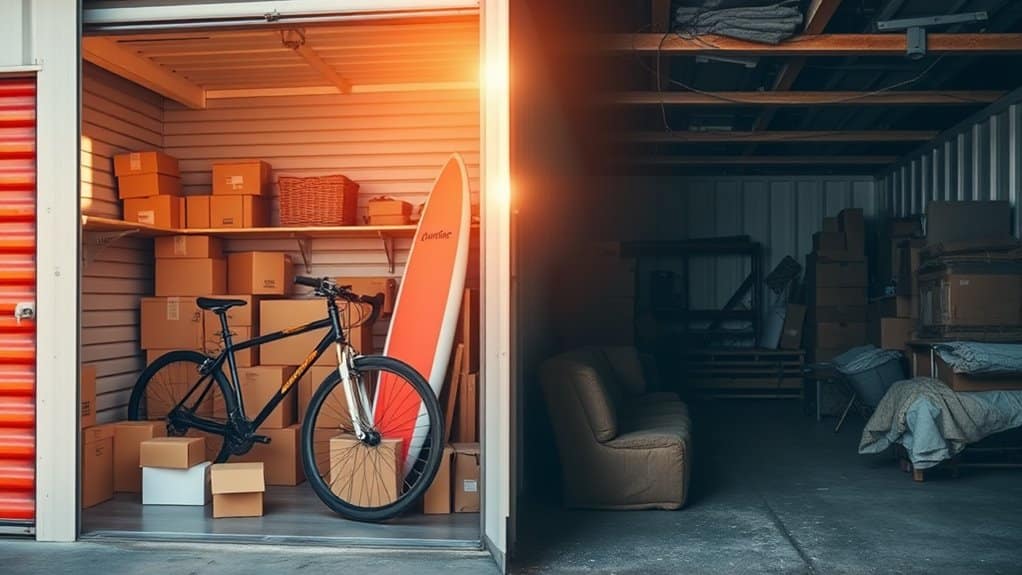
Finding the right balance in self-storage requires evaluating your storage duration, cost efficiency, and access needs.
Consider how long you'll need to store your belongings and how often you might need to retrieve them.
For instance, if you're storing seasonal items like garden furniture, you might only need a short-term solution.
Assessing Storage Duration
When considering how long you'll need to store your belongings, it's important to find a balance between your current needs and future plans.
The duration of your storage can impact how easily you can access your items and manage your space. Here are three key factors to consider:
- Type of Items: Are you storing seasonal garden furniture, important paperwork, or things you might need soon?
- Access Frequency: How often will you need to get to your belongings?
- Future Plans: Are you planning a move, home renovation, or downsizing?
Evaluating Cost Efficiency
Evaluating cost efficiency in self-storage options is crucial for making informed decisions that fit your budget and requirements. A cost-benefit analysis can help you compare short-term and long-term storage unit options.
Short-term storage often has lower initial costs but generally comes with higher monthly fees, making it less economical for extended use. On the other hand, committing to a long-term lease can lead to significant savings, often offering discounts of 10–15% or more.
Don't forget to consider additional fees for both options. Short-term storage may charge extra for services like climate control and 24-hour access, while long-term units might involve ongoing maintenance costs.
It's also important to assess the size of the storage unit you need; larger units can be more cost-effective on a per square foot basis, especially if you have many belongings.
Location is another key factor, as storage prices can vary widely between urban and rural areas. Balancing these aspects is essential.
If flexibility is important to you, short-term storage could be the best fit. However, for long-term cost efficiency, opting for a longer lease may be wiser.
Ultimately, understanding these elements will help you find the right balance to meet your financial goals.
Prioritizing Access Needs
Access needs are crucial when choosing the right self-storage solution. How often you need to access your items can significantly influence your decision. Here are three key points to consider:
- Frequency of Use: If you require daily access to your belongings, short-term storage might be the most suitable option. It typically offers more flexible access hours, making it easier for frequent visits.
- Security versus Accessibility: Self-storage facilities often feature robust security measures. However, it's important to consider how these might affect your access. While long-term storage may enhance security, it might limit your ability to retrieve items whenever you need them.
- On-Site Options: Portable storage solutions allow for immediate access, enabling you to load and unload at your convenience. This can be particularly useful if your storage needs change frequently.
Striking the right balance between accessibility and security is vital. If regular access is a priority, short-term or portable storage may provide the flexibility you need.
Assess your specific access requirements to find the solution that best fits your lifestyle.
Frequently Asked Questions
What Items Are Prohibited in Storage Units?
When using a storage unit, it's important to steer clear of prohibited items such as perishable food, hazardous materials, and illegal substances. For instance, you shouldn't store items like fresh fruit, chemicals, or stolen goods. Following these regulations ensures safety and compliance, protecting both your belongings and the storage facility.
How Do I Choose the Right Storage Size?
To choose the right storage size, start by assessing your needs. Think about the dimensions of your items; for instance, if you have bulky furniture or fragile antiques, you'll need more space. Also, consider any future items you may want to store to prevent overcrowding or paying for excess space. A good rule of thumb is to make a list of what you'll be storing to help you gauge the size required.
Are There Insurance Options for Stored Items?
Yes, there are several insurance options for items in storage. You can select flexible coverage with adjustable policy limits to protect against damage and liability. For instance, if you're storing furniture, you might want a policy that covers accidental damage. It's worth comparing different providers to find a plan that meets your needs and covers your specific risks.
Can I Access My Unit Outside of Business Hours?
Yes, you can access your unit outside of business hours at many facilities. They typically offer controlled access and enhanced security, giving you the flexibility to retrieve your belongings whenever you need to, accommodating your busy lifestyle.
What Should I Do if I Forget My Access Code?
If you forget your access code, you can recover it through the Public Storage App or by texting "OPEN" to retrieve it. Regularly updating your security measures can improve safety and help avoid future access problems.
Conclusion
Ultimately, choosing between short-term and long-term self-storage depends on your specific requirements. Short-term storage is ideal for those needing temporary space, like during a house move or seasonal changes, while long-term storage is best for those with larger collections or belongings that need to be stored for an extended period. Consider factors such as cost, how often you'll need access to your items, and the storage conditions. By evaluating these aspects, you can find the right storage solution for your belongings, ensuring they are secure and easy to retrieve, helping you regain your space and peace of mind.