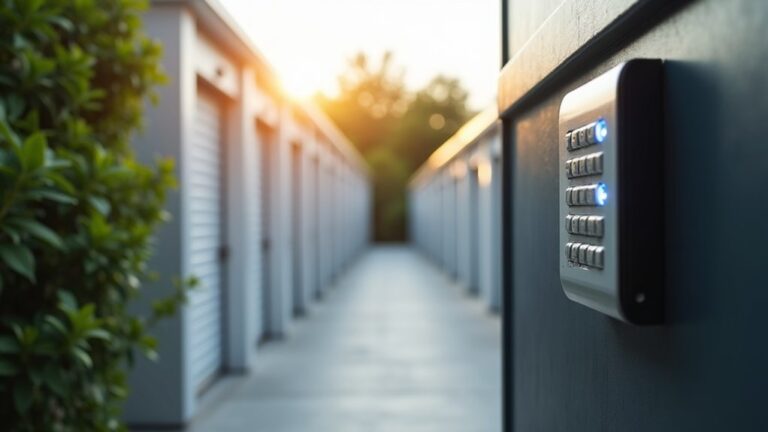
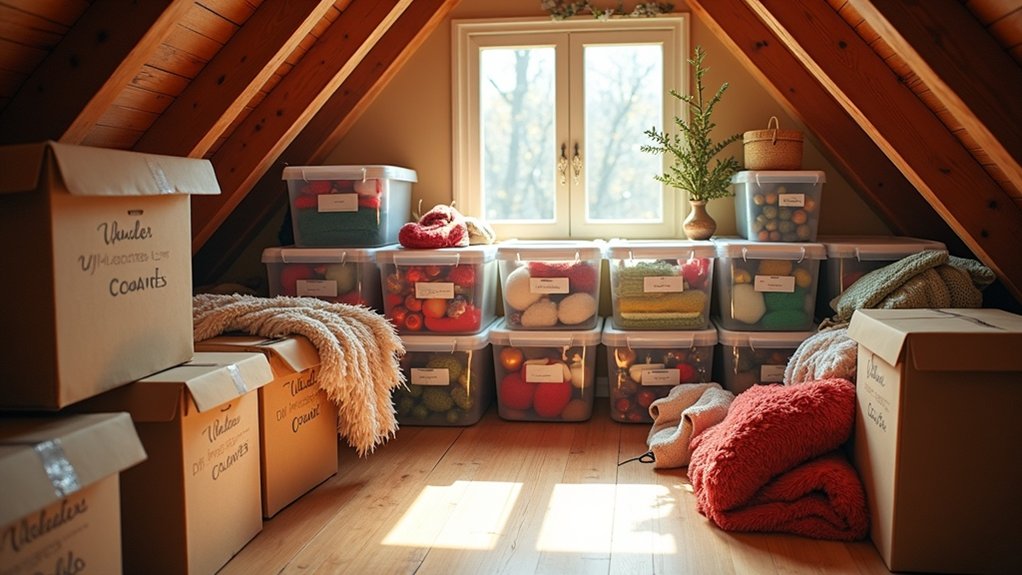
To prepare your items for long-term seasonal storage, start by cleaning them thoroughly to avoid any damage. Use appropriate packing materials, such as sturdy plastic boxes, and wrap fragile items in bubble wrap for added protection. Make sure to organise and label everything clearly, so you can easily find what you need later. Choose a storage space that maintains stable temperature and humidity levels. It’s wise to check your stored items regularly for any signs of damage or moisture. By following these steps, you can keep your belongings safe and in good condition for future use.
Key Takeaways
- Thoroughly clean items using suitable methods to prevent damage and mould during storage. For example, ensure clothing is washed and dried before packing.
- Use strong plastic bins or acid-free cardboard boxes to shield items from moisture and pests, such as moths or woodlice.
- Organise items by type or how often you’ll need them, and label boxes clearly for quick identification when retrieving them.
- Maintain a stable temperature and humidity in the storage area to avoid deterioration, such as keeping it cool and dry.
- Regularly check the storage space and items for any signs of damage, moisture, or structural issues to ensure they remain in good condition for the long term.
Cleaning and Preparing Items for Storage
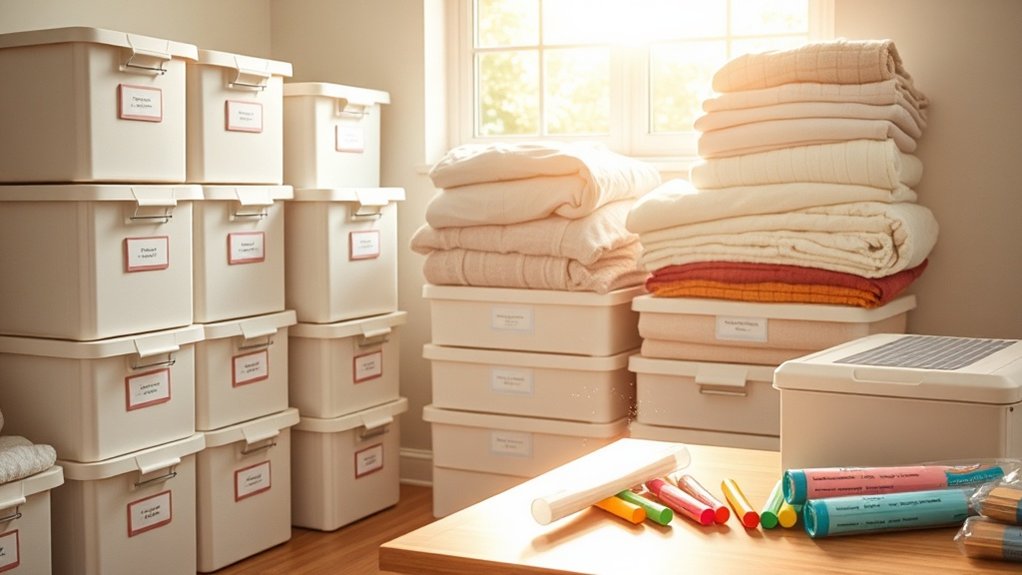
When preparing to store items seasonally, the first step is to clean and prepare them properly.
For wooden items, use a mild cleaning solution that won’t damage the surface. Designated Storage Area to keep cleaning supplies away from the items will help prevent degradation of chemical components in cleaning products. Choosing the right durable materials for storage solutions can also enhance the longevity of your items.
For metal, mix baking soda with warm water to effectively tackle grime. Glassware should be thoroughly cleaned and completely dried to prevent any damage. Gently wipe artwork with a soft cloth and store it framed or with protective dividers. Leather furniture needs a mild soap solution; always test it on a small area first. To ensure moisture control, allow all items to dry completely before storage. Consider adding silica gel packets in containers to absorb excess moisture, helping to protect your valuables from mould and mildew.
Packing and Protection Materials

Once you’ve cleaned and prepared your items, the next step is to choose the right packing and protection materials.
For long-term storage, opt for sturdy plastic storage bins to resist moisture and pests. If plastic isn’t available, use acid-free cardboard boxes, steering clear of flimsy options. Clear containers are great for visibility.
Inside these boxes, use cushioning materials like bubble wrap for fragile items and packing paper to fill gaps while allowing airflow. Avoid using plastic sheeting directly on items, as this can trap moisture. Temperature-controlled units are also advisable for sensitive items that need extra protection during storage. It’s crucial to maintain ideal humidity levels for preserving items like electronics and wooden furniture.
For extra protection, add silica gel packets to control humidity. Elevate items on pallets to prevent moisture damage and seal bins tightly to keep pests out, ensuring your belongings remain safe and sound.
Organization and Labeling
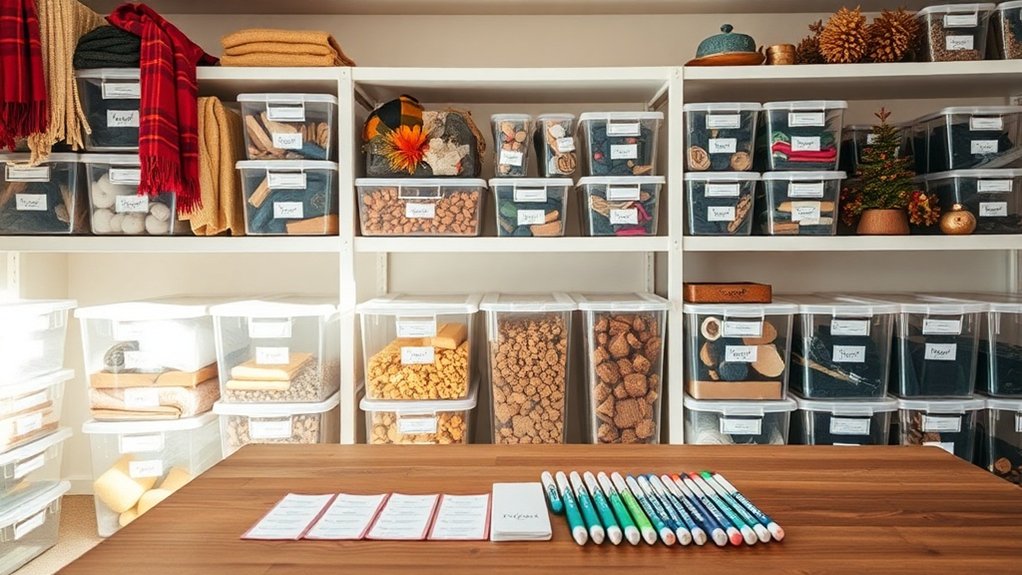
Effective organisation and labelling are key to maximising your seasonal storage efficiency. Start by grouping items according to how often you use them or their type, such as clothing, decorations, and tools.
Consider using a colour-coding system to visually separate categories, making it easier to find what you need. Use clear, legible labels on containers, detailing item descriptions, quantities, and storage dates. Waterproof labels are a good choice to withstand moisture, and placing labels on multiple sides improves visibility.
Keep an inventory system, either digital or physical, and make sure to update it regularly. Store frequently accessed items at the front, and place heavier items lower down for safety. This straightforward approach ensures you can easily access your seasonal items, giving you more freedom in your space. Additionally, using self-storage benefits can further enhance your decluttering efforts by providing a safe and secure location for items not currently in use.
Storage Environment and Unit Preparation
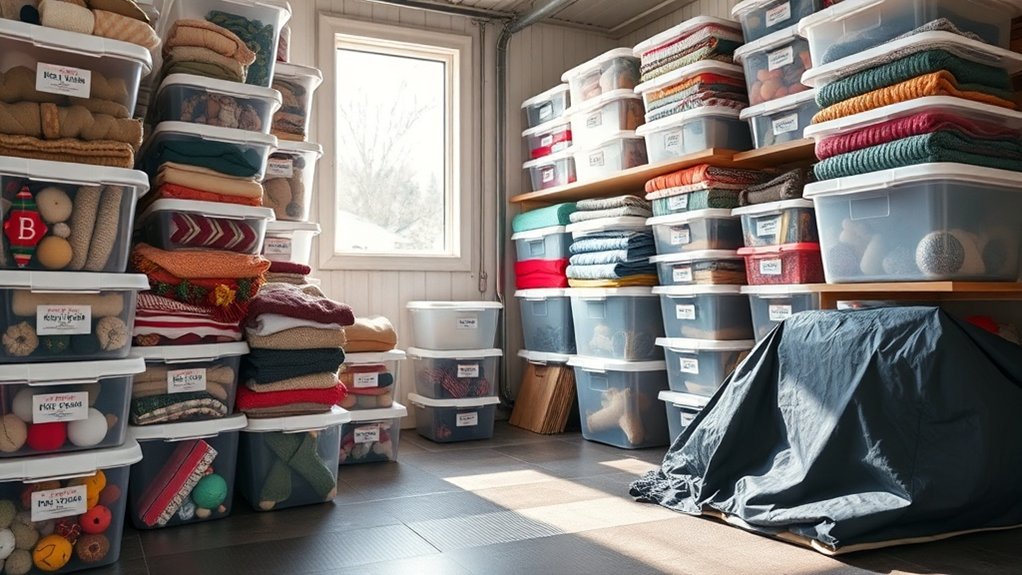
Creating the right storage environment is essential for protecting your seasonal items and preventing damage. Here are the key factors to consider:
- Maintain a stable temperature that suits your items.
- Control humidity to avert moisture-related issues.
- Select a unit that limits direct sunlight exposure.
When choosing your storage unit, ensure it’s made from durable, corrosion-resistant materials appropriate for the conditions. High-efficiency insulation is crucial for maintaining thermal energy and reducing energy costs.
Additionally, pick a location that’s safe from flooding and severe weather. Proper installation is vital for a level foundation, which helps avoid structural problems.
Maintenance and Regular Checks
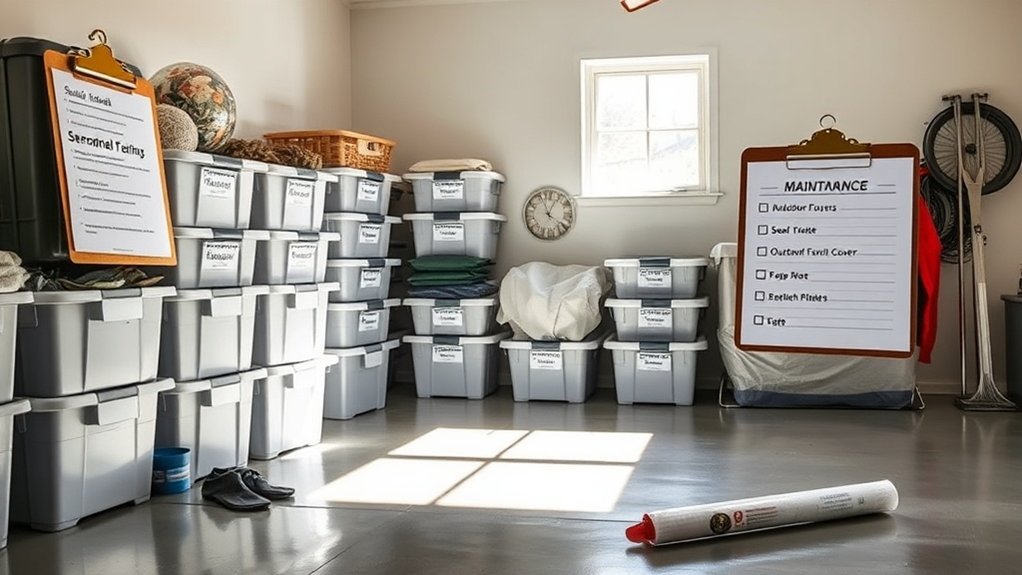
To ensure your seasonal storage stays in good condition, regular maintenance and checks are crucial. Aim to inspect your unit at least once a month, paying attention to structural integrity and pest prevention.
Look for any damage or leaks in the walls, roof, and seals. Clear any debris from gutters and beneath your unit to keep pests at bay.
Check moisture levels by inspecting your stored items for signs of dampness. Clean air vents and dehumidifiers to maintain airflow and minimise fire hazards.
Lubricate locks and door mechanisms during your inspections to ensure smooth operation.
Frequently Asked Questions
How Long Can Items Be Stored Without Damage?
Items can generally be stored for 10 hours to several months without damage, depending on the materials involved. For instance, clothing can often be stored for months if kept in a cool, dry place, while perishable food should only be kept for a few hours at room temperature. Ensuring proper conditions can enhance the storage duration and help keep your belongings in good condition over time.
Can I Store Clothes in Plastic Bags?
Storing clothes in plastic bags is not a good idea. They trap moisture, leading to mildew and damage. For sturdier fabrics, vacuum sealing is an option, but remember to choose materials that allow breathability to keep your garments fresh and vibrant.
Is It Safe to Store Electronics in Non-Climate-Controlled Units?
No, it isn’t safe to store electronics in non-climate-controlled units. Extreme temperatures and humidity can damage components, resulting in malfunction. For instance, a laptop left in a damp environment may experience corrosion, while heat can warp plastic parts. To ensure the safety of your electronics, opt for climate-controlled storage for better protection against these factors.
What Items Should Never Be Stored Together?
Never store fragile items alongside food products such as onions and potatoes, or tomatoes and cucumbers. Mixing these items can lead to spoilage and damage, ruining both. It’s best to keep them separate to maintain their quality.
How Can I Prevent Items From Fading in Storage?
To prevent fading, store items in dark, cool locations and manage humidity levels effectively. Use airtight containers, minimise light exposure, and ensure proper ventilation to maintain colour integrity and protect your belongings from damage over time. For example, placing textiles in a cool cupboard away from sunlight can help preserve their vibrancy.
Conclusion
By following these steps, you can ensure your seasonal items remain in excellent condition during long-term storage. Did you know that 20% of people discover mould on their belongings after just six months in a damp environment? To avoid this issue, clean your items thoroughly, pack them carefully, and maintain a dry storage area. With proper organisation and regular checks, your belongings will be ready for use when you need them again, free from damage and looking their best.