
To safeguard your stored items against theft, first ensure you fully understand your insurance coverage, particularly the limits for high-value items. Keep evidence of forced entry, such as police reports and photographs, to support any claims you may need to make. Consider adding scheduled personal property endorsements for valuable items and be aware of common exclusions like flood damage. Regularly assess your costs and premiums, adjusting them based on the value of your belongings.
Additionally, implement strong security measures at your storage facility to better protect your possessions and reduce the risk of theft. For example, choose a storage unit with robust locks, security cameras, and good lighting. By taking these steps, you can help ensure your items remain safe and secure.
Key Takeaways
- Check that your home or renters’ insurance covers items stored off-site. Consider adding scheduled endorsements for valuable possessions like jewellery and artwork.
- Take photographs of all stored items and keep an updated inventory to back up your insurance claims in case of theft.
- Obtain evidence of forced entry, including police reports and documentation of any damage, to bolster your theft claims.
- Review your insurance policy for common exclusions, such as limits on theft for high-value items and coverage gaps for natural disasters.
- Regularly assess and improve the security of your storage facility, as this could potentially lower your insurance premiums and better protect your belongings.
Understanding Coverage for Stored Items
When storing your belongings in a storage unit, it’s crucial to understand how your insurance applies. Most home insurance and renters’ policies in the UK include theft cover for items stored off-site, but this is typically limited to around 10% of your total contents coverage. If you have valuable items, it’s wise to consider additional insurance to ensure they’re properly protected. Many storage facilities also require you to have insurance, which can be through your current policy or a separate storage insurance plan. Keep in mind that standard security measures may not protect against risks like flooding or earthquakes, so it’s important to review your policy’s exclusions and limits to adequately safeguard your possessions. Additionally, theft is a named peril under your home insurance, which means your policy could help cover losses from break-ins at your storage unit as well.
Importance of Proof of Forced Entry

Understanding the importance of proof of forced entry is crucial for anyone making an insurance claim for theft. Without clear evidence, your claim could be delayed or denied, as insurers typically require visible proof of forced entry. This includes police reports and documentation of damage to entry points like doors and windows.
To strengthen your case, take photographs or videos of these areas immediately after the incident and keep copies of all relevant police reports. Witness statements and any available CCTV footage can also support your documentation. Having solid proof of forced entry can speed up the claims process and minimise disputes, ensuring your rights to compensation are upheld. Additionally, most policies will require proof of the breach to validate your claim for forcible entry.
Policy Limits and High-Value Items
While many home insurance and tenants’ insurance policies provide basic coverage, they often fall short for high-value items. Standard policies typically have coverage limits, which can leave you underinsured for valuable possessions. It’s important to understand the permitted items that may be affected by these restrictions, particularly when stored in a self-storage unit.
| Item Type | Typical Coverage Limit |
|---|---|
| Jewellery | £2,500 |
| Artwork | £5,000 |
| Collectibles | Varies, often low |
Coverage can differ significantly between policies, and without proper documentation, you risk being underprotected. Items kept in storage units may face even stricter limits. It’s essential to review your policy to ensure your valuable belongings are adequately covered. Consider additional coverage options to fully protect against potential losses, especially since specialized insurance provides comprehensive protection for high-value items.
Scheduled Personal Property Endorsements
If you own valuable items, scheduled personal property endorsements are crucial for proper coverage.
These endorsements prevent the limitations set by standard policies, ensuring your belongings are insured for their full value.
For instance, if you have an expensive piece of art or jewellery, a scheduled endorsement guarantees that it’s protected adequately.
Understanding these benefits can significantly improve your overall insurance approach.
High-Value Item Protection
When you own high-value items, it’s crucial to ensure they’re properly protected.
Scheduled personal property endorsements offer essential coverage that extends beyond the limits of a standard homeowners policy. This is particularly important for valuable items such as:
- Jewellery, including engagement rings and family heirlooms
- Fine art and antiques with significant appraisal values
- High-end electronics and cameras
- Firearms and collectible items
These endorsements help safeguard your prized possessions, giving you peace of mind.
Coverage Limits Explained
Scheduled personal property endorsements allow you to enhance coverage limits for your valuable items, ensuring they’re properly protected.
With scheduled coverage, each item has a specific limit, which is crucial for high-value possessions like jewellery or musical instruments. This is different from blanket coverage, which provides a higher limit for entire categories but offers lower protection per item.
Scheduled coverage often waives the standard deductible, making it a sensible option if you own a few high-value items. Accurate appraisals are key for determining these limits.
Policy Endorsement Benefits
While standard home insurance provides essential coverage, it often doesn’t cater well to high-value items. Scheduled personal property endorsements, or floaters, enhance your policy by offering more specific protection for valuable possessions.
Here are some key benefits:
- Increases coverage limits for high-value items, or removes them entirely.
- Covers risks such as accidental loss and theft, even when you’re away from home.
- Ensures full reimbursement for scheduled items in the event of theft or damage.
- Streamlines the claims process with fixed values, minimising disputes.
For example, if you own an expensive watch or artwork, a floater ensures you’re fully covered, making it easier to claim if something goes wrong.
Additional Storage Insurance Options
When considering storage for your belongings, it’s wise to look into additional insurance options for added peace of mind. Different types of storage units may require varying levels of coverage. Common insurance policies cover risks such as theft, fire, water damage, and vandalism.
For example, plans like GoodShield by Yardi offer up to £10,000 in coverage without any deductibles.
If you have homeowners or renters insurance, check whether it covers items stored off-premises; many policies include around 10% of your total property limit.
Additionally, some storage facilities provide their own insurance options, so be sure to explore these before signing a rental agreement.
Taking these steps ensures your belongings are safeguarded, allowing you to have confidence in your storage choice.
Claims Process for Theft of Stored Items
What should you do if you discover theft in your storage unit? Start by documenting everything thoroughly. Here are key steps to follow:
- Take photographs of any stolen or damaged items as visual evidence.
- Report the incident to the storage facility and file a police report.
- Notify your insurance provider without delay to start the claim process.
- Keep detailed records of all communications and documentation.
Be aware of possible reasons for claim denial, such as lacking proof of ownership.
To strengthen your case, consider theft prevention measures like properly securing your unit and reviewing your insurance policy.
Acting quickly can simplify the claims process and improve your chances of a successful outcome.
Documentation Needed for Claims
When filing an insurance claim for stolen items, having the right documentation is crucial.
Begin by creating a detailed inventory list that includes descriptions, serial numbers, and valuations of your belongings. Ensure this list is regularly updated and kept in a secure location.
Take photographs and videos of your items, making sure they’re date-stamped for verification. Keep original receipts, appraisals, and proof of purchase for valuable items organised.
Additionally, it’s important to file a police report immediately after the theft, as this is often required for claims.
Common Exclusions in Insurance Policies

Having proper documentation can significantly help with the claims process, but it’s also essential to understand common exclusions in insurance policies to safeguard your stored items.
Many policies have specific limitations that can create coverage gaps. Here are some common exclusions you should be aware of:
- Theft limits on high-value items, such as electronics and jewellery.
- Water damage from leaks or humidity in non-climate-controlled storage units.
- Natural disasters like earthquakes or floods, which may require separate coverage.
- Pest damage, often considered a maintenance issue and not covered.
Evaluating Costs and Premiums
Start by assessing your coverage needs. Monthly premiums for storage unit insurance typically range from £6 to £30 for around £8,000 coverage. Adjust your premiums based on the value of your belongings and the type of coverage you select.
Remember, replacement cost coverage is pricier than actual cash value, so consider your options carefully. You can lower your monthly premium by opting for a higher deductible, but make sure you’re comfortable with any potential out-of-pocket expenses.
Lastly, improving your storage facility’s security can reduce your premiums by lowering the risk of theft, helping you safeguard your items affordably. Additionally, ensure that your facility has robust security features such as video monitoring and access control systems to enhance the safety of your stored items.
Regularly Reviewing Coverage Limits
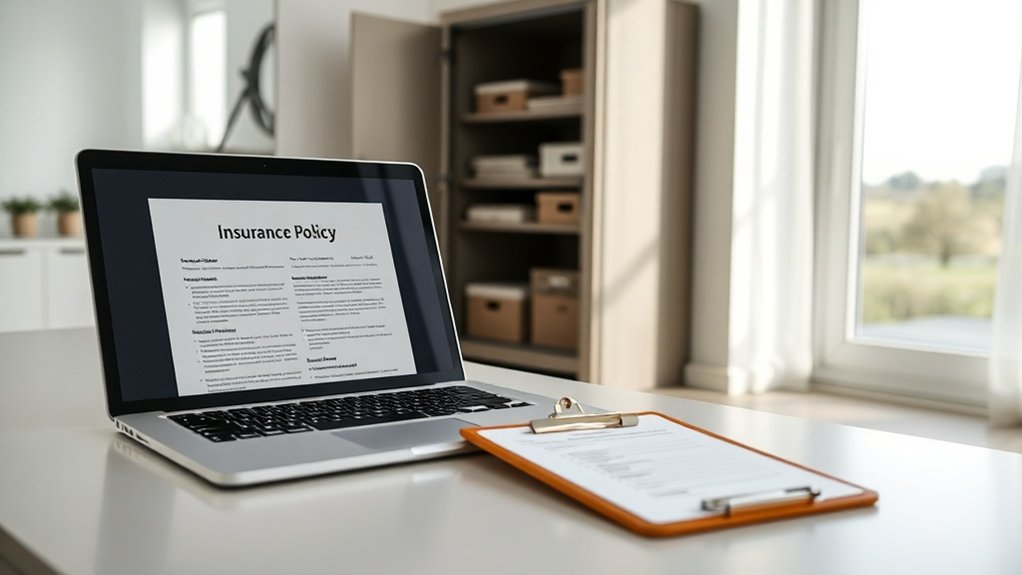
Are your stored items properly protected? Regularly reviewing your coverage limits is vital to ensure your insurance reflects current values and risks. If you neglect this, you could face significant out-of-pocket costs if a loss exceeds your coverage.
Here are some reasons to adjust your coverage:
- Changes in personal or business circumstances may increase the value of your stored items, such as acquiring new equipment or stock.
- Regular risk assessments can help you spot vulnerabilities and indicate when to increase your limits.
- Comparing your coverage with industry standards can help you determine if your limits are competitive and sufficient.
- Annual reviews help avoid underinsurance and ensure your policy aligns with current risks.
Stay proactive about your coverage to effectively protect your stored items!
Tips for Safeguarding Stored Items
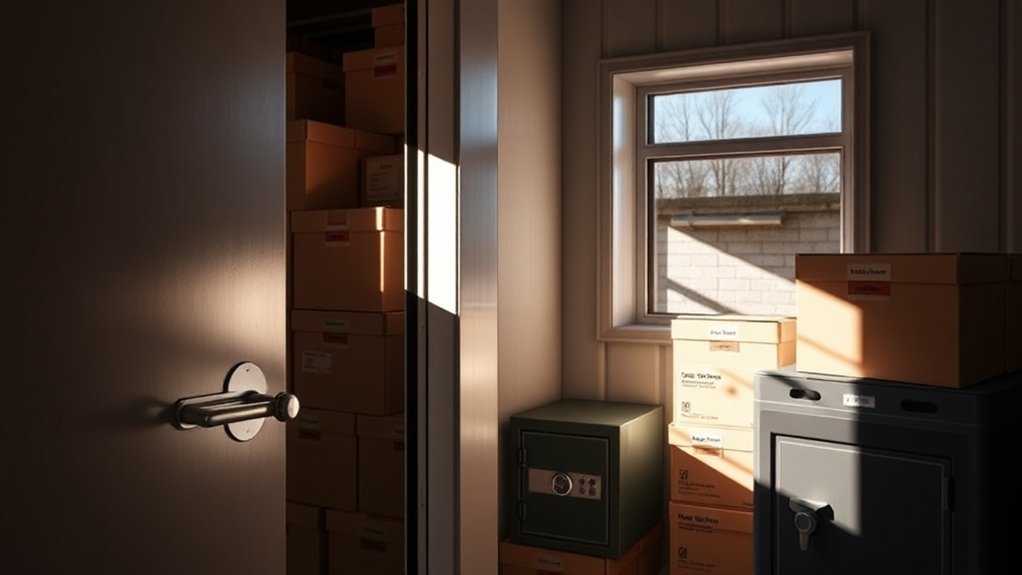
To effectively protect your stored items, implement strong security measures alongside proactive management.
Start by selecting secure storage facilities with solid barriers, controlled access systems, and on-site security staff. Invest in high-quality locks and individual alarm systems to deter theft.
Use inventory tracking technologies, like RFID tags, to maintain accurate records and quickly spot any discrepancies. Additionally, set up surveillance cameras with night vision for continuous monitoring.
Lastly, ensure everyone with access understands the security protocols and stays vigilant. By taking these steps, you significantly reduce the risk of theft and keep your belongings safe. Furthermore, choosing a facility with enhanced security features can further bolster the protection of your items.
Frequently Asked Questions
How Can I Reduce My Insurance Premiums for Stored Items?
To lower your insurance premiums for stored items, try negotiating your premium terms, opting for a higher deductible, and documenting any security upgrades. For instance, if you’ve installed a robust alarm system or improved your storage facilities, these enhancements can signal a lower risk to insurers. This could result in reduced premiums and better coverage options.
What Security Features Can Lower My Storage Insurance Costs?
Installing advanced security features, such as live monitoring and access control systems, at your storage facility can significantly reduce your insurance premiums. These measures improve safety, deter potential theft, and often qualify you for discounts on your policy. For example, facilities with 24/7 CCTV coverage or keycard access tend to be viewed more favourably by insurers.
Are There Discounts for Bundling Policies With Stored Item Coverage?
Yes, bundling policies can lead to substantial discounts. By combining your insurance, you can benefit from lower premiums and easier management. For instance, if you have home and car insurance with the same provider, you might save money while ensuring your stored items are adequately covered. Comparing different policies could help you find the best options for maximum savings.
Can I Insure Items Stored in Someone Else’s Unit?
It’s wise to be cautious. You can insure items stored in someone else’s unit, but it’s important to check your policy for details on coverage for stored items and shared storage liability. Make sure you have proof of ownership in case you need to make a claim.
How Often Should I Update My Inventory for Insurance Purposes?
You should update your inventory for insurance purposes at least once a year, after making significant purchases, or when any items change. This ensures that your items are accurately valued, which helps in managing your inventory effectively, safeguarding your belongings, and maximising potential claims. For example, if you buy a new laptop worth £1,000, it’s essential to add it to your inventory right away.
Conclusion
In summary, it’s crucial to understand your insurance coverage for stored items. Theft can happen unexpectedly, so being prepared can save you both stress and money. Know your policy limits, ensure you have proof of forced entry, and consider additional coverage options to protect your valuables. Regularly reviewing your policy keeps you informed and up to date. Remember, taking steps to safeguard your belongings is just as important as having insurance—every measure contributes to your peace of mind.