To select the most secure storage unit, start by assessing your specific requirements and prioritising safety features. Look for gated access, CCTV cameras, and individual alarms on units. Opt for steel units with reinforced doors for added protection. The location is important too—choose a facility near main roads and with flexible access hours. Finally, practise good security habits, such as using unique access codes. Want to boost your storage security even more? There’s plenty more to consider!
Key Takeaways
- Opt for storage facilities that feature gated access and personalised keypad entry to enhance security.
- Look for units fitted with CCTV and individual alarms to deter unauthorised access.
- Choose steel-constructed units with reinforced doors and secure locks to resist break-ins.
- Ensure the facility has on-site security staff and regular patrols to keep an eye on the premises.
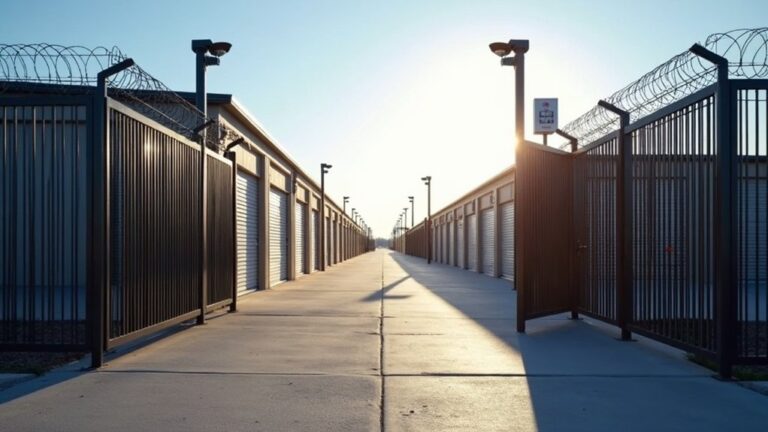
- Check for comprehensive security measures, such as fencing and bright lighting, for added protection.
Assessing Your Storage Needs
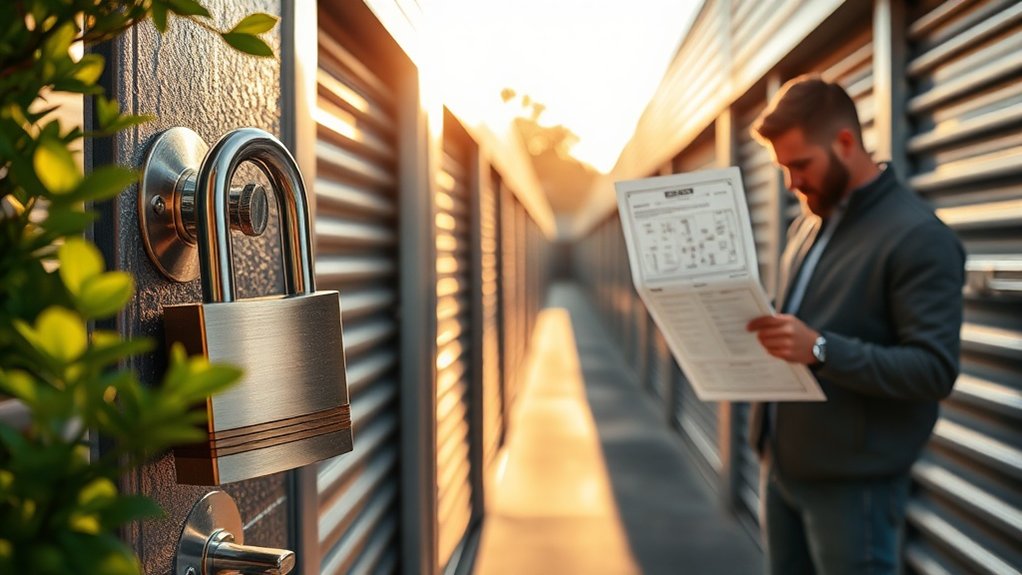
How do you choose the right storage unit for your needs? Start by assessing the total volume of your belongings. Make a list to help estimate the size of the unit you’ll need.
Next, consider the types of items you’ll be storing, such as furniture, electronics, or documents. Some may require specific conditions like climate control or extra padding. If you have high-value items, keep these separate for added security. Additionally, ensure the facility you choose has robust access control measures to protect your belongings and offers climate-controlled units for temperature-sensitive items.
Think about how long you’ll need storage—short-term needs often require easy access, while long-term storage offers more flexibility.
Understanding Different Types of Storage Units
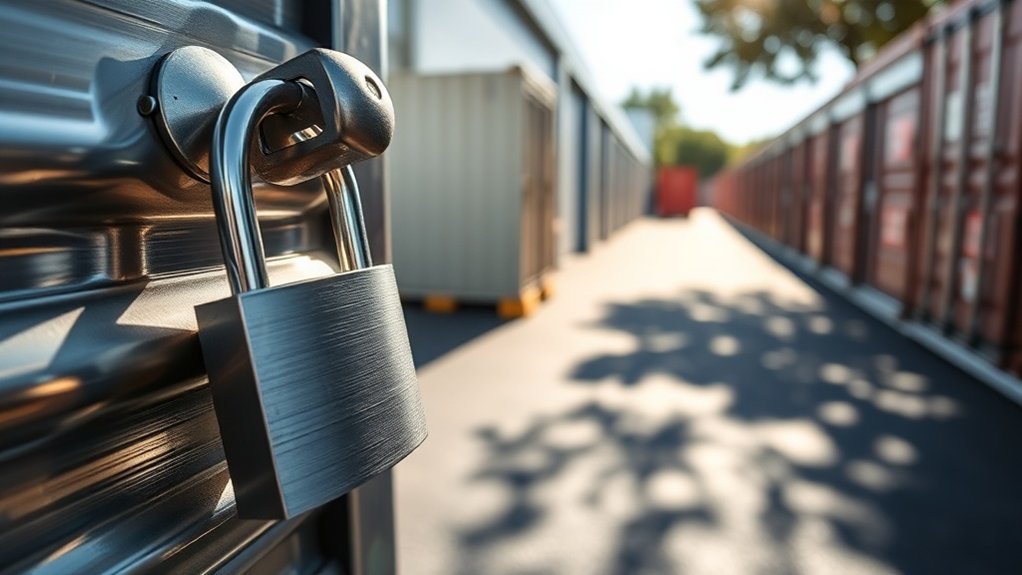
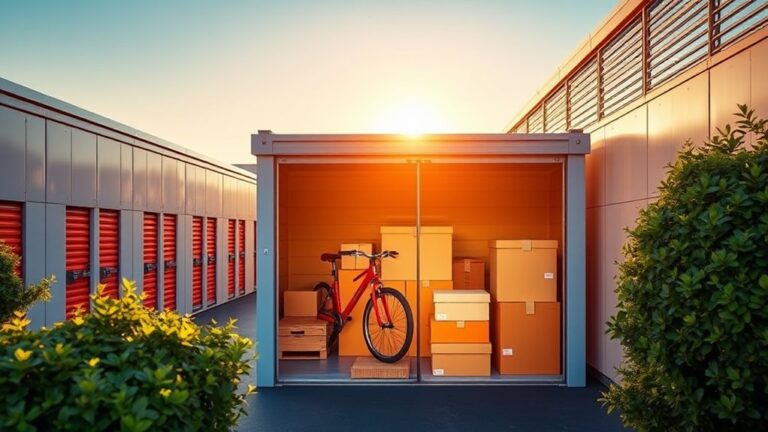
When choosing a storage unit, it’s important to know the difference between indoor and outdoor options. Indoor units typically offer enhanced security and protection from the elements, making them ideal for valuable items. In contrast, outdoor drive-up units allow easy access for larger belongings, such as furniture or appliances. If you have sensitive items that require a stable environment, consider climate-controlled units to keep them in top condition. Additionally, security features such as surveillance and gated access can further enhance the safety of your stored items. Outdoor units, while budget-friendly, lack robust security measures that can leave valuable items vulnerable.
Indoor vs. Outdoor Units
Understanding the differences between indoor and outdoor storage units is crucial for making the right choice for your needs. Here’s a concise comparison:
- Indoor Benefits: Indoor units typically offer better security, featuring 24/7 surveillance and controlled access, which significantly reduces the risk of theft. Additionally, many indoor units are constructed using durable materials that enhance their overall security and longevity.
- Outdoor Risks: Outdoor units often have basic security measures, making them more vulnerable to vandalism and theft.
- Access Convenience: Outdoor units provide easy drive-up access, making them suitable for frequent use. In contrast, indoor units may require navigating through corridors, which can be less convenient.
- Environmental Protection: Indoor units protect your belongings from weather and pests, while outdoor units leave your items exposed to potential damage. Furthermore, indoor units are often equipped with state-of-the-art security systems, ensuring that your items are well-protected against threats.
Choosing the right storage unit not only safeguards your possessions but also provides peace of mind, ensuring your valuables are secure and easily accessible when needed.
Climate-Controlled Benefits
Climate-controlled storage units provide essential benefits for protecting sensitive items, particularly in areas with extreme weather. They maintain a stable temperature between 13°C and 29°C, shielding belongings from harmful heat, cold, and temperature fluctuations.
This stability helps prevent warping, cracking, and melting of materials such as wood and electronics. Furthermore, controlled humidity levels inhibit the growth of mould and mildew, extending the lifespan of fabrics and paper items.
Improved air quality also reduces dust and pest intrusion, ensuring your valuables stay in excellent condition. Whether you’re storing antiques, collectibles, or important documents, these units help preserve their value and give you peace of mind.
Investing in climate control is a wise decision for long-term preservation.
Evaluating Security Features
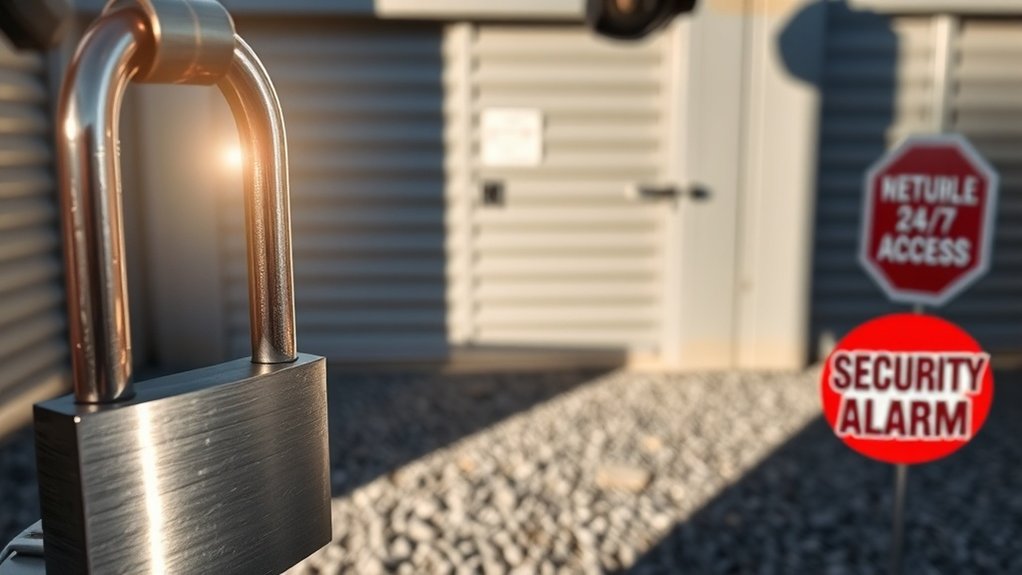
When assessing security features for a storage unit, it’s vital to consider a range of systems that work together to safeguard your belongings.
Here are the key elements to focus on:
- Access Control: Seek out gated access with personalised keypad entry and multiple security protocols to ensure only you can gain entry.
- Surveillance Technology: High-definition cameras monitoring around the clock act as a strong deterrent against theft.
- Individual Unit Alarms: Real-time alerts for unauthorised access provide peace of mind and enable quick responses.
- Lighting and Visibility: Well-placed, bright lighting enhances safety and boosts the effectiveness of surveillance cameras.
Importance of Location and Accessibility
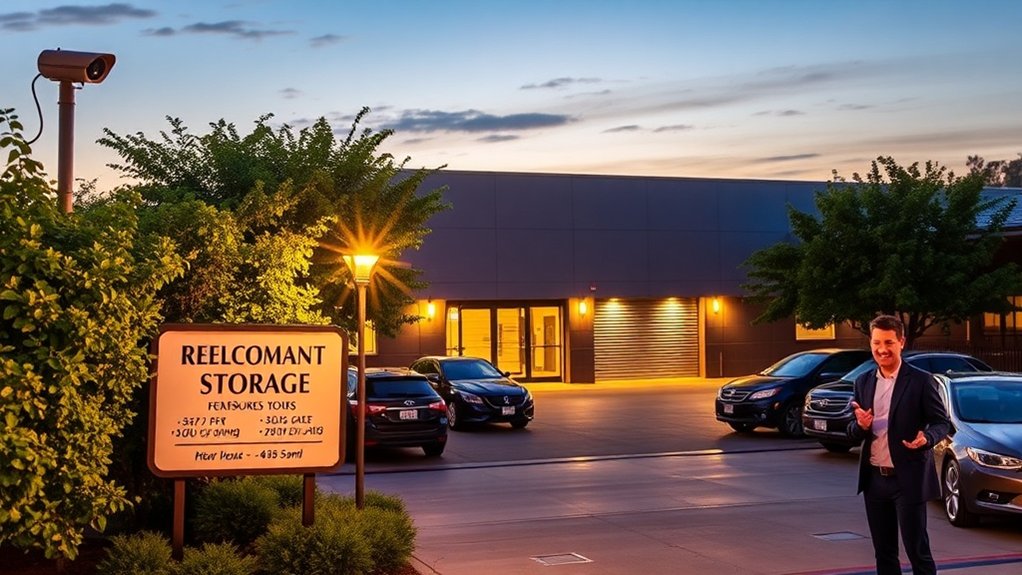
When choosing a secure storage unit, the importance of location and accessibility is crucial. Opting for a facility situated near main roads and residential areas provides clear advantages for convenience. Factors such as flexible access hours and well-kept pathways ensure you can easily retrieve or store your belongings.
| Location Advantage | Accessibility Factor |
|---|---|
| Close to main roads | 24/7 access |
| Near residential areas | Easy-to-navigate entry points |
| Visible from busy streets | On-site staff for assistance |
| Located in low-crime areas | Well-lit surroundings |
| Proximity to shops and businesses | Convenient loading zones |
Climate Control: Why It Matters
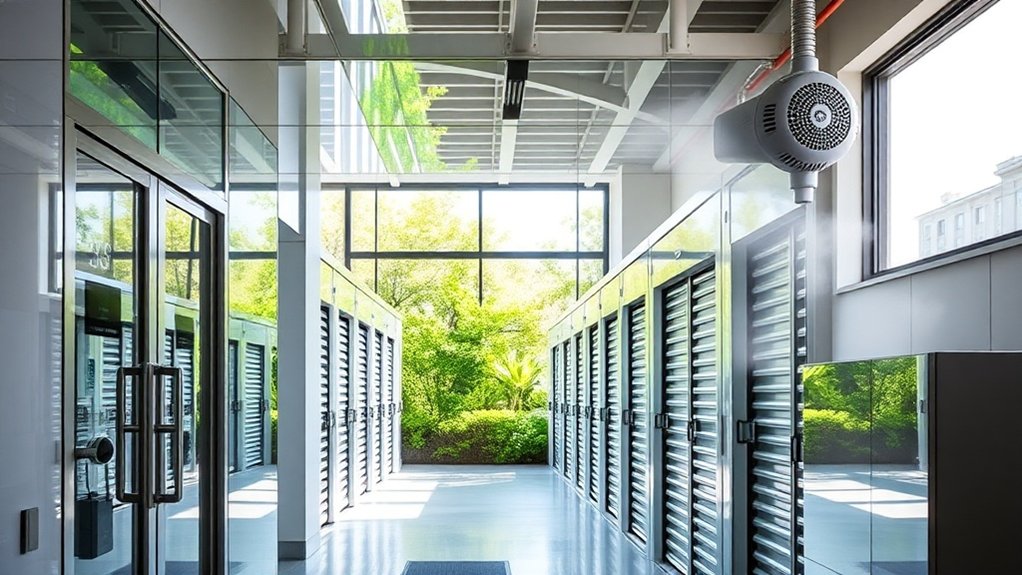
When selecting a storage unit, climate control is crucial for safeguarding your delicate items from environmental harm.
Changes in temperature and humidity can cause damage to everything from electronics to antiques.
Protect Sensitive Items
Many people overlook the importance of climate control in storage, but it’s vital for protecting sensitive items from environmental damage.
Opting for a climate-controlled unit offers several key benefits:
- Temperature Stability: Helps prevent warping or melting, keeping your items in optimal condition.
- Humidity Regulation: Stops mould and mildew from forming, safeguarding fabrics and important documents.
- Oxidation Prevention: Reduces corrosion in metals, which is crucial for the longevity of electronics and musical instruments.
- Pest Deterrence: Minimises the risk of infestations, ensuring your valuables remain undamaged.
These advantages highlight why climate control is essential for preserving your sensitive items, allowing you to store them with confidence.
Prevent Environmental Damage
Climate control is vital for preventing environmental damage to your stored items. By managing temperature and humidity, you protect sensitive materials from extreme conditions that can cause lasting harm. A stable environment is key, as fluctuations can lead to warping, cracking, or decay.
| Condition | Effect on Items |
|---|---|
| High Temperature | Damages electronics |
| Low Temperature | Warps wooden furniture |
| High Humidity | Promotes mould and mildew |
| Low Humidity | Dries out textiles and papers |
Investing in climate-controlled units ensures proper environmental management, prolonging the life of your valued possessions and giving you peace of mind.
Prioritizing Surveillance and Monitoring
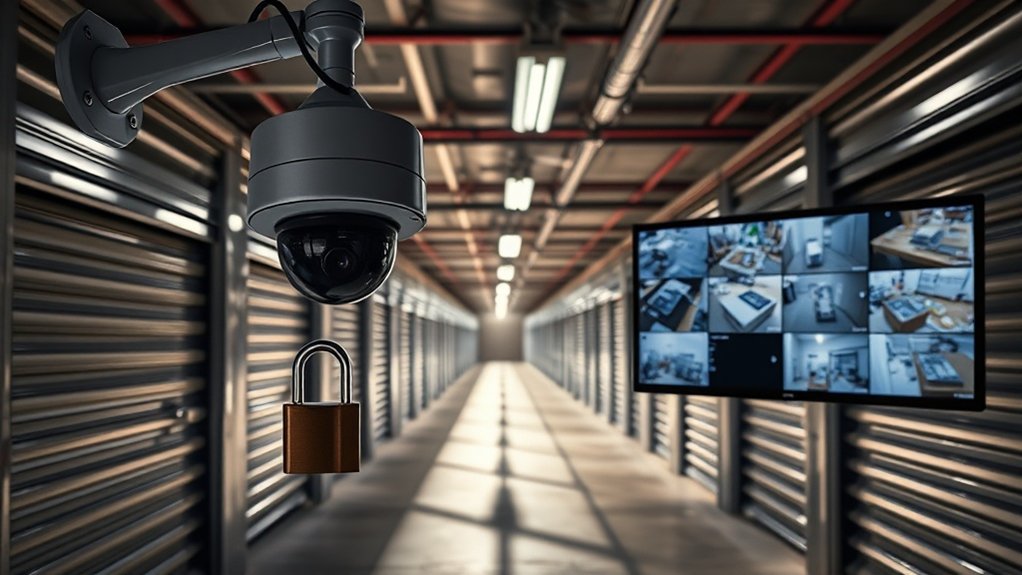
How can effective surveillance and monitoring bolster the security of your storage unit? By employing advanced surveillance technology and monitoring systems, you can significantly minimise the risk of theft and damage.
Here are four key benefits:
- Continuous Protection: Security cameras and motion sensors offer real-time monitoring, promptly identifying unauthorised access.
- AI-Driven Alerts: Automated systems alert you to any unusual activity, allowing for swift responses to potential threats.
- Remote Access: IoT-based sensors let you monitor your unit live, providing peace of mind from anywhere.
- Proactive Deterrence: Real-time monitoring can dissuade intruders before they act, effectively safeguarding your belongings.
Focusing on these features empowers you to take control of your storage unit’s security, enhancing your sense of safety and freedom.
The Role of On-Site Security Personnel
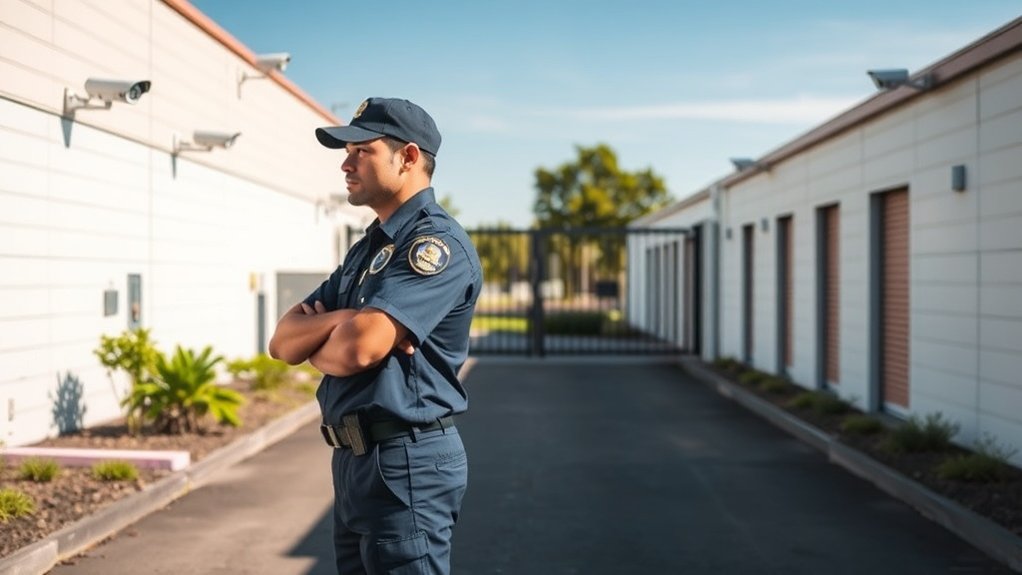
Effective surveillance and monitoring systems lay the groundwork for security, but adding on-site security personnel enhances protection significantly.
The visible presence of security guards serves as a strong deterrent against potential intruders, boosting tenant confidence. These guards conduct regular patrols and check identities, minimising unauthorized access. Their ability to respond quickly during emergencies, such as break-ins or fires, further protects your belongings.
Having trained staff on-site complements electronic systems, creating a layered security approach. This combination reassures tenants and helps establish a reputation for safety, encouraging longer rental periods.
In a competitive market, a robust security presence can greatly impact tenant satisfaction and retention.
Choosing the Right Unit Size
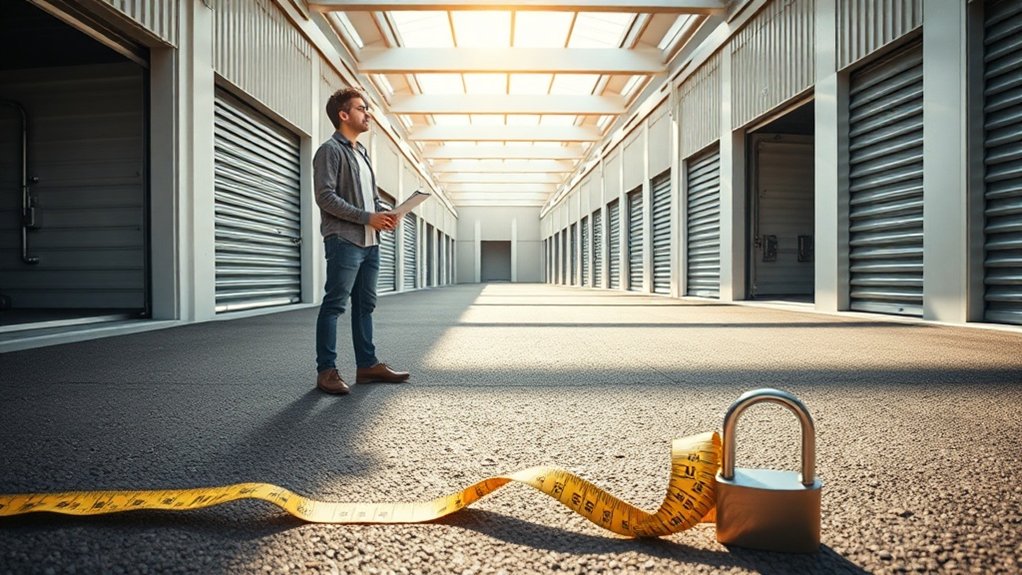
Choosing the right unit size for your storage needs is crucial for making the most of your space and budget. Here are some key factors to consider:
- Make a list of all items you need to store, including large furniture or delicate items.
- Sort items by size and how often you’ll need to access them. This helps you use your space efficiently.
- Think ahead about future needs—consider any additional items you might want to store later on.
- Select the right unit dimensions to avoid overcrowding and ensure everything is easily accessible.
Examining Unit Construction for Security
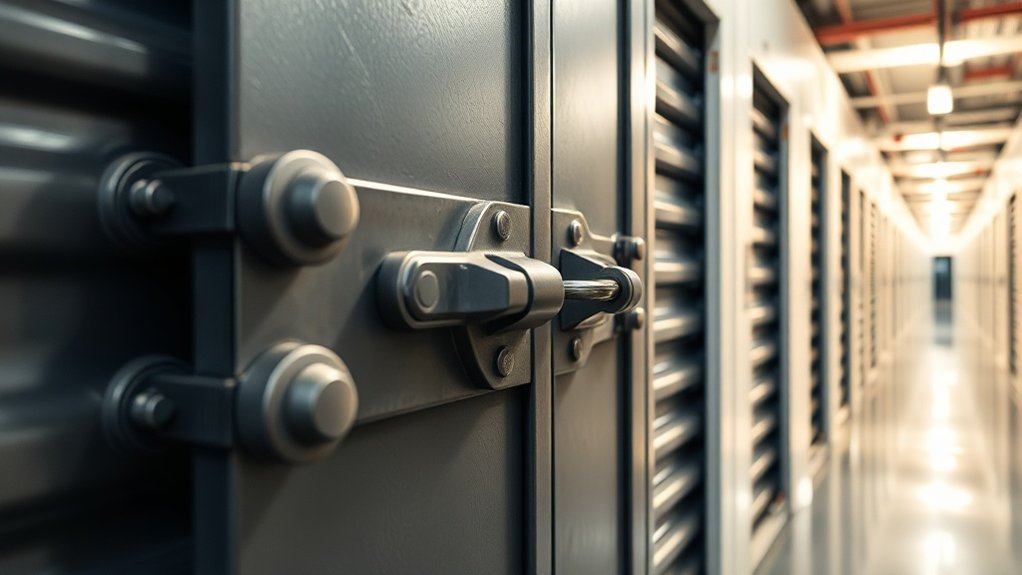
When assessing a storage unit for security, it’s crucial to examine the materials and design features that ensure safety.
Look for units made from steel, as it’s robust and resistant to forced entry. Reinforced steel doors equipped with secure latches and integrated locks offer additional protection.
Pay attention to perimeter fencing; using high-quality materials with anti-climb features is essential, particularly in areas with higher crime rates.
Additionally, access control systems, such as electronic keypads and Bluetooth-enabled smart locks, should be in place to restrict entry to authorised users only.
Lastly, ensure the design accommodates surveillance systems that can monitor entrances and corridors.
This comprehensive approach to security, using reliable materials and construction methods, will provide you with peace of mind.
Enhancing Security With Tenant Practices
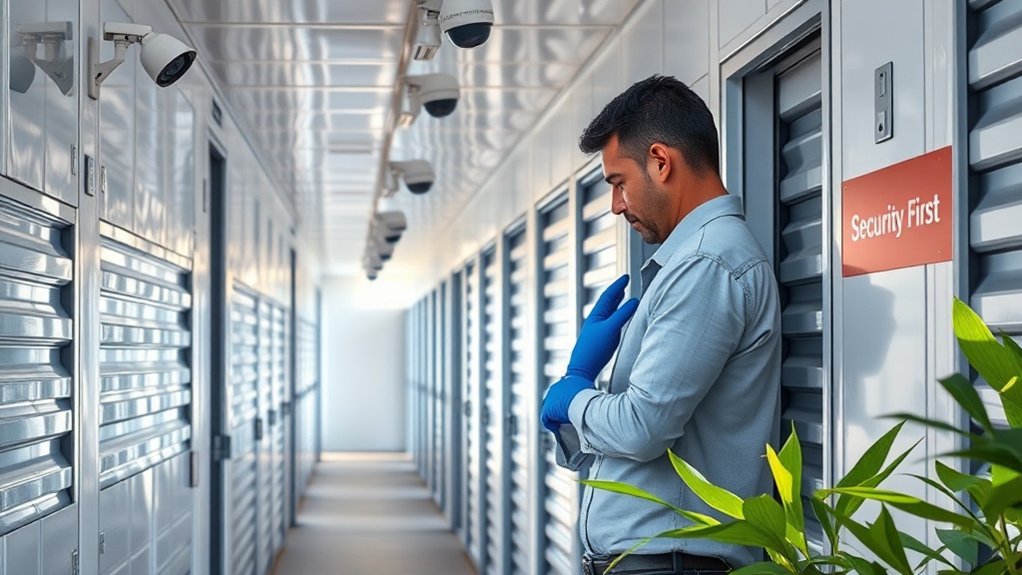
To enhance security in storage facilities, it’s vital for tenants to engage in practices that strengthen protection.
Your participation plays a crucial role in fostering a safer environment.
Consider adopting these measures:
- Use unique, random access codes to avoid unauthorised sharing.
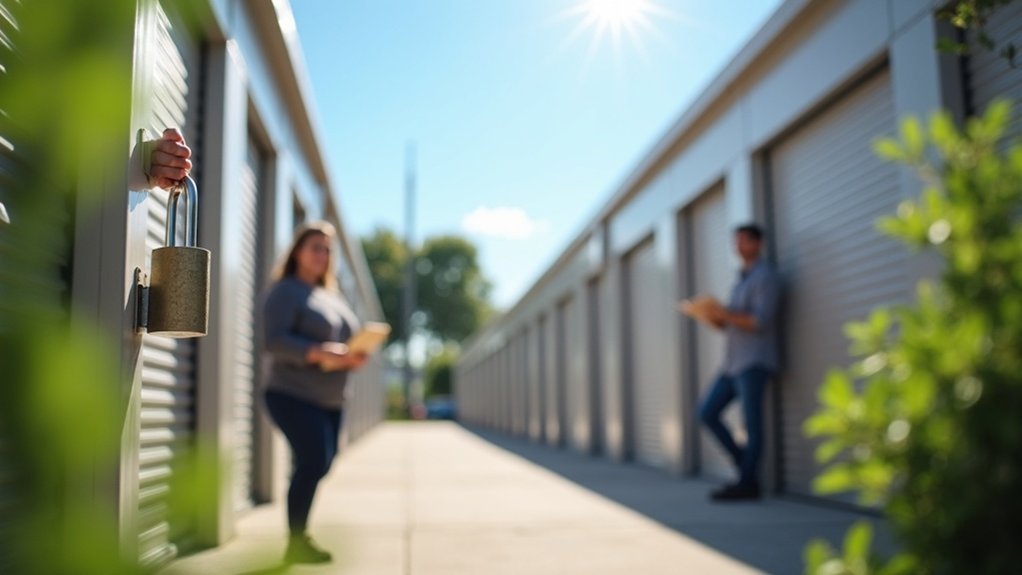
- Secure your unit with high-quality locks or alarms in addition to those provided.
- Report any suspicious behaviour promptly to management, which helps improve informal surveillance.
- Maintain an inventory of your stored items, updating it regularly to spot any losses.
Utilizing Tenant Insurance Options
Taking proactive security measures is important for safeguarding your belongings in a storage unit, but tenant insurance offers an additional layer of protection. This insurance typically covers risks such as fire, theft, and vandalism, helping to financially shield you from unexpected events.
You can select from various coverage options, including replacement cost policies that reimburse you based on the value of your items. Many storage facilities allow you to combine insurance payments with your rent for added convenience.
Additionally, specialised storage insurance can cover risks that standard renters’ insurance might not, such as damage from temperature changes. The enrolment process is often straightforward, with automated reminders to help you keep your coverage active.
Regular Unit Maintenance and Inspection
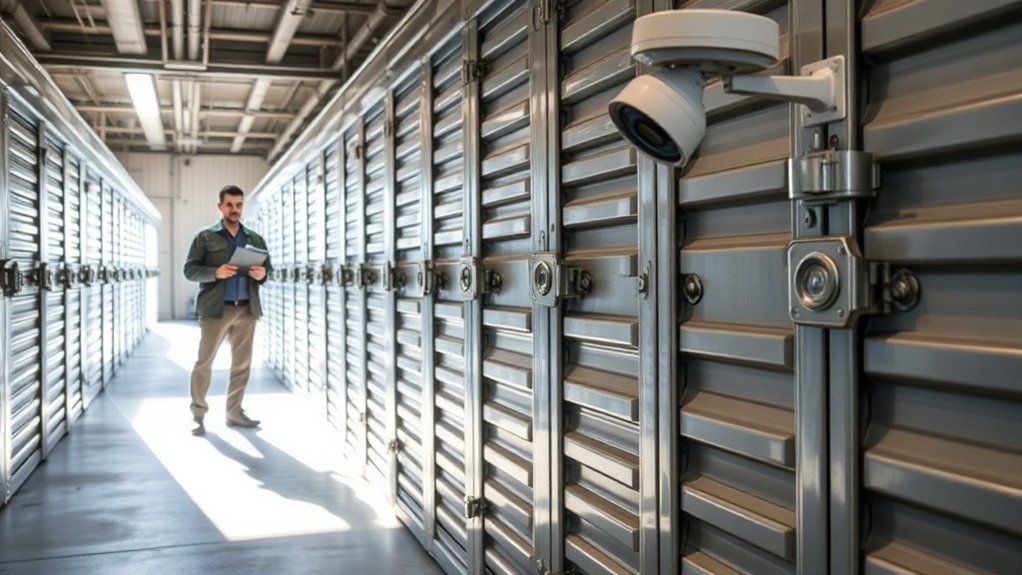
To ensure your storage unit remains secure and in good condition, it’s essential to arrange regular inspections.
These checks should evaluate the unit’s structure and security features.
Additionally, monitoring environmental conditions is crucial to prevent damage from dampness and pests.
Schedule Routine Inspections
Scheduling routine inspections is crucial for the upkeep and security of your storage units. Regular checks help avoid significant issues and provide peace of mind.
- Spot structural wear and tear before it worsens.
- Ensure doors and locks work properly to deter unauthorised access.
- Identify pest infestations early to safeguard your belongings.
- Keep the environment clean, promoting safety and security.
Check Security Features
Regularly checking security features is crucial for maintaining the integrity of your storage unit. Ensure that all security technology is current and functioning properly. Conduct routine inspections of surveillance cameras, locks, and alarm systems to mitigate vulnerabilities. Keep batteries charged, update software, and clean camera lenses to ensure clear imagery.
| Security Feature | Maintenance Action |
|---|---|
| Surveillance Cameras | Clean lenses, check coverage |
| Locks | Inspect for rust, lubricate |
| Alarm Systems | Test functionality, schedule updates |
Monitor Environmental Conditions
Monitoring environmental conditions in your storage unit is crucial for protecting your belongings, as changes in temperature and humidity can cause damage.
To effectively monitor these conditions, consider the following steps:
- Use environmental sensors to track temperature and humidity in real-time.
- Choose wireless data loggers for easy remote access to your data.
- Carry out regular calibration to ensure your measurements are accurate and reliable.
- Create a Standard Operating Procedure (SOP) for consistent monitoring and to outline corrective measures.
Frequently Asked Questions
What Are the Average Costs of Different Storage Unit Types?
Average pricing for storage units varies by size: 1.5m x 1.5m units start around £30, while 3m x 6m units can cost up to £160. When comparing storage options, it’s essential to consider factors like climate control and location, as these can significantly affect prices.
How Can I Find Storage Units Near Me?
To find storage units near you, use online search tools, check Google Maps for nearby facilities, or ask local community groups for recommendations. Comparing your options will help you find the best storage facility to suit your needs.
What Should I Avoid Storing in a Storage Unit?
Avoid storing flammable materials such as petrol and propane, as well as perishable food items. These can create dangerous situations, attract pests, and cause considerable damage, jeopardising the safety of your storage unit.
Are There Any Hidden Fees for Storage Units?
Yes, storage units often come with hidden charges. Be mindful of potential extra costs such as insurance, administration fees, late payment penalties, and security deposits. Always read the contract thoroughly to avoid any unexpected expenses. For instance, some providers may charge a one-off fee for setting up your account or require you to take out insurance, which can add to your overall costs.
How Do I Properly Pack Items for Storage?
To properly pack items for storage, use strong packing materials like sealed plastic boxes and protect fragile items with bubble wrap. Always label boxes clearly for easy retrieval and organisation later on.
Conclusion
Choosing the right storage unit is essential for keeping your belongings safe. Start by assessing your needs and understanding the security features available. A well-built unit with climate control can protect items from damage, particularly for delicate belongings like electronics or antiques. Good tenant practices, such as using strong locks and ensuring insurance is in place, further enhance security. Don’t take chances with your valuables—make informed decisions to ensure their protection for the long term.