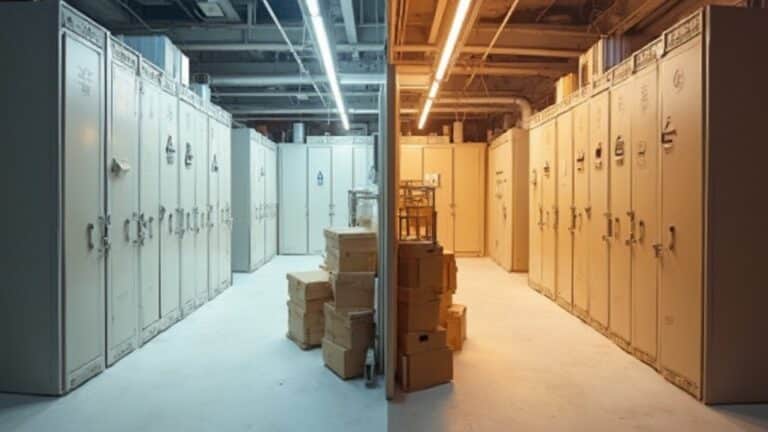

Multi-level storage units enhance efficiency and accessibility by making the most of vertical space. This approach maximises storage capacity while reducing the land footprint. Consequently, operational costs decrease, as less energy is needed for lighting and heating. Features like easily accessible stairways and lifts streamline inventory management.
These units can be tailored to suit various needs, making them ideal for urban environments. Additionally, modern technology—such as automated systems and smart locks—further improves efficiency. Discover how these innovative storage solutions can optimise your strategy and help you achieve your operational objectives.
Key Takeaways
- Multi-level storage units make the most of limited space by stacking vertically, which is particularly beneficial in urban areas where land is scarce.
- They enhance operational efficiency by providing easy access to all levels, streamlining inventory management and workflow.
- Innovations like automated storage and smart monitoring improve retrieval speed and boost inventory accuracy significantly.
- Customisable designs, such as mezzanine levels and modular layouts, enable facilities to cater to specific storage requirements.
- Security features, including smart locks and surveillance systems, ensure safety and foster customer trust in multi-level storage solutions.
Benefits of Multi-Level Storage
When considering the benefits of multi-level storage, the advantages are immediately apparent. One of the key benefits is enhanced space utilisation. By stacking storage units vertically, you can maximise capacity without needing extra land, which is particularly important in urban areas where space is limited. Instead of expanding outwards, you can build upwards, effectively doubling or even tripling your storage capacity within the same footprint.
Multi-level storage also improves inventory management. With a more compact layout, items are easier to locate and access, streamlining operations. Quick retrieval reduces the time spent searching for products, ultimately boosting productivity. Additionally, well-organised vertical systems promote safety by reducing clutter and ensuring easy access to all levels. This flexibility to adapt to changing market demands ensures that multi-level facilities remain relevant and efficient in various economic climates. Furthermore, facilities equipped with advanced security features can further enhance tenant confidence in storing their valuable items.
Economic efficiency is another significant advantage. You save on costs associated with acquiring more land or expanding existing facilities. By optimising storage capacity, you can achieve long-term cost savings while maintaining operational efficiency.
Design and Customization Options

Multi-level storage effectively optimises space and offers a range of design and customisation options tailored to specific operational needs.
Consider these key factors when planning your design:
- Floor-to-Floor Height: Aim for a minimum of 3 metres; 3.3 metres is ideal to accommodate essential infrastructure. Additionally, ensuring adequate height can facilitate climate-controlled units that protect sensitive items.
- Elevator and Stair Placement: Position these strategically to enhance efficiency and accessibility.
- Loading Areas: Ensure easy access for loading and unloading goods to streamline operations. This is particularly important in multi-level design, where operational flow can be maximized through careful planning.
- Design Aesthetics: Incorporate higher signage and windows for better visibility and appeal.
With modular flexibility, you can easily customise your storage unit to meet changing demands.
Think about adding mezzanine levels or utilising existing structures, such as warehouses, for enhanced efficiency.
Additionally, various decking materials and safety features, like handrails and safety gates, allow for further adaptability.
Types of Multi-Level Storage Units
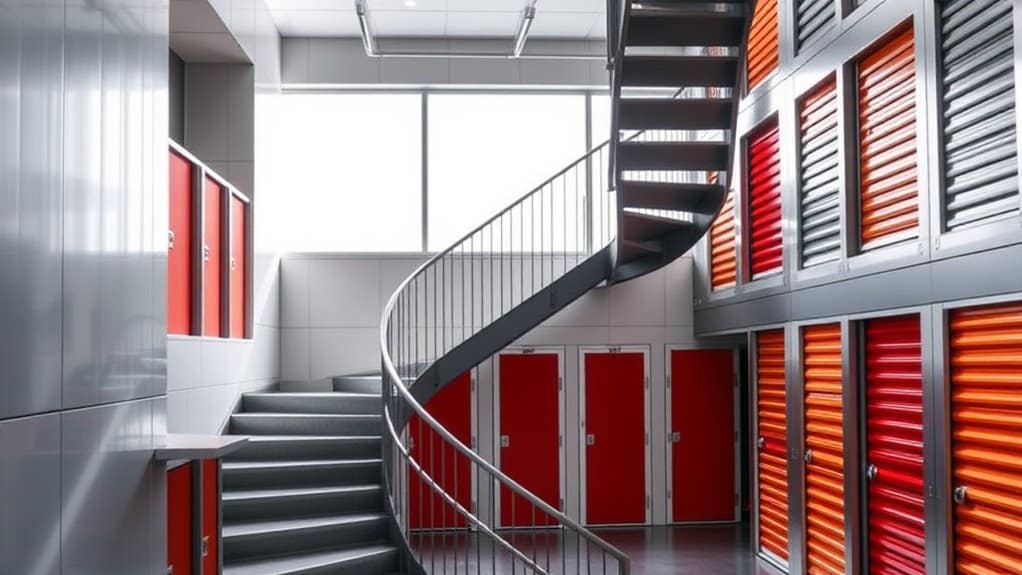
A range of multi-level storage units is available to suit various needs, helping to make the most of your space.
One popular option is pre-engineered steel buildings, which use load-bearing wall systems to reduce structural requirements. These units can be tailored with features like fire suppression systems and solar roofing, making them environmentally friendly. Additionally, these buildings often feature galvanized steel construction for enhanced strength and longevity. The integration of energy-efficient building practices in such constructions further supports sustainability.
Warehouse and industrial storage units often include multi-tier racking and shelving systems, optimising vertical space. They may also feature mezzanines, allowing for the use of heavy machinery such as forklifts while complying with safety regulations.
Configurable storage systems provide flexibility, with interchangeable designs and modular adjustments. You can enhance these systems with custom accessories, such as stairs and safety gates, to ensure safety and accessibility.
In urban areas, self-storage and commercial facilities combine aesthetics with functionality. Designed to maximise rental potential, they often include split-level layouts and integrated office spaces, making them more appealing to tenants.
Selecting the right multi-level storage unit is crucial for balancing efficiency with compliance, ensuring your space meets your needs while adhering to safety and environmental standards.
Technological Innovations
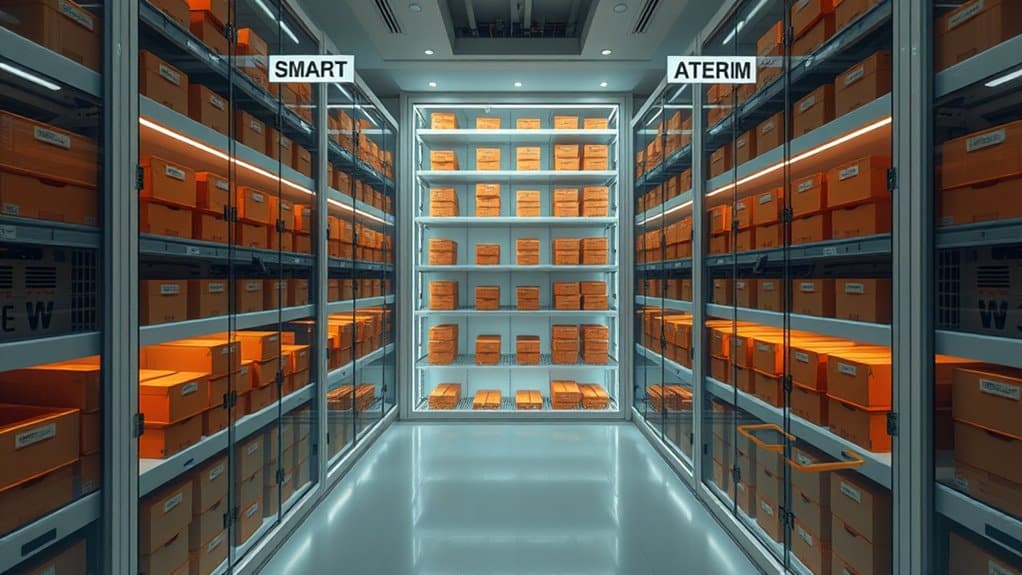
As storage needs change, technological innovations are transforming multi-level storage units. By incorporating IoT and smart technologies, efficiency and security have significantly improved. Here’s what’s new:
- Smart Storage Units: Equipped with temperature sensors, smart locks, and automated notifications, these units allow you to monitor and control access remotely.
- Automated Security: Advanced smart locks and access control systems enhance security, ensuring your belongings remain protected.
- Real-Time Monitoring: Use smartphone apps to keep an eye on your storage unit, providing peace of mind.
- Automated Storage and Retrieval Systems (AS/RS): These systems optimise space and speed up retrieval times, simplifying storage management.
Modular construction methods further boost efficiency, allowing for rapid deployment and sustainable practices.
With increased storage capacity and lower operational costs, these innovations cater to the rising demand for self-storage in urban areas.
Embrace these advancements to gain better control and oversight of your belongings, all while enjoying smart security features.
Case Studies in Practice
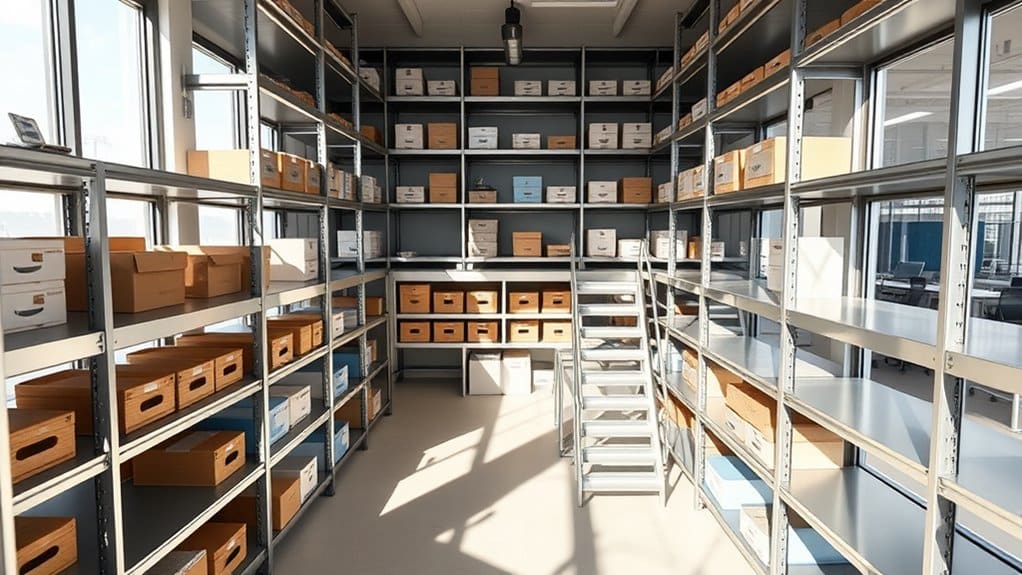
In this section, you’ll discover real-world examples of how multi-level storage units are transforming urban storage solutions and improving warehouse efficiency.
We’ll look at successful implementations of vertical lift modules (VLMs) that optimise space utilisation across various environments.
These case studies present practical strategies that could inspire your own storage solutions.
Urban Storage Innovations
As urban populations grow, innovative storage solutions are becoming crucial in densely populated areas. One effective method is the use of vertical storage facilities that combine urban design with appealing aesthetics. These structures save space while enhancing the city’s skyline.
Here are four key aspects of urban storage innovations:
- Space Efficiency: Vertical facilities maximise storage capacity, making them perfect for crowded areas.
- Architectural Integration: They can seamlessly blend with residential or retail spaces, fostering a mixed-use environment.
- Sustainability: Many vertical storage units feature green roofs and terraces, contributing to environmental sustainability and providing much-needed green spaces in urban settings.
- Advanced Security: Modern technologies, such as smart locks and advanced surveillance systems, ensure your belongings are well-protected.
Cities like London and Manchester are leading the way with these innovations, demonstrating how repurposed buildings can house multi-level storage units.
Warehouse Efficiency Transformation
Urban storage solutions are enhancing warehouse efficiency. By adopting strategic layouts and advanced technology, businesses are experiencing significant improvements in their operations. For example, Performance Bike boosted its pick rate by 50-100 units per hour after implementing a Warehouse Management System (WMS). Similarly, Covenant Logistics optimised its warehouse design, resulting in fewer product touches and better inventory management.
Here’s a summary of efficiency gains from various case studies:
| Case Study | Efficiency Improvement |
|---|---|
| Performance Bike | 50-100 units/hour increase |
| Nature’s Best | Completed WMS under budget, on time |
| Covenant Logistics | 76% increase in inventory accuracy |
| ASRS Implementation | Productivity up to 300 pieces/hour |
| Men’s Wearhouse | Lower processing costs |
These examples underscore the importance of combining a well-planned warehouse layout with effective inventory management. Automation, including barcode scanning and drones, is crucial for improving accuracy and reducing labour costs. By adopting these strategies, businesses can streamline operations and become more scalable and adaptable in today’s fast-paced environment.
Successful VLM Implementations
Businesses in the UK are increasingly adopting Value Stream Management (VSM) to improve their operational efficiency and transparency. Successful implementations demonstrate how organisations can make significant gains. Here are the key factors that contribute to effective VSM:
- Faster Deployments: Automation and improved visibility enhance release quality and speed, while a streamlined Change Advisory Board (CAB) process minimises delays.
- Improved Transparency: Comprehensive visibility into release statuses simplifies various systems, enabling teams to trust the process and release more quickly.
- Emerging Trends: The growth of Value Stream Management Platforms (VSMPs) such as Plutora highlights the importance of value stream mapping in driving VSM’s resurgence.
- Industry Case Studies: Healthfirst’s successful implementation of VSM with Plutora demonstrates quicker app delivery and better visibility into value streams.
These elements show how organisations can optimise operations through VSM.
By concentrating on value stream insights and continuous improvement, you can foster a culture of agility and responsiveness.
With the right tools and frameworks, your team can effectively manage complex change records and achieve success, ultimately enhancing your organisation’s ability to adapt and thrive in today’s fast-paced environment.
Future Trends in Storage Solutions
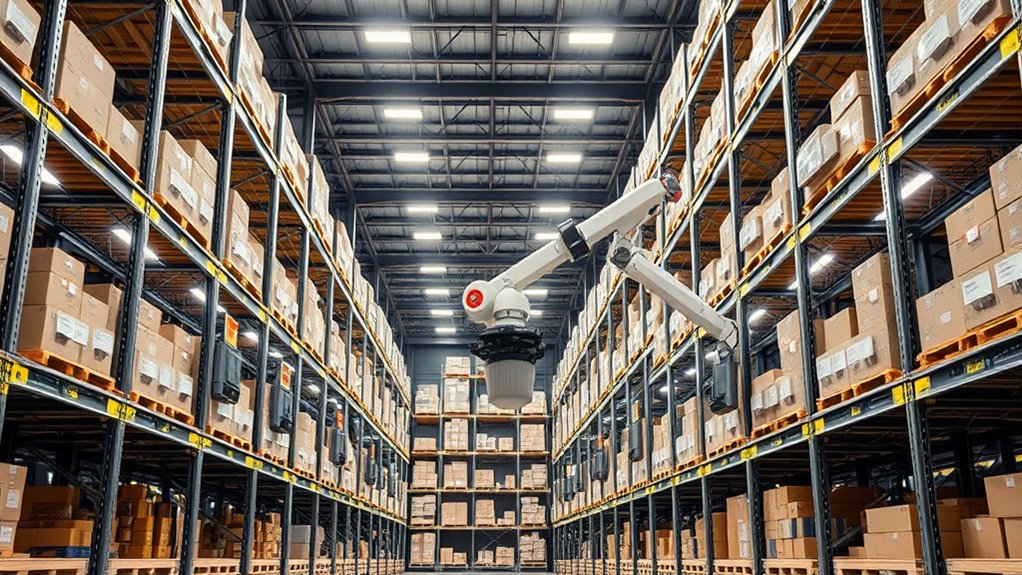
As the need for efficient storage solutions grows, several key trends are shaping the future of storage systems, particularly in urban areas facing challenges from population density and data expansion.
Here are some notable trends:
| Trend | Description |
|---|---|
| Exponential Data Growth | Data is projected to surge, reaching 175 zettabytes by 2025. |
| Smart Warehouses | Artificial intelligence and the Internet of Things are transforming inventory management through real-time tracking. |
| Vertical Integration | Multi-storey warehouses are optimising space in crowded urban settings. |
| Sustainable Practices | Eco-friendly materials and upcycling are becoming standard in storage solutions. |
Embracing these trends not only tackles future challenges but also promotes sustainability, ensuring your storage solutions are efficient and environmentally responsible. By incorporating advanced technologies and smart designs, you can enhance your storage experience while supporting a greener future. Stay tuned to these developments, as they will significantly influence how you manage space and resources in the years ahead.
Enhancing Efficiency in Warehousing
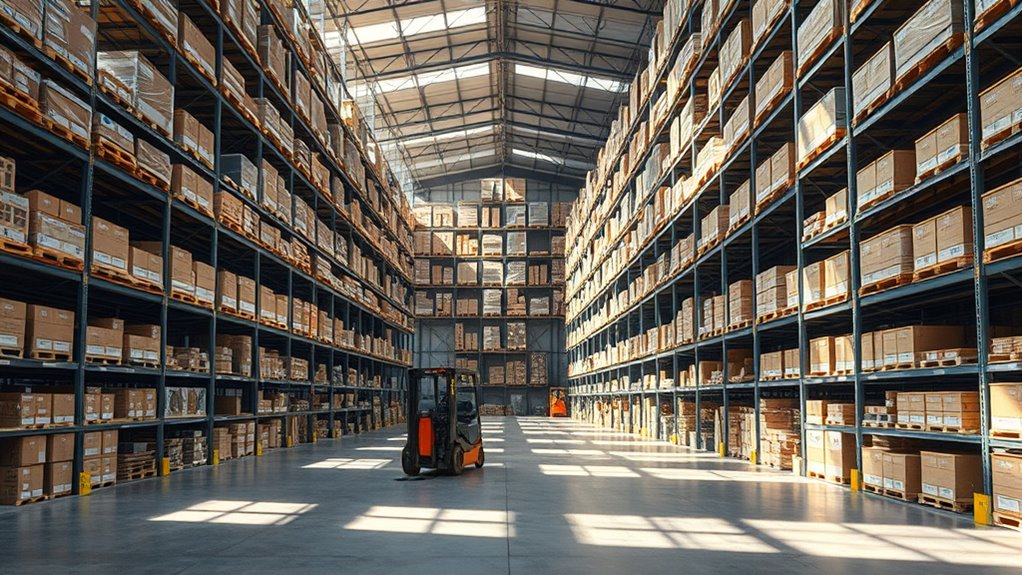
Maximising efficiency in warehousing is crucial for remaining competitive in today’s fast-paced market.
To enhance your operations, focus on aisle optimisation and strategic inventory management. Here are four key strategies to consider:
- Adjust Aisle Width: Choose narrow aisles to boost storage capacity by up to 50%. This option effectively balances space and accessibility.
- Strategic Placement of Inventory: Use ABC analysis to categorise items. Position high-demand products close to shipping areas to minimise picking times and streamline workflow.
- Implement Cross-Docking: This approach enables you to transfer incoming goods directly to outgoing shipments, reducing storage costs and speeding up order fulfilment.
- Utilise Advanced Storage Systems: Consider mezzanine flooring, pallet-flow racking, or automated storage systems to make the most of vertical space and improve accessibility.
Accessibility Features and Benefits
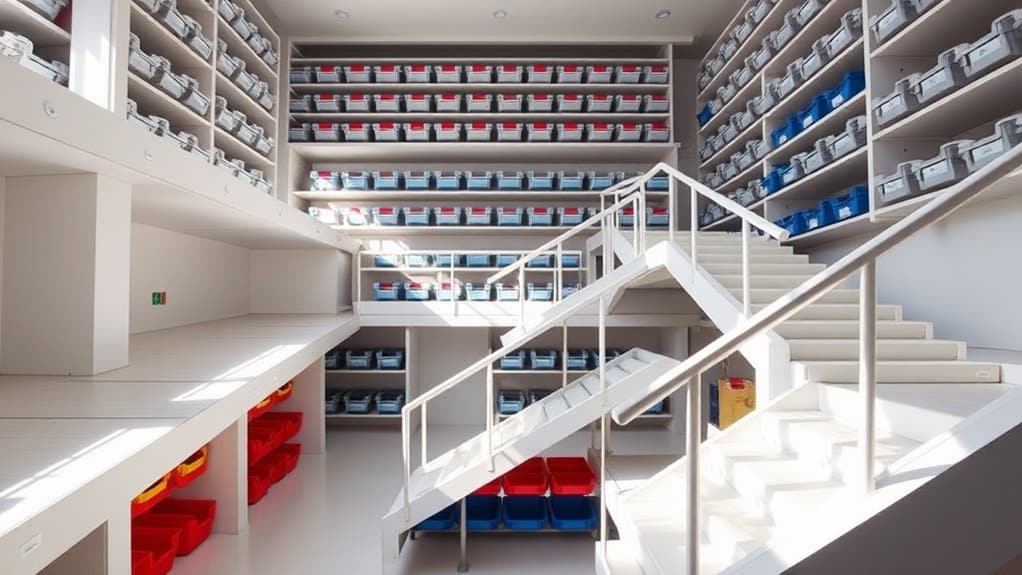
Accessibility in storage facilities is crucial for ensuring everyone can make full use of the space available. Adhering to accessibility standards, such as the Equality Act, helps ensure that storage units cater to all users. For instance, at least 5% of the first 200 units should be accessible, featuring ramps and roll-up doors with pull handles and nylon ropes for easier operation.
These accessible features, including ramps for wheelchair users, not only improve usability but also streamline the loading and unloading process. Signage that incorporates Braille ensures that all individuals can navigate the facility without difficulty.
Multi-level storage systems can be designed to accommodate adaptive equipment and heavy machinery, further enhancing accessibility.
Effective organisation within storage units also plays a vital role. By labelling items and creating a master inventory list, you can easily find what you need. Thoughtful shelving arrangements and clear pathways make it simpler for everyone to access their belongings.
Prioritising accessibility in your storage solutions maximises usability and ensures that everyone can utilise the space effectively.
Cost-Effectiveness of Multi-Level Systems
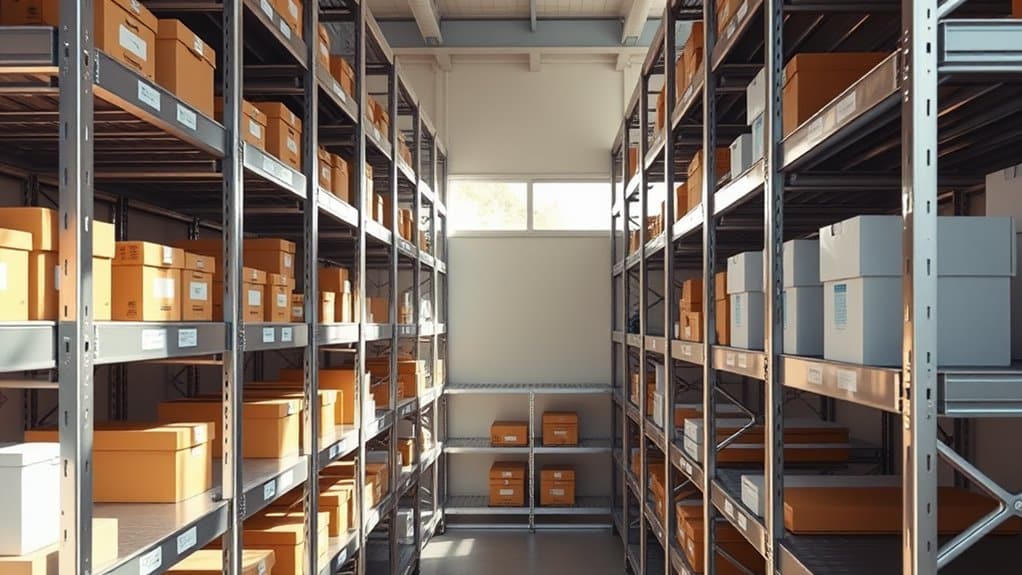
Choosing multi-level storage systems significantly reduces land acquisition costs by making the most of vertical space.
This approach not only saves you money initially but also helps lower ongoing costs through decreased energy consumption and better resource management.
For instance, a warehouse that uses vertical racking can store more goods in a smaller footprint, reducing both rent and utility bills.
Reduced Land Acquisition Costs
Investing in multi-level storage units can significantly lower land acquisition costs, making them a smart choice for developers. A detailed land cost analysis shows that these systems optimise land use, maximising your investment.
Here are some key benefits:
- Land Utilisation: Multi-level units stack storage spaces, drastically reducing the land area required.
- Cost Efficiency: Single-level facilities may cost between £25 to £40 per square foot, while multi-level options range from £42 to £70. The latter often yields better returns when factoring in land usage.
- Location Flexibility: Whether you’re in suburban, urban, or rural settings, multi-level units can adapt to varying land costs, aiding in effective acquisition strategies.
- Lower Overall Costs: By reducing land expenses, you can allocate more resources towards enhancements or other development aspects.
Lower Operational Expenses
Considering the benefits of reduced land acquisition costs, it’s evident that multi-level storage units also provide substantial operational savings. By utilising vertical space, you can effectively double or even triple your storage capacity without expanding your footprint. This not only cuts down on land costs but also reduces overhead expenses per square foot.
These systems require less energy for lighting and heating due to concentrated areas for picking items, which leads to lower utility bills for electricity and water, especially in climate-controlled environments. The design of multi-level systems allows for easy access to all storage levels, improving operational efficiency and simplifying inventory management.
Long-term savings are also significant. You can expect lower maintenance and repair costs, as well as reduced insurance premiums due to the smaller facility size.
Additionally, these systems are adaptable, making future modifications easier and more economical. By adopting multi-level storage, you’re not just optimising space; you’re also managing expenses smartly and freeing up resources for other initiatives.
Urban Storage Strategies

How can urban areas tackle the increasing demand for storage solutions? With urbanisation on the rise and living spaces shrinking, innovative storage strategies are crucial.
Multi-storey storage facilities can optimise urban space and offer several advantages:
- Maximised Space: Multi-storey units make use of vertical space, accommodating more units in a smaller footprint.
- Flexible Access: These facilities can feature various layouts, including direct access from the outside, to meet different needs.
- Adaptive Reuse: Converting existing buildings into storage spaces can reduce costs and improve local aesthetics.
- Enhanced Security: Modern technology, such as smart locks and surveillance systems, ensures that your belongings remain secure.
These strategies not only help to address storage needs but also contribute positively to urban environments.
Frequently Asked Questions
What Are the Weight Limits for Multi-Level Storage Units?
When it comes to weight limits for multi-level storage units, you can typically expect a load capacity of up to 1,000 kg. It’s crucial to distribute the weight evenly to ensure safety and efficiency. For example, if you’re storing boxes, make sure they are balanced across the shelves to prevent any risk of collapse. This way, you can optimise your storage space effectively without compromising safety.
How Do I Determine the Right Configuration for My Inventory?
To determine the right configuration for your inventory, start by evaluating the size and weight of your items. For instance, if you’re storing heavy tools, ensure your shelving can support the weight. Next, focus on optimising your space; use vertical storage solutions to make the most of limited areas. Implementing efficient inventory management strategies, such as regular stock audits, can help you accommodate future growth and maintain easy access to your products.
What Maintenance Is Required for Multi-Level Storage Systems?
Regular maintenance checks and cleaning are essential for multi-level storage systems. Inspect for any signs of damage, ensure everything is properly aligned, and confirm load capacities are within limits. For instance, if shelves are sagging or bolts are loose, it’s crucial to address these issues promptly. This proactive approach ensures your storage system operates safely and efficiently, giving you peace of mind.
Can Multi-Level Storage Units Be Relocated Easily?
Over 60% of businesses encounter difficulties when relocating multi-level storage units. Their design often restricts storage flexibility, making transport complicated and expensive, particularly when disassembly and reassembly are necessary.
What Safety Regulations Apply to Multi-Level Storage Units?
When looking at safety regulations for multi-level storage units, it’s crucial to adhere to specific standards and design requirements. These guidelines ensure compliance with fire safety, hazard classification, and security measures to protect your stored items.
For instance, fire safety regulations may require the installation of smoke detectors and fire extinguishers on each level. Additionally, proper signage should clearly indicate emergency exits. Compliance with these regulations not only safeguards your materials but also ensures the safety of personnel working in and around the storage units.
Conclusion
Incorporating multi-level storage units can significantly enhance your space. You’ll benefit from improved efficiency, better accessibility, and options that can be customised to suit your needs. These systems not only save money but also address urban challenges, making them a practical choice for any setting. By adopting this innovative storage solution, you can optimise your operations and create a more organised, functional environment. Don’t overlook the advantages!