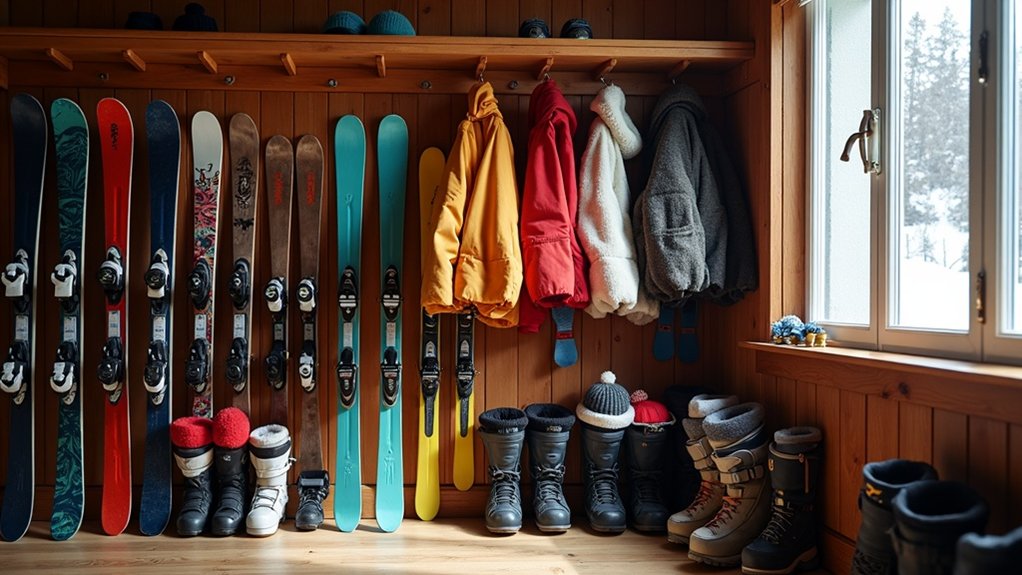
To store your skis, snowboards, and winter gear effectively, start by giving everything a thorough clean to prevent rust and damage. Ensure everything is completely dry before storing it in a cool, dry location, ideally between 15°C and 21°C, and out of direct sunlight. Use padded wall mounts or breathable storage bins for organisation, and remember to release the bindings to protect them. It’s also wise to check your gear regularly for any signs of wear to keep it performing at its best. Proper storage and maintenance can make a big difference.
Key Takeaways
- Clean and dry your skis, snowboards, and gear thoroughly before storing them to avoid rust and damage.
- Store your equipment in a cool, dry place with low humidity, keeping it out of direct sunlight.
- Use padded wall mounts or soft supports for vertical and horizontal storage to protect your gear.
- Regularly check and maintain your safety equipment to ensure all parts are working properly and free from damage.
- Organise your gear by grouping similar items together for easier access and to make the most of your storage space.
Proper Cleaning and Preparation Before Storage
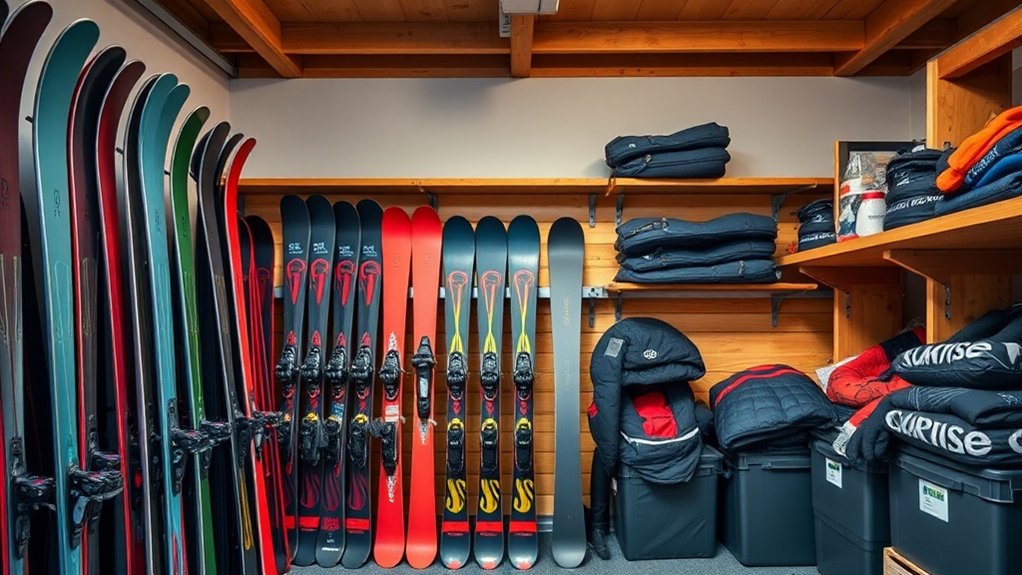
Before storing your winter gear, it’s vital to ensure everything is clean and ready.
Start by cleaning your skis and snowboards. Use a damp cloth and mild detergent to wipe away dirt, salt, and grime. Remember to clean the bindings with a soft brush and securely store any small hardware pieces. Additionally, proper drying techniques are essential to prevent rust and material degradation.
For your boots, take out the liners and footbeds, clean them gently, and let them air dry completely before putting them back together.
Wash your helmets, gloves, and outerwear according to their care labels, making sure they’re fully dry.
This thorough prep not only extends the life of your gear but also gets you set for your next winter adventure.
Ideal Storage Conditions and Environment
To keep your winter gear in top condition, it’s important to control the temperature, ideally between 15°C and 21°C. Ensure the environment is dry with low humidity to prevent rust and mildew, and shield your gear from UV exposure to protect the materials. Additionally, proper storage habits contribute to overall gear longevity, ensuring your equipment remains ready for the next season. Utilizing a humidity-controlled unit can greatly enhance the protection of your gear from moisture-related damage.
Optimal Temperature Control
When storing your winter gear, it’s essential to maintain the right temperature to protect your skis and snowboards. Aim for a temperature range of 10°C to 21°C (50°F to 70°F) to prevent issues like delamination and brittleness. Keeping a consistent temperature helps avoid material fatigue, so consider using temperature monitors to ensure optimal conditions. Steer clear of extreme heat or cold, as these can warp bases and weaken bindings. It’s best to store your gear in temperature-controlled spaces like basements or closets, rather than in attics or garages. Additionally, use thermal insulation by wrapping your gear in acid-free cloth or ski bags to shield against temperature fluctuations. This careful approach reduces the need for repairs later and extends the lifespan of your equipment. Regularly cleaning equipment before storage can further prevent damage and ensure your gear is ready for the next season. Furthermore, implementing humidity control is crucial to safeguard your equipment from moisture-related issues during storage.
Moisture and UV Protection
To protect your winter gear, it’s crucial to manage both moisture and UV exposure alongside temperature control.
Store your skis, snowboards, and boots in cool, dry, and well-ventilated areas to prevent rust and mould. Steer clear of humid spots like basements, and consider using breathable storage bags as moisture barriers.
For UV protection, keep your gear out of direct sunlight, using UV shields like specialised bags or covers to guard against damaging rays. Regularly check your equipment for any signs of wear and tear, and use a dehumidifier in damp environments. Additionally, consider using climate-controlled storage to maintain optimal conditions for your winter gear.
Storage Methods: Position and Supports
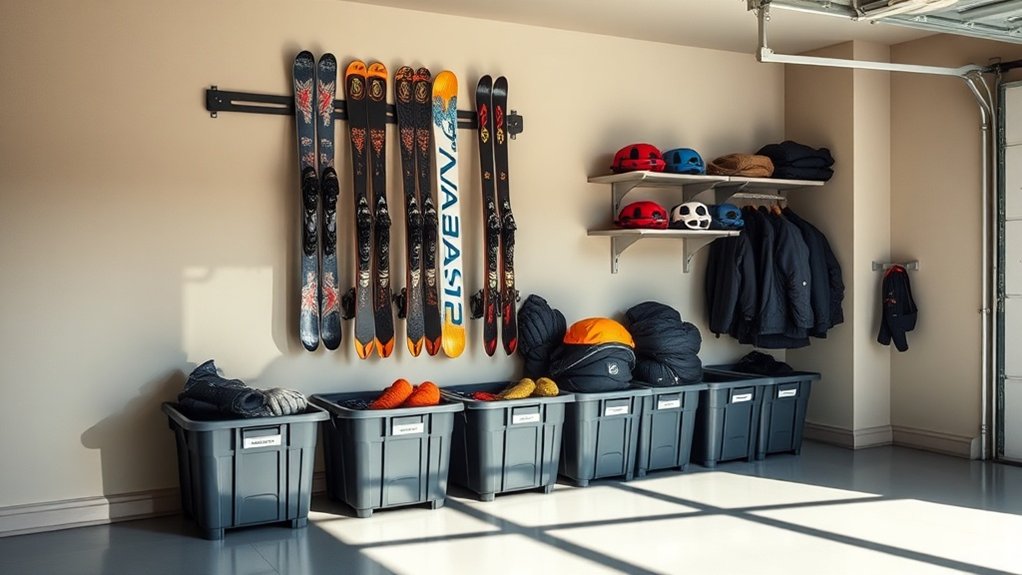
Effective storage methods for winter gear depend on your chosen position and support systems, which can significantly affect the lifespan and performance of your equipment.
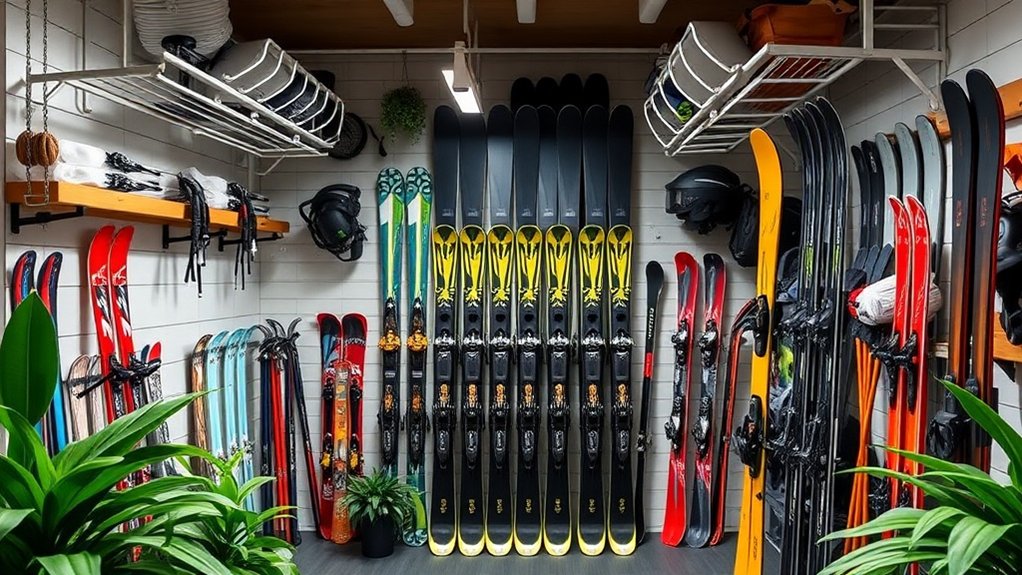
For vertical storage, opt for wall mounts with padded supports to keep skis and snowboards upright. This prevents binding compression and helps maintain their shape.
For horizontal storage, use soft supports to protect the base from scratches. Always release the bindings before storing to reduce stress on the equipment.
Consider overhead racks for saving space, but ensure they’re securely fastened to avoid accidents. Store ski poles with skis using dedicated vertical racks for easy access.
Proper ventilation for boots is crucial; keep them in a dry area, away from direct sunlight, and separate from other gear.
Gear Organization and Space Maximization
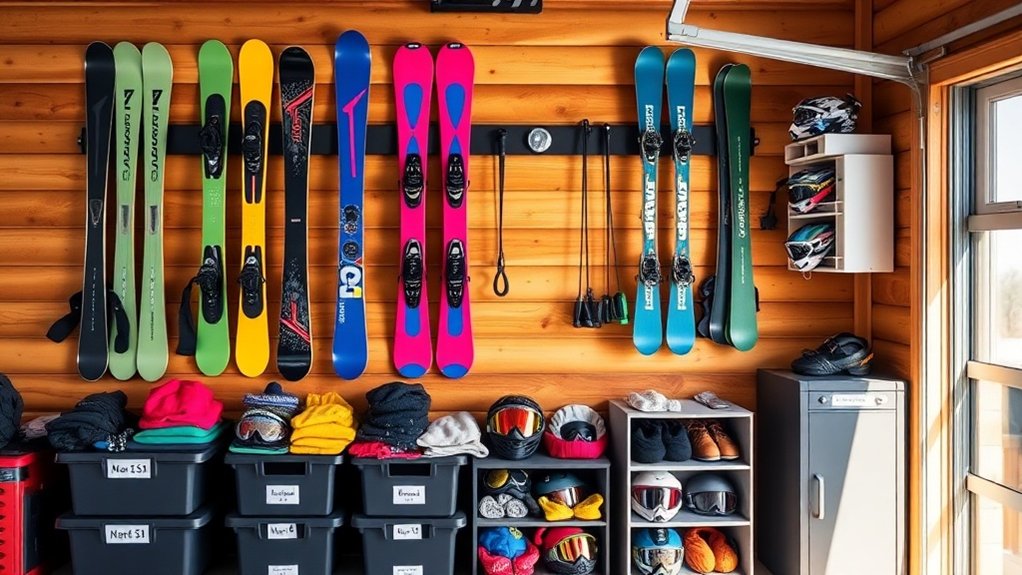
To make the most of your winter gear storage, it’s important to organise your space effectively.
Start by grouping items like skis, snowboards, helmets, and outerwear together. Use vertical storage solutions, such as wall-mounted racks or hooks, to take advantage of the height of your space. This not only keeps your gear together but also makes it easier to access.
For items you don’t use as often, consider under-bed storage with breathable bins to keep them safe from dust and moisture. Multi-purpose furniture can also help, combining places to sit or store everyday items with space for your gear.
With these tips, you’ll create a tidy, accessible environment that maximises both your space and your freedom.
Protection and Maintenance During Storage
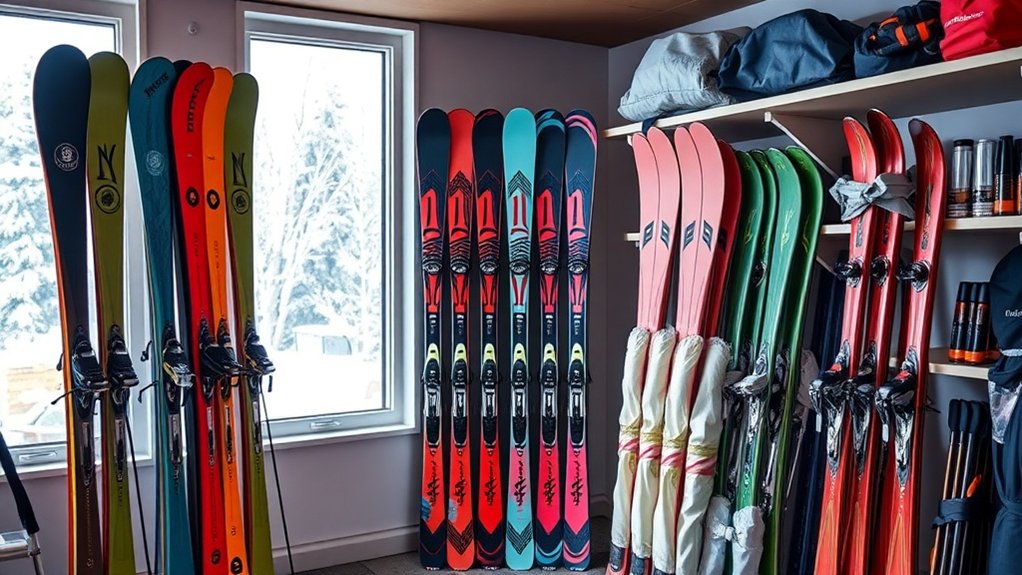
To properly store your winter gear and ensure it lasts, follow these straightforward steps:
- Clean and wax: Give your equipment a good clean, sharpen any edges, and apply a generous layer of wax. Leave the wax on; it helps protect your gear over time.
- Inspect and repair: Check for any damage such as nicks or scratches. If you find serious issues, get them repaired by a professional to keep your gear performing well.
- Store correctly: Keep your gear in a cool, dry place away from direct sunlight. Use padded bags or racks to protect it physically.
Security and Long-Term Storage Facilities
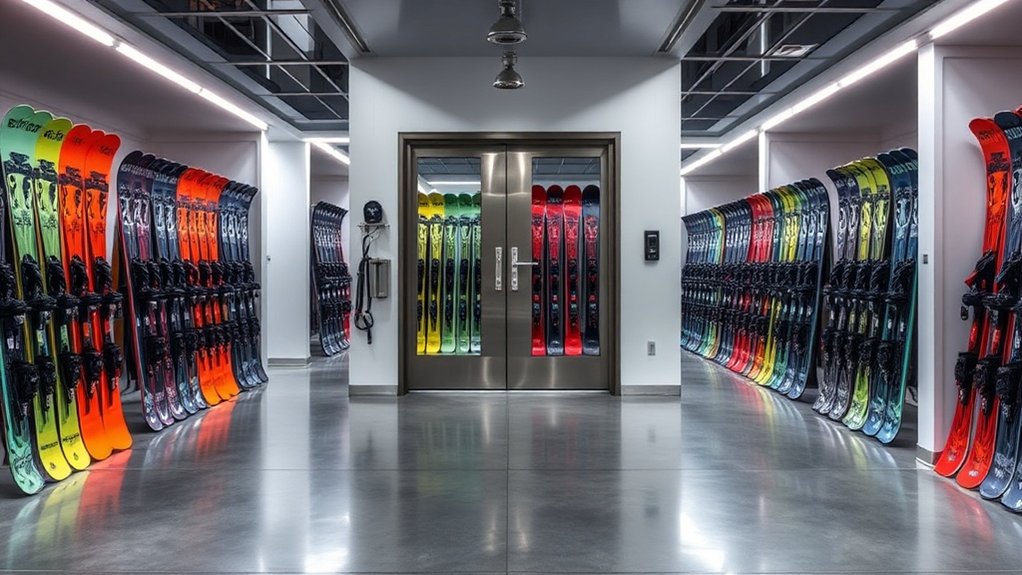
When considering long-term storage for your winter gear, it’s important to focus on security and environmental conditions.
Look for facilities with strong security measures, such as 24/7 CCTV and on-site security personnel. Access controls like electronic keypads or biometric scanners ensure that only authorised individuals can enter.
Climate-controlled environments are crucial; they maintain stable temperatures and humidity levels, preventing any warping or rust on your equipment. This not only extends the lifespan of your gear but also makes it easier to access when needed.
Well-lit areas and reinforced walls help reduce the risk of theft.
Lastly, think about insurance options to cover any potential loss or damage. This will give you peace of mind while you enjoy a break from worrying about your winter gear.
Seasonal Gear Inspection and Maintenance

Before storing your winter gear, carry out a thorough damage check to spot any scratches, dents, or rust on your skis or snowboard.
Pay particular attention to the edges, as they need to be sharp for good grip on snow and ice; sharpen them if necessary.
This maintenance won’t only extend the life of your equipment but also ensure it performs at its best when the next winter season arrives.
Damage Assessment Checklist
As winter approaches, it’s vital to carry out a thorough damage assessment of your seasonal gear to ensure optimal performance and safety on the slopes.
Use this checklist for effective damage prevention and performance enhancement:
- Visual Inspection: Examine your skis and snowboards for any cracks or deep scratches, and check that the bindings are secure with no loose screws.
- Safety Gear Review: Inspect your helmet for cracks, ensure the straps are functioning correctly, and check your avalanche safety gear for any signs of battery corrosion or wear.
- Boot and Outerwear Check: Take the liners out of your boots to dry them out, clean the boot shells, and look over your outerwear for any tears or issues with zippers.
Stay safe and enjoy the slopes!
Edge Sharpening Tips
To ensure your winter gear performs optimally, edge sharpening is a crucial part of seasonal maintenance that shouldn’t be neglected. Use appropriate edge tools, such as files or diamond stones, to achieve the best sharpness. Apply smooth strokes along the edge with consistent pressure, adjusting bevel angles (0.5° to 1°) according to the conditions.
| Task | Suggested Tool |
|---|---|
| Initial Edge Sharpening | File or Edge Tool |
| Polishing | Diamond Stones |
| Burr Removal | Gummy Stone |
| Detuning | Gummy Stone or File |
Regularly check your edges for rust and burrs. Sharpen carefully to avoid over-filing, ensuring your gear is always ready for the slopes!
Frequently Asked Questions
How Long Can I Store My Skis and Snowboards Without Use?
You can store your skis and snowboards for 4 to 7 months without use, but it’s essential to carry out seasonal maintenance. Taking proper care before long-term storage ensures they remain in good condition for your next trip on the slopes.
Can I Store My Gear in Its Original Packaging?
It’s not advisable to store your gear in its original packaging. Doing so can reduce its lifespan by trapping moisture and lacking proper ventilation, which may result in mould growth and damage. Instead, choose breathable storage options like fabric bags or boxes with air holes.
Is It Necessary to Remove Bindings Before Storage?
It’s not essential to remove bindings before storing your gear, but doing so can help maintain them and extend their lifespan. Think about your storage methods and what works best for you. For instance, if you’re storing skis in a damp garage, removing the bindings might prevent rust and deterioration. Ultimately, it’s a matter of personal preference.
What Is the Best Way to Clean My Gear Before Storage?
To clean your gear before storing it, start by brushing off any debris. Next, wash it with a mild soap solution, ensuring all dirt and grime are removed. Finally, make sure to dry your gear thoroughly to prevent mould or corrosion. Proper maintenance keeps your equipment in excellent condition, ready for your next adventure.
How Can I Prevent My Gear From Getting Scratched During Storage?
How do you keep your gear in top condition? To prevent scratches, use protective covers, store items upright, and ensure proper airflow. For example, keeping your camping gear in padded bags or using dividers in storage boxes can help. This approach reduces contact and helps maintain your gear, keeping it ready for your next adventure.
Conclusion
In summary, properly storing your skis, snowboards, and winter gear can significantly extend their lifespan. Regular maintenance can boost your gear’s durability by as much as 40%. By following the essential steps—cleaning, organising, and ensuring suitable storage conditions—you not only protect your investment but also maintain your gear’s performance for the next winter season. Make seasonal storage a priority, and enjoy worry-free shredding when the snow returns!