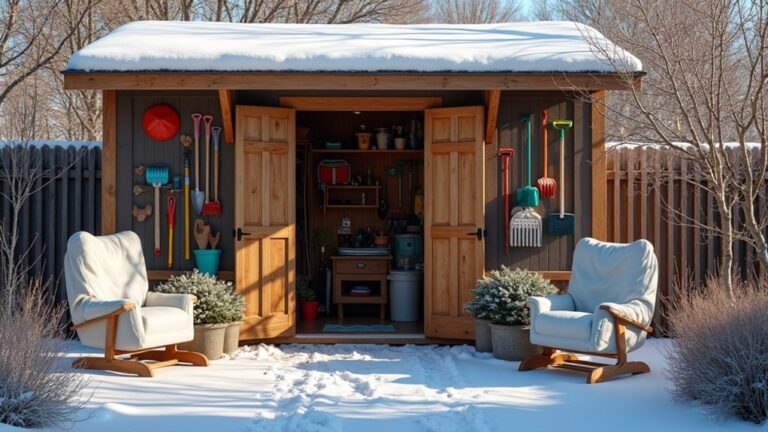
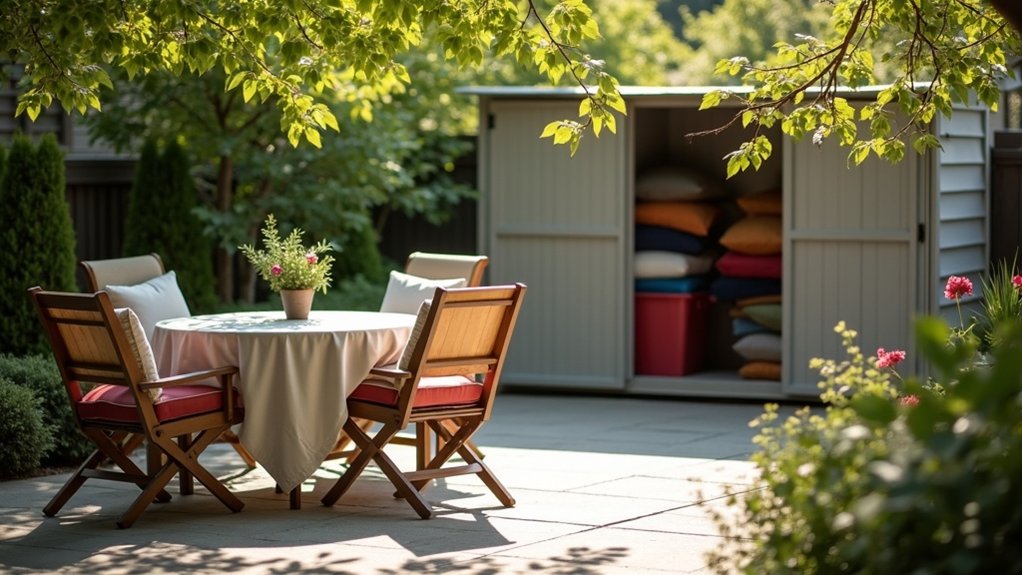
To store your patio furniture for long-term care, begin by giving it a thorough clean—remove any covers, vacuum the cushions, and wash the surfaces with warm soapy water. Protect your items with breathable, UV-resistant covers, ensuring they’re securely fastened to withstand windy conditions. Opt for a dry, well-ventilated storage space, away from direct sunlight and dampness. For specific materials, apply sealant to wooden furniture, use rust-proof primer on metal, and place cushions in waterproof bags. Keeping your furniture in good condition can significantly extend its lifespan.
Key Takeaways
- Clean all furniture thoroughly before storing to prevent stains and deter pests.
- Use breathable, UV-resistant covers to shield against moisture and fading.
- Store furniture in a dry, cool, and well-ventilated space to avoid warping and mould.
- Disassemble larger items where possible to reduce the risk of damage during storage.
- Check on stored furniture regularly for signs of wear and tear to ensure it lasts longer.
Cleaning and Preparing Patio Furniture for Storage
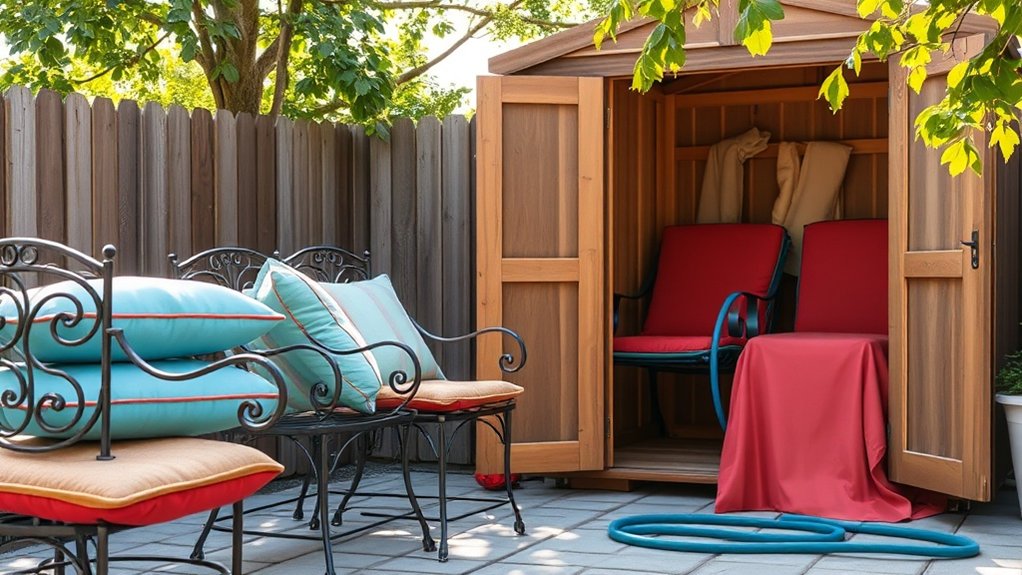
Before storing your patio furniture for the season, it’s important to give it a good clean and prepare it properly.
Start with the cushions by removing all fabric covers. Check the care labels and wash them as instructed—whether by hand or in the machine. Don’t forget to vacuum the cushions to remove any dirt.
For solid surfaces, mix warm soapy water with a mild dish soap and use a soft sponge to clean all the nooks and crannies. Rinse thoroughly to prevent any soap residue. Proper storage techniques significantly extend the lifespan of your outdoor furniture, so taking care of your items now will save you time and hassle next season, ensuring it’s ready for your next outdoor gathering.
If you have metal furniture, deal with any rust right away, and protect wooden items with waterproof sprays.
Protecting Furniture With Covers and Materials
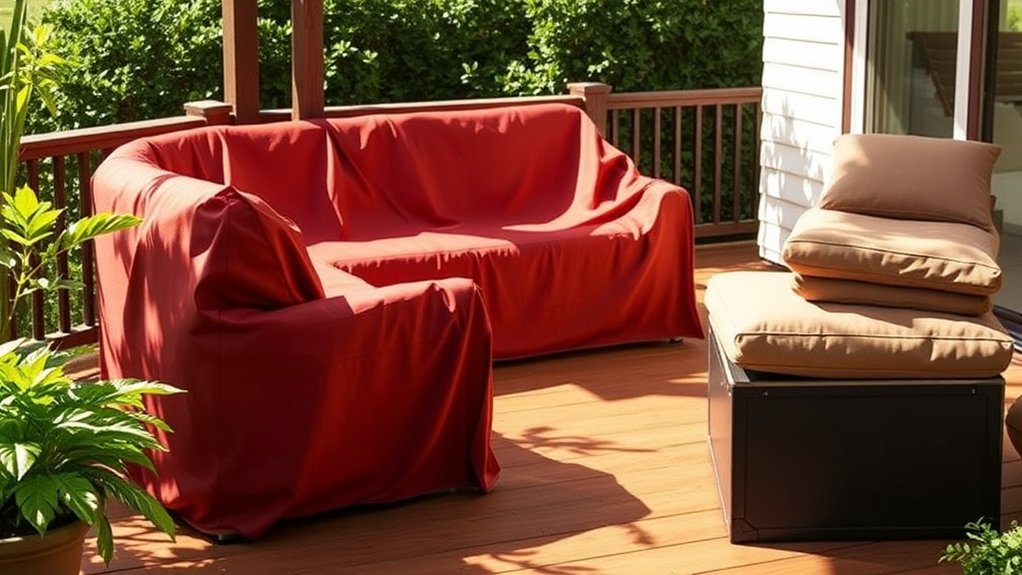
Selecting the right covers for your patio furniture is vital to protect them from the British weather. Opt for breathable materials that allow moisture to escape, which helps prevent mould growth. Regular maintenance of your covers will prolong their lifespan and keep your furniture looking smart for years. Additionally, consider choosing UV-resistant covers to safeguard your furniture from harmful sun exposure and fading.
Choosing the Right Covers
Choosing the Right Covers for Your Patio Furniture
To protect your patio furniture effectively, it’s crucial to select the right covers. Start by considering materials such as treated polyester, which is lightweight and highly water-resistant. Covers constructed with strong elastic bottoms ensure a secure fit and help prevent them from blowing away during windy conditions.
If you prefer vinyl, look for laminated polyester linings for added durability. For excellent UV and mildew resistance, solution-dyed acrylic is a smart investment. On a budget? Olefin provides decent protection and dries quickly. Specialty fabrics like Weathermax offer great durability and come with long-term warranties.
When selecting covers, ensure they can withstand heavy rain and snow, keeping your furniture safe throughout the seasons.
With the right covers, your outdoor space will remain inviting and ready for use.
Importance of Breathability
Protecting your patio furniture with covers is important, but prioritising breathability can significantly improve their lifespan and performance.
Breathable fabrics allow air and moisture to escape, preventing the build-up of dampness that causes mould and mildew. This is crucial in humid conditions, as it helps safeguard your furniture from rust and wood warping.
Moreover, breathable covers help to regulate temperature, preventing overheating and protecting materials sensitive to heat damage.
Look for covers made from high-quality synthetic fabrics that offer durability while allowing for air exchange.
Regular Cover Maintenance
Even with breathable covers in place, regular maintenance is essential to keep your patio furniture protected and in good condition.
Start by shaking off any loose debris and cleaning the covers with mild soap and warm water to ensure they last longer. Check for any tears or worn areas regularly and make minor repairs promptly to extend their lifespan.
Reapply protective treatments, like water-repellent sprays, twice a year to maintain their resistance against the elements. Always ensure the covers are completely air-dried before storing them in a dry, ventilated area.
Optimal Storage Environment
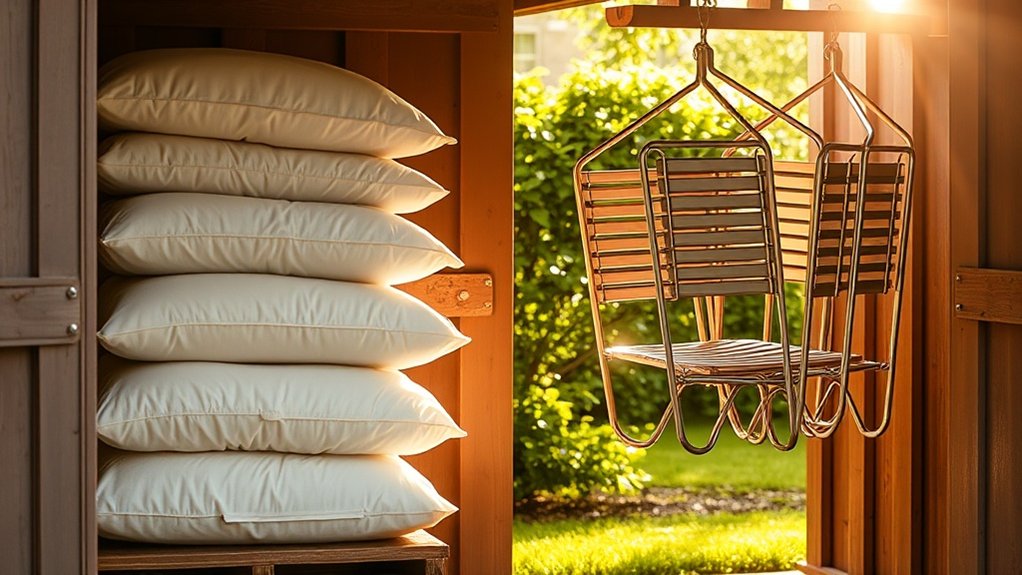
Creating the perfect storage environment for your patio furniture is essential to ensure its durability and appearance. Select a storage spot that is dry, cool, and well-ventilated to avoid problems like mould or rust. Remember, ventilation is key! Keep your furniture out of direct sunlight to prevent fading.
| Condition | Importance | Tips |
|---|---|---|
| Dryness | Prevents warping and rot | Use moisture absorbers |
| Ventilation | Stops mould growth | Ensure good airflow |
| Temperature Control | Reduces material expansion | Consider climate-controlled storage |
Additionally, using climate-controlled storage can help maintain optimal conditions for your patio furniture, protecting it from potential damage caused by extreme temperature fluctuations.
Material-Specific Storage Tips
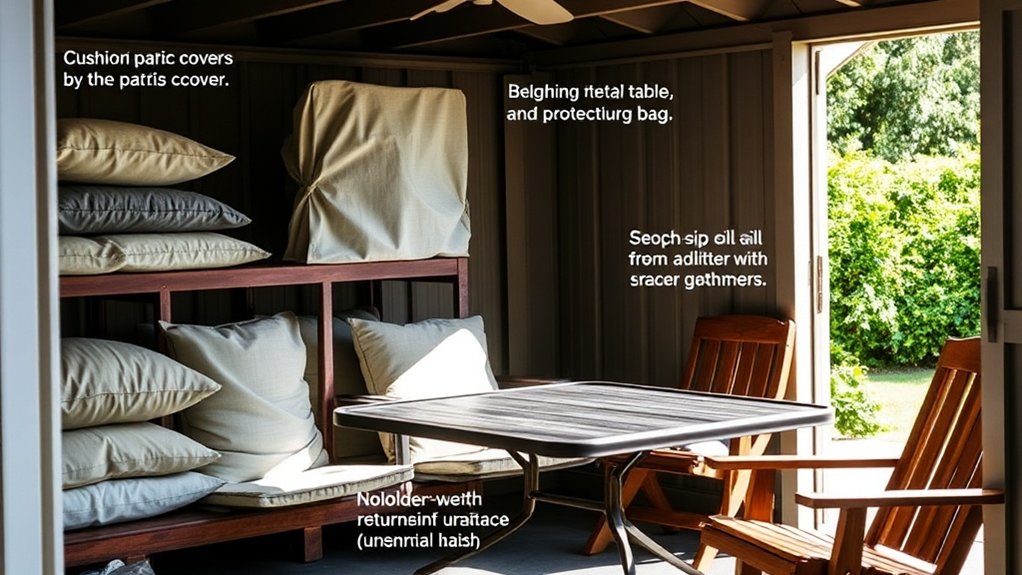
When storing patio furniture, it’s essential to cater to the specific needs of different materials to ensure longevity.
For wooden furniture, give it a thorough clean and apply a sealant. Store it in a dry, ventilated area, keeping it off the ground.
For metal items, clean them and apply a rust-resistant primer; cover with breathable materials to prevent moisture build-up.
Plastic furniture should be washed with mild soap, stored in shaded areas, and avoid stacking to prevent damage.
For fabric cushions, clean them well, use waterproof bags, and keep them out of direct sunlight.
Lastly, for glass tables, wrap them securely and store them vertically to avoid breakage.
Following these straightforward tips will keep your furniture in excellent condition for your next outdoor gathering.
Seasonal Maintenance and Inspection
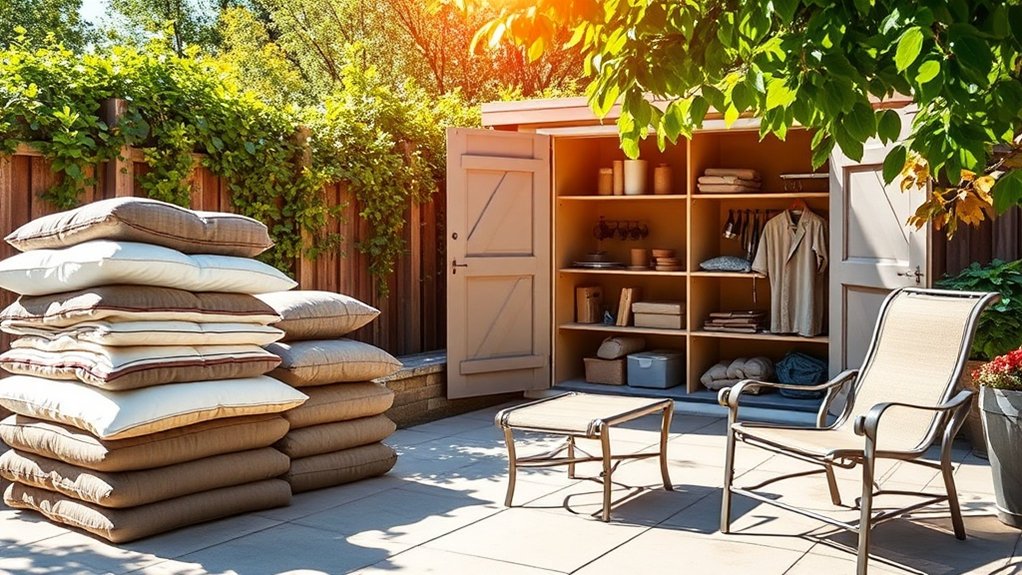
As the seasons change, it’s important to inspect your patio furniture for any signs of wear and tear.
Regular checks can help you identify loose screws, cracks, or rust before they become major issues.
Regular Damage Checks
Regular damage checks are vital for maintaining the integrity and appearance of your patio furniture throughout the seasons.
By following these practices, you’ll ensure the longevity and enjoyment of your outdoor space:
- Check for Rust: Inspect metal frames and joints for rust, particularly at seams. Use a wire brush to remove light rust and confirm that rust-resistant coatings are intact.
- Mildew Prevention: Look for tears or mildew on cushions and fabric coverings. Clean affected areas with a vinegar solution and ensure fabrics are thoroughly dried.
- Structural Integrity: Test the stability of chairs and tables by giving them a gentle shake. Watch for cracks or loose screws, and sand rough edges or reapply sealant as necessary.
Regular checks will keep your patio furniture in excellent condition, allowing you to relish your outdoor space!
Timely Repairs Needed
Timely repairs are crucial for keeping your patio furniture in top condition all year round. Regular inspections can significantly reduce the risk of damage.
For metal furniture, deal with rust quickly using a wire brush and rust converter, and apply a rust-resistant coating each year. Remember to tighten screws and joints every season to keep everything stable.
For wooden pieces, sand down rough edges and apply sealants in spring and autumn to prevent cracking.
Don’t overlook your cushions—store them indoors during winter and clean them regularly to prevent mildew.
Additional Tips for Extending Patio Furniture Lifespan
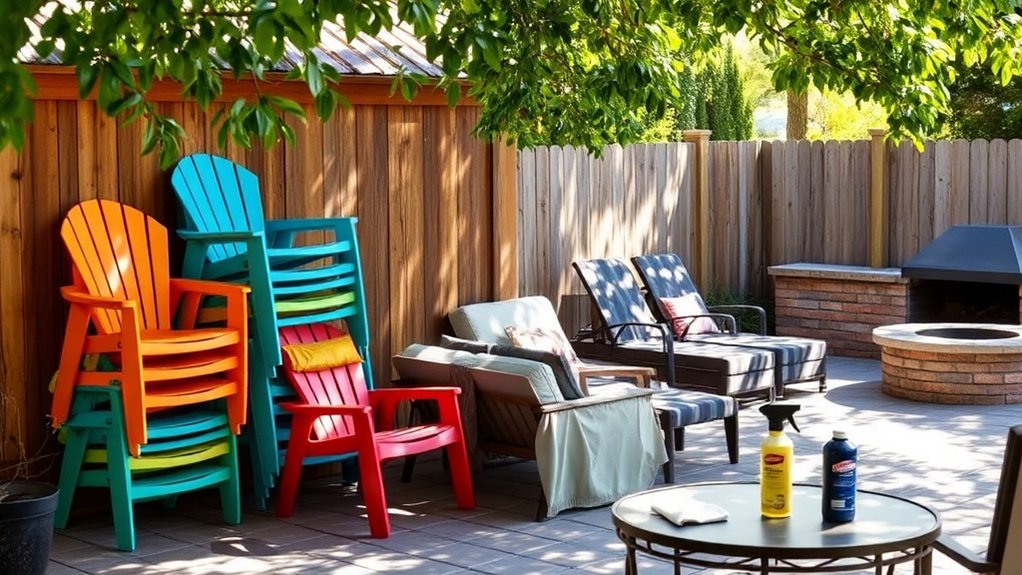
To keep your patio furniture looking its best and prolong its lifespan, effective maintenance is key. Here are some straightforward tips:
- Seasonal Storage: Bring your furniture indoors during harsh weather to protect it from moisture, which can cause rust or warping.
- Smart Placement: Arrange your furniture in shaded spots to reduce sun exposure and prevent fading. Consider using weather-resistant covers to guard against rain and dirt.
- Regular Cleaning: Clean your furniture often using the right methods—apply mild soap for wood and metal, and use a pressure washer for stubborn grime. Additionally, investing in durable materials for your outdoor furniture can help ensure it withstands varied UK weather conditions.
Common Mistakes to Avoid
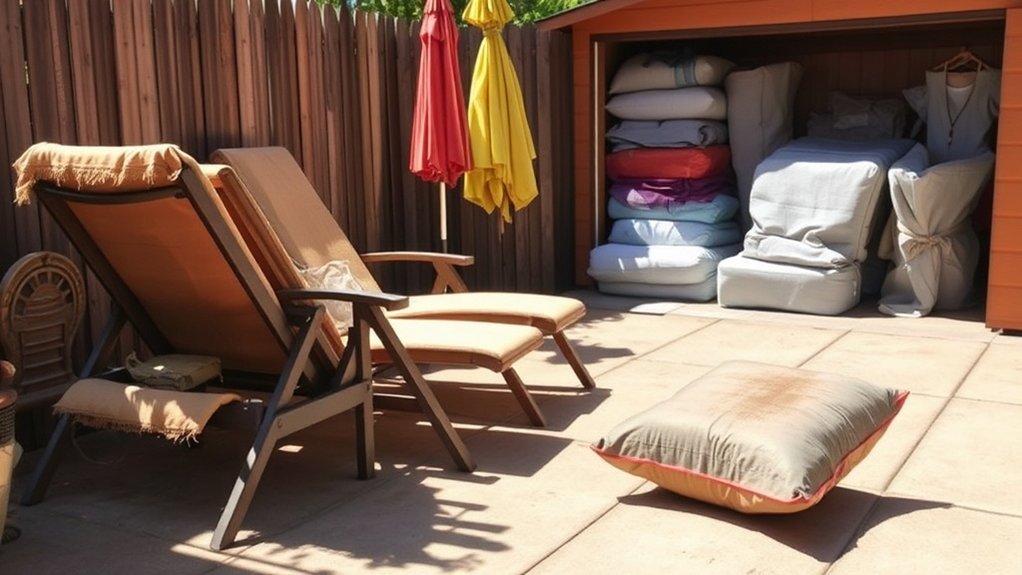
Storing patio furniture may seem simple, but many people fall into common traps that can cause damage and reduce its lifespan. Here are key mistakes to avoid:
| Mistake | Consequence |
|---|---|
| Using airtight covers | Traps moisture, leading to mould |
| Not cleaning before storage | Attracts pests and sets in stains |
| Storing on concrete | Absorbs moisture, causing furniture to warp |
| Ignoring furniture disassembly | Heightens risk of damage during transport |
To ensure your furniture remains in good condition, always clean it thoroughly, disassemble it when feasible, and opt for breathable covers. Store it in a dry, well-ventilated area to keep it safe and ready for the next season!
Choosing the Right Storage Solutions
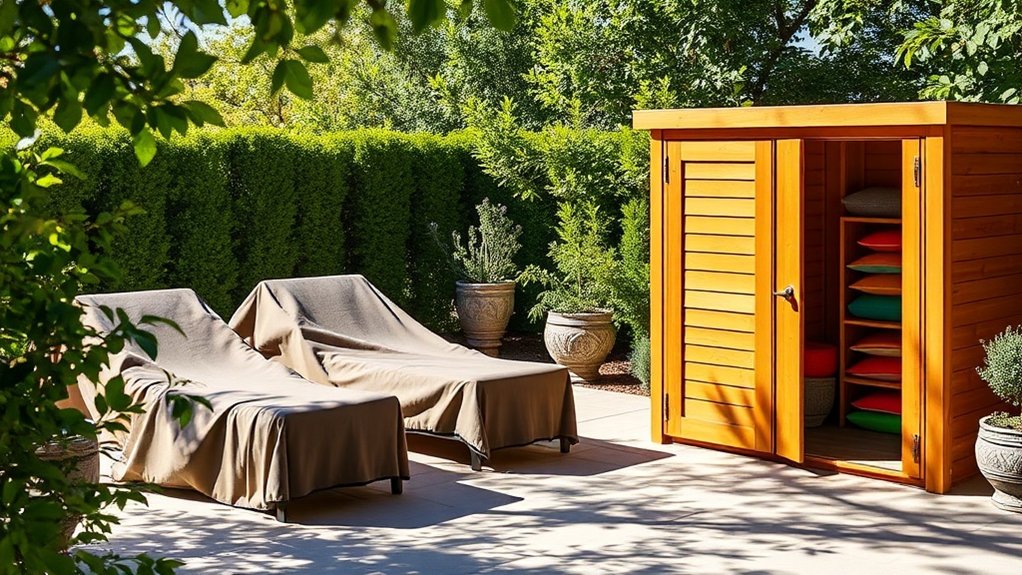
Here are three options to consider:
- Deck Boxes: Opt for deck boxes made from weather-resistant materials such as resin or powder-coated steel to safeguard your cushions and outdoor toys.
- Storage Benches: These versatile pieces serve as both seating and storage, offering a stylish yet practical solution that withstands the elements.
- Outdoor Cabinets: Perfect for smaller spaces, these vertical units provide easy access and keep your patio essentials organised.
Additionally, consider the importance of climate control when storing furniture to protect it from extreme temperature fluctuations.
Select the option that best fits your needs and enhances your outdoor area.
Frequently Asked Questions
How Often Should I Clean My Patio Furniture During Storage?
You should clean your patio furniture every 1-2 weeks while in storage, adjusting based on the storage environment. Regular upkeep prevents damage and ensures your furniture stays in good condition for your next outdoor gathering. For instance, if it’s stored in a damp area, you might need to clean it more frequently to avoid mould.
Can I Use Regular Tarps for Covering Patio Furniture?
Consider regular tarps as a protective cover for your patio furniture. Durable tarp material can shield your furniture from rain and UV damage, ensuring it lasts longer. They’re a practical and versatile solution for outdoor storage.
What Is the Best Way to Remove Mold From Fabric Cushions?
To remove mould from fabric cushions, try using vinegar or a diluted bleach solution. Scrub the affected areas, rinse thoroughly, and dry them in the sunlight. This method not only helps eliminate mould but also prevents it from returning.
Should I Disassemble My Furniture for Storage?
Yes, disassembling your furniture is a smart move for storage. It saves space and helps prevent damage. For instance, a flat-packed wardrobe is much easier to store than a bulky one. It makes handling simpler, reduces strain on the materials, and keeps everything organised. This way, your furniture will remain in great condition for when you need it again.
How Do I Know if My Storage Location Is Suitable?
To ensure your storage location is suitable, monitor humidity levels and avoid extreme temperatures. A dry, stable environment helps prevent damage, keeping your furniture in great condition. Ensure there’s good ventilation and protection from pests to maintain your belongings effectively!
Conclusion
As you prepare to store your patio furniture, remember to treat it with care. With a bit of attention and the right conditions, your chairs and tables can survive the winter and be ready for your summer gatherings. After all, you want your furniture to come out looking as good as new come spring!