How to Rotate Seasonal Items in Your Storage Unit
To rotate seasonal items in your storage unit, start by setting a clear schedule and marking seasonal change dates in your calendar. Organise your belongings into clearly labelled zones for easy access, and maintain a detailed inventory to keep track of what you have. Use colour-coded bins for quick identification and set reminders a week before you need to swap items. Regularly check your unit for cleanliness and any pest issues to ensure a safe environment. Optimising this process can save you time and hassle.
Key Takeaways
- Set up a seasonal rotation schedule and mark swap dates on your calendar for timely reminders.
- Keep a detailed inventory list for each seasonal category to track items effectively.
- Organise your storage unit into clearly labelled zones for easy access to seasonal items.
- Conduct regular inventory checks and decluttering sessions during swaps to maintain order.
- Use specific containers and colour-coded boxes to make identifying and retrieving seasonal items easier.
Understanding Seasonal Rotation
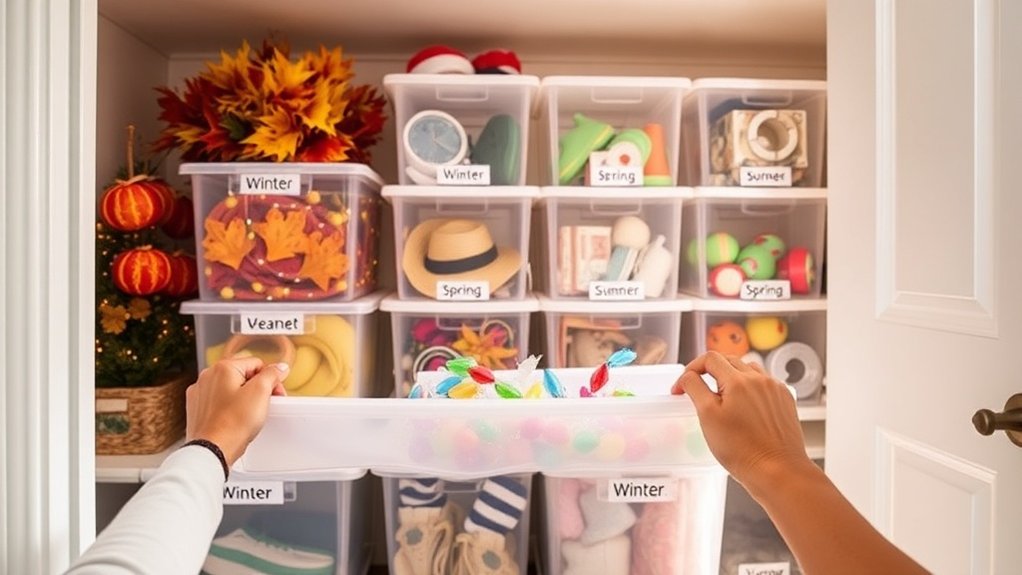
Understanding seasonal rotation is crucial for effective storage management, helping you keep your living space organised and functional. Start by identifying seasonal categories such as clothing, décor, outdoor gear, and sports equipment. This will help you determine which items need to be rotated according to the seasons. Create detailed inventory lists for each category, so you don’t overlook anything during seasonal changes. Use clearly labelled bins for easy visibility and access, grouping similar items together to simplify retrieval. Additionally, selecting the right storage unit size can greatly enhance your seasonal rotation process. Ensure you consider proper storage techniques to protect off-season items from damage.
Establishing a Rotation Schedule
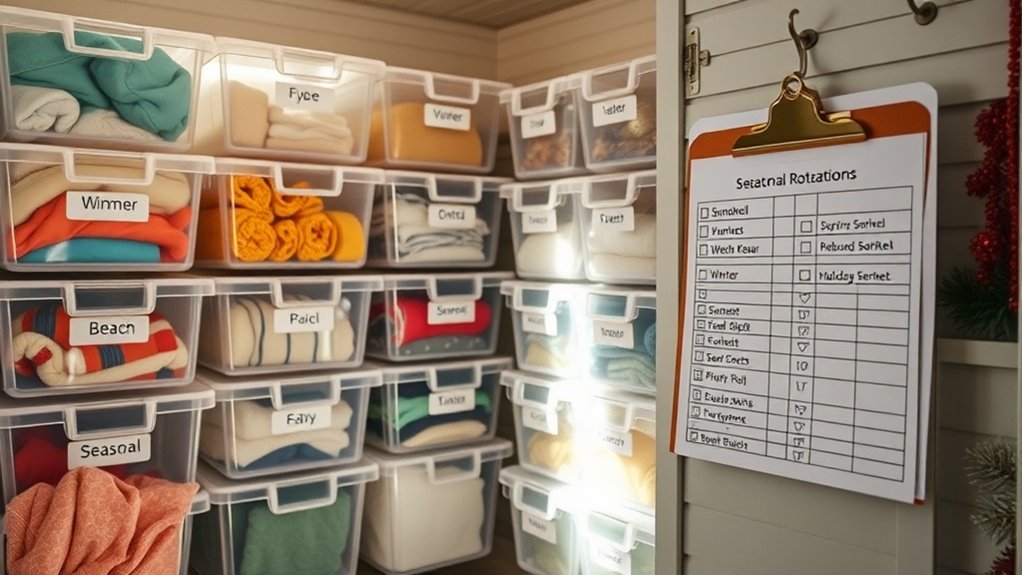
To set up a rotation schedule effectively, begin by marking the seasonal change dates on your calendar, such as April and October. Next, outline a straightforward process for swapping items, ensuring you know exactly what needs to be exchanged. Lastly, establish reminder systems to notify you in advance, helping you avoid any last-minute rush. For example, if you’re switching your winter clothes for summer attire, set a reminder a week before to give yourself ample time. This organized approach not only aids in maintaining a clutter-free space but also enhances seasonal storage efficiency by ensuring that items are easily accessible when needed. Additionally, utilizing self-storage for seasonal items helps optimize your home’s space and reduces the stress associated with clutter.
Seasonal Start Dates
Establishing clear seasonal start dates is vital for an effective rotation schedule. These dates are influenced by regional climate and cultural factors. Typically, spring begins in March, summer in June, autumn in September, and winter in December. To manage seasonal changes, keep track of the first and last usage dates each year for a smooth transition. Organise your items by category—such as clothing and outdoor gear—and assign them to the appropriate seasons. Creating a master calendar to coordinate your rotation periods ensures timely access to items, while also considering seasonal relevance to help determine which items should be prioritized during each season. Conduct biannual check-ins in spring and autumn to improve storage efficiency, especially when planning around temporary storage solutions that may be needed during home renovations. Regularly review your calendar to adapt to any climate variations, keeping your storage tidy and accessible throughout the year.
Item Swapping Process
To improve your item swapping process for seasonal items, it’s important to have a clear system. Set up a rotation schedule that aligns with the seasons and include regular decluttering sessions. Keeping a detailed inventory will help you track items and plan your next swaps.
Here’s a straightforward table to keep your rotation organised:
| Season | Action | Notes |
|---|---|---|
| Winter | Swap out winter items | Check for damage or unused items |
| Spring | Bring in spring items | Declutter as needed |
| Summer | Rotate summer items | Ensure easy access |
| Autumn | Prepare for autumn items | Update inventory |
| All Year | Maintain storage unit | Clean and check conditions |
This approach simplifies the process and keeps your items relevant.
Reminder Systems
A well-organised reminder system can significantly improve your rotation schedule for seasonal items. Start by implementing a biannual rotation that aligns with the changing seasons in early spring and autumn.
Use digital calendar alerts or apps to manage how often you receive reminders, ensuring they come well in advance. Tailor your notification preferences to suit the local climate or holiday periods to stay organised.
Link reminders to specific tasks, such as inventory checks and cleaning, to simplify the process. Make it a point to review your rotation schedule each year, adjusting for any shifts in usage patterns or storage needs.
Organizing Your Storage Unit Zones
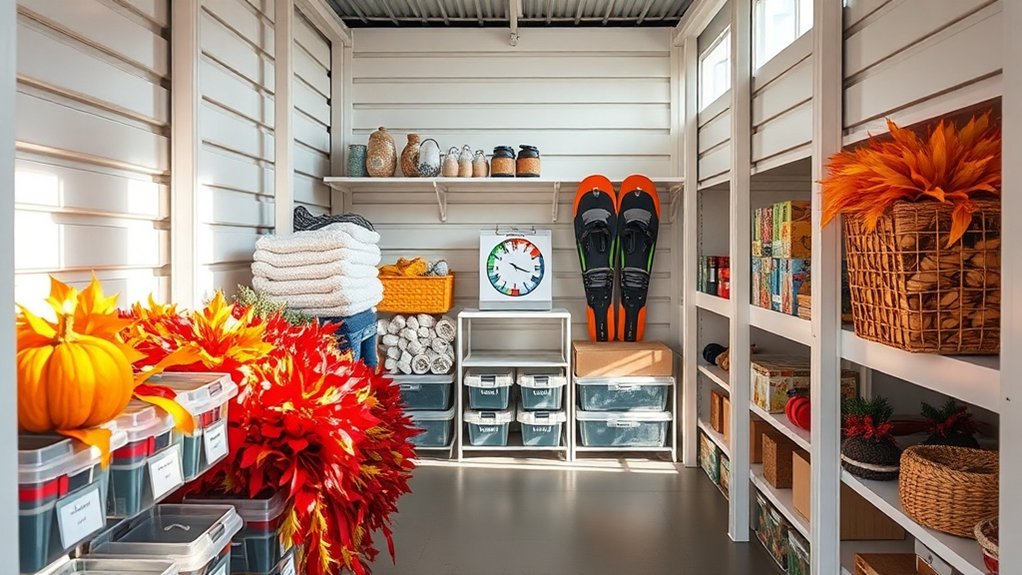
Organising your storage unit into distinct zones is crucial for efficient retrieval and rotation of items.
Start by categorising your belongings and assigning zones based on how often you use them. Here are some straightforward tips to improve your organisation:
- Separate items into categories (e.g., seasonal decorations, sports equipment).
- Clearly label zones on walls and containers for easy identification.
- Create a simple map to plan your layout and ensure accessibility.
- Utilise vertical space with shelving to accommodate taller items.
- Regularly update zones and labels as your inventory changes.
Proper Packing Techniques for Seasonal Items
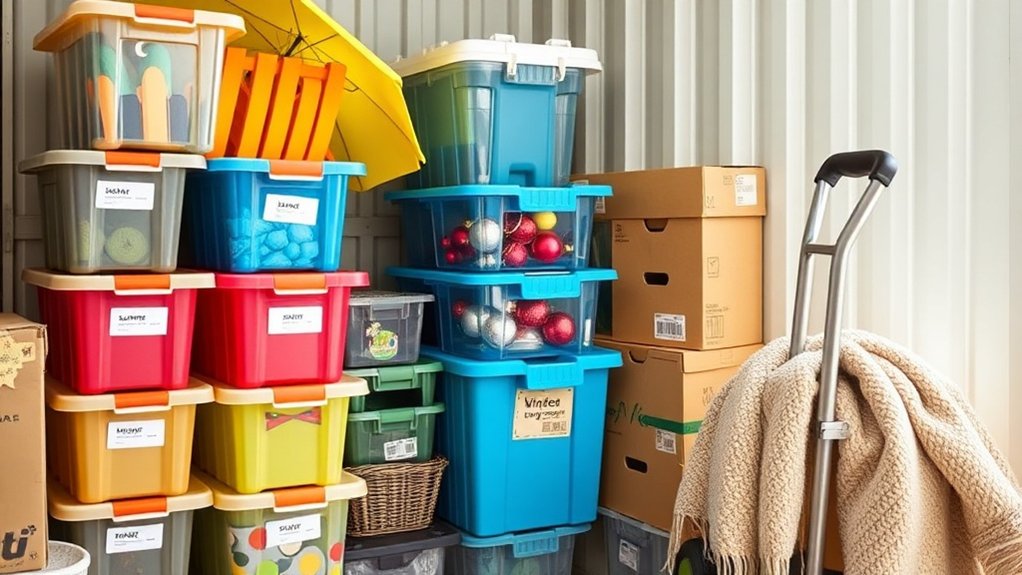
Properly packing your seasonal items can save you time and hassle when it’s time to get them out again.
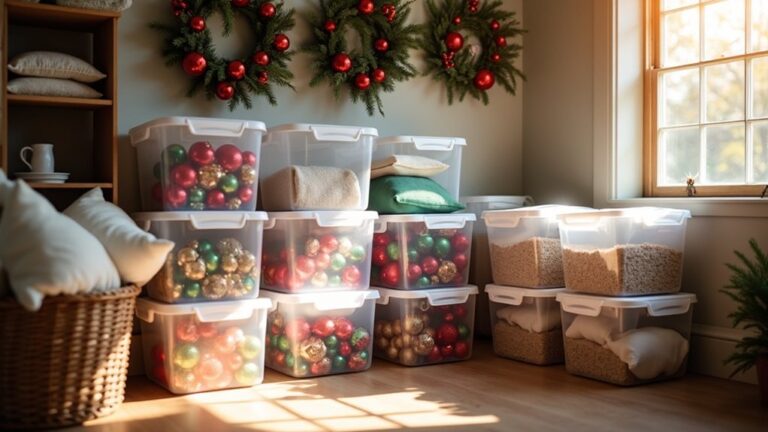
Begin by cleaning and drying everything to prevent mildew and stains. Use clear, sturdy plastic boxes with airtight lids to protect against dust and moisture. For fragile items, wrap them in bubble wrap or soft fabric, and store them in their original boxes if you can.
Label each box clearly with its contents and the corresponding season, and consider using colour-coded labels for quick identification.
Keep a detailed inventory list to track what you have. By following these steps, you’ll ensure your seasonal items stay in good condition and are easy to find when you need them.
Space Optimization Strategies
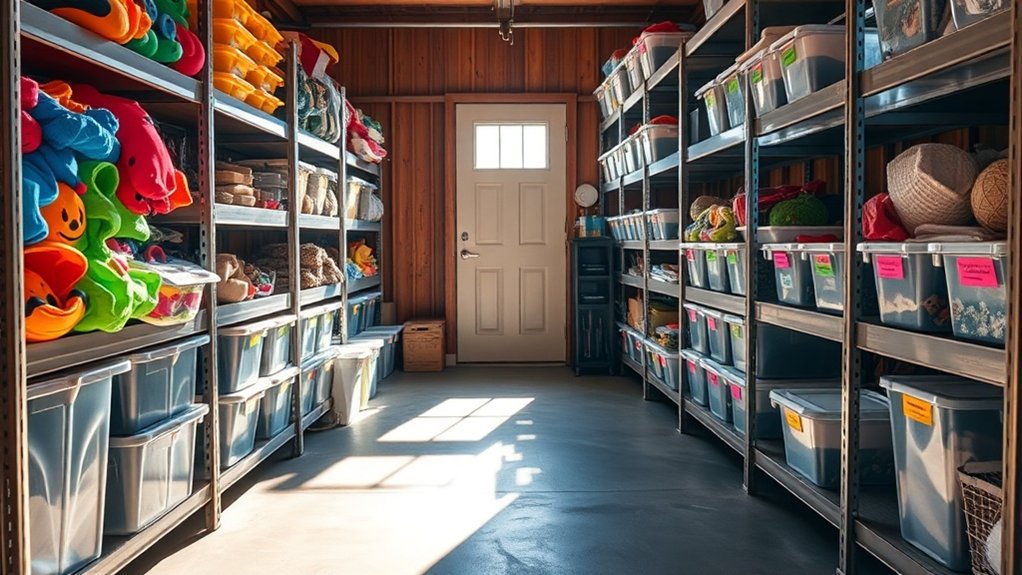
Effective space optimisation strategies can greatly enhance your storage experience, making it easier to access seasonal items when required. By focusing on space use and seasonal accessibility, you can establish a tidy and efficient arrangement.
- Start with a thorough inventory to sort items by how often you use them.
- Use adjustable shelving to make the most of vertical space.
- Opt for clear bins for easy visibility and quick retrieval.
- Keep frequently used seasonal items at the front for easy access.
- Implement a first-in, first-out system for straightforward rotation.
These methods ensure your storage remains functional while making seasonal changes hassle-free.
Regularly reviewing your layout allows you to adapt to changing needs, giving you easy access to your items.
Climate and Security Considerations
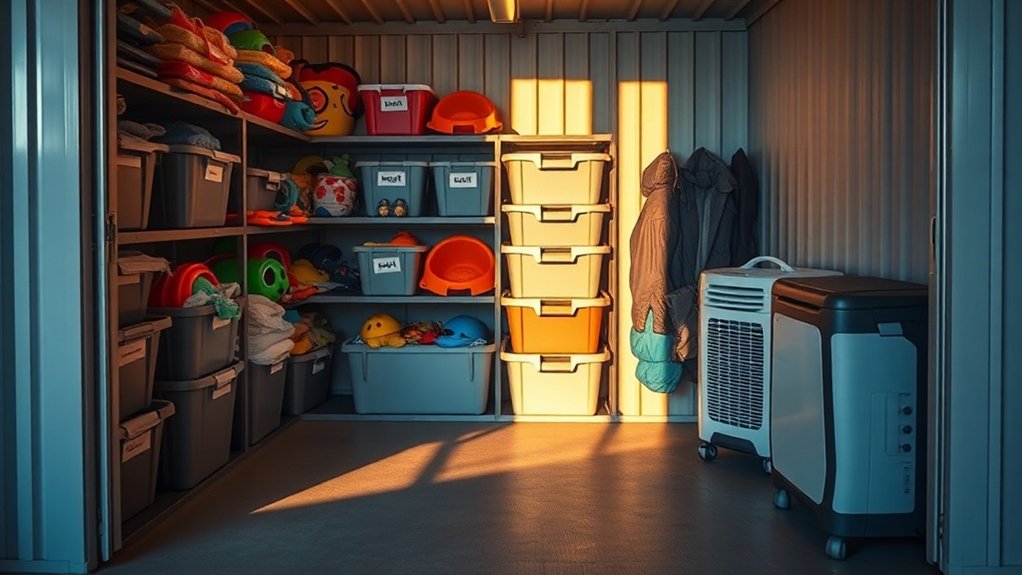
Seasonal changes can significantly impact the condition of your stored items, so it’s important to consider both climate and security.
Using climate-controlled units helps maintain a stable temperature of around 15°C, which protects sensitive items from warping, cracking, and deterioration. This also regulates humidity, preventing mould and rust, crucial for preserving fabrics, wood, and metal goods.
Don’t overlook security features such as surveillance cameras and controlled access to protect your belongings. These measures help reduce the risk of theft or vandalism, giving you peace of mind.
Maintenance and Upkeep of Your Storage Unit
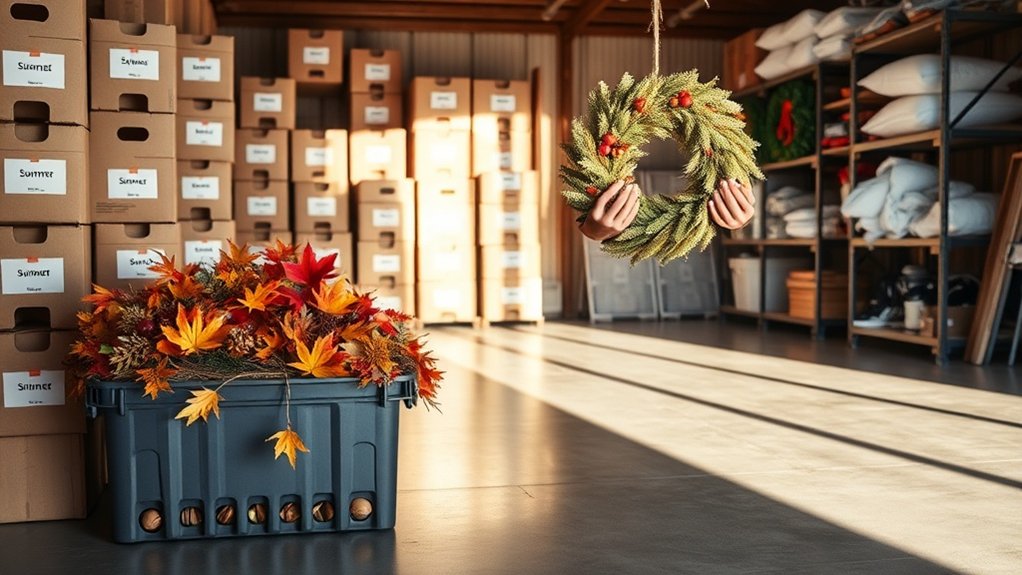
To keep your storage unit in good condition, set up a regular cleaning routine that includes thorough inspections and tidying up.
Make it a habit to update your inventory and check that everything is organised and easy to reach.
This proactive approach not only keeps your unit clean but also helps prevent problems from cropping up later on.
For example, regularly checking for dampness can save you from mould issues down the line.
Regular Cleaning Schedule
Establishing a regular cleaning schedule is vital for keeping your storage unit in good condition and ensuring a safe environment. Sticking to a routine enhances cleanliness and minimises potential hazards.
- Clear out rubbish and debris daily to maintain hygiene.
- Sweep and mop floors regularly, especially in busy areas.
- Wipe down high-touch surfaces to ensure proper sanitation.
- Inspect vacant units weekly to keep them tidy.
- Arrange for monthly pest control to prevent infestations.
Adjust your cleaning frequency based on the season and how often you use the unit.
This structured approach not only protects your belongings but also gives you peace of mind, allowing you to focus on what really matters.
Inventory Updates and Checks
Keeping an accurate inventory is crucial for the efficiency of your storage unit, especially with seasonal items. Start by conducting regular inventory checks, particularly focusing on higher-value items more often.
Compare your physical counts with your inventory records to identify discrepancies early on. Schedule these checks in sections to reduce disruption, allowing for thorough condition assessments of your items.
Clearly label containers and organise your inventory for better visibility and easy retrieval. Consider using inventory management software for real-time updates and set alerts for low stock levels.
Tips for a Smooth Transition Between Seasons
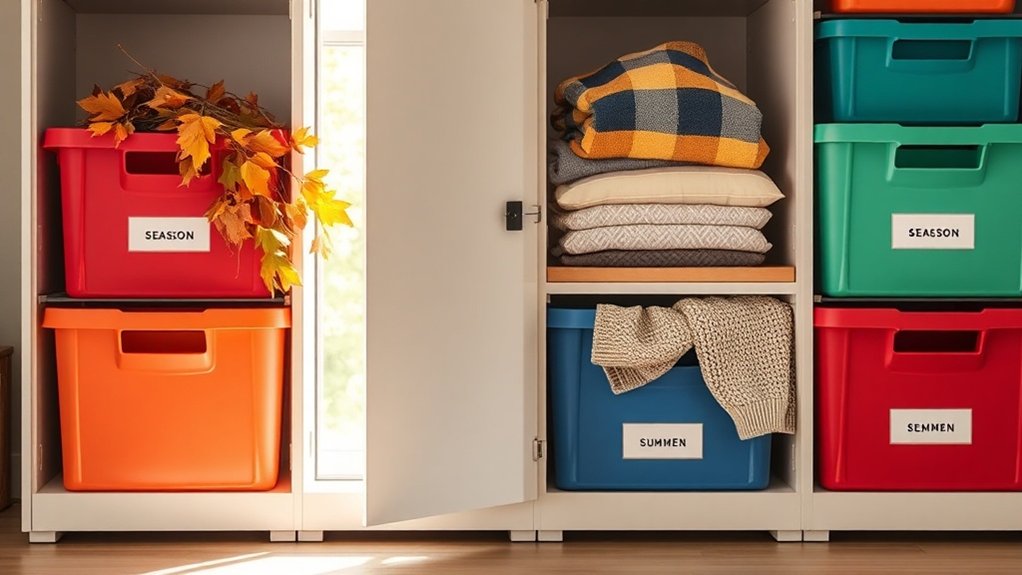
As you get ready for a smooth transition between seasons, organising your storage space is crucial for quick access to what you need.
Here are some straightforward tips to help you manage seasonal changes and storage issues:
- Set up designated areas for each season to make access easier.
- Keep frequently used items at the front for simple retrieval.
- Ensure clear pathways for easy navigation.
- Use colour-coded boxes for quick identification.
- Mark seasonal rotation days in your calendar to stay organised.
Frequently Asked Questions
What Items Should I Prioritize for Seasonal Rotation?
Prioritise holiday decorations and outdoor furniture for seasonal rotation. Store out-of-season items in clearly labelled boxes, making it easy to access current-season decor. This also helps protect your furniture from moisture and damage while in storage.
How Can I Prevent Pest Infestations in My Storage Unit?
To prevent pest infestations in your storage unit, adopt simple pest control strategies. Seal any gaps or entry points, use airtight containers for your belongings, and clean regularly to keep your space organised and free from pests. For example, consider using plastic bins instead of cardboard boxes, as they are less attractive to pests.
What Are the Best Materials for Packing Fragile Items?
To pack fragile items, use bubble wrap for cushioning and packing peanuts to fill any gaps. Wrap each item individually and ensure they’re secured. Avoid packing too tightly to prevent damage during transport or storage. For example, when packing glassware, wrap each piece with bubble wrap before placing them in a sturdy box with packing peanuts.
How Often Should I Inspect My Storage Unit?
Inspect your storage unit regularly, just like a gardener looks after their plants. Aim for at least an annual check, using an inspection checklist to identify any issues. Adjust the frequency based on how often you use the unit, ensuring that everything remains in good condition.
Can I Store Seasonal Items in Non-Climate-Controlled Units?
You can store seasonal items in non-climate-controlled units, provided they are sturdy and well-packed. However, be cautious with sensitive items like electronics or important documents, as they may require climate control to prevent damage from temperature and humidity changes.
Conclusion
Rotating your seasonal items in storage is essential for managing clutter effectively. Think of it like ensuring every musician in an orchestra plays their part at the right time. By keeping a consistent rotation schedule, you’ll make accessing your items much easier. For instance, store your winter gear at the back and bring your summer items to the front as the seasons change. With a bit of organisation, your storage unit can remain tidy and functional all year round.