How Shared Storage Units Work: A Growing Trend
Shared storage units allow you to share space with others, reducing costs and improving efficiency. By splitting rental fees, this option becomes more affordable for both personal and business use. Various types, such as Cloud Storage and Network-Attached Storage, provide distinct advantages, helping you manage everything from digital files to physical goods. Robust security measures, including user authentication and data encryption, ensure your belongings remain safe. This trend is driven by increasing urbanisation and the need for flexible storage options. Keep exploring to discover more about the innovations shaping this evolving industry.
Key Takeaways
- Shared storage units enable multiple users to share rental costs, making storage more affordable and efficient for individuals and businesses alike.
- These units vary in type, including cloud storage and Network Attached Storage (NAS), to meet different storage and collaboration needs.
- Enhanced security features, such as data encryption and access controls, safeguard shared items and build trust among users.
- The self-storage industry is expanding due to urbanisation, the rise of e-commerce, and increased relocation trends, indicating a growing interest in shared solutions.
- Consumers increasingly prefer flexible access, climate control, and smart technology, which is driving the trend towards more user-friendly shared storage options.
Overview of Shared Storage Units
Shared storage units offer a practical solution for individuals and businesses looking for additional space without incurring high costs. By sharing rental fees with a partner, you can significantly reduce your storage expenses. Larger units often provide even better savings per square foot, making long-term storage more financially viable. This arrangement allows for potential upgrades to larger units without financial strain, making it a budget-friendly solution overall.
Collaboration is key in these arrangements. You not only split costs but also share responsibilities—organising, packing, and maintaining the unit become joint tasks. This division eases the workload for both parties, making upkeep quicker and more efficient. Additionally, shared storage units often feature enhanced security features, ensuring that both parties' belongings are well protected.
Another major advantage of shared storage is flexibility. You and your partner can access the unit as required, with a variety of lease lengths available. This adaptability can simplify logistics, especially for larger joint investments.
Security is a shared concern, so trust and clear communication are essential. Establishing security measures, such as coded access and surveillance, helps ensure that both parties feel confident in the shared space.
With open dialogue, you can enjoy the benefits of shared storage without conflict, making the experience more rewarding.
Types of Shared Storage Solutions

When exploring shared storage solutions, you'll come across three main options: Cloud Storage, Network-Attached Storage (NAS), and Storage Area Networks (SAN).
Each type has its own benefits suited to various needs, such as scalability, cost-effectiveness, and high performance. For instance, Cloud Storage is great for easy access and collaboration, while NAS is ideal for local network file sharing. Additionally, understanding the different types of cloud storage methodologies is crucial for choosing the right solution for your organisation's data management needs.
Cloud Storage Solutions
Many organisations today are looking for efficient ways to manage and store their data, opting for various cloud storage solutions that meet specific needs. The main types are block storage, file storage, and object storage, each designed for different data types and workloads.
Block storage is ideal for high-performance environments with low latency, making it perfect for databases. Services like Amazon Elastic Block Store offer the necessary scalability for demanding applications. Scalability is a key advantage, allowing organizations to adjust their storage capacity based on demand.
File storage organises data hierarchically, making access easier and is well-suited for unstructured data. Solutions such as Amazon Elastic File System enable collaboration by allowing shared file access across different applications.
In contrast, object storage is designed for large volumes of unstructured data, providing cost-effective scalability. It uses data redundancy strategies to ensure that documents, images, and videos are secure and easily retrievable.
When considering these options, take into account your organisation's specific needs, including security, compliance, and performance.
Choosing the right cloud storage solution can significantly enhance data management and improve operational efficiency in today's digital world.
Network-Attached Storage
Network-attached storage (NAS) is an essential solution for organisations looking to manage data effectively in today's connected world. By providing a centralised resource for file storage, NAS enables multiple users and devices to access and share data at the same time, which boosts collaboration and productivity.
Its advantages include high performance, cost-effectiveness, and reliability, making it ideal for everyone from small businesses to large corporations.
However, it's important to consider the limitations of NAS. Although scalability is a key benefit, poor capacity planning can cause issues as data requirements increase.
Additionally, NAS devices must be compatible with existing network infrastructures, which can complicate integration. Security is also crucial; while NAS offers advanced features like encryption, it's vital to enforce strict security policies to safeguard sensitive information.
Storage Area Networks
In today's data-driven world, Storage Area Networks (SANs) provide an effective solution for organisations requiring efficient and scalable shared storage. By linking multiple storage devices through a dedicated network, SANs improve performance and simplify management, allowing you to handle large volumes of data with ease.
SAN protocols such as iSCSI and FCP offer various methods for data transfer, tailored to your performance needs. Their high-speed capabilities eliminate bandwidth bottlenecks, ensuring smooth operation even during busy periods. A key feature of SANs is their scalability, allowing you to easily expand storage capacity as your data needs increase.
Furthermore, SANs emphasise data protection with advanced backup options, including immutable snapshots to secure critical information. This reliability ensures your organisation can recover quickly from potential data losses.
Although setting up a SAN may require a considerable investment and technical know-how, the advantages of enhanced performance and centralised management make it a worthwhile consideration. As your organisation grows, a well-implemented SAN can adapt to your changing needs, enabling you to focus on your core business objectives.
How Access Works
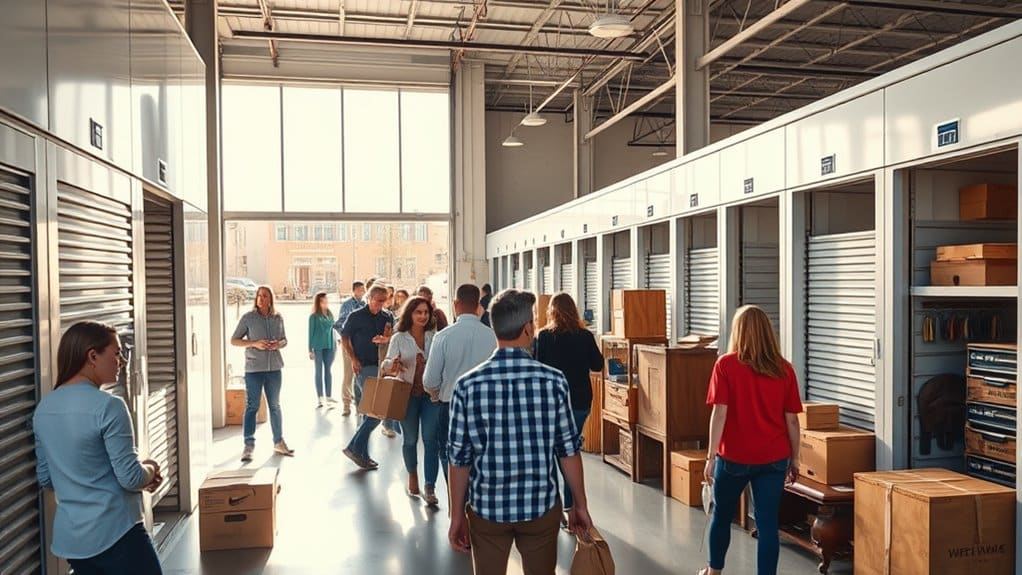
Access to shared storage units is made easy through various innovative technologies that enhance both security and convenience. Access methods include traditional keyed systems like RFID locks and keypads, as well as modern smart entry systems that use mobile apps and biometric scanners. These solutions not only simplify entry but also strengthen security, ensuring that only authorised individuals can gain access.
Each tenant receives their own unique credentials, which allows for tracking of access events. This means every entry is logged, providing an audit trail that promotes accountability. Additionally, shared gate access systems often work in tandem with property management software, ensuring smooth coordination of access control.
As the self-storage industry progresses, access control technologies are becoming increasingly advanced. We can expect improved mobile applications and cloud-based systems that offer greater flexibility and scalability. Furthermore, many facilities now incorporate enhanced security features such as 24/7 video surveillance, providing an additional layer of protection for stored belongings.
These developments ensure you can access your belongings safely and conveniently, giving you the freedom to manage your storage effectively.
Importance of Security

When it comes to shared storage units, security is essential, not just an extra. Effective user authentication, data encryption, and strict access controls all work together to protect your valuables. For instance, think of user authentication like a key to your front door; it ensures that only you and those you trust can access your items. Understanding these security features highlights their role in preventing unauthorized access and potential data breaches. Additionally, ensuring that the facility has robust security features can provide peace of mind when storing your belongings.
User Authentication Processes
User authentication processes are essential for protecting shared storage units, ensuring sensitive data is only accessible to authorised users. Implementing strong authentication methods like Single Sign-On (SSO) and Multi-Factor Authentication (MFA) significantly boosts security.
SSO simplifies user verification by centralising access management, allowing you to efficiently control permissions and reduce the hassle of remembering multiple passwords.
MFA provides an additional layer of security by requiring extra verification, such as a one-time password or biometric data. This combination greatly lowers the risk of unauthorised access, creating a safer environment for your data.
Multi-User Authentication further enhances security by requiring multiple approved individuals to authorise critical actions, ensuring that no single person can compromise your account alone.
Centralised access control makes managing permissions simpler and helps with compliance to security regulations, making it easier for you to track who accesses your data.
Data Encryption Techniques
Data encryption techniques are crucial for enhancing the security of shared storage units, protecting sensitive information from unauthorised access. By using strong encryption methods, you can ensure that your data remains confidential and shielded from potential threats.
Here are some key points to consider regarding encryption methods:
- Symmetric Encryption: This approach uses a single key for both encrypting and decrypting data, making it fast and straightforward. Common examples include AES and Twofish, which are often used for full disk encryption.
- Asymmetric Encryption: This method involves two keys—one public and one private—providing higher security, albeit at a slower pace than symmetric encryption. RSA and ECC are well-known examples, frequently used for secure communications.
- Granular Application: You can encrypt specific files or folders, ensuring tailored protection for your most critical data.
- Implementation Planning: It's essential to evaluate the type of storage, potential environmental threats, and existing infrastructure to optimise your encryption strategies.
Access Control Measures
Access control measures are crucial for protecting shared storage units, ensuring that only authorised individuals can access sensitive information. By implementing strong access control systems, you significantly enhance security and reduce the risk of unauthorised access.
Features such as electronic gate systems, keypad access, and individual entry pins allow for effective management of who enters the facility and enable tracking of their movements.
Remote access control allows you to monitor the facility in real-time from anywhere, making it easier to address potential threats. Integrating these systems with facility management software provides instant updates, streamlining operations and improving customer experience.
To improve the security of individual units, consider using motion-activated alarms and electronic smart locks. These measures not only alert you to unauthorised access attempts but also offer convenience through mobile app functionality.
Regular system checks and professional installations are key to ensuring reliability and performance.
Adopting a multilayered approach that combines access control with surveillance creates a comprehensive security plan tailored to your facility's needs.
Benefits of Shared Storage
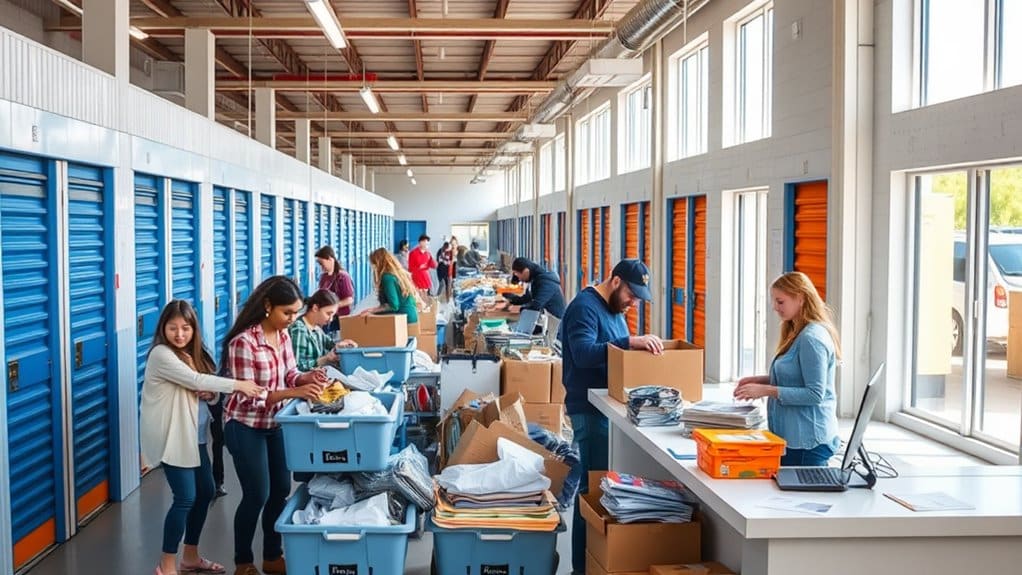
When considering shared storage, the benefits are clear, particularly in terms of cost savings and efficiency. By collaborating on storage solutions, you can significantly reduce expenses while optimising the space you use.
Here are some key advantages:
- Cost Savings: Splitting the rental costs makes storage more affordable, often halving your expenses.
- Improved Efficiency: Consolidating items allows for diverse storage needs to be met in one unit, enhancing space management.
- Shared Responsibilities: Dividing the workload makes it easier to organise and maintain the unit, fostering accountability among users.
- Additional Benefits: Sharing a unit can strengthen relationships through teamwork and shared experiences.
In summary, shared storage isn't just about saving money; it's about creating a more organised and efficient solution for your storage needs.
By working together, you can achieve a level of efficiency that individual units can't provide, allowing you to allocate those savings to other important costs.
Embracing shared storage means embracing flexibility and a more communal approach to managing your belongings.
Growth of Self-Storage Industry

The self-storage industry has experienced significant growth recently, driven by changing societal needs and economic factors. Valued at £44.6 billion in 2023, the global market is projected to reach £64.6 billion by 2030, reflecting a solid CAGR of 5.9%. This growth is in line with trends in self-storage, particularly the rising demand for flexible storage solutions as urbanisation and population growth continue.
Consumer preferences are reshaping the industry, with more individuals and businesses seeking storage options that cater to various requirements. The surge in e-commerce is also increasing demand, as businesses need spaces for inventory and shipping materials. Furthermore, the rise in relocations has made temporary storage solutions vital.
In the UK, the self-storage market is expected to expand from £36.5 billion in 2024 to £41.5 billion by 2029. With over 1,500 facilities across the country and an impressive average occupancy rate of 91.6%, it's evident that the self-storage sector is adapting to meet your needs.
This evolution highlights how essential self-storage has become in modern life, providing the flexibility to store and manage belongings efficiently.
Current Industry Trends

As you look into the current trends in the self-storage industry, you'll see a notable shift in market dynamics driven by consumer behaviour and technological advancements.
The increasing demand for flexible storage options and enhanced digital services is transforming the way facilities operate. For instance, many providers now offer online booking and management systems, making it easier for customers to access their units.
Staying updated on these trends is crucial, as it will enable you to anticipate future changes and adapt accordingly.
Market Growth Dynamics
The market for shared storage units is experiencing significant growth, influenced by several key factors. As urban areas expand and living spaces become smaller, the demand for storage solutions is increasing. To navigate this market effectively, understanding segmentation strategies and the competitive landscape is crucial.
- Urbanisation is leading to higher population density, particularly in places like London and Manchester.
- The self-storage sector is set to grow steadily, with projections estimating it will reach £38.6 billion by 2030.
- Increased job mobility and the rise of e-commerce are creating varied storage needs for consumers.
- Notably, 37% of people are contemplating relocation, which further drives the demand for storage options.
These trends underscore the need for more storage facilities and highlight the importance of operators adapting to changing consumer expectations.
By investing in flexible pricing and innovative solutions, businesses can enhance their chances of success in this evolving market.
With a potential supply peak anticipated in 2025, strategic planning is essential to seize new opportunities and maintain a competitive edge.
Technology Integration Advancements
Market dynamics aren't only influencing the demand for shared storage units but are also driving significant technological innovations within the industry. Facilities are increasingly adopting smart access control systems, incorporating smart locks and facial recognition technology.
These advancements enhance user convenience and add multiple layers of security for safeguarding your belongings. Automated access systems simplify entry, reducing the need for manual intervention and ensuring a smooth experience.
With real-time alerts for any unauthorized access attempts, you can trust that your items are safe. Many modern storage units also feature climate control, which maintains ideal conditions for sensitive belongings.
Remote monitoring technologies allow facility owners to manage operations, security, and maintenance from virtually anywhere, thereby improving customer satisfaction.
Mobile management is becoming more prevalent. Many renters prefer using their smartphones for access control, making mobile apps essential for quick entry and automated payment processes.
Cloud storage services further boost operational efficiency by providing secure, reliable data management, reducing the risk of costly outages.
As these technological advancements continue to develop, they'll transform your experience with shared storage units, offering greater freedom and control than ever before.
Consumer Behavior Shifts
Today's consumers are transforming the self-storage sector, driven by a need for flexibility and convenience in storage solutions. You want options that fit your lifestyle and reflect changing preferences.
Here are the key shifts in behaviour:
- Flexible access hours: You seek storage facilities that fit your schedule.
- Convenient locations: Proximity matters; you prefer storage units near your home or workplace.
- Value-added amenities: Features like climate-controlled rooms and packing materials are becoming essential.
- Personalised experiences: You expect user-friendly technology for easy booking and remote management of your storage unit.
With urbanisation and higher population density, the demand for self-storage is booming. Baby Boomers are downsizing, while Millennials are dealing with clutter, both searching for effective storage solutions.
Notably, 61% of storage customers are relocating to suburban areas, indicating a demographic shift.
As you navigate this changing landscape, remember that your preferences shape the market. Self-storage providers must adapt to these trends to meet your needs, ensuring you have the freedom to manage your belongings effectively.
Challenges Faced by Users

Navigating the complexities of shared storage units can be challenging for users. Issues such as scheduling conflicts and financial disputes can complicate the sharing experience. For instance, coordinating access times requires careful communication, as clashing calendars can lead to frustration and delays. If agreements regarding space usage and security responsibilities are not clearly defined, misunderstandings can create tension.
Here's a brief overview of the challenges you may encounter:
| Challenge | Description | Impact |
|---|---|---|
| Scheduling Conflicts | Overlapping schedules can hinder access coordination | Frustration and delays |
| Financial Disputes | Unexpected costs or uneven usage can lead to arguments | Strained relationships |
| Space Allocation | Disagreements on using shared space | Clutter and disorganisation |
| Security Responsibilities | Shared access heightens the risk of damage or loss | Liability issues |
| Communication Issues | Poor communication can worsen disputes | Misunderstandings |
To overcome these challenges, effective user management and strong organisational practices are essential. By addressing these concerns proactively, you can create a more harmonious shared storage experience.
Best Practices for Sharing

Sharing a storage unit can be a sensible choice for those needing extra space, but it demands careful planning and collaboration to ensure a smooth experience.
Here are some best practices for effective shared space management:
- Set Clear Boundaries: Agree on responsibilities and how to allocate space from the outset.
- Create a Formal Agreement: Write down the costs and access rights to avoid misunderstandings.
- Keep Communication Open: Regular chats can help address any changes or maintenance needs.
- Organise and Label: Clearly label items and maintain an inventory to minimise confusion.
Cost-Effectiveness of Shared Units
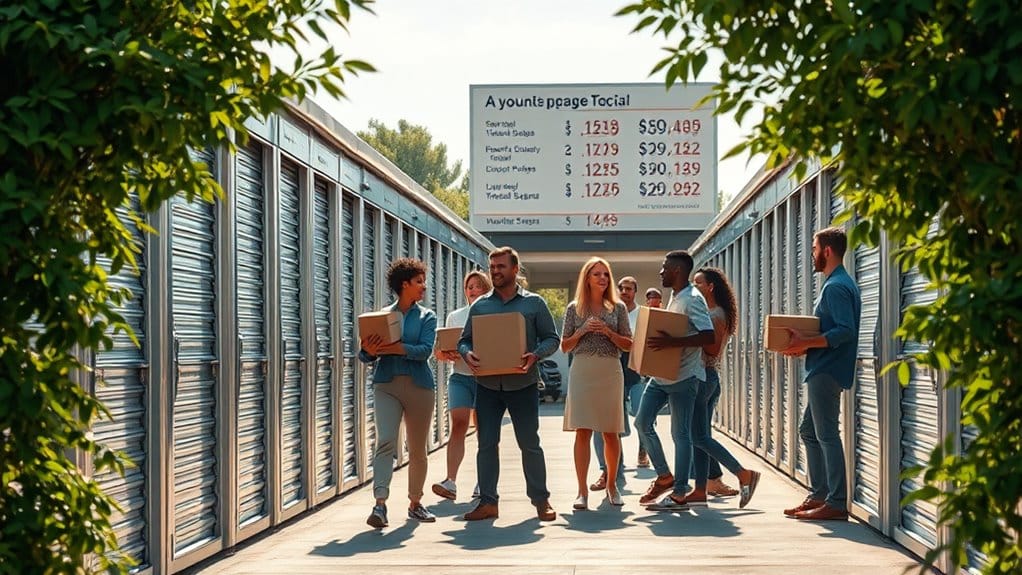
Cost-effectiveness is a key benefit of using shared storage units, particularly for those on a tight budget. By splitting costs, you can significantly reduce your individual expenses, making storage more affordable. Monthly prices typically range from £50 to £150, and sharing with others allows for greater flexibility in managing your finances.
Larger shared units make better use of space and often offer more value per square foot compared to smaller individual units. Sizes can vary from 1.5×1.5 metres to 3×9 metres, which accommodates various storage needs. This way, you can allocate your resources efficiently and avoid financial strain.
Companies like Extra Space Storage and CubeSmart provide budget-friendly options, averaging around £130 per month. With market prices fluctuating based on demand, it's wise to compare options to secure the best deal.
Ultimately, choosing shared storage units not only saves you money but also helps you manage your finances more effectively, allowing you to invest in what matters most to you.
The Role of Technology
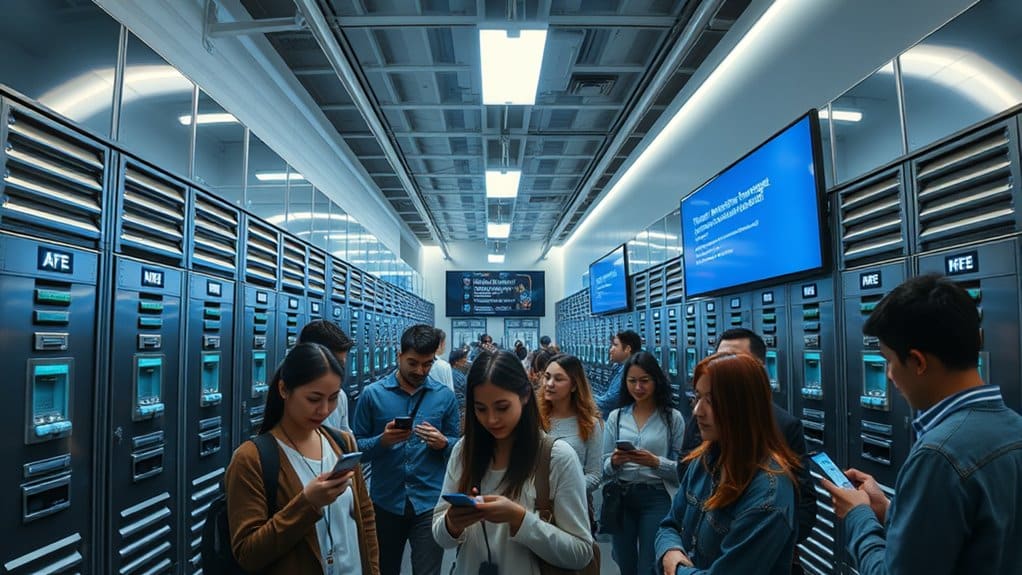
As technology evolves, it significantly impacts shared storage units, boosting operational efficiency and enhancing customer experience. Innovations streamline processes and improve user interactions.
Here are some key ways technology is making a difference:
- Smart Surveillance: Real-time monitoring enhances security, ensuring your belongings are protected.
- Automated Inventory: RFID tags and barcoding improve data management, making it easier to track items accurately.
- Energy Efficiency: Modern HVAC systems and solar panels promote sustainable facility management.
- Robotic Retrieval: Autonomous robots enable quicker storage and retrieval, minimising wait times.
These advancements change how you engage with storage units. Mobile apps allow for remote management, while technologies like facial recognition improve convenience and security.
Additionally, blockchain integration ensures transparency and trust in transactions. As you consider shared storage options, it's evident that technology not only streamlines operations but also provides greater control and peace of mind.
With these innovations, shared storage units are evolving into intelligent solutions designed to meet your needs.
Future of Shared Storage Units
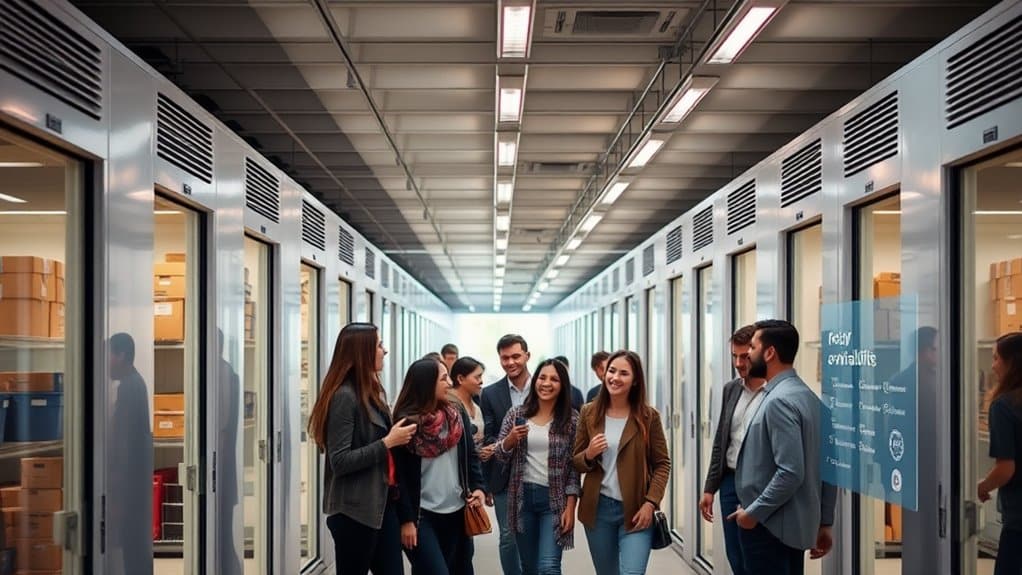
The future of shared storage units is set for significant growth, driven by changing market demands and innovative business models. As urban living spaces become smaller, there's a rising need for compact, affordable storage solutions that support the shared economy and communal living.
With the self-storage market projected to reach £86.05 billion by 2028, demand for alternative storage options is expected to increase, particularly among millennials looking for extra space.
New business models are emerging, such as hybrid storage and co-working environments, which cater to entrepreneurs and small business owners. Peer-to-peer platforms enable you to rent out unused space effectively, fostering a sense of community and collaboration.
Furthermore, there's a growing preference for climate-controlled units and enhanced security features, reflecting your desire for convenience and safety.
Flexible leasing options will allow you to select arrangements that fit your lifestyle. As the industry adopts automation and IoT technologies, you'll experience smarter and more efficient storage solutions.
With continued investment and resilience against economic downturns, shared storage units are poised to revolutionise how you manage space and storage needs in the coming years.
Frequently Asked Questions
How Do I Choose the Right Shared Storage Unit?
To choose the right shared storage unit, assess the items you'll be storing and prioritise collaboration with your partner. Consider factors such as security, location, costs, sizes, and accessibility. For instance, if you both need to access the unit regularly, a central location with easy access is essential. Make sure the unit meets both your needs.
Can I Access My Shared Storage Remotely?
Yes, you can access your shared storage remotely. With advanced remote access features, you can manage your belongings at any time, ensuring both convenience and security. This allows you the freedom to check on your items or retrieve them whenever needed, making it easier to stay organised.
What Happens if Someone Damages Shared Items?
If someone damages shared items, refer to your responsibility agreement. Make sure to document the damage clearly and discuss reimbursement with those involved. For instance, if a communal kettle is broken, talk it through with housemates to agree on how to cover the cost. Clear communication is key to resolving these issues fairly.
Are There Insurance Options for Shared Storage Units?
Yes, there are several insurance options available for shared storage units. You can consider liability coverage from third-party providers, which offers tailored protection against theft, damage, and other unexpected incidents that might affect your belongings. For instance, if someone accidentally damages your items or if there's a break-in, having the right insurance can give you peace of mind.
How Is Access Managed Among Multiple Users?
Picture a digital lockbox where you control access permissions via user agreements. Each user is assigned a unique code, providing secure entry while allowing you to manage access effectively. This approach not only enhances security but also improves the overall user experience.
Conclusion
In a world where misplacing your car keys is common, why not consider sharing your entire wardrobe with others? Shared storage units could be the answer to your cluttered home, but they come with their own set of challenges. While this trend is on the rise, successful sharing hinges on trust and a healthy dose of caution. After all, would you really want to risk your cherished belongings among a mix of someone else's forgotten items? Welcome to the unpredictable world of shared storage!