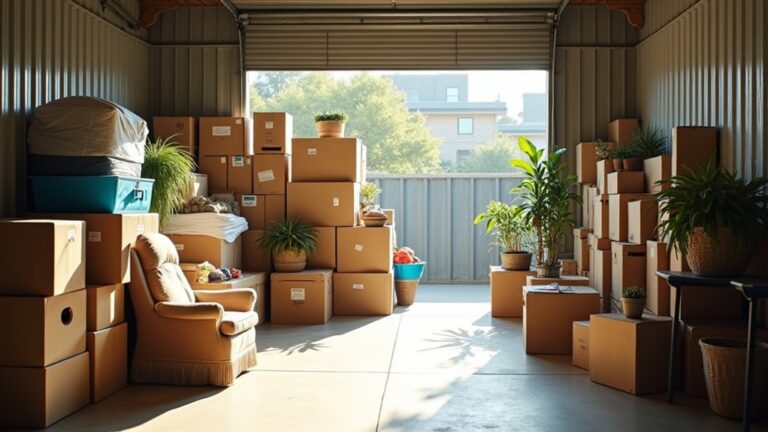
To avoid common self-storage mistakes, begin by selecting the right unit size and facility. Assess your current needs and think about future storage requirements to ensure you don't end up with too much or too little space. Pack your items carefully with sturdy materials, and use clear labels and effective organisation methods. Keep your inventory updated and maintain records of any high-value items. Also, pay attention to security features like individual alarms and monitored access to safeguard your belongings. Lastly, check the cleanliness and maintenance of the facility you choose. Following these steps will help you make informed choices and protect your items.
Key Takeaways
- Assess your storage needs carefully to select the right size unit and avoid paying for unnecessary space.
- Choose a storage facility with strong security measures, such as CCTV and gated access, to keep your belongings safe.
- Pack items properly and label boxes clearly to prevent damage and make retrieval simple.
- Regularly update your inventory list and carry out checks to keep track of your stored items accurately.
- Familiarise yourself with rental agreements and costs to avoid unexpected charges and ensure you understand what's included.
Choosing the Right Storage Unit
When choosing the right storage unit, it's vital to consider several key factors to ensure it meets your needs.
Start with the location; opt for a facility near your home or workplace for easy access, especially if you plan to visit often. Also, check the hours of operation—24/7 access can be incredibly convenient.
Next, pay attention to security features. Seek out facilities with security cameras, a gated perimeter, and robust locks on the units. Good lighting not only enhances safety but also gives you peace of mind. Additionally, facilities with on-site management during operational hours can further enhance security and provide assistance when needed.
Don't ignore cleanliness and maintenance, as these protect your belongings. If you have delicate items, look into climate-controlled units.
When reviewing rental agreements, make sure you understand the costs and what features are included.
Lastly, evaluate the overall value. While price is important, consider the quality of service and any special offers for long-term rentals. A knowledgeable staff can significantly improve your storage experience, providing help when you need it.
Calculating Appropriate Unit Size
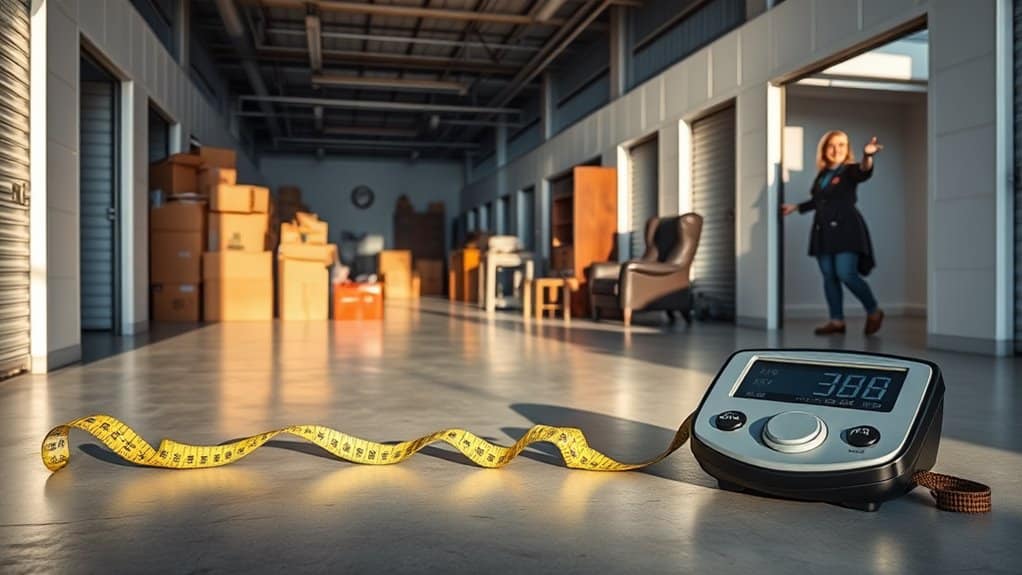
When determining the right unit size, it's essential to accurately assess your current storage needs and anticipate future requirements. This approach ensures you avoid a cramped space or overspending on unnecessary room. For instance, if you're storing furniture from a two-bedroom flat, consider how much space you'll need for additional items in the future. Using inventory lists and online calculators can simplify this process significantly. Additionally, utilizing a size calculator can provide instant recommendations for the appropriate unit size based on the items you plan to store. Moreover, understanding the storage duration can help you determine whether a smaller unit for short-term needs or a larger unit for long-term storage is more suitable for your situation.
Accurate Size Estimation
Getting the right size for your storage unit is crucial for a smooth experience. Many people misjudge their needs, either underestimating or overlooking the full range of their belongings. To prevent this, start by listing everything you plan to store, including furniture and awkwardly-shaped items.
Estimating the number of boxes can also aid in determining the appropriate unit size. Use spatial planning tools, such as visual size guides or online calculators, to grasp what fits in each unit. If you're unsure, it's often better to opt for a slightly larger unit; overcrowding can lead to damage and safety risks. Additionally, consider the height of storage units, as most units are 8 feet tall, allowing for efficient vertical stacking. A good rule of thumb is to choose a unit that provides at least extra space for walkways and easy access to your items.
Remember to consider vertical space—most units are 2.4 metres tall, allowing for efficient stacking. Finally, take the time to measure larger items. A thorough approach will save you hassle later on, ensuring your storage experience is organised and stress-free.
Future Space Considerations
Considering future storage needs is crucial when choosing the right unit. Start by estimating your current inventory, but also think ahead. Changes in your life—like moving, expanding a business, or taking up new hobbies—might require additional space. The demand for self-storage remains stable due to trends like urbanization and decluttering. Additionally, over 20% of Americans utilize self-storage, highlighting its growing popularity among individuals and businesses alike.
Use a size guide and measure your items for an accurate fit. It may be wise to opt for a larger unit to accommodate future growth. When planning the layout, ensure there's enough room to navigate safely. It's not just about fitting everything in; easy access to your belongings is important. Make use of vertical space by stacking items and using shelving, placing heavier items at the bottom for stability.
Forecasting your space requirements is essential. Consider your long-term needs and look for storage facilities offering flexible leasing options, so you can upgrade as needed. Avoid overloading your unit, as this can lead to damage and make retrieving items difficult. By planning for future storage needs, you ensure you're not only meeting your current requirements but also preparing for what's to come, allowing you to adapt as your life evolves.
Assessing Inventory Before Storage
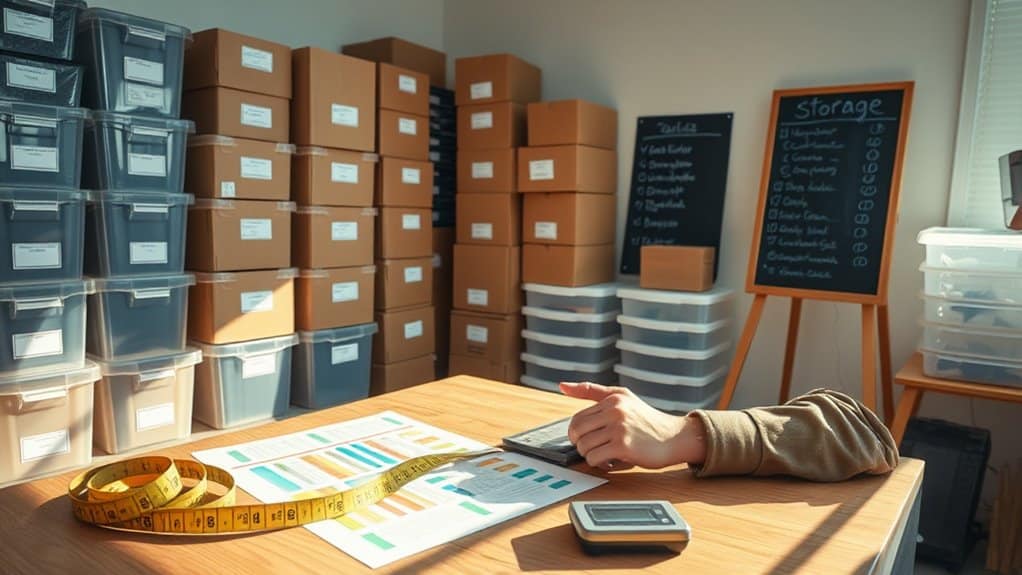
Before storing any items, it's crucial to assess your inventory thoroughly. Start by identifying which items you need to store and their specific requirements. Consider the size, quantity, and how often you'll need access to each item. A checklist or a simple spreadsheet can help organise your items by category, making management easier.
As you take stock, pay attention to the condition of each item and any special considerations. Grouping items by size or how frequently you use them can help optimise your space and simplify retrieval. Using inventory tracking software can assist in keeping track of stock levels and movements, ensuring your records stay accurate. Furthermore, it's essential to track product movement to maintain accurate records of your inventory.
Make sure to label boxes clearly for easy identification. Document the condition and quantity of each item, and take photos of valuable goods for added security.
Plan your storage layout to maximise space, placing frequently accessed items near the front.
Lastly, schedule regular inventory checks to keep your list up to date. By maintaining a clear inventory assessment, you'll have a more organised and stress-free storage experience.
Understanding Unit Dimensions
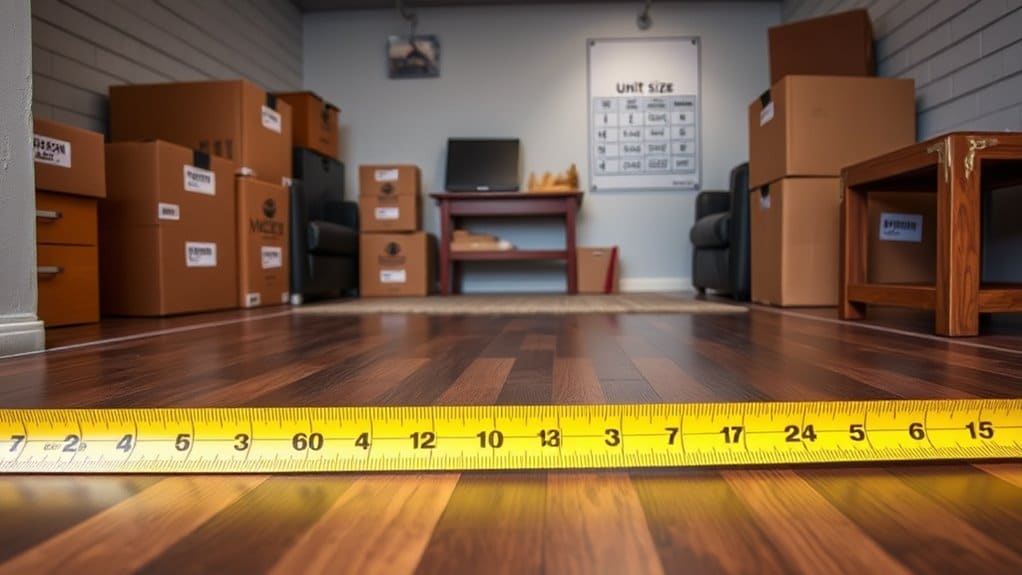
Once you've evaluated your belongings and identified what needs to be stored, understanding storage unit dimensions is crucial for optimising your space. The right dimensions can significantly improve your storage efficiency.
For smaller items, a 5×5 unit offers 200 cubic feet—ideal for boxes, clothing, or small furniture, much like a small cupboard. Choosing the right unit size is critical to ensure that you have enough room for all your belongings without overpaying for unnecessary space.
If you're storing items from a one-bedroom flat, a 10×10 unit provides 800 cubic feet, accommodating larger items like sofas and appliances, akin to a single garage.
For more substantial needs, a 10×20 unit with 1,600 cubic feet is suitable for king-size bedroom sets or even a car.
If you're moving the contents of a larger house, a 10×30 unit is your best option, offering 2,400 cubic feet, comparable to an extra-long garage, perfect for large furniture and even boats.
Avoiding Over or Under Sizing
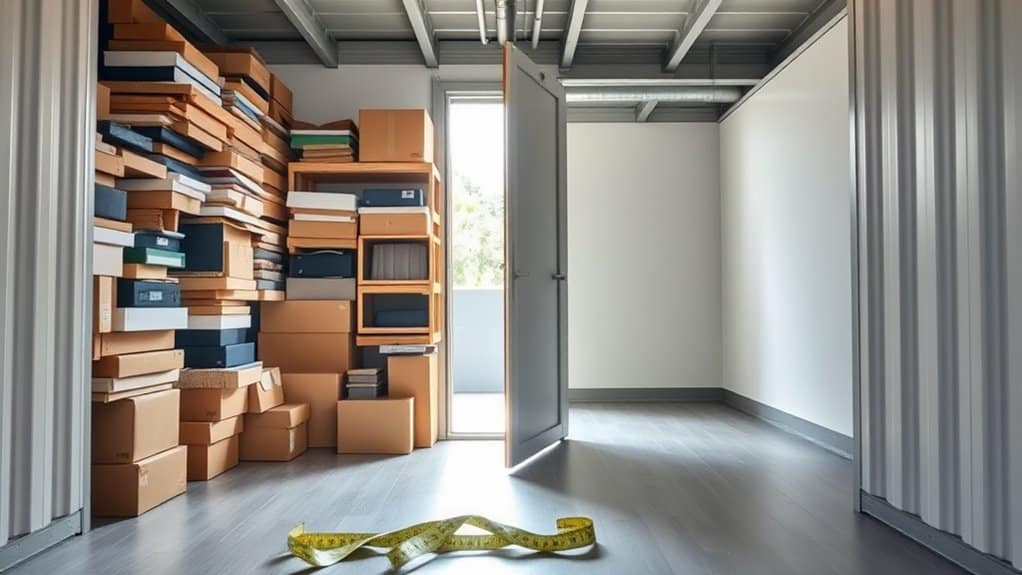
Avoiding the issues of over or under sizing your storage unit is crucial for effective organisation and easy access. Start by taking a thorough inventory of your items; make a list with their dimensions. This helps you determine the total space you need and ensures you don't misjudge your requirements.
Remember to consider the shape and size of irregular items, as these can affect how you use your space. Familiarise yourself with common unit sizes—such as 5×5, 5×10, and 10×10—so you can choose the right one for your belongings.
Visiting a storage facility can help you visualise how your items will fit. Avoid cramming everything into a unit, as this can lead to damage and chaos. Instead, choose a size that allows for proper organisation and easy access. Larger units may provide better organization and access to belongings, making it easier to retrieve items when needed.
Make the most of vertical space by considering shelving systems. By stacking items strategically and leaving room to move around, you can create a functional storage area without overcrowding.
Planning for Future Expansion

Selecting the right storage unit size is just the first step; it's vital to consider your future needs. With significant growth in the self-storage market expected in 2024 and 2025, now is the time to strategise your storage solutions. As supply is set to peak by 2025, think about how your circumstances might change and whether you'll require additional space. Notably, there is a significant decrease in new supply expected post-2025, which could affect availability.
Consumer preferences are shifting, with 37% of people in the UK planning to move within the next year. This could lead to a resurgence in demand for storage, which may impact rental rates.
It's crucial to evaluate your investment strategies, particularly as the market aims to address oversaturation in certain areas. Investing in well-established facilities from 2028 onwards could be a prudent move. Collaborating with experienced firms can help guide your investments effectively.
Utilizing Proper Packing Techniques

When packing for self-storage, it's essential to use sturdy packaging materials to keep your belongings safe. Clear labelling makes it easier to locate items without having to sift through every box. Additionally, ensuring proper weight distribution will keep your boxes manageable and prevent damage during transport and storage. For instance, place heavier items at the bottom and lighter ones on top to maintain stability. To maximize space efficiency, consider packing vertically by storing large furniture upright and utilizing the height of your storage unit.
Sturdy Packaging Materials
When it comes to effective self-storage, selecting sturdy packaging materials is vital for safeguarding your items. The right packing materials not only protect your belongings but also support eco-friendly practices, enabling you to store sustainably.
Here are some essential materials to consider:
- Quality Boxes: Ensure they're in good condition, free from dampness or damage.
- Specialty Boxes: Use wardrobe boxes for clothing and mirror boxes for fragile items.
- Plastic Bins: Ideal for protecting moisture-sensitive items like books and textiles.
- Recycled Materials: Opt for boxes made from recycled materials to reduce your environmental footprint.
When packing, always place heavier items at the bottom of boxes and use cushioning for delicate items. Additionally, remember to wrap fragile items individually in bubble wrap or foam sheets for extra protection.
Disassemble larger furniture to save space, and make sure everything is clean and dry before packing. This careful approach helps prevent mould and damage, giving you peace of mind.
With the right packing materials and techniques, you can optimise your storage space while protecting your valued belongings and embracing a more sustainable lifestyle.
Effective Labeling Strategies
Effective labelling strategies are crucial for ensuring your self-storage experience is smooth and straightforward. Start by choosing the right labelling tools; opt for durable materials like printed labels rather than sticky notes that might fall off. Clearly write the contents with a pen or marker, and label boxes on multiple sides for easy identification.
Next, use colour coding and visual labelling techniques. Assign different colours for categories, such as rooms or types of items, and use bold letters for better readability. Clearly mark boxes containing fragile items to prevent accidents.
Descriptive labelling is also important. Include specific contents, the room they belong to, and even dates for seasonal items. This way, you'll know what's inside without having to rummage through boxes.
Finally, keep your labels organised and tracked. Maintain a list of labelled boxes and consider drawing a simple map of your storage layout. This will help you quickly locate frequently used items and make your self-storage experience as efficient as possible.
Proper Weight Distribution
Once you've mastered effective labelling strategies, it's time to focus on proper weight distribution through careful packing techniques. Achieving the right weight balance is crucial for maintaining stability in your self-storage unit.
Here are some essential tips for packing wisely:
- Place heavier items at the bottom to create a solid foundation.
- Use sturdy containers with flat tops to prevent shifting.
- Limit stack height to ensure easy access and stability.
- Employ interlocking patterns, such as brick or cross-stacking, to enhance stability.
By following these techniques, you'll create a safer environment for your belongings.
Position bulkier items towards the back and frequently used items near the front for easy retrieval. Avoid overcrowding by planning your space wisely—leave gaps for air circulation and access.
Finally, ensure your boxes rest on flat surfaces to distribute weight evenly across the unit. This will help prevent collapse or damage.
With these strategies, you'll achieve a more organised and accessible storage space, allowing you to retrieve your items whenever you need them!
Ensuring Climate Control Needs

When storing your belongings, it's important to consider whether climate control is necessary to prevent damage from environmental factors. Maintaining stable temperatures and humidity levels is crucial for sensitive items.
For instance, wooden and leather furniture can warp or rot, while high humidity can damage electronics.
Before selecting a storage unit, evaluate what you're storing. If you have valuable collections like coins, stamps, or artwork, a climate-controlled environment is essential to protect them from temperature extremes.
Ideally, the unit should keep temperatures between 13-29°C and maintain consistent humidity levels. This applies not only to long-term storage but also to short-term periods, especially for delicate materials.
Evaluating Security Measures
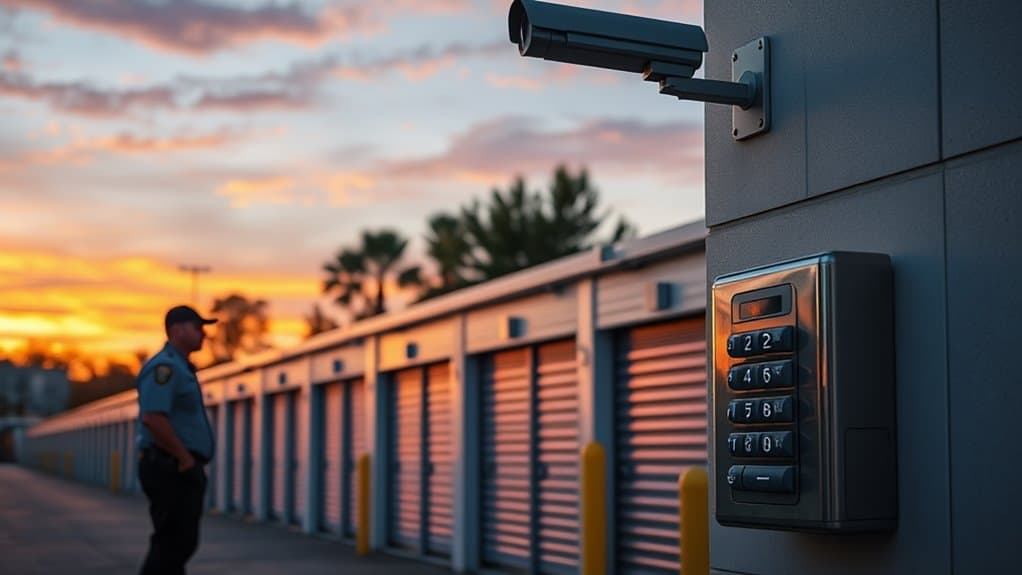
When assessing security measures for your self-storage unit, it's crucial to have a reliable security features checklist.
Familiarise yourself with how access control systems function and their significance in safeguarding your possessions. By implementing strong security measures, you can significantly minimise the risk of unauthorised access and potential loss.
For example, a unit with keypad entry or CCTV can provide peace of mind that your belongings are well protected.
Security Features Checklist
To ensure the safety of your belongings, it's important to assess the security features of a self-storage facility. You want peace of mind, so look for reliable security technology and surveillance systems.
Here's a straightforward checklist to help you:
- Video Surveillance: Check that the facility has high-quality cameras monitoring all areas, both day and night.
- 24/7 CCTV Monitoring: Continuous monitoring can deter crime and provide evidence if required.
- Individual Alarms: Each unit should have its own alarm system for added protection.
- On-Site Security Personnel: Trained staff can respond quickly to any security concerns.
Also, pay attention to perimeter security, such as strong fencing and controlled access gates.
Inquire about motion sensors, fire alarms, and the regular upkeep of security systems. By concentrating on these key features, you'll find a self-storage facility that prioritises the safety of your belongings.
Access Control Importance
Access control is a vital aspect of self-storage security, offering numerous benefits to protect your belongings effectively. By implementing access control, you can restrict entry to your unit, ensuring that only authorised individuals can access your space. This significantly reduces the risk of theft and unauthorised access.
Advanced security technologies, such as keypad or card readers, provide an additional layer of protection. Real-time monitoring and integration with CCTV systems enable you to observe activity, while AI can analyse footage for any suspicious behaviour.
Furthermore, access control systems create a digital log, detailing who accessed your unit and when.
When choosing an access control system, weigh the cost against essential features. High-quality locks, gated access, and alarm systems further enhance security.
Organizing the Storage Unit
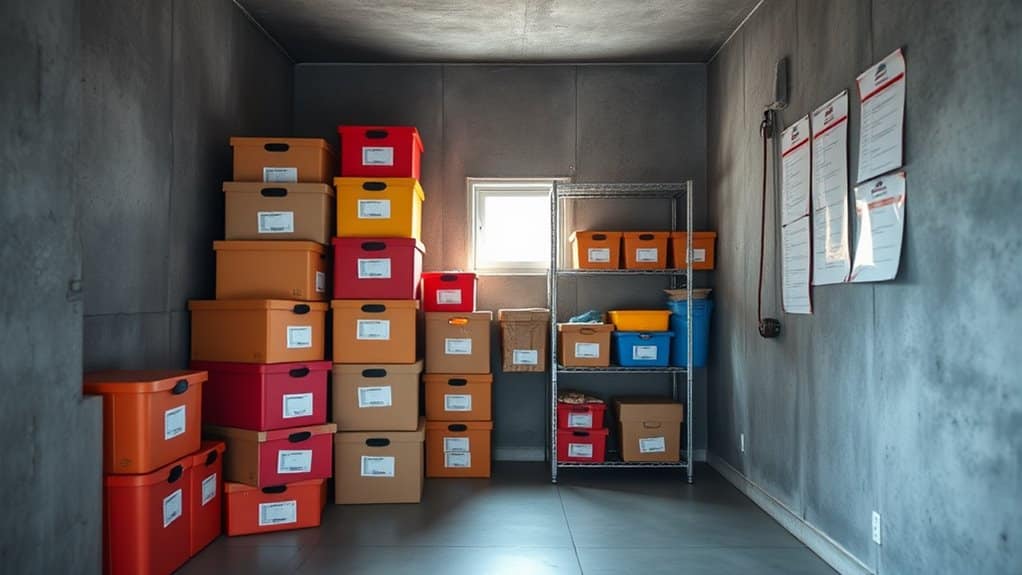
A well-organised storage unit can save you time and reduce stress. By categorising items effectively and mapping out your space, you'll create a system that's easy to navigate.
Start by grouping items by type or room to make locating them simpler. Here's how to get started:
- Make a detailed list of all items stored.
- Use waterproof labels that face the entrance for easy visibility.
- Designate sections for each room, such as kitchen or office.
- Place frequently used items at the front for quick access.
Mapping out your storage unit helps you visualise where everything is. Consider drawing a simple layout so you know where to find your belongings.
Taking photos of your items can serve as a visual inventory, and recording serial numbers is useful for insurance.
Keep your master list updated as contents change over time. By following these straightforward steps, you'll ensure a hassle-free experience every time you access your storage unit, allowing you to focus on what truly matters.
Maximizing Vertical Space
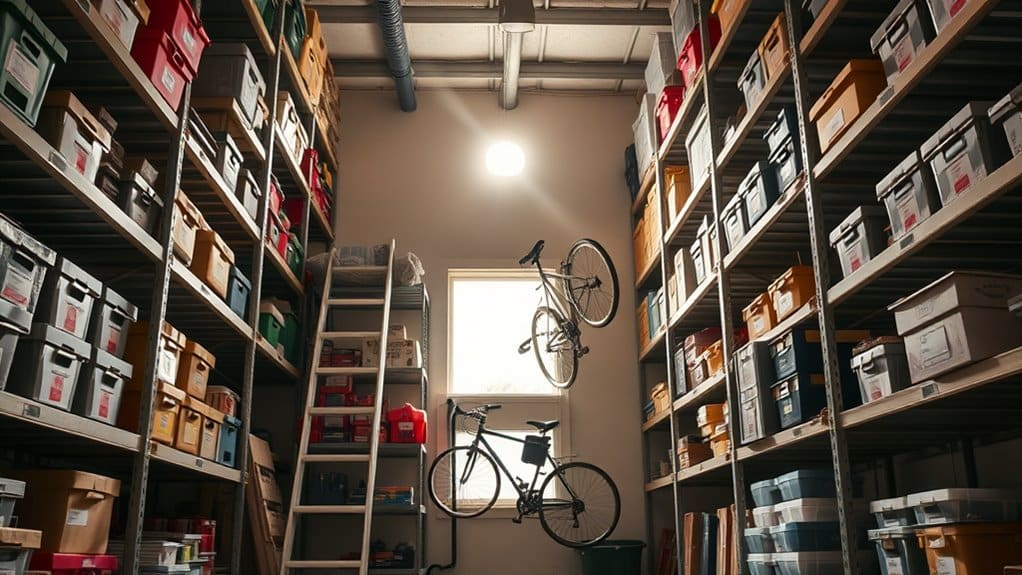
Organising your storage unit is key to making the most of every inch, especially when it comes to vertical space. By utilising the full height of your unit—from floor to ceiling—you can significantly boost your storage capacity without needing more room.
Start by installing freestanding shelving units or wall-mounted hooks to take advantage of vertical storage. Place heavier or less frequently used items on lower shelves for easy access, while lighter items can go higher up.
Consider elevating items off the floor with pallets to protect them from moisture and create extra space underneath. You can even use overdoor hooks or shoe organisers to turn doors into additional storage areas.
For a bit of greenery, think about adding a vertical garden for plants or herbs, which adds both function and style.
Stack boxes neatly and label them for easy identification, ensuring you can retrieve what you need without hassle. Custom shelving solutions tailored to your needs can also be very effective.
Long-Term Storage Considerations
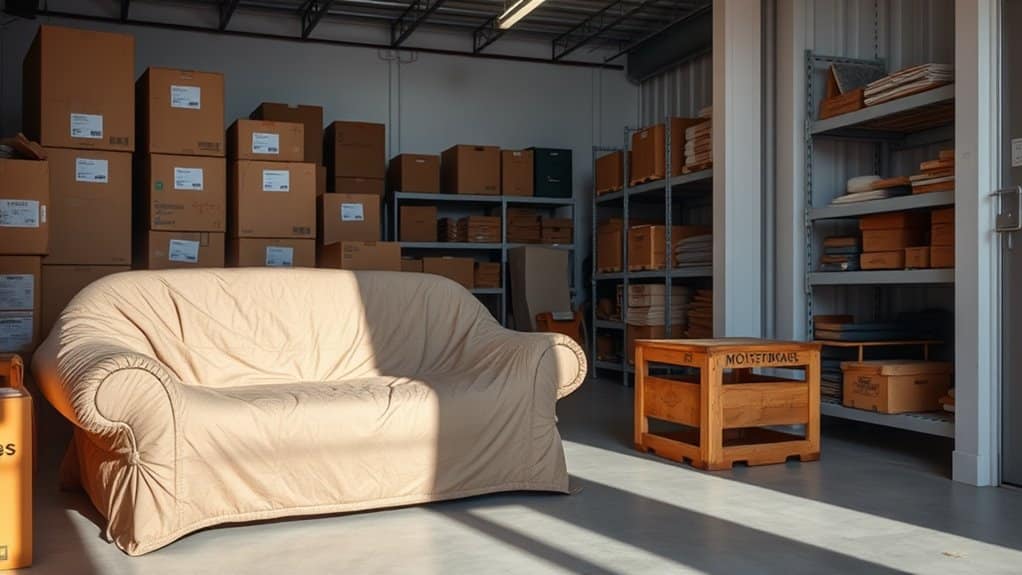
How can you ensure your belongings remain safe and in good condition during long-term storage? Start by selecting a trustworthy facility that prioritises unit maintenance and security.
Next, prepare your items properly and perform regular checks to identify any issues early on.
Here are some key considerations:
- Clean and dry items before packing to avoid moisture damage.
- Use quality packing materials for added durability.
- Label boxes clearly for easy retrieval.
- Inspect your storage unit regularly.
Choosing the right size unit is crucial. Overcrowding can cause damage and make access difficult.
Consider climate-controlled options for sensitive items. Keep a detailed inventory of stored items and review your contract periodically to ensure you understand your commitments.
Managing Environmental Factors
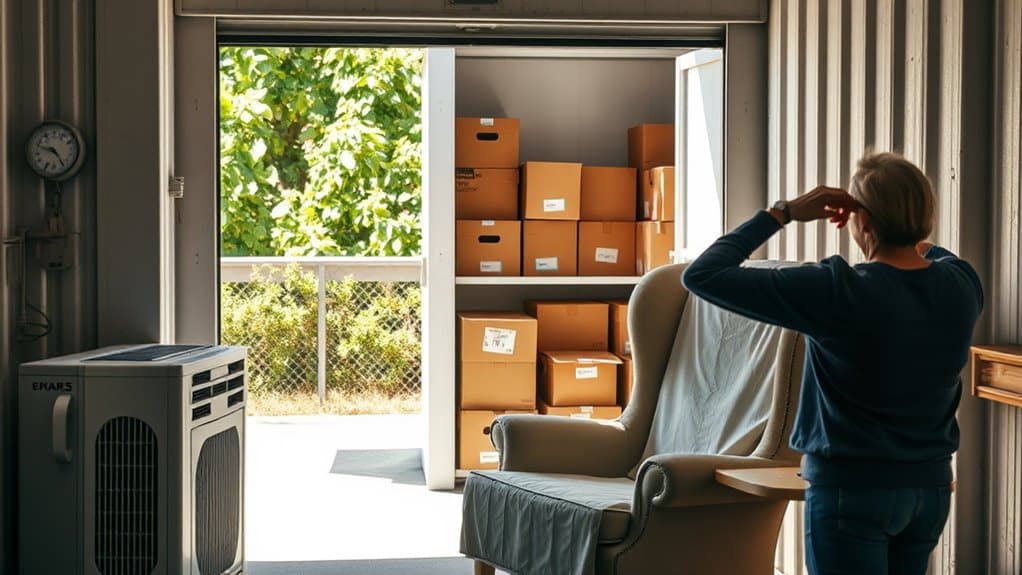
When storing your belongings, it's essential to consider the environmental factors of your storage facility, as these can significantly affect the condition of your items. Ensure the facility adopts sustainable practices, such as energy-efficient designs and eco-friendly materials.
Here's a brief overview of key environmental factors to assess:
| Factor | Importance |
|---|---|
| Energy Conservation | Reduces reliance on the grid by using solar panels and LED lighting. |
| Sustainable Materials | Opt for facilities that use recycled materials and low-VOC options to enhance air quality. |
| Water Management | Look for facilities that implement water-efficient systems to reduce waste. |
Implementing Pest Control Strategies
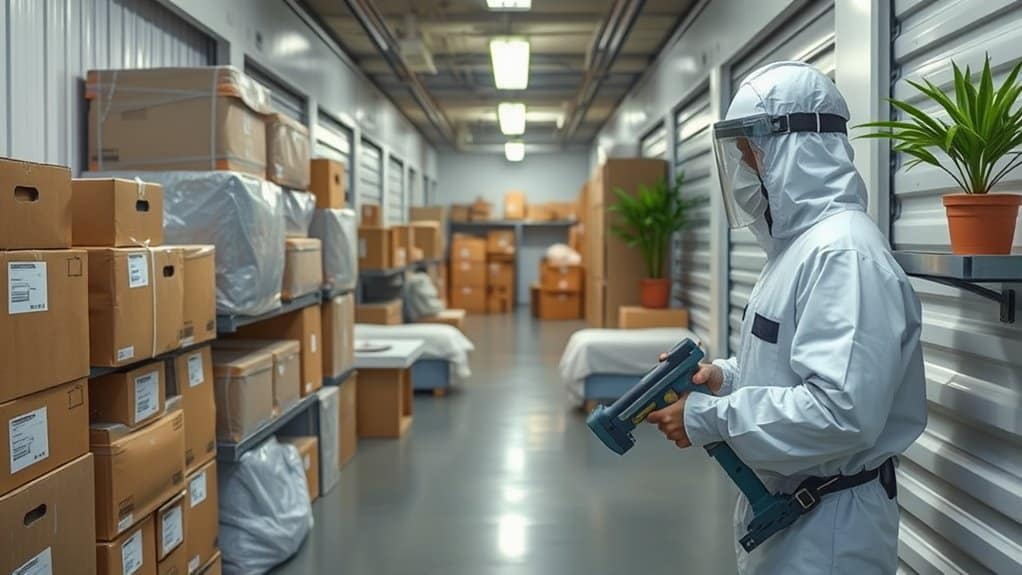
Implementing effective pest control strategies is essential for protecting your stored items. By taking proactive steps, you can significantly reduce the likelihood of infestations. Here are some straightforward measures to consider:
- Conduct regular inspections to spot potential entry points and nesting areas.
- Seal any gaps around doors and windows to keep pests out.
- Keep areas dry to prevent moisture build-up that could attract unwanted insects.
- Use plastic containers with secure lids instead of cardboard boxes, which are more inviting to pests.
Educating tenants is also vital. Inform them about the importance of cleanliness and discourage food storage in units.
By fostering a cooperative environment, you can strengthen your pest management efforts. Work with licensed pest control professionals to perform regular treatments and monitor for pest activity.
Maintaining cleanliness and proper waste disposal around your facility will further deter pests. With ongoing efforts and communication, you can safeguard your belongings and enjoy peace of mind knowing your storage space is secure.
Keeping Accurate Records

Maintaining a clean and pest-free storage area is crucial, but accurate record keeping is equally essential for effective management. Start by labelling all items clearly and descriptively.
Create a digital inventory that lists the contents of each box or container, making it easier to locate what you need. Remember to keep this list updated and include dates for stored documents to track retention periods effectively.
Organise your storage systematically, sorting documents by category and date for quick access. Using shelving units can optimise your space and keep frequently needed items within easy reach.
It's wise to consult with legal experts to establish clear record retention policies, determining how long to keep or dispose of documents.
Regular audits are vital. Check your records for accuracy and completeness, ensuring all items are properly sealed.
Update your inventory lists and document logs as necessary. By prioritising these practices, you'll safeguard your belongings and ensure you can access important information whenever needed, without unnecessary stress.
Frequently Asked Questions
What Items Should I Avoid Storing in a Self-Storage Unit?
Avoid storing perishable items, hazardous materials, valuable antiques, and important documents in self-storage units. These can result in damage, legal complications, or loss. For instance, food items can decay, while chemicals might pose safety risks. Keeping your belongings secure ensures you can enjoy a tidy space without worry.
How Can I Prevent My Items From Getting Damaged in Storage?
To protect your belongings in storage, plan ahead. Use sturdy packing materials and proper techniques. Consider climate control to guard against dampness and temperature changes. For example, wrapping fragile items in bubble wrap can prevent breakages, while using plastic containers can keep moisture out. This approach ensures your items stay in excellent condition.
Are There Any Hidden Fees Associated With Storage Units?
Yes, there can be hidden charges in rental agreements for storage units. Watch out for admin fees, lock charges, and compulsory insurance costs. Always read the fine print and don't hesitate to ask questions to avoid any unexpected expenses. For example, some companies may advertise a low monthly rate but add on these extra fees, which can significantly increase your overall cost.
How Do I Choose the Best Location for My Storage Unit?
When selecting a storage unit, think about how easy it is to access from main roads and the safety of the area. A well-lit, secure location not only safeguards your belongings but also gives you peace of mind, allowing you to store your items without worry.
What Should I Do if I Need to Access My Items Frequently?
If you need to access your items often, focus on organising your storage effectively. Place frequently used items at the front, use clear labels on boxes, and ensure pathways are unobstructed. For instance, if you regularly need your gardening tools, keep them in an easily accessible spot. This way, you'll have quick and hassle-free access to your belongings whenever you need them.
Conclusion
In summary, steering clear of common self-storage blunders can save you both time and money. Did you know that nearly 30% of renters choose a unit that's too small? By selecting the right size, assessing what you need to store, and considering environmental factors, you can ensure your belongings remain safe and easily accessible. Keeping precise records and employing pest control measures will further safeguard your items. With thoughtful planning, you'll optimise your storage experience and keep your possessions in excellent condition.