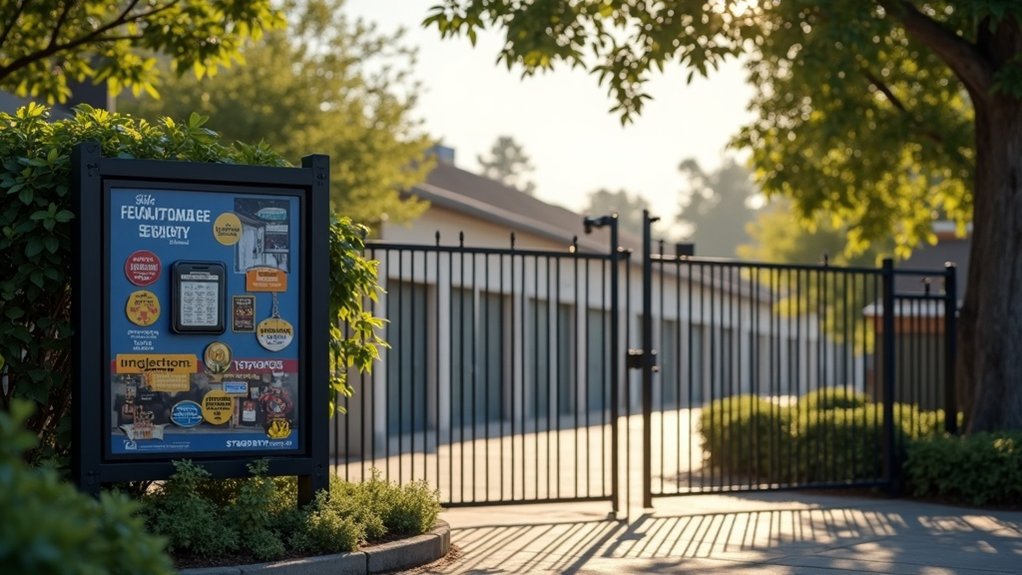
To check the security ratings of local self-storage facilities, focus on key elements such as access control, surveillance systems, and physical security measures. Look for features like automated entry systems, high-definition cameras, and certified alarm systems. It’s also important to consider whether there are on-site security staff and established emergency response procedures. By evaluating these factors and any relevant security ratings or accreditations, you’ll have a better understanding of a facility’s safety measures, helping you make an informed decision.
Key Takeaways
- Research online reviews and ratings from customers to assess the security satisfaction of local self-storage facilities.
- Check the facility’s website for detailed information on their security features and any ratings they might have.
- During facility tours, ask about security measures such as CCTV, alarms, and the presence of staff on-site.
- Request details on compliance with industry standards and any recent security audits from management.
- Compare the security ratings and features of different facilities to help you make a well-informed choice.
Understanding Security Ratings in Self-Storage Facilities
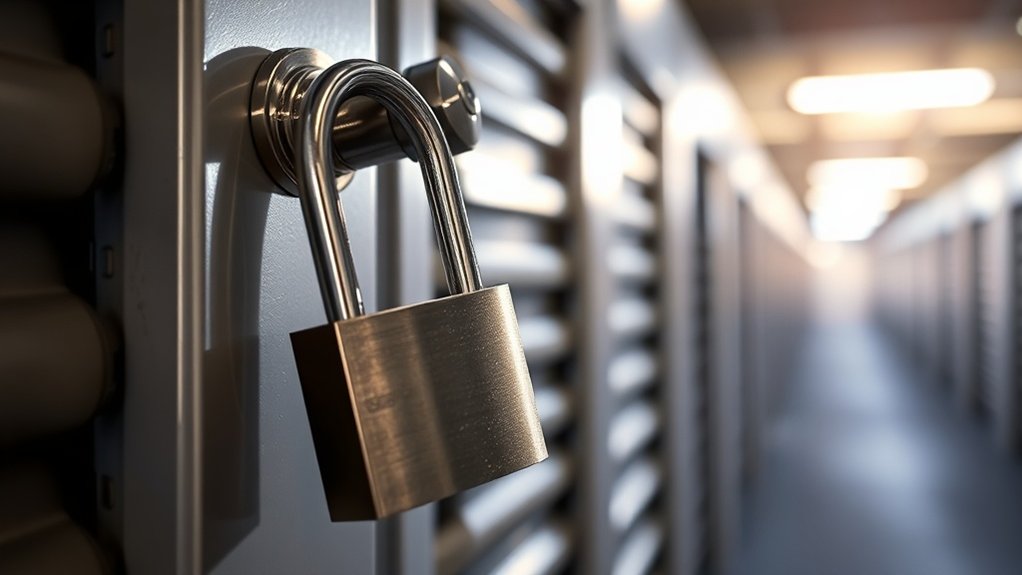
Not all self-storage facilities offer the same level of security, so it’s important to understand their security ratings to ensure your belongings are safe.
Security assessments use rating systems to evaluate factors such as access control, surveillance, physical barriers, and the presence of on-site security. Higher ratings indicate more advanced security measures, like electronic gates and biometric access, which boost tenant safety. Facilities with comprehensive video surveillance and trained security staff usually receive better ratings, giving customers greater peace of mind. The layout and technology of the facility also play a role in these ratings, as effective security prevents break-ins. Additionally, facilities that incorporate robust roller shutters and advanced security systems can significantly enhance the overall security rating.
Key Components of Security Systems
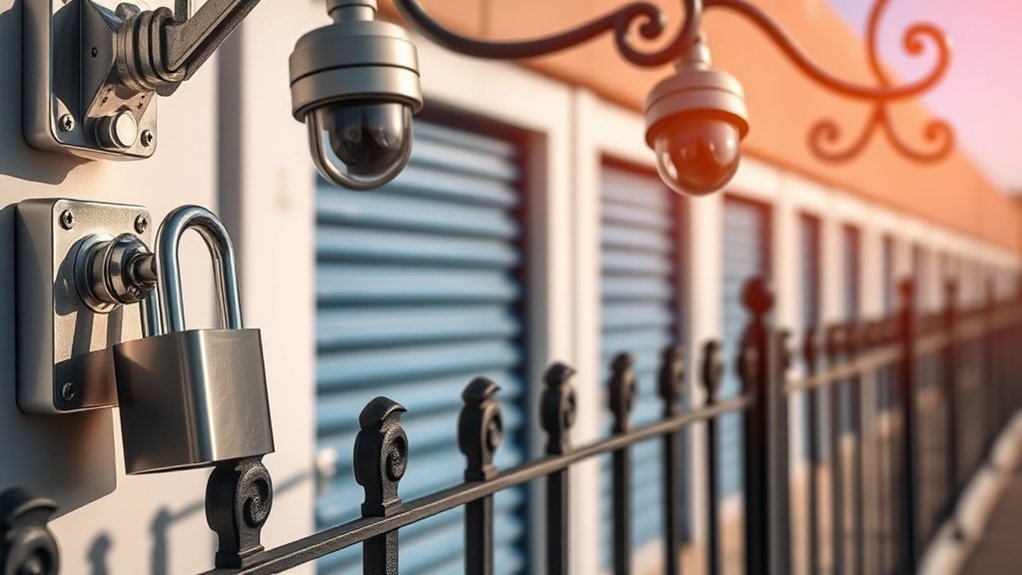
Understanding the key components of security systems is vital for assessing the safety of self-storage facilities.
Fire alarm systems provide early detection of smoke or fire, ensuring swift alerts to managers and emergency services.
Burglar alarm systems enhance security by detecting unauthorized access at entry points and are often linked to 24/7 monitoring. Additionally, the integration of security and monitoring enhancements with burglar alarms can provide added layers of protection.
Surveillance camera systems offer live monitoring and recorded evidence, using cloud storage to protect against tampering.
Smart lock technologies allow tenants to control unit access via their smartphones, adding a personal touch to security.
Finally, integrating these alarm systems ensures they work together seamlessly, boosting overall facility security and operational efficiency.
Each element is crucial for protecting your stored belongings.
Evaluating Access Control Features
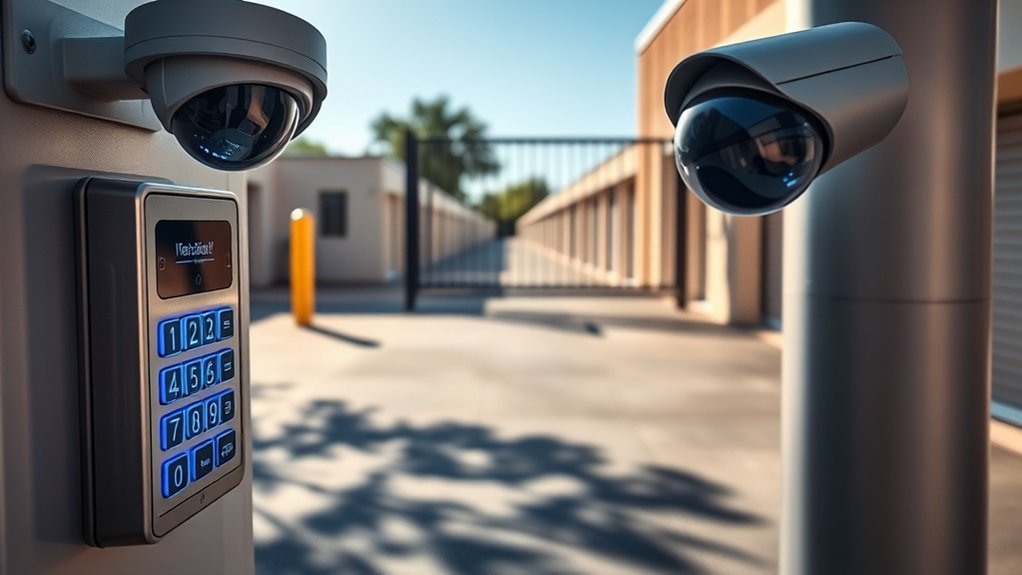
Evaluating access control features is essential for assessing how well a self-storage facility can protect tenant belongings.
Look for automated entry systems like electric gates and keypads that require unique credentials to enhance security. Technologies such as Licence Plate Recognition (LPR) enable smooth access, while biometric verification provides an additional layer of protection. Additionally, secure access management enhances security and simplifies operations, making it easier for tenants to manage their access to the facility. The implementation of enhanced security features can significantly reduce the risk of theft and unauthorized access.
Consider individual unit access controls, such as smart locks and electronic keypads, which offer convenience and security through mobile apps and cloud-based management.
Multi-factor authentication, which combines different credential types, significantly reduces the risk of unauthorized access.
Importance of Surveillance and Monitoring
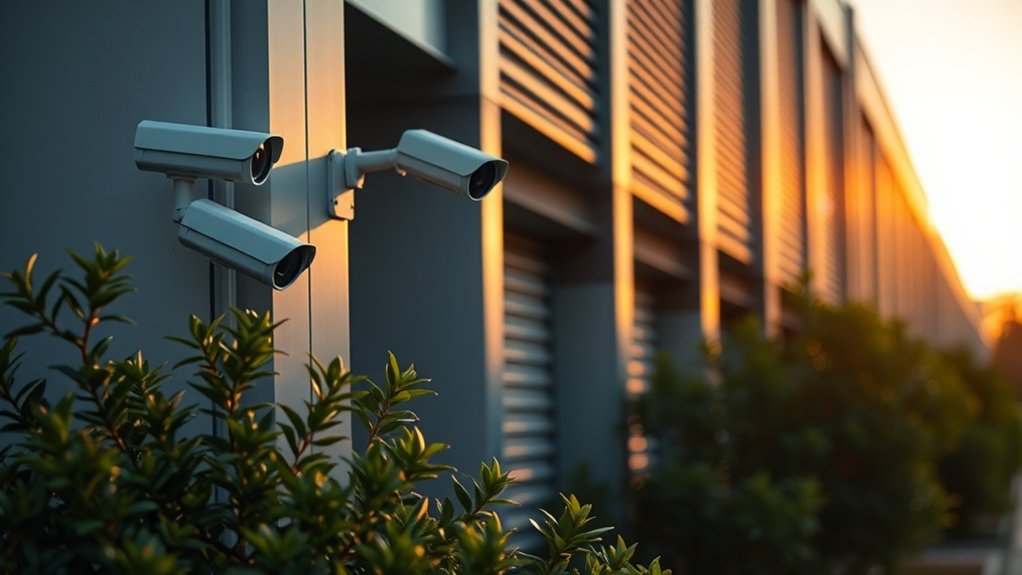
Surveillance and monitoring are crucial for the security of self-storage facilities. They not only deter crime but also offer real-time updates on the security status of the premises.
The effectiveness of these systems relies on advanced technology like high-definition cameras and motion sensors that alert you to any suspicious activity. Live monitoring, enhanced by video analytics, enables quick responses to potential threats, improving overall safety.
Using AI-driven systems can help minimise false alarms and boost detection accuracy. By incorporating various types of cameras, such as bullet and fisheye models, facilities can ensure comprehensive coverage. Additionally, the presence of enhanced security measures can significantly improve physical security for valuable possessions.
In short, effective surveillance and monitoring allow you to maintain control over your storage space, giving you peace of mind.
Assessing Physical Security Measures
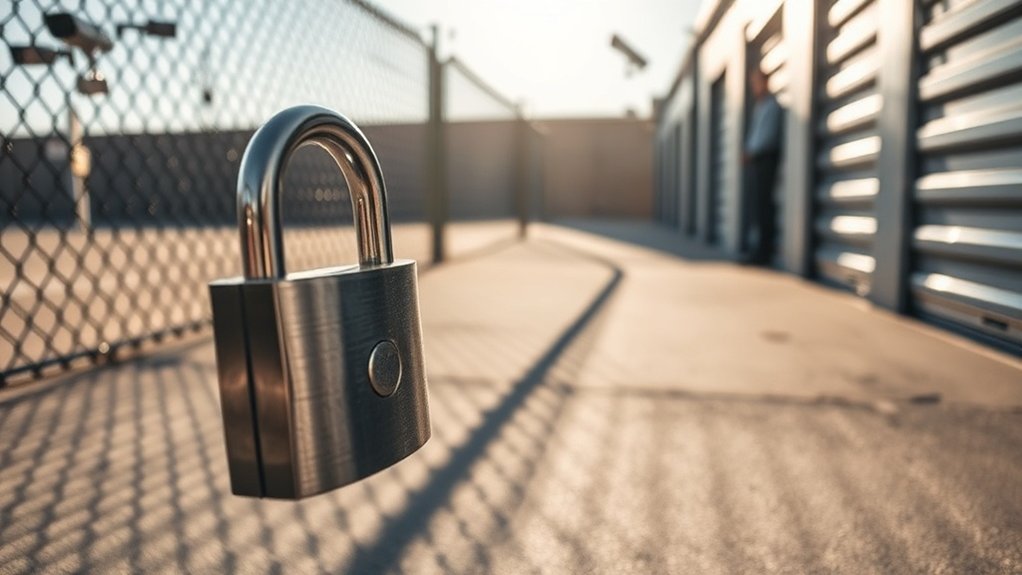
Effective surveillance and monitoring systems are essential for assessing the physical security of self-storage facilities.
Start by checking the fencing; strong materials like steel, chain-link, or barbed wire can deter tampering. Opt for designs that make climbing or digging difficult, such as angled fencing.
Next, evaluate the lighting—bright, durable lights and motion-activated features improve visibility and help prevent crime. Look for integrated technologies, such as thermal cameras and motion sensors, which can detect any unauthorized movement.
Ensure individual storage units are fitted with heavy-duty locks and alarms for extra security.
Lastly, confirm that the facility employs trained security personnel for round-the-clock monitoring, ensuring your belongings remain safe and secure.
Reviewing Security Ratings and Credentials
When considering a self-storage facility, it’s crucial to review its security ratings and credentials to ensure your belongings are safe.
Start by checking for compliance with standards set by bodies like the Home Office, which assesses intrusion detection systems and alarm monitoring.
Look for third-party certifications that confirm adherence to fire safety and adequate surveillance measures.
Evaluate access control systems; facilities with personalised electronic access and real-time audit trails usually have higher ratings.
Lastly, confirm the reliability of their surveillance systems; continuous monitoring and integration with alarms significantly boost security credentials.
Innovations in Security Technology
Innovations in security technology, especially AI-powered surveillance systems, are changing how self-storage facilities protect their assets.
By using real-time data analysis and IoT integration, these systems improve monitoring and simplify security management.
For instance, they enhance response times to potential threats and offer comprehensive oversight of facility operations, ensuring a safer environment for customers.
AI-Powered Surveillance Systems
As security threats evolve, AI-powered surveillance systems are transforming how self-storage facilities safeguard their assets. These systems leverage AI detection to achieve up to 98% accuracy in spotting unauthorised activities, allowing for real-time monitoring and proactive deterrence.
Features such as immediate alerts and remote access mean that a single security guard can effectively oversee multiple sites. AI’s ability to filter out false alarms improves response accuracy, while advanced algorithms detect suspicious behaviour and unusual patterns, helping to prevent security breaches.
Additionally, automated police dispatch for confirmed threats adds an extra layer of protection. By integrating various sensors and tools, these intelligent systems not only enhance security but also significantly lower operational costs, boosting customer confidence and satisfaction.
IoT Integration Benefits
AI-powered surveillance systems are revolutionising security in self-storage facilities, and integrating Internet of Things (IoT) technology enhances these improvements significantly.
The benefits of IoT in smart security include:
- Smart access and real-time control via mobile apps and biometric systems, allowing users to manage access effortlessly.
- Environmental condition monitoring with sensors that help prevent damage to delicate items, like antiques or electronics.
- Multi-sensor integration that identifies various threats, offering more protection than traditional locks alone.
- Remote monitoring and alert systems that provide round-the-clock visibility and enable quick responses to incidents.
These advancements make storage facilities safer and more user-friendly.
The Role of On-Site Security Personnel
When assessing self-storage facilities, it’s essential to consider the vital role of on-site security staff. Their presence not only improves real-time monitoring and patrols but also ensures quick response in emergencies.
For instance, if a fire breaks out or a security breach occurs, having personnel on-site can make all the difference. Understanding how these elements affect security ratings will help you make a more informed choice about where to store your belongings.
Importance of On-Site Presence
On-site security personnel are essential for enhancing the safety of self-storage facilities. Their presence significantly increases customer confidence, assuring tenants that their belongings are secure.
Here’s how on-site security contributes:
- Visual Deterrent: Their presence discourages theft and vandalism.
- Quick Response: Trained staff can promptly address security breaches or suspicious behaviour.
- Access Control: They manage entry points, verifying identities and preventing unauthorised access.
- Incident Management: Security personnel can liaise with law enforcement for effective incident handling.
Investing in on-site security not only safeguards your assets but also creates a safer environment, leading to higher occupancy rates and tenant satisfaction.
Your peace of mind is invaluable.
Patrol and Monitoring Duties
The effectiveness of on-site security personnel goes beyond just their presence; it relies on proactive patrol and monitoring duties.
By using varied patrol patterns, security staff can effectively cover high-risk areas without becoming predictable, which helps reduce the likelihood of intruders taking advantage of any gaps.
Regular foot and mobile patrols ensure thorough surveillance, while monitoring alarms allows for quick responses to any triggered alerts.
When alarms go off, immediate investigation is crucial to assess threats and deter potential breaches.
This vigilant patrolling and rapid incident response not only enhances security but also creates a sense of safety for customers.
Ultimately, effective monitoring is essential for maintaining the integrity and safety of self-storage facilities.
Emergency Response Capabilities
Emergencies can happen at any time, but having trained security staff on-site significantly improves a self-storage facility’s response capability.
These professionals play a vital role in situations like break-ins or medical emergencies, ensuring prompt action. Their responsibilities include:
- Implementing emergency procedures and swiftly contacting local authorities
- Using situational awareness to identify and address threats
- Managing crowd control and securing the scene during incidents
- Coordinating with emergency services for effective incident management
With proper training, security personnel can effectively use tools like panic alarms and communication devices to enhance their response efforts.
Their presence not only speeds up response times but also gives tenants peace of mind, demonstrating the facility’s commitment to safety and security.
Compliance With Industry Standards
Ensuring compliance with industry standards is crucial for the security and operational integrity of self-storage facilities. Verify that the facility follows regulatory measures, such as the British Security Industry Association (BSIA) guidelines, which recommend electronic gate systems for access control.
Look for evidence of security audits and accreditations from industry bodies to demonstrate their commitment to best practices. Facilities must also comply with local building codes and safety standards, ensuring that security installations are both reliable and effective.
Check for documentation like floor plans and approval checklists that confirm ongoing monitoring capabilities. By assessing these compliance factors, you can better understand the facility’s dedication to keeping your belongings safe.
Frequently Asked Questions
What Should I Do if I Experience a Security Breach?
If you experience a security breach, follow your incident response plan. Inform management, secure the area, and start the breach notification process. Keep detailed records of everything that happens, and communicate openly with those affected to maintain trust and accountability. For example, if customer data is compromised, promptly notify them and explain the steps being taken to address the situation.
How Can I Report Suspicious Activity at a Storage Facility?
If you see any suspicious activity at a storage facility, report it immediately to local police or the facility management. For instance, if you notice someone trying to pry open a unit or loitering without a clear reason, don’t hesitate to act. Keeping an eye on the facility helps ensure everyone’s safety, and your quick response can help prevent crime, creating a safer environment for all.
Are Security Ratings Standardized Across All Storage Facilities?
No, security ratings are not standardised across all storage facilities. Different facilities have various certification criteria and inspection standards, making it difficult to assess security consistently. For instance, one facility may prioritise CCTV and access control, while another might focus on fire safety and environmental controls. This lack of uniformity means you need to do your research to determine the security level of each location.
Can I Change My Access Permissions Remotely?
Yes, you can change your access permissions remotely. Many self-storage businesses in the UK now offer remote access for enhanced security management, allowing you to manage your storage unit conveniently from anywhere. This feature provides you with greater flexibility and control over your belongings.
What Steps Are Taken to Ensure Data Privacy in Security Systems?
To ensure data privacy in security systems, robust data encryption protocols and comprehensive privacy policies are in place. These measures safeguard sensitive information, respect individuals’ rights, and ensure compliance with data protection laws, prioritising your privacy. For example, when accessing security footage, encryption helps prevent unauthorised access, keeping your data safe.
Conclusion
When selecting a self-storage facility, prioritising security is essential. Just as a castle shields its treasures, the right security features protect your belongings. Assess access controls, surveillance systems, and the presence of on-site staff to ensure your items are safe. A bit of careful consideration now can save you from distress later—just as a knight wouldn’t head into battle unarmed, don’t risk your valuables without adequate protection.